Caddisfly
Insect
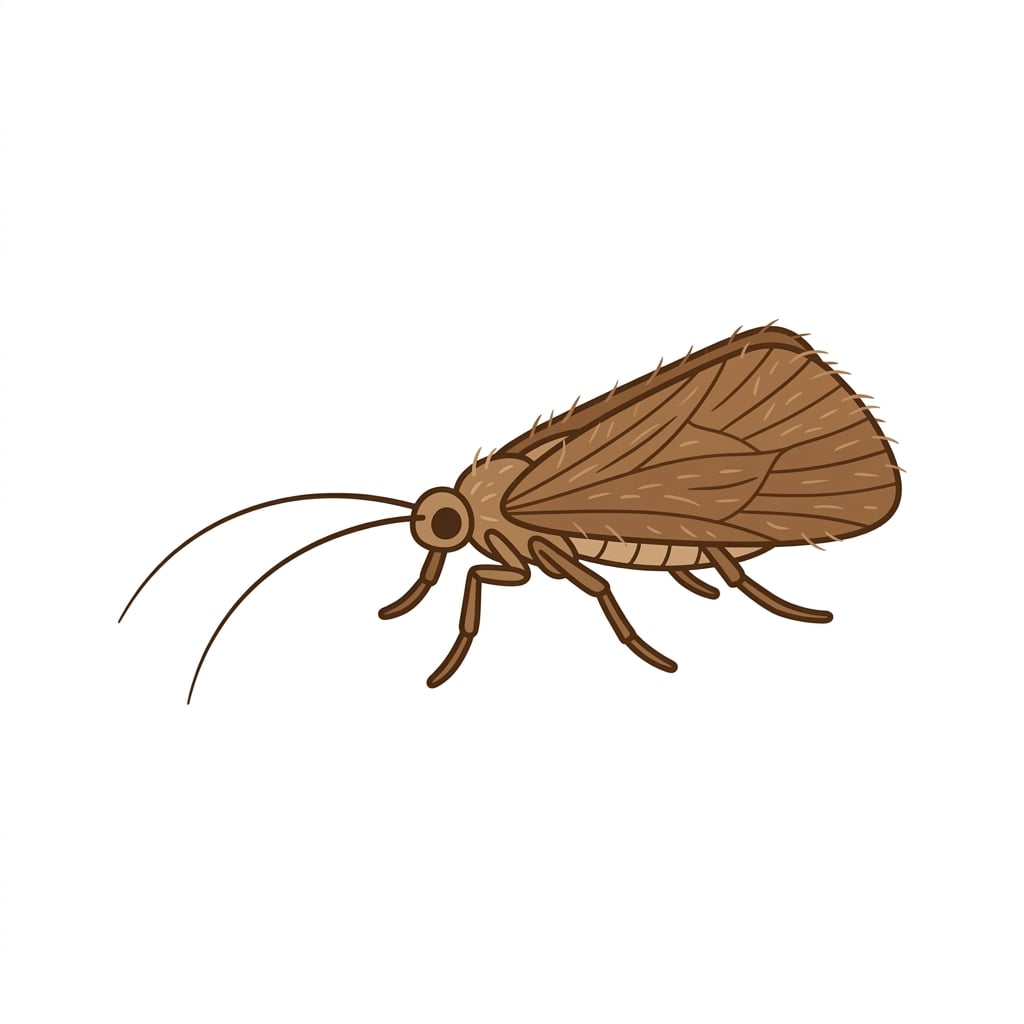
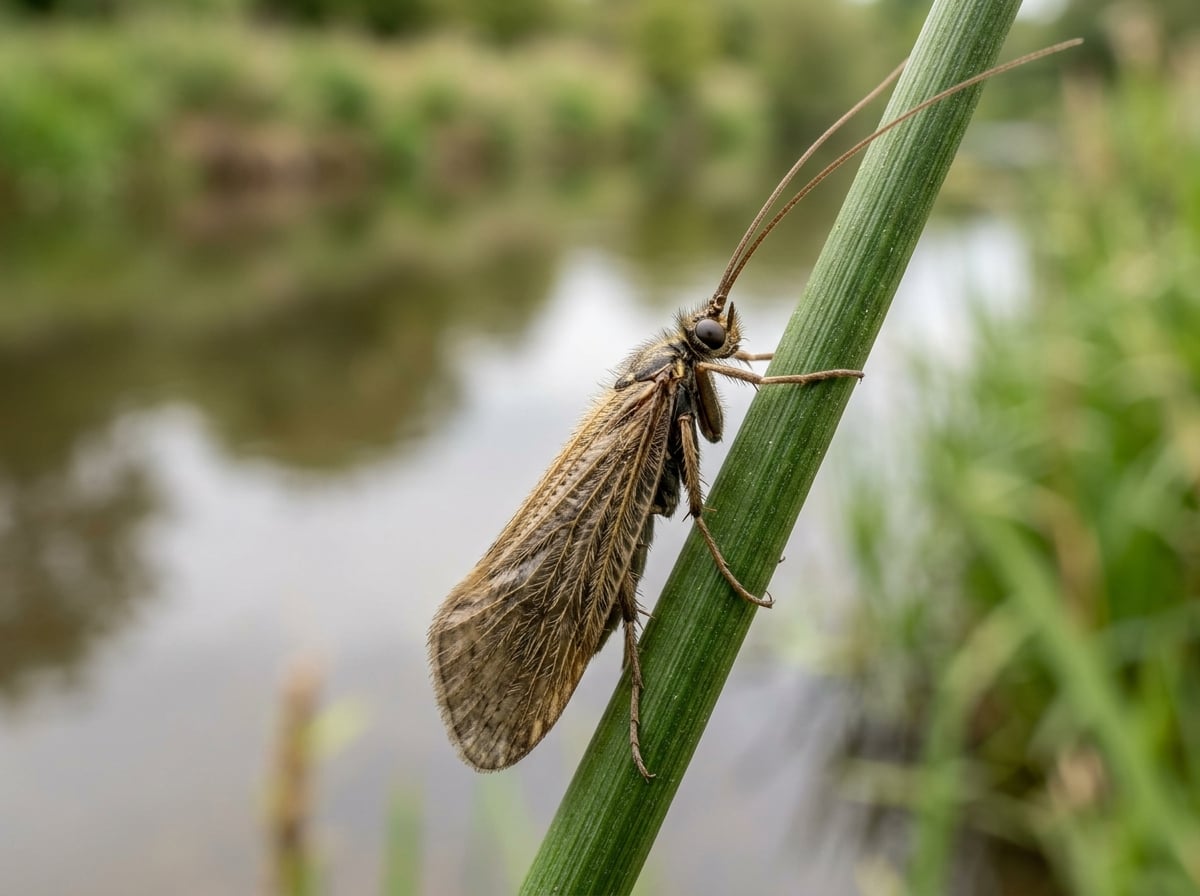
The caddisfly is a small, soft, moth-like insect that flutters near water at night. Its remarkable underwater baby builds a protective case of sand, stones and twigs bound with silk, and because the larvae only survive in clean water, finding them is a sign of a healthy river.
💡 Fun Facts
- The underwater baby builds its own suit of armour: it spins silk and glues on sand grains, tiny stones, twigs and leaf bits to make a little case it carries about like a snail's shell — and different kinds use different materials, so you can sometimes tell them apart by their "houses".
- Because the larvae can only live in clean water, finding them tells scientists that a river is healthy and happy.
- The adult hardly eats at all: it spends months as a hungry underwater larva, then lives just a couple of weeks as a soft, moth-like flier — mostly to find a mate.
🔍 How to spot it
- Size
- A small, moth-like insect about 1.5 cm long, with wings held in a tent-shape over its back.
- Markings
- Dull brown or straw-coloured hairy wings (its scientific name, Trichoptera, means 'hair-wing') — not the powdery scales of a moth.
- Features
- Very long thread-like antennae held out in front; the larva lives inside a little tube-shaped case of sand or plant bits.
- Behaviour
- Flutters weakly near water at night and comes to lit windows; the larvae crawl along the bottom of ponds and streams, case and all.
- Where & when
- Beside any clean pond, lake, stream or river, right across the UK.
- Easily confused with
- Small moths — but caddisflies have hairy (not scaly) wings, longer antennae and no coiled tongue; and mayflies, which hold their wings upright and have long tail filaments.