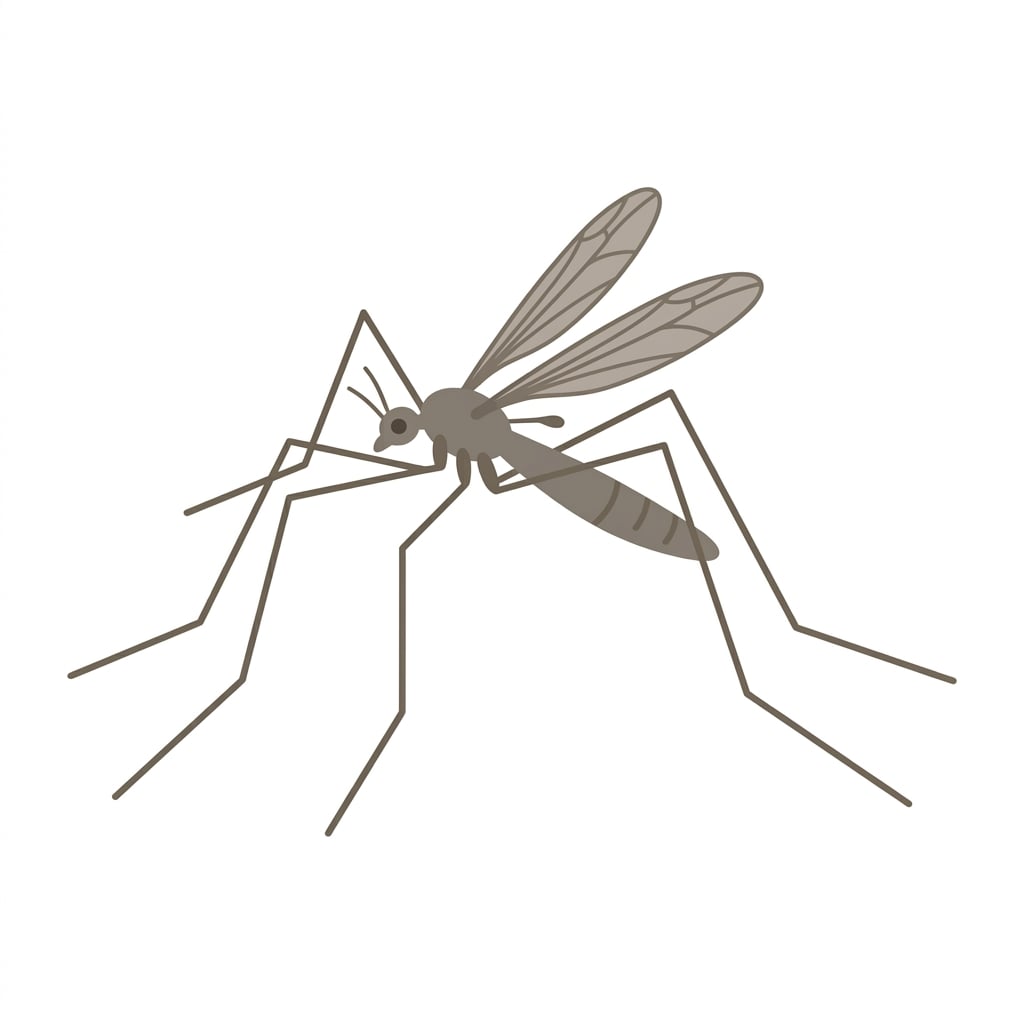
Cranefly
Insect
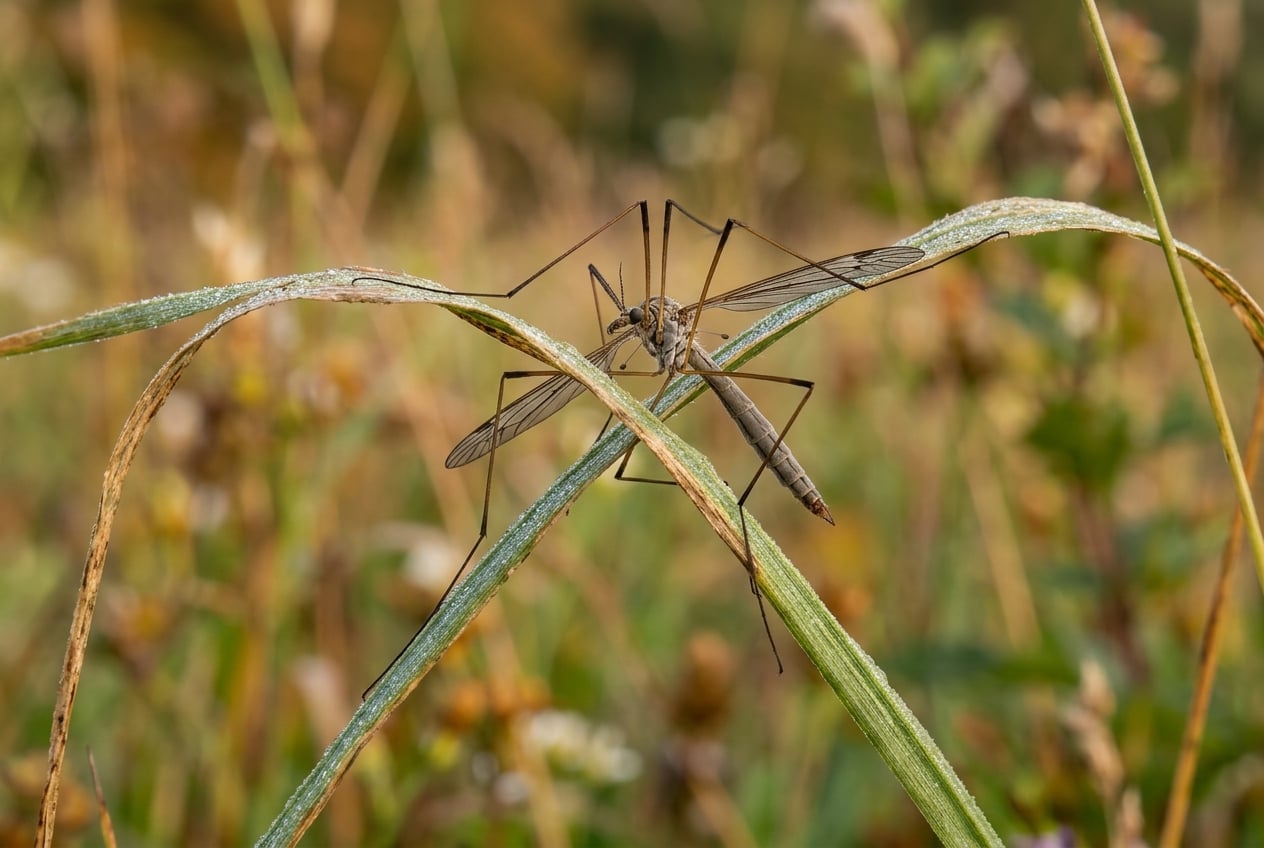
The cranefly, or daddy-long-legs, is a large, delicate fly with enormously long, easily-broken legs that dances around autumn lights. Its grub, the leatherjacket, lives in the soil eating grass roots, and its sheer numbers make it one of the most important insect meals in Britain.
💡 Fun Facts
- Its grub is the "leatherjacket" every gardener knows: the tough, brown-skinned grub that eats grass roots and makes bare patches on lawns grows up into the daddy-long-legs that dances around the lights in autumn.
- It is one of the most important insect meals in Britain. There are so many that whole flocks of starlings, rooks and plovers probe the grass for the grubs. Meanwhile, bats feast on the flying adults. A single field can feed an astonishing number of animals.
- It can drop a leg to escape: if something grabs a leg, the cranefly simply lets it fall off and flies away, which is why you so often see one with a leg or two missing.
🔍 How to spot it
- Size
- A large, delicate fly about 2–2.5 cm long — but with enormously long, spindly legs spanning 5–6 cm.
- Markings
- Slender grey-brown body, two narrow wings held out or swept back, and six extremely long, easily-broken legs.
- Features
- Long thin body and legs; females have a pointed tip at the tail-end for laying eggs in the soil — it is not a sting.
- Behaviour
- Flies weakly and clumsily around grassland and lit windows on autumn evenings, and often loses legs when handled.
- Where & when
- Over damp grassland, lawns and meadows everywhere in the UK, mostly from August to October.
- Easily confused with
- Harvestmen (which have a single round body, not a long one, and no wings) and large mosquitoes — but craneflies are far bigger, do not bite, and have no biting mouthparts.