Midge
Insect
The non-biting midge is a tiny, harmless fly whose males gather in dancing swarms over water at dusk. Its bright-red larva, the bloodworm, carries the same blood pigment we do so it can breathe in muddy pond beds, and the swarming adults are a vital food for bats and fish.
💡 Fun Facts
- The dancing columns at dusk are a bat's dinner bell: on still evenings, thousands of male midges hover in tall, swirling towers over water or a hedge — and that is exactly where pipistrelle and Daubenton's bats come to feast.
- Its baby has red blood like ours. The larva is called a "bloodworm" because it is bright red: it carries haemoglobin, the same oxygen-grabbing substance in our own blood, which lets it breathe in stagnant, muddy water where almost nothing else can live.
- The adult never eats at all. It has no working mouth — it lives only a few days, just long enough to find a mate, which is why midges appear in such enormous, sudden clouds.
🔍 How to spot it
- Size
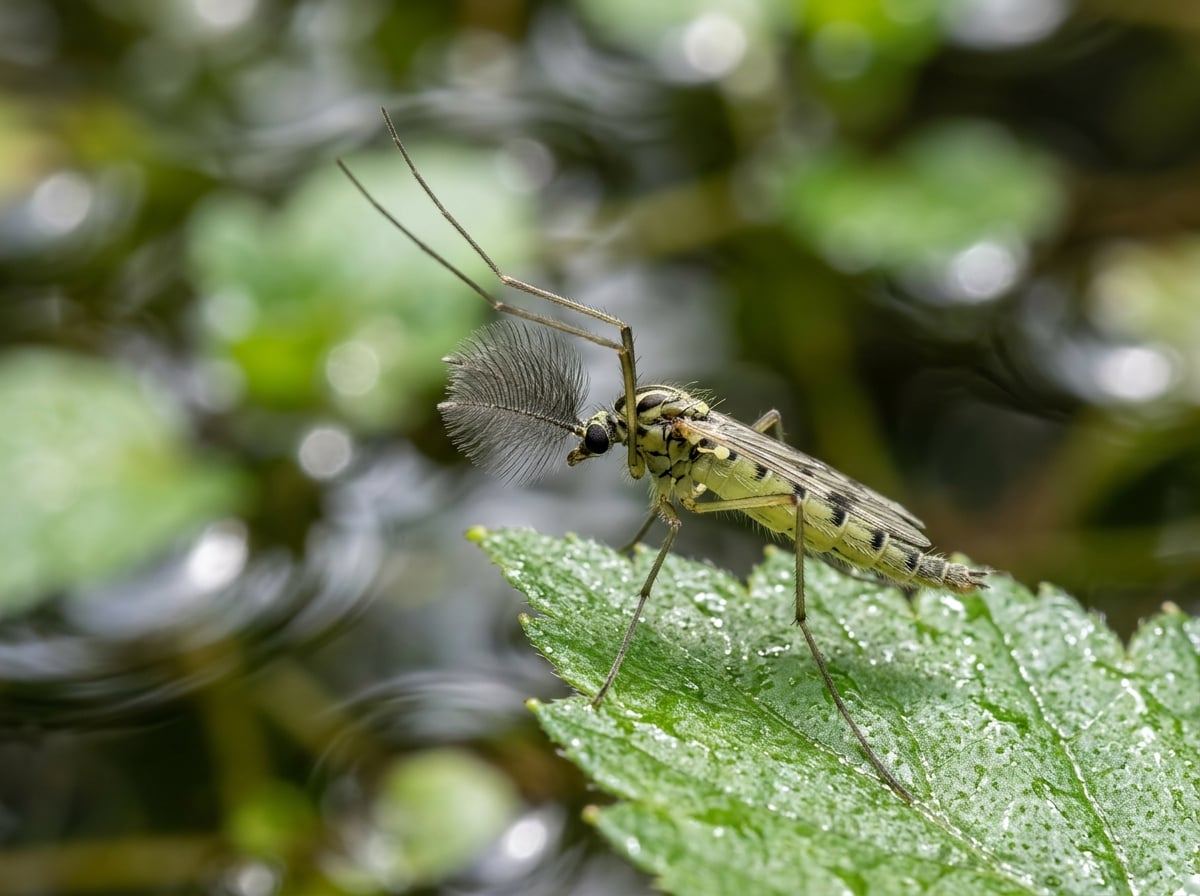
- A tiny, delicate fly, usually only a few millimetres long (the biggest about 1 cm).
- Markings
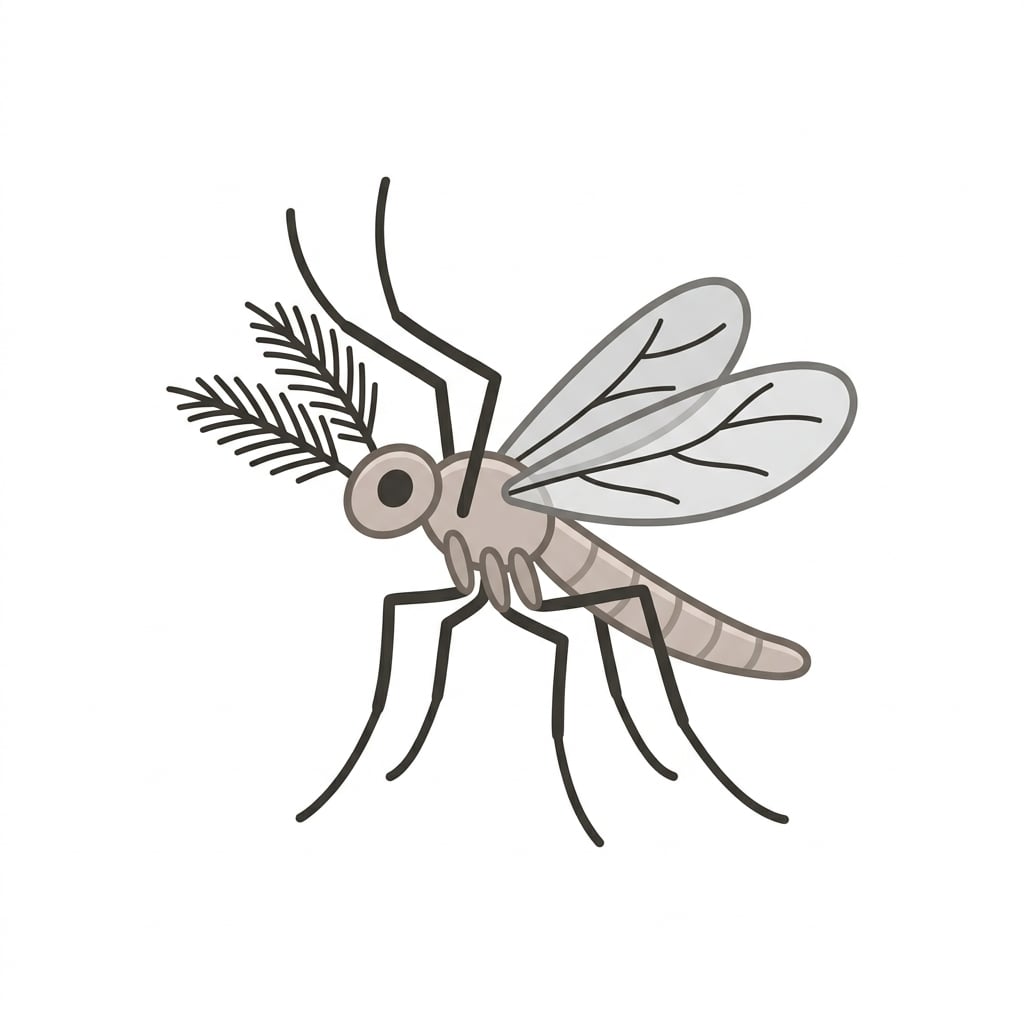
- Slender pale-green, brown or greyish body; the male has a very bushy, feathery pair of antennae.
- Features
- At rest it often holds its front legs up in the air; the larva is a thin, bright-red 'bloodworm' in pond mud.
- Behaviour
- Does not bite; males gather in dancing swarms at dusk, often over water or above a bush or a person's head.
- Where & when
- Near any fresh water — ponds, lakes, rivers and ditches — everywhere in the UK, in vast numbers from spring to autumn.
- Easily confused with
- Mosquitoes and biting midges — but non-biting midges have no biting mouthparts, hold their front legs raised at rest, and the male's feathery antennae are much bushier; they are completely harmless.