Creature
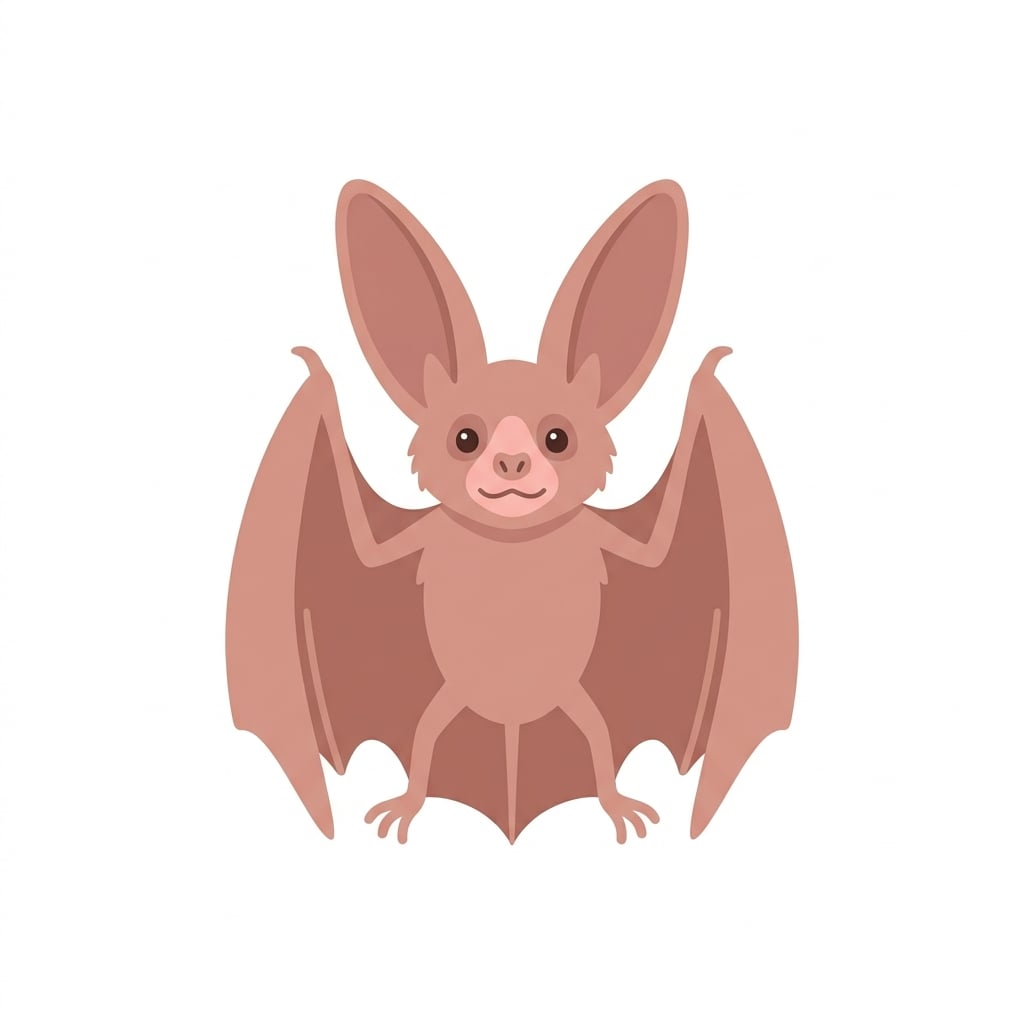
Bechstein's Bat
Mammal
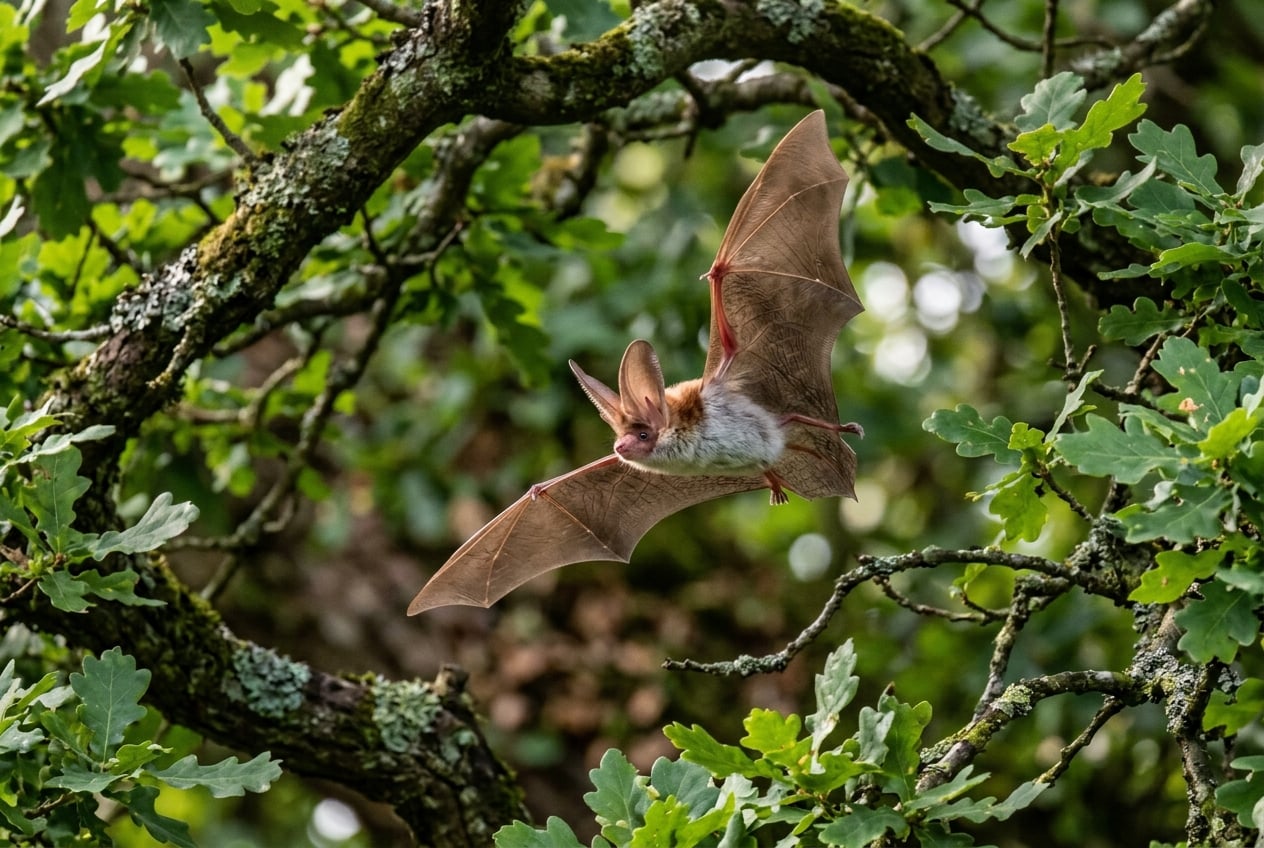
Using its long, listening ears, Bechstein's bat flies slowly through the treetops and gently plucks resting moths, caterpillars and spiders straight off the leaves. It is a hunter of ancient oak woodland — and one of Britain's rarest, most secretive bats.
💡 Fun Facts
- Bechstein's is a very rare ancient-woodland specialist — one of Britain's scarcest bats, tied to old oak woods in the south, so secretive it is usually found only by careful scientists.
- Instead of only catching insects in mid-air, it gleans — flying slowly through the treetops to pluck resting moths, caterpillars and spiders straight off the leaves, using its long ears to listen for them.
- Its long ears, held apart on top of its head, are longer than any other UK mouse-eared bat's — a bridge between the ordinary bats and the giant-eared long-eared bats.
🔍 How to spot it
- Size
- Medium — wingspan about 25 to 30 cm; a little larger than a Daubenton's.
- Markings
- Pale to reddish-brown fur above, greyish-white below, with a pink face.
- Features
- Long ears, held apart (much longer than other mouse-eared bats) — the clue to look for; no strange flap on its nose (some bats, like the horseshoe bats, have one).
- Behaviour
- Flies slowly and with great control inside the woodland canopy, plucking caterpillars, moths and spiders off leaves and bark — and rarely venturing into the open.
- Where & when
- Rare — ancient broadleaved woodland, especially old oak, in southern England and south Wales; so seldom seen it is usually found only through bat boxes or special surveys.
- Easily confused with
- The brown long-eared bat is the other long-eared woodland gleaner, but its ears are enormous — almost as long as its body — and curl back at rest, while Bechstein's ears are long but clearly shorter and held forward.
📅 Through the Year
- Hibernation:November to March
- Active:April to October
- Maternity/Breeding:June to July