Algae
Water & Wetland Plant
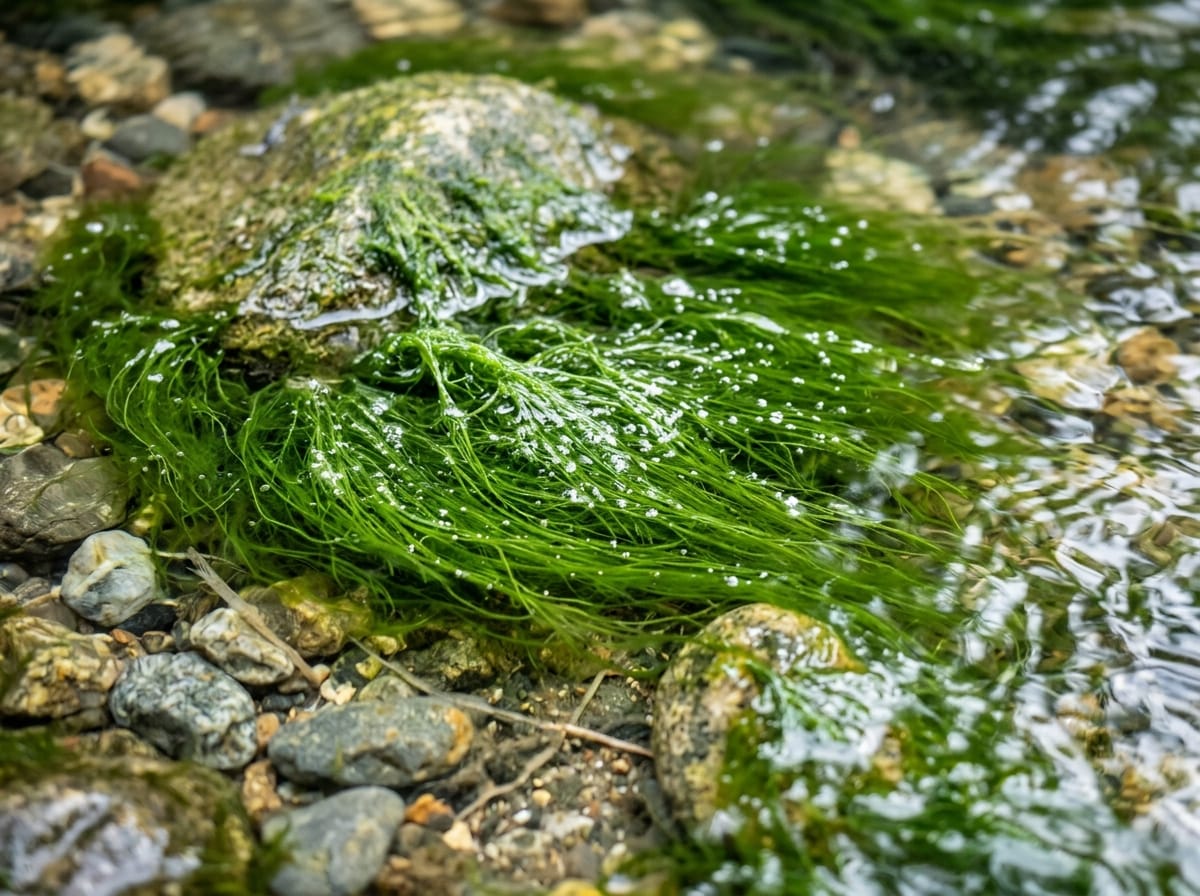
The simple green plant-life that coats wet rocks and pond beds as a slippery film and drifts through still water as fine green threads (often called blanketweed) — one of Earth's oldest living things and the base of many watery food webs.
💡 Fun Facts
- Algae are simple green living things that make their own food from sunlight, just like plants — but they have no roots, stems, leaves or flowers; a strand of pond algae is green all the way through.
- Green algae can grow back from a single broken piece, and the thin film on a rock or wall can dry right out and then spring back to life when the rain returns.
- Algae are some of the oldest living things on Earth — green algae gave rise to all land plants, and the algae in the world's water make a big share of the oxygen we breathe.
📅 Through the Year
- Growth:January to December
- Bloom:May to September
- Die-back:October to November
Name Story
Chlorophyta
means “"green plants" — and the everyday word "algae" means "seaweed"”
What does its name mean?
- chloro- — greenGreek khlōros 'pale green' — the same root as chlorophyll, the green pigment that catches sunlight
- -phyta — plantsGreek phyton 'plant'
- alga (the word "algae") — seaweed / the wrack washed up on the shoreLatin alga 'seaweed'
The scientific name Chlorophyta simply means "green plants" — from the Greek khlōros (green) and phyton (plant), the same khlōros that gives chlorophyll its name. The ordinary English word "algae" comes from somewhere else entirely: the Latin alga, meaning the seaweed or wrack that piles up along the tideline — so using "algae" for pond and freshwater forms too is really a later broadening of the word.