Creature
Common Pipistrelle
Mammal
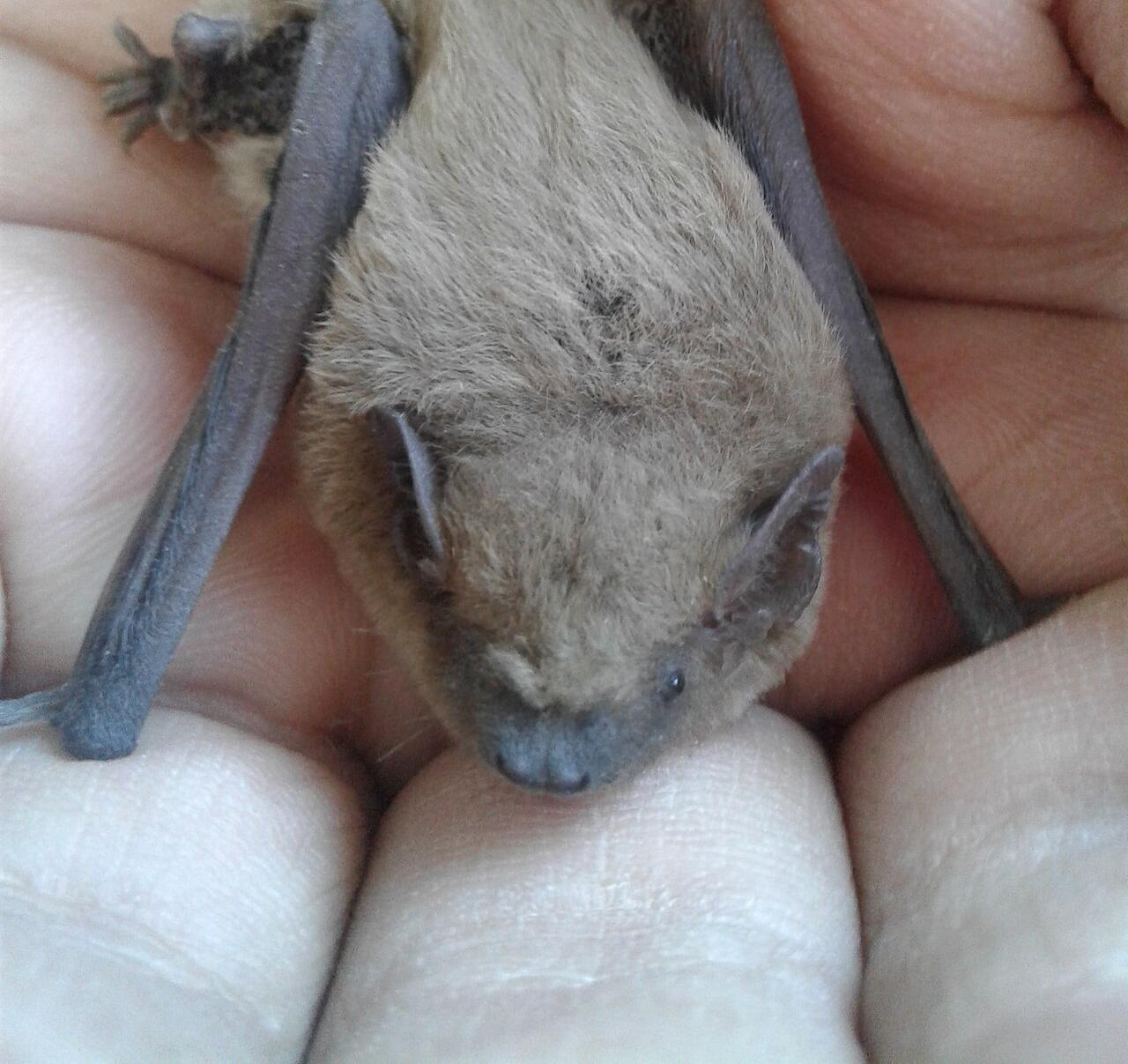
The Common Pipistrelle is the UK's commonest and one of its smallest bats — tiny enough to fit in a matchbox. It is the bat most people see flickering over a garden at dusk, hunting thousands of midges a night.
Seasonal Behaviour:
In summer, mother bats all join together in one place (like a warm attic or an old tree) to have their babies. This is called a 'maternity roost'. They keep their babies (called 'pups') warm and fly out at dusk to hunt for insects.
💡 Fun Facts
- A single, tiny Common Pipistrelle can eat up to 3,000 small insects — mostly midges and gnats — in one night.
- It is the UK's commonest and most widespread bat, and also one of the smallest: its body is shorter than your thumb and it weighs about the same as a 20p coin.
- It was only discovered to be a separate species in the 1990s, when bat detectors revealed that two kinds of 'pipistrelle' were squeaking at different pitches — and never breeding with each other.
🔍 How to spot it
- Size
- Tiny — body smaller than your thumb and about the weight of a 20p coin; one of the UK's smallest bats.
- Markings
- Golden-brown fur, a little paler below, with a dark face, ears and wings — like a little dark 'bandit mask'.
- Features
- Short, triangular ears and a short, blunt flap inside the ear; no strange flap on its nose (some bats, like the horseshoe bats, have one).
- Behaviour
- Fast, jerky, twisting flight about 2 to 10 m up, turning again and again to snatch insects; appears about 20 minutes after sunset, often round street lights and gardens.
- Where & when
- Everywhere — gardens, parks, farmland and towns right across the UK; the bat most people see flickering over a garden at dusk. Roosts in buildings.
- Easily confused with
- The almost-identical soprano pipistrelle looks the same to our eyes; experts tell the two apart by the pitch of their calls on a special detector (the soprano calls a little higher).
📅 Through the Year
- Hibernation:November to March
- Active:April to October