Arctic Ocean Pack Ice 🌊
The freezing, ice-choked waters beneath the surface of the Arctic.
📄 Educational Handout Available
Download the printable infographic for this habitat.
Climate & Environment
Frigid waters that are often covered by sea ice. Water temperatures hover around -1.8°C (the freezing point of saltwater).
Key Plants
Phytoplankton (microscopic floating plants) and kelp forests in shallower, ice-free zones.
💡 Fun Facts
- The Arctic Ocean is the smallest and shallowest of the world's oceans, but it holds a massive amount of the world's fresh water in the form of ice.
- The narwhal's famous 'tusk' is actually a giant, spiraled tooth that has millions of nerve endings to help it sense the ocean water.
Key Creatures
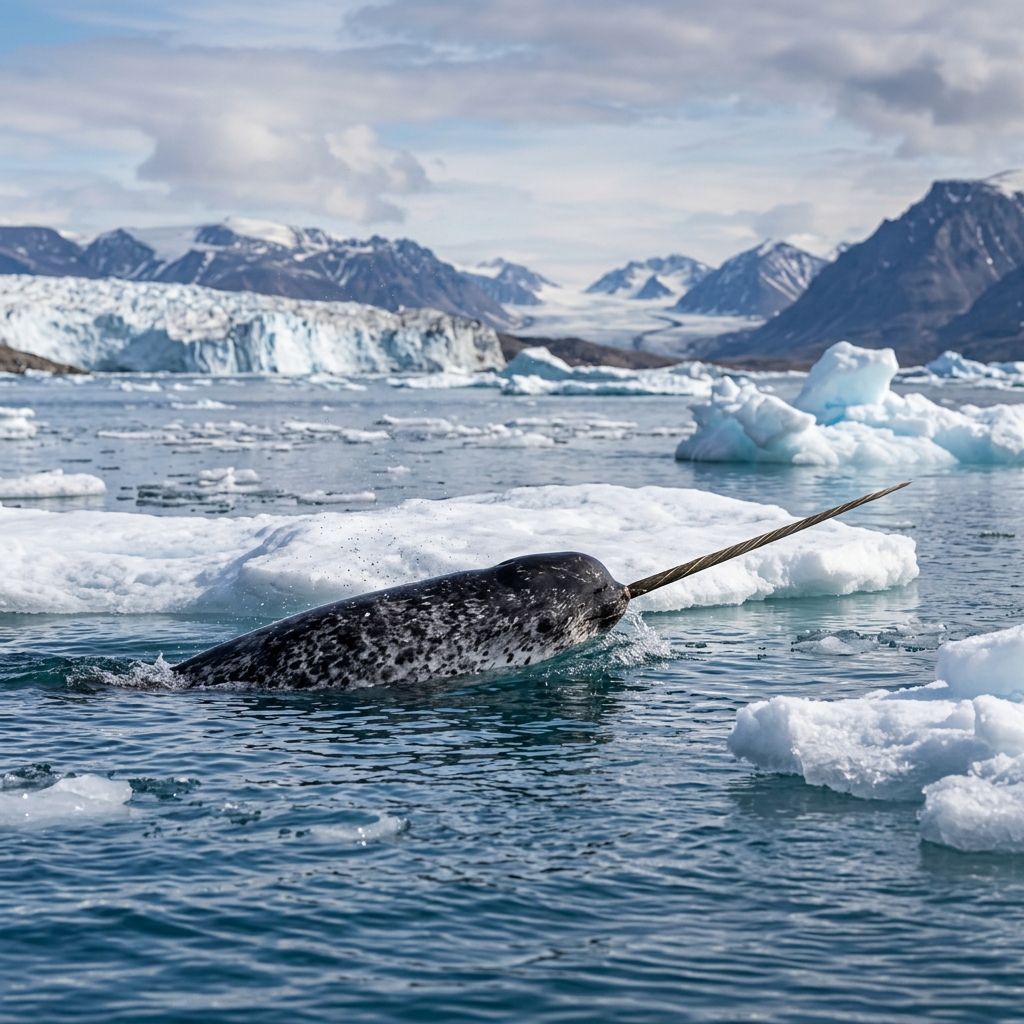
Narwhal
Monodon monoceros
How it survives here:
Has no dorsal fin on its back, allowing it to swim smoothly just below the thick ice without getting stuck.
Narwhal
How it survives here:
Uses its long tusk as a highly sensitive sensory organ to navigate and find food in freezing, dark waters.
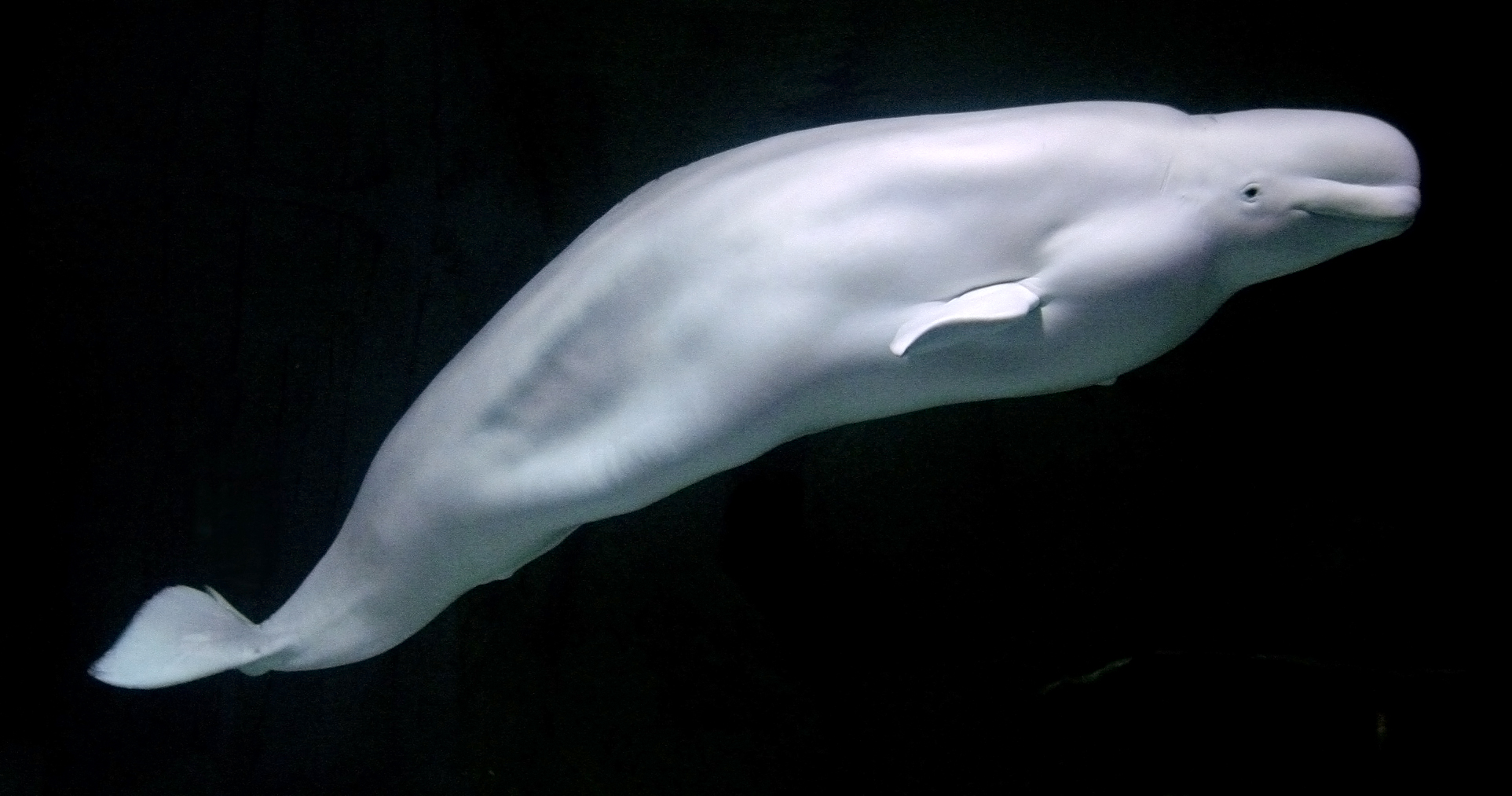
Beluga whale
How it survives here:
Lacks a dorsal fin on its back, allowing it to swim smoothly right up against the underside of the ice sheets.
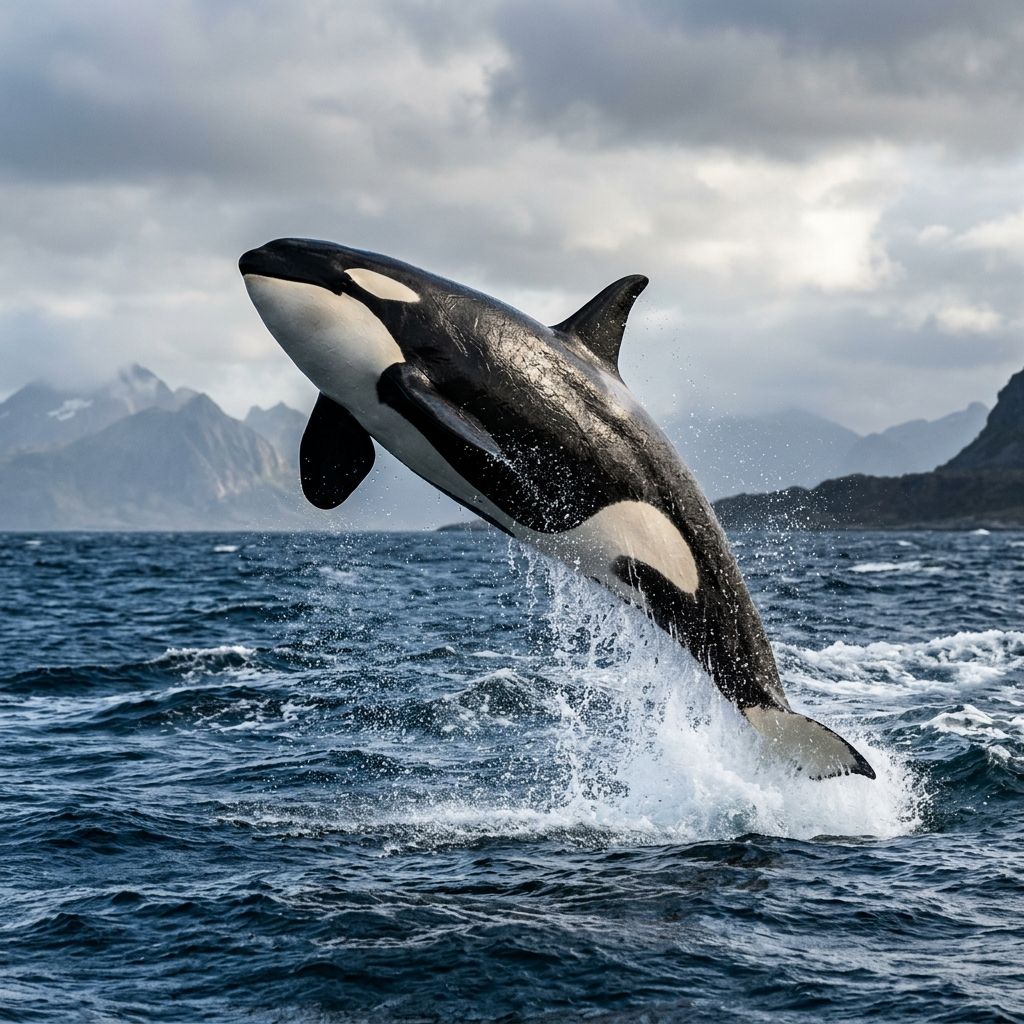
Orca
How it survives here:
A highly intelligent predator with a thick layer of blubber to survive the icy water.
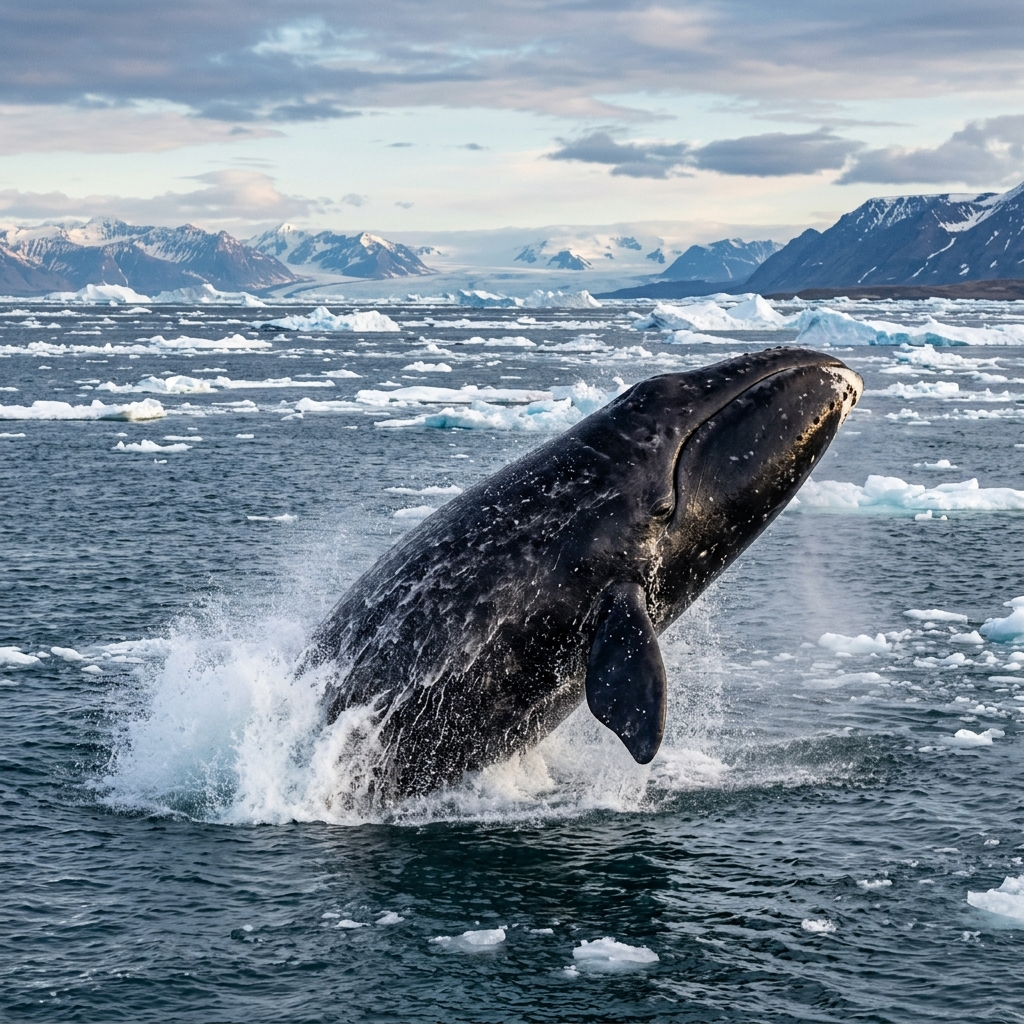
Bowhead Whale
How it survives here:
Has a massive, thick skull that it uses to smash through sea ice from below to breathe.