The Four Main Parts of a Plant
Curriculum Requirement
Identify and describe the functions of different parts of flowering plants: roots, stem/trunk, leaves and flowers.
Nature Examples
Roots
The part of the plant that usually grows underground.
Function: To anchor the plant firmly in the soil and to absorb water and nutrients.
💡 Fun Facts
- The roots of a large tree can spread out two to three times wider than its branches.
- Some plants, like carrots and parsnips, have a large 'taproot' that stores food for the plant over winter.
- The tiny hairs on the end of roots dramatically increase the surface area for absorbing water.
Stem / Trunk
The main body or stalk of a plant that supports the leaves and flowers.
Function: To hold the plant upright and to act as a transport system, carrying water from the roots to the leaves.
💡 Fun Facts
- The rings inside a tree trunk not only tell you its age but also what the weather was like each year—a wide ring means a good year for growing.
- The strong, woody stem of a tree is called a trunk.
- Some plant stems, like those on a stinging nettle, have tiny hollow hairs that act like needles to defend the plant.
Leaves
The part of the plant where food is made.
Function: To capture sunlight and use its energy to make food for the plant through a process called photosynthesis.
💡 Fun Facts
- Plants 'breathe' through tiny pores on the underside of their leaves called stomata.
- The veins in a leaf are part of the plant's transport system, bringing water in and taking food out.
- Some plants have leaves that are adapted for defence, like the sharp spines on a cactus.
Flowers
The reproductive part of a flowering plant.
Function: To produce seeds so that the plant can reproduce.
💡 Fun Facts
- Flowers use bright colours and sweet smells as advertisements for passing insects, telling them where to find tasty nectar.
- Pollination occurs when an insect, like a bee, carries pollen from one flower to another.
- Not all flowers are bright and colourful; grasses have flowers too, but they are often small and green and rely on the wind for pollination.
Activities & Reflections
Activities
Celery Experiment
Stand a stalk of celery with leaves in a jar of water with food colouring. After a day, pupils will see the coloured water has been transported up the stem's 'pipes' (xylem) and into the leaves.
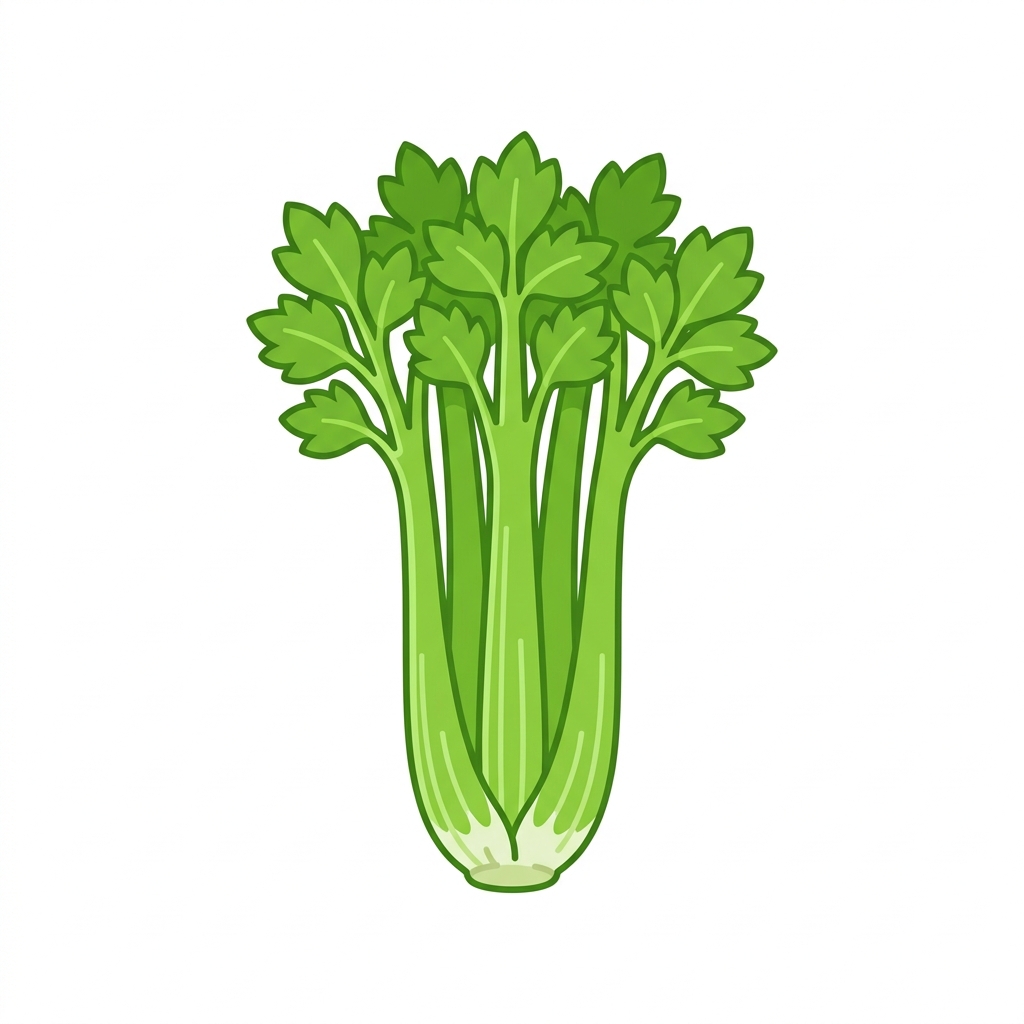
Celery
A crunchy, watery vegetable whose stalks reveal the tiny tubes (xylem) that carry water up a plant.
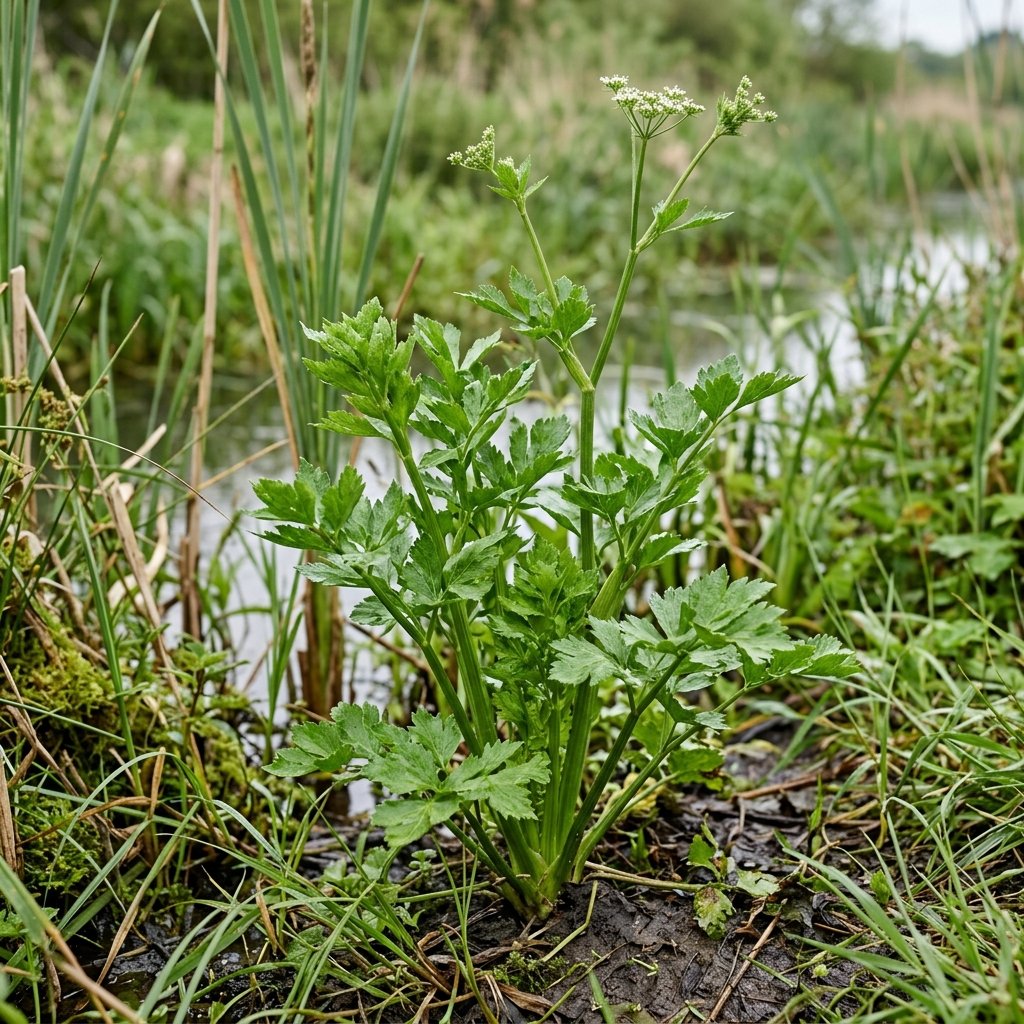
💡 Fun Facts
- If you stand a celery stalk in coloured water, you can watch the colour travel up its tiny tubes!
- Those tubes, called xylem, carry water from the roots all the way up the plant.
- The crunchy stalks are mostly water.
📅 Through the Year
- Flowering:June to August
Function Match-up
Create cards with the plant parts (root, stem, leaf, flower) and separate cards with their functions (anchors the plant, carries water, makes food, makes seeds). Pupils can then work in pairs to match them up.
Plant Part Hunt
Take pupils outside to look at the plants in the school grounds. Ask them to find and sketch a plant, then label the four main parts they can see.
Reflections
Self-Reflection (Exit Ticket)
On a piece of paper, ask pupils to draw a simple flower and label its four main parts: roots, stem, leaves, and flower.
Paired Reflection (Think-Pair-Share)
Ask pupils to discuss with a partner: If a plant had no leaves, what problem would it have?
Group Reflection
In small groups, ask pupils to think about the vegetables we eat. Which part of the plant are we eating when we have carrots, celery, spinach, or broccoli?
Whole Class Share-Out
Ask the class: We learnt that flowers are often brightly coloured to attract insects. Why do you think the leaves and stems of most plants are green and not other colours?
Exploring Plant Variety
Plants come in wonderful variety — some we grow to eat, and some have no flowers at all. Here are a few to explore.
Plants We Eat
When we eat vegetables, we are often eating a different part of the plant each time: a root, a stem, a leaf, a seed, or a fruit. See if you can work out which part of each of these we eat.
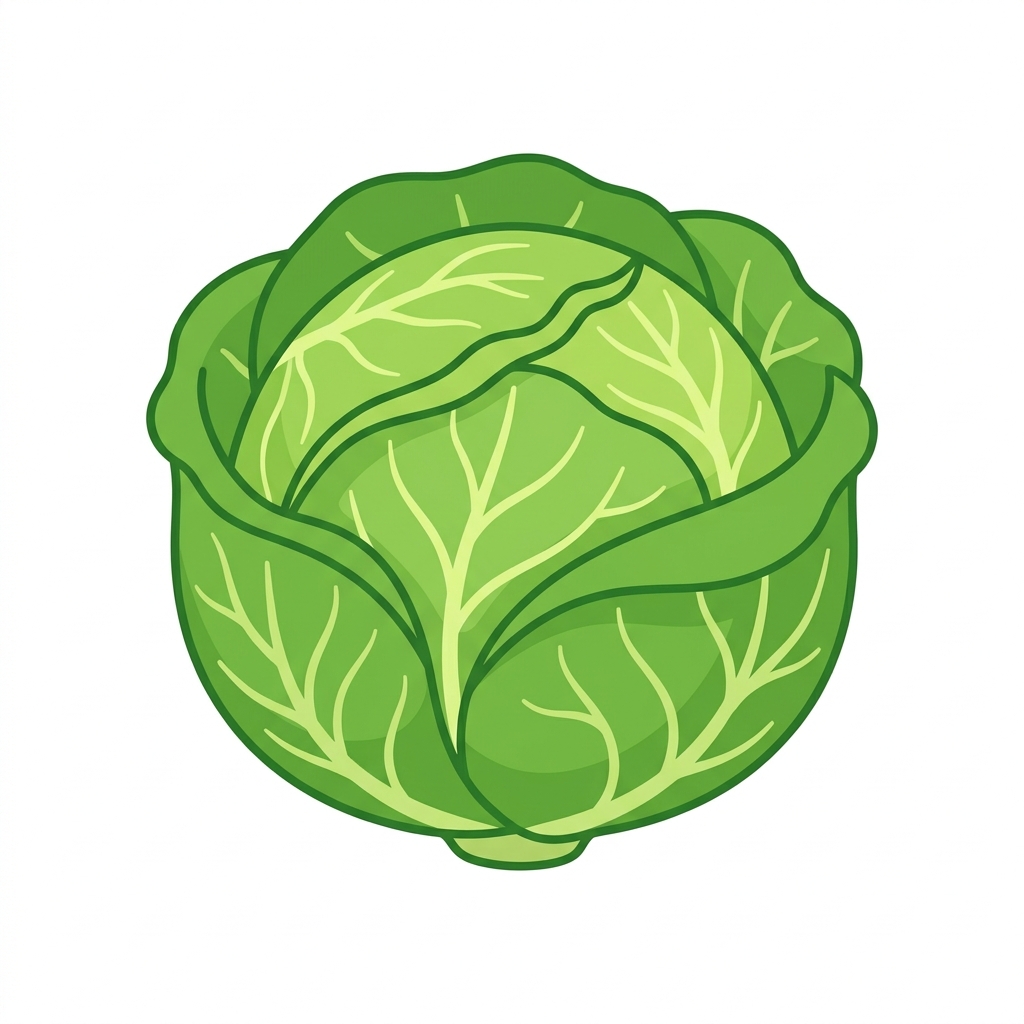
Cabbage
A leafy vegetable that packs its leaves into a tight head — and the ancestor, with its many bred forms, of kale, broccoli, cauliflower and Brussels sprouts.
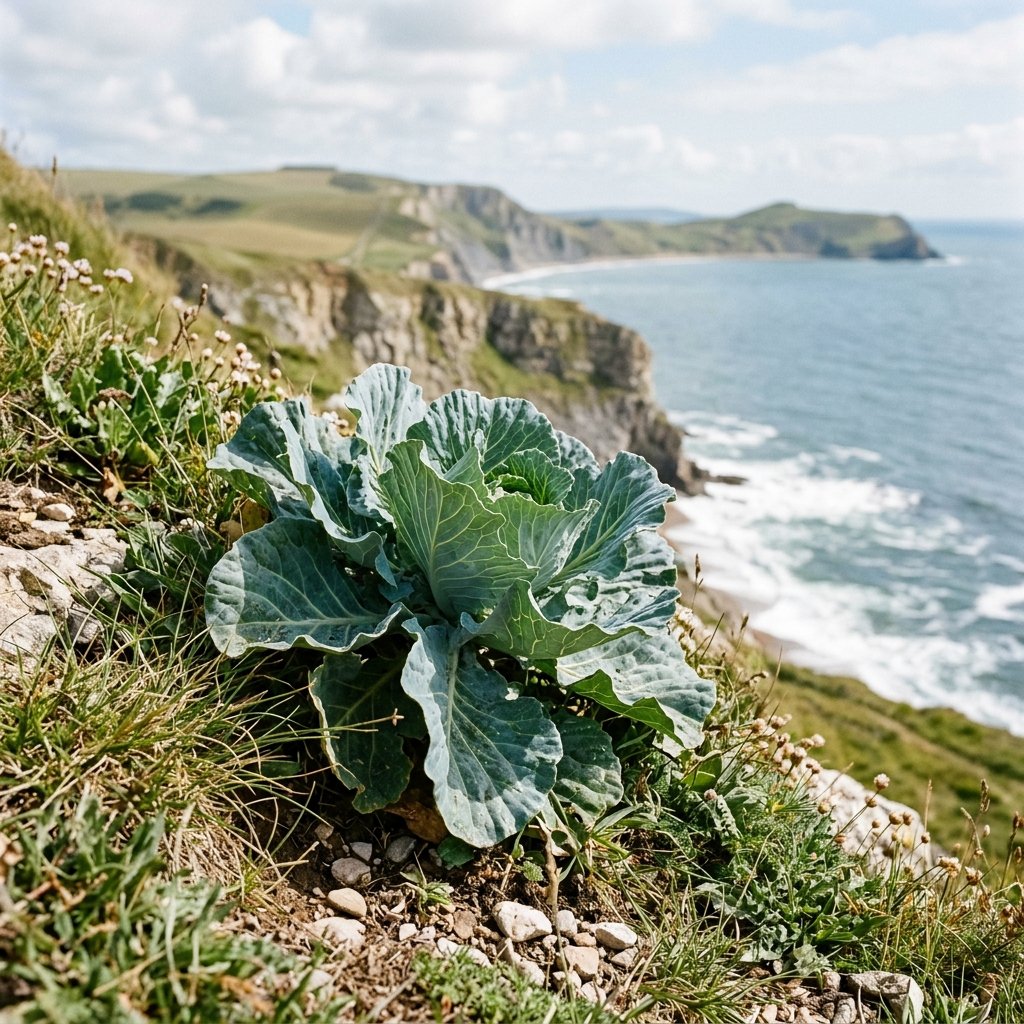
💡 Fun Facts
- We grow cabbage for its tight ball of leaves, which we eat raw, boiled, or turned into sauerkraut.
- If it is left in the ground into a second year, it shoots up a tall stalk of yellow flowers.
- Kale, broccoli, cauliflower and Brussels sprouts were all bred from this one wild plant.
📅 Through the Year
- Flowering:April to June
- Fruiting:June to July
Lettuce
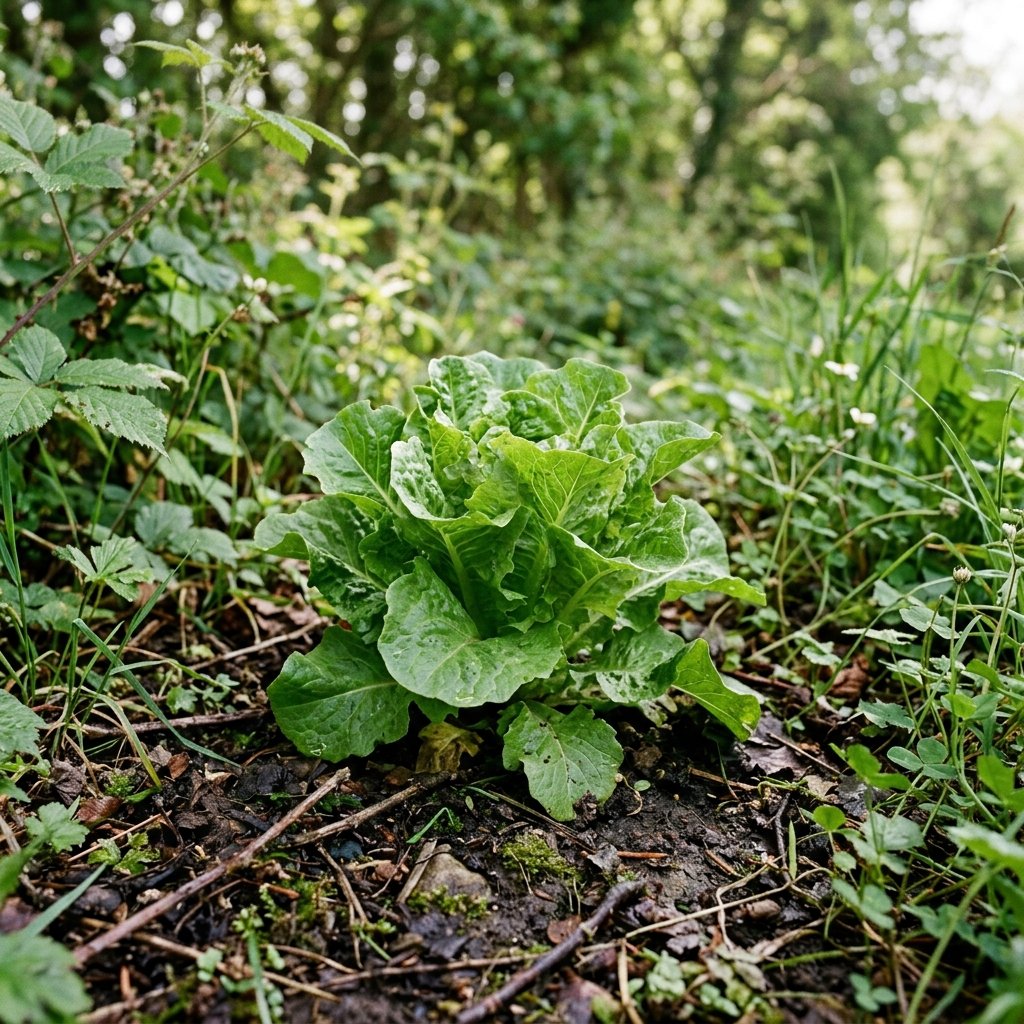
A fast-growing salad plant grown for its crisp leaves — a cousin of the dandelion whose parachute seeds drift away on the wind.
💡 Fun Facts
- We grow lettuce for its soft, crisp leaves, which we eat raw in salads.
- In hot weather it 'bolts' — it shoots up a tall stalk and turns bitter.
- It belongs to the daisy family, and its seeds float away on tiny parachutes just like a dandelion's.
📅 Through the Year
- Flowering:July to September
- Fruiting:August to September
Potato
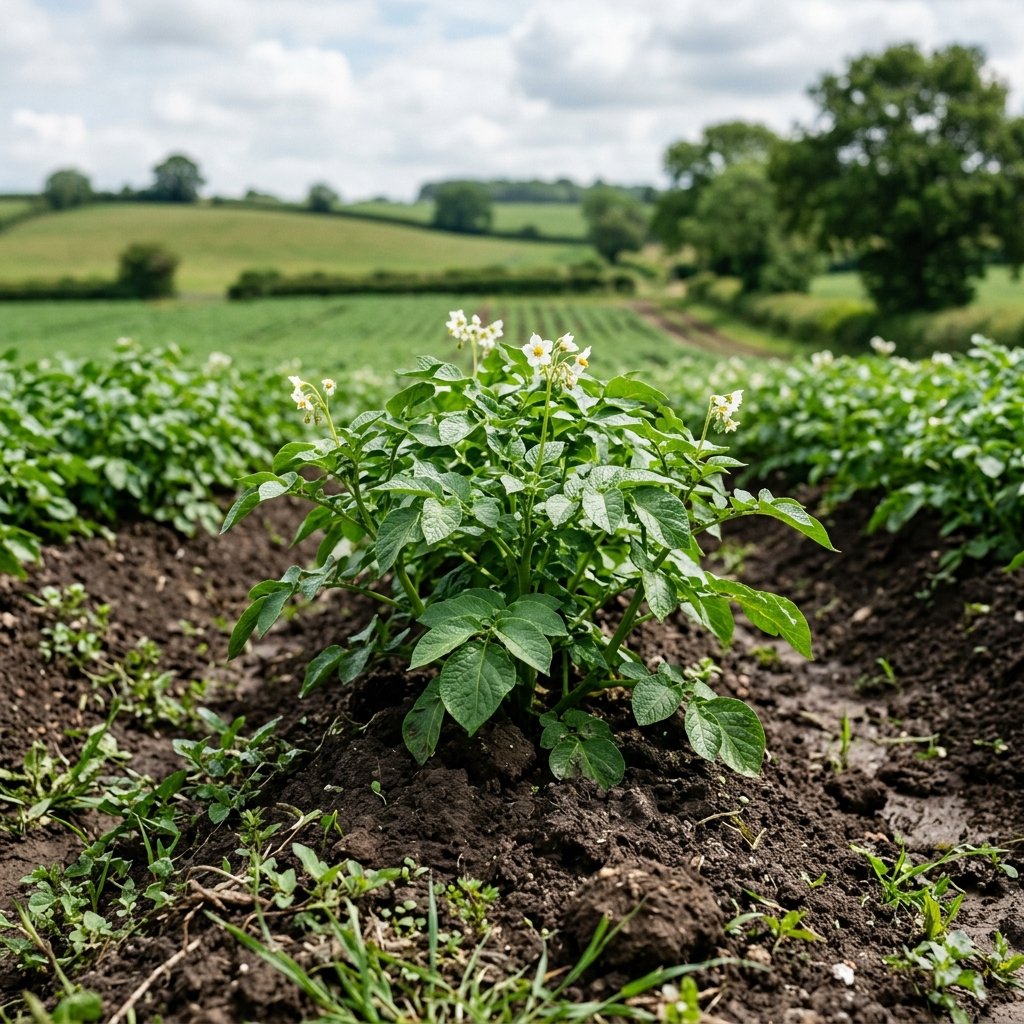
A staple food crop grown for its energy-rich underground tubers — swollen stems that store starch and can grow into whole new plants.
💡 Fun Facts
- The part we eat is the tuber — a swollen underground stem, not a root — packed with energy as starch.
- After its flowers, it can make small green berries like tiny tomatoes, but these are poisonous.
- Only the tuber is safe to eat: the leaves, stems and any green potatoes contain a natural poison.
📅 Through the Year
- Flowering:June to August
- Fruiting:August to October
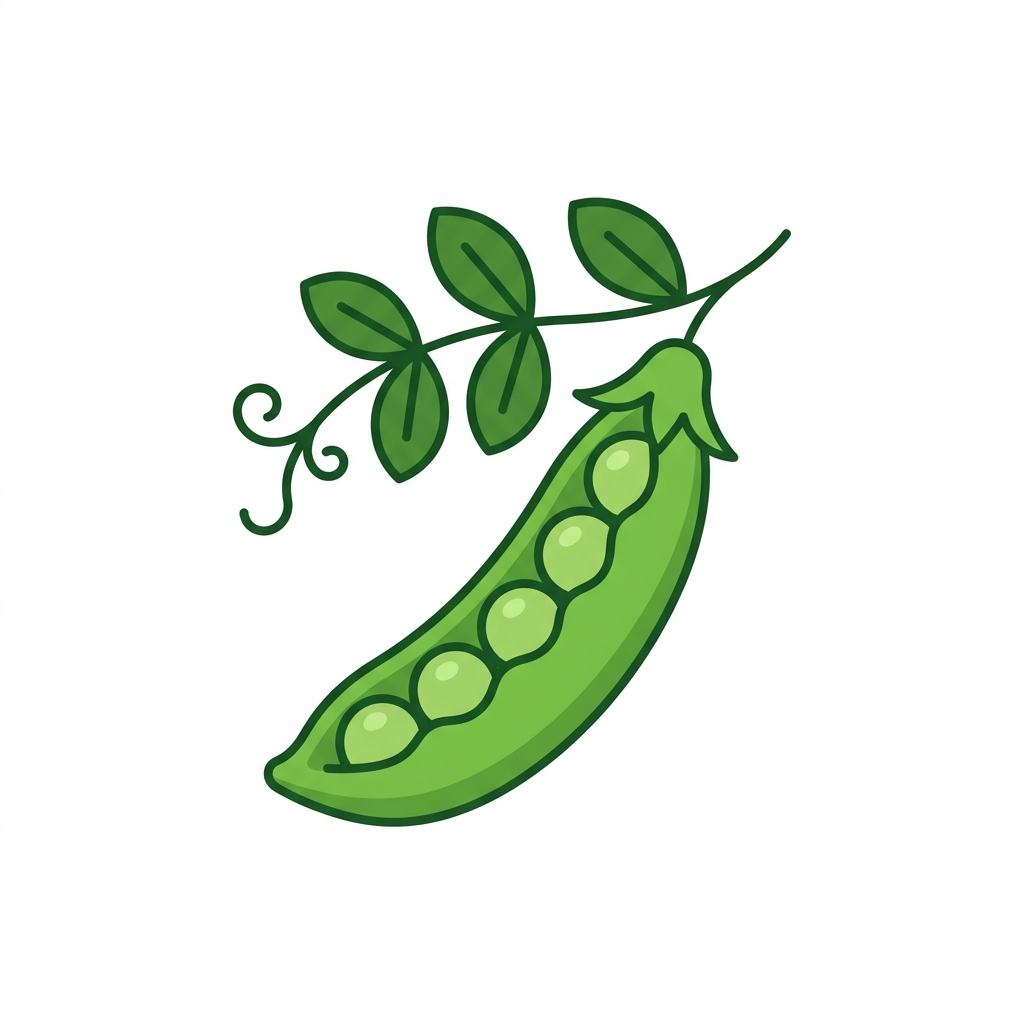
Pea
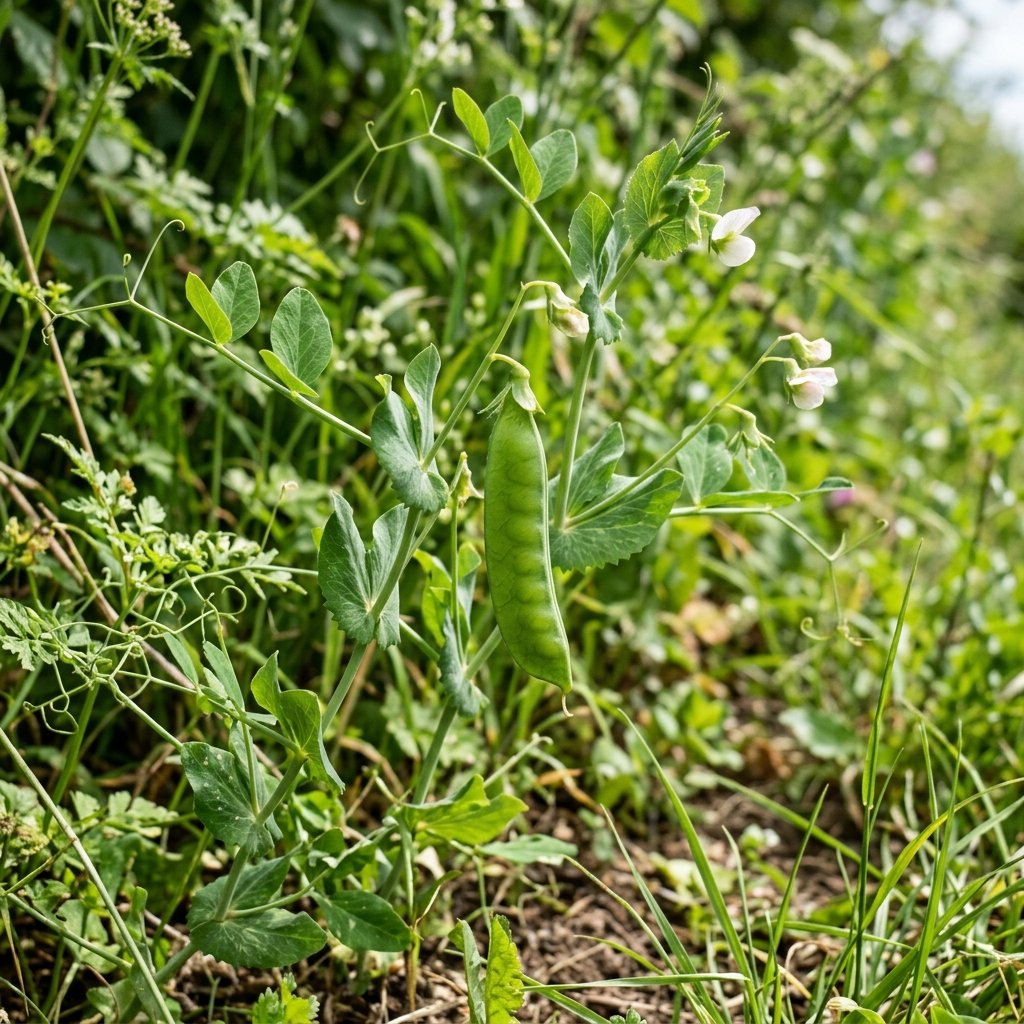
A climbing bean-family plant grown for its sweet seeds — famous as the plant Gregor Mendel used to discover the rules of inheritance.
💡 Fun Facts
- We grow peas for the sweet round seeds inside their pods, eaten fresh, frozen or dried.
- The plant climbs by sending out curly, coiling threads called tendrils that grip onto supports.
- A monk named Gregor Mendel grew thousands of pea plants and used them to discover the rules of inheritance — the start of genetics.
📅 Through the Year
- Flowering:May to July
- Fruiting:June to August
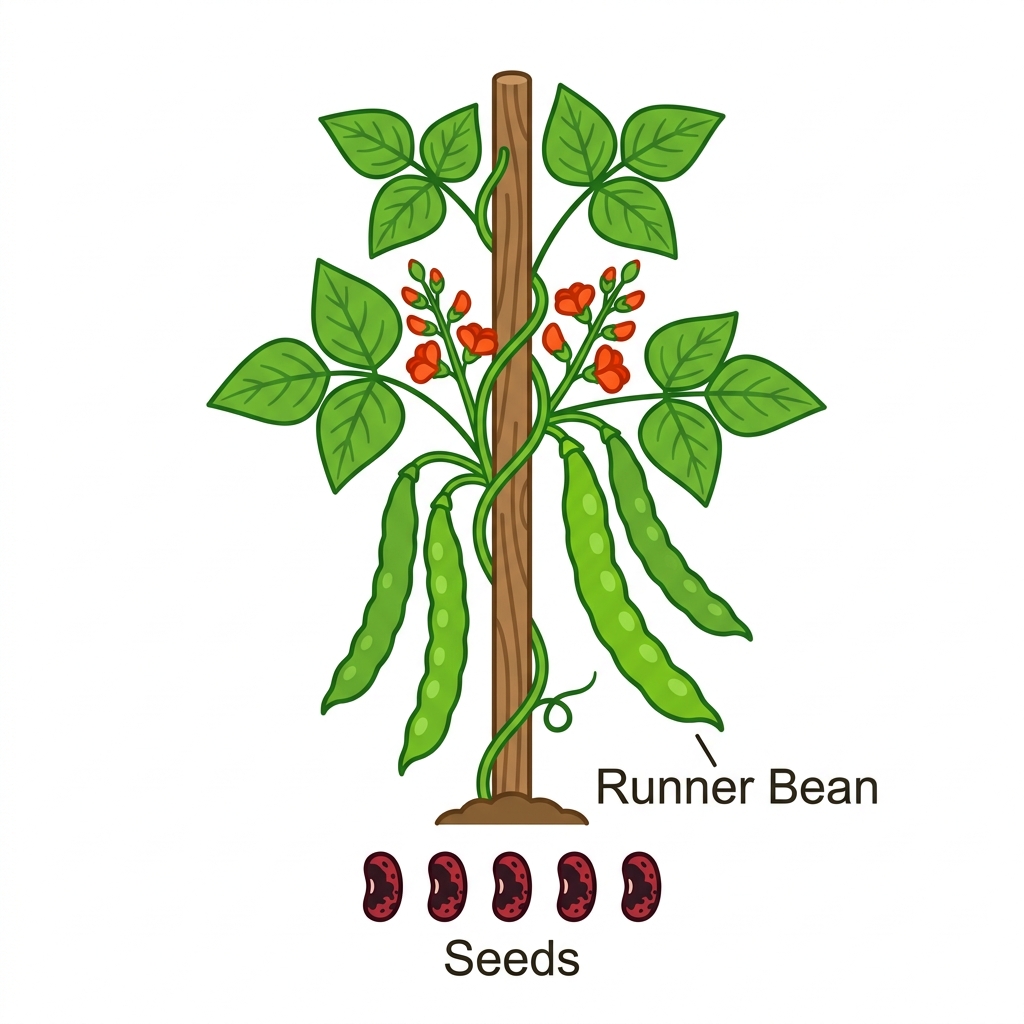
Runner Bean
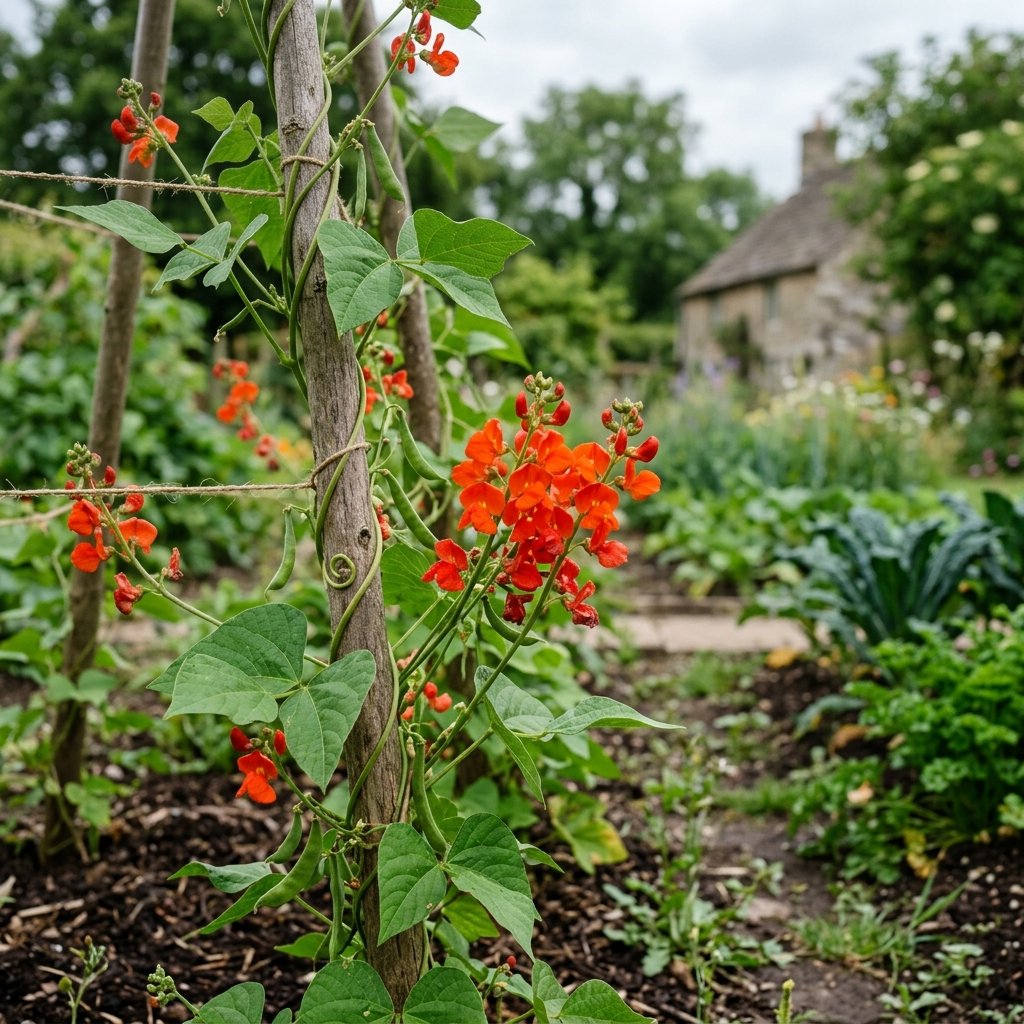
A tall climbing bean grown for its long green pods and bright scarlet, bee-friendly flowers — its stems always twining in one fixed direction.
💡 Fun Facts
- We grow runner beans up tall canes for their long green pods, which we eat cooked.
- Its bright scarlet flowers are grown for their beauty too, and bumblebees love them.
- The stems always twine round their support in the same direction — spiralling anticlockwise as they climb.
📅 Through the Year
- Flowering:July to September
- Fruiting:August to October
Carrot
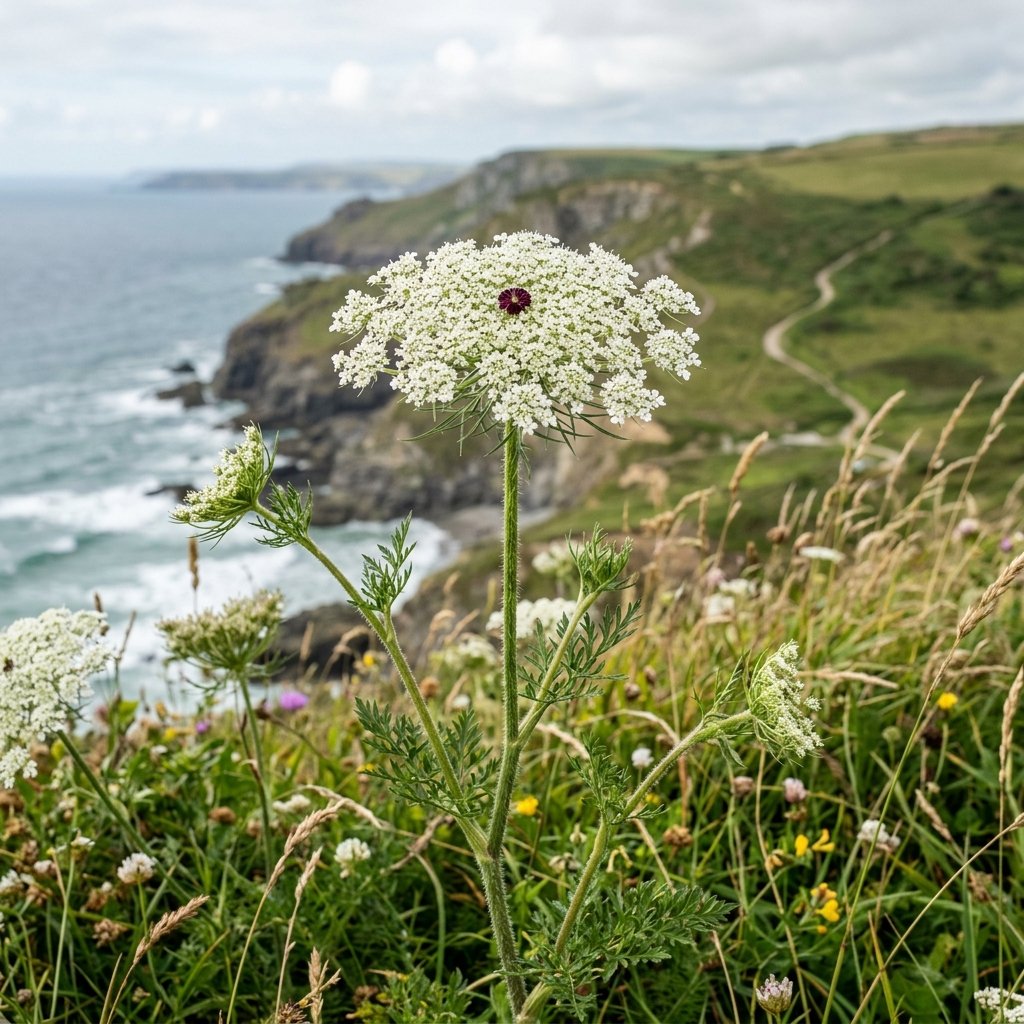
A plant grown for its sweet orange taproot — a store of food for winter — whose wild form is a common native British wildflower.
💡 Fun Facts
- We eat the carrot's swollen orange taproot, where the plant stores sugar for the winter.
- In its second year it sends up a tall, flat-topped cluster of tiny white flowers.
- Wild carrot grows all over Britain; the orange one we eat was bred later — the first carrots were purple, white and yellow.
📅 Through the Year
- Flowering:June to August
- Fruiting:August to September
Tomato
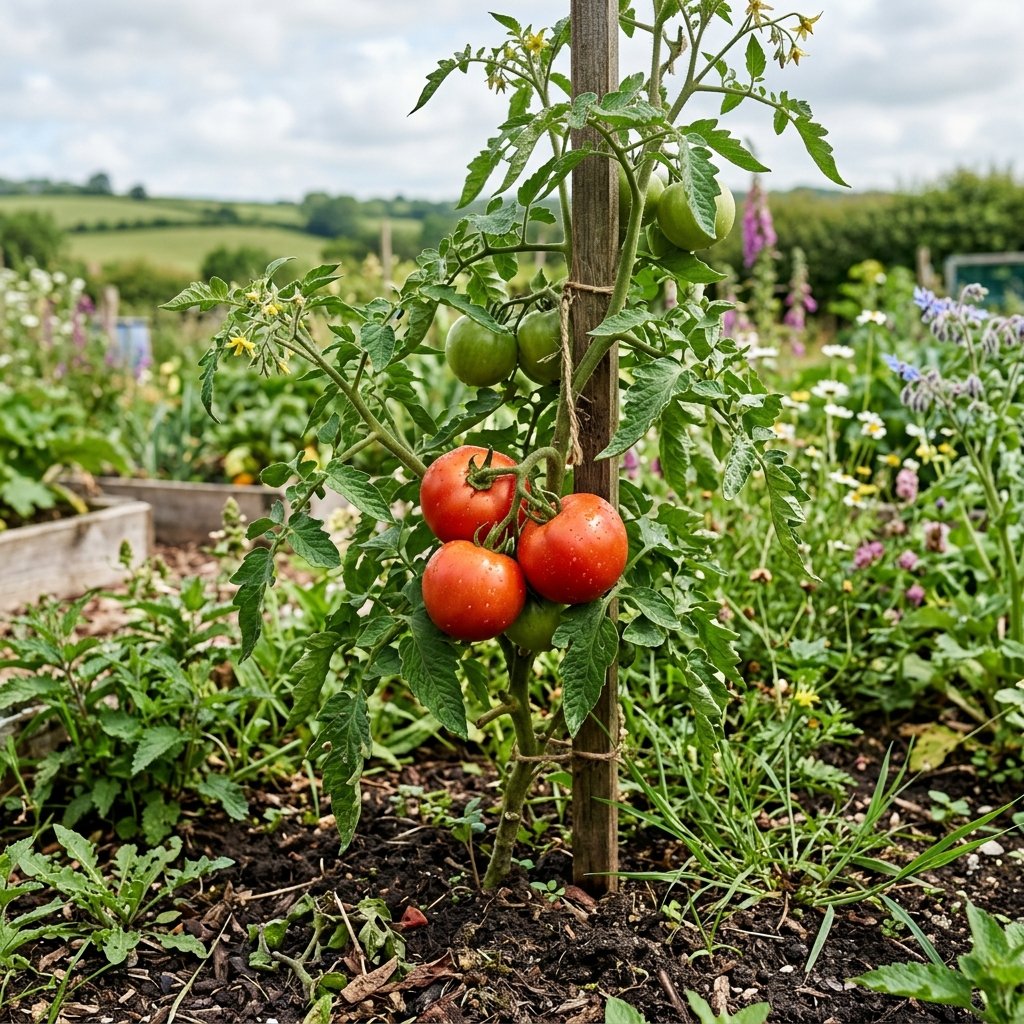
A warmth-loving fruit crop — botanically a berry — whose flowers need a bumblebee's buzz to shake their pollen free.
💡 Fun Facts
- A tomato is really a fruit — a berry — even though we treat it as a vegetable.
- Its flowers need a special trick called buzz-pollination: a bumblebee grips the flower and vibrates to shake the pollen loose.
- Only the ripe fruit is safe to eat; the leaves and stems smell strong and are mildly poisonous.
📅 Through the Year
- Flowering:June to August
- Fruiting:July to October
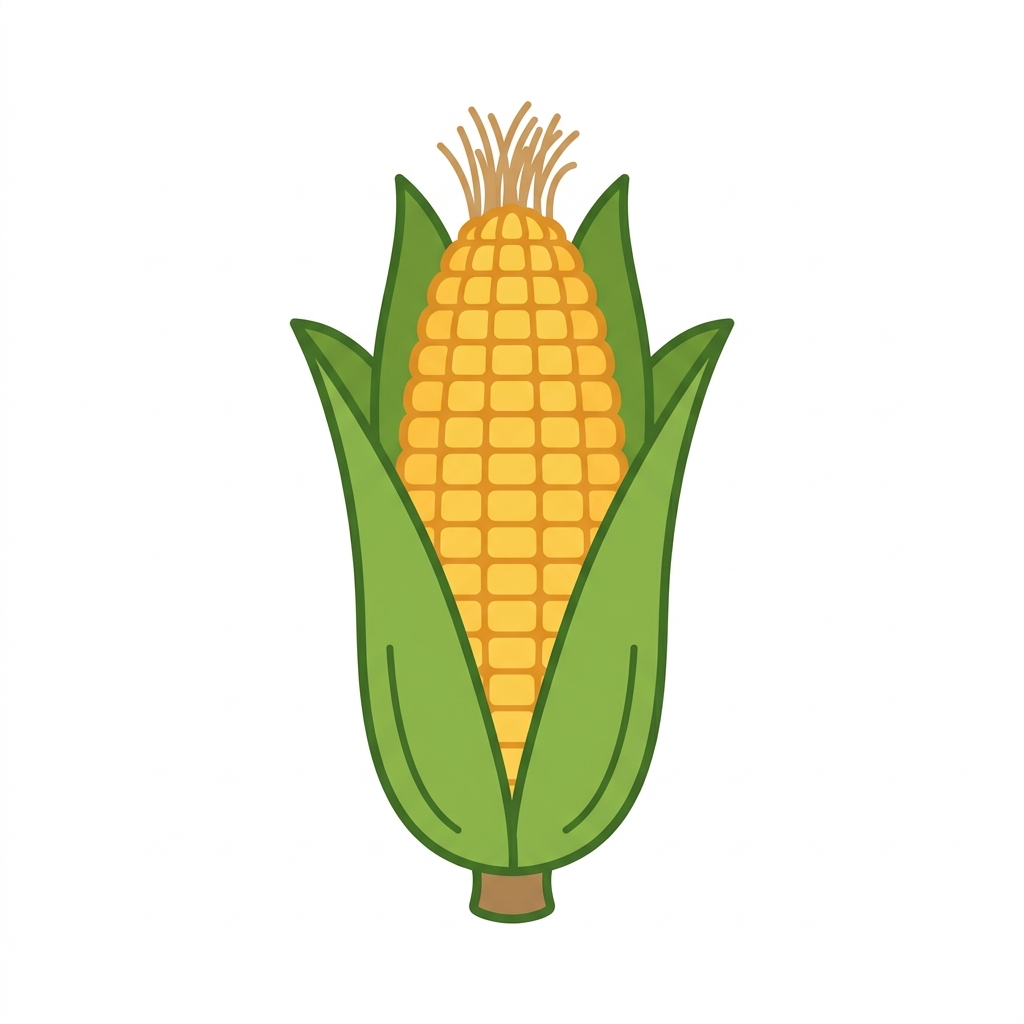
Sweetcorn
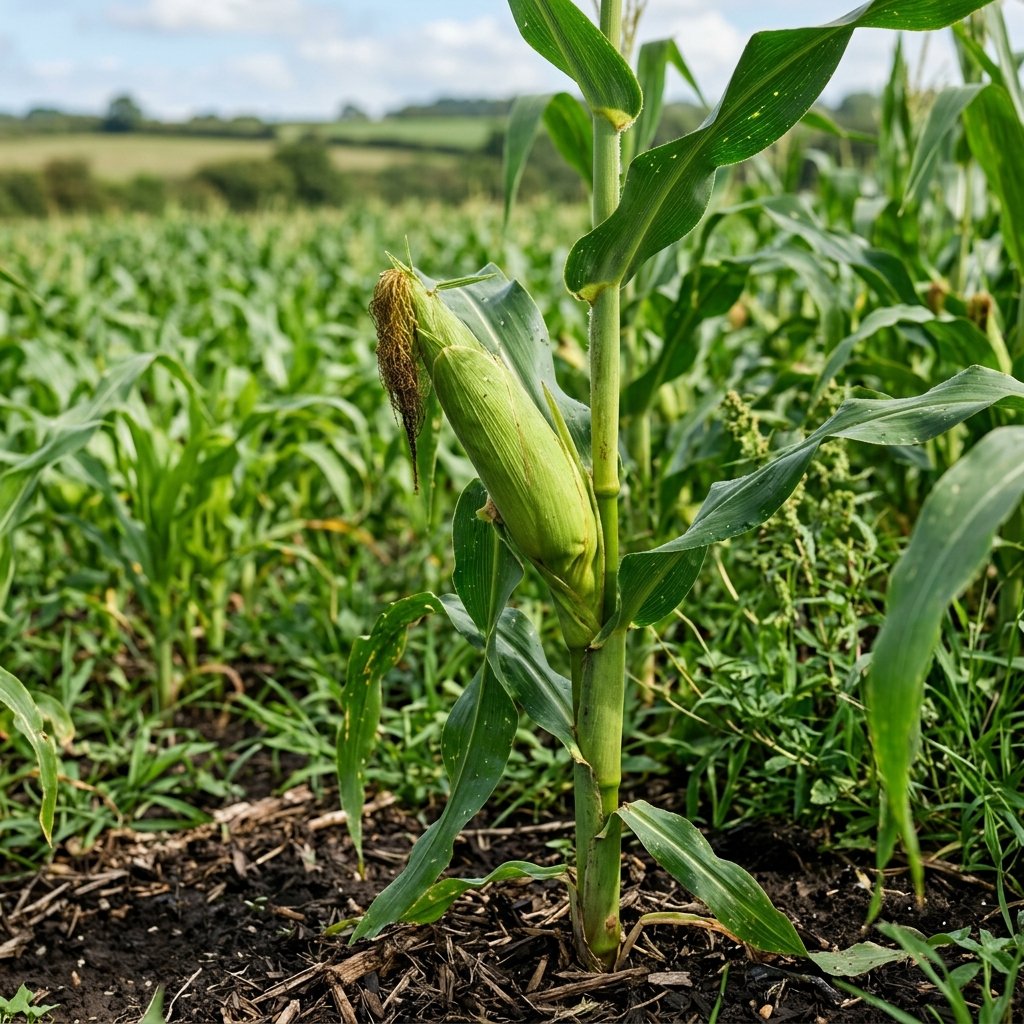
A giant grass grown for its sweet kernels — where each silky thread on a cob must catch wind-blown pollen to make a single grain.
💡 Fun Facts
- Sweetcorn is really a giant grass — a cousin of the lawn and of wheat.
- Each silky thread hanging from a cob leads to a single kernel, which only forms if that thread catches pollen.
- The pollen falls from feathery tassels at the very top of the plant and drifts down on the wind.
📅 Through the Year
- Flowering:July to August
- Fruiting:August to October
Ferns and Horsetails — Plants Without Flowers
Not every plant makes flowers. Ferns and horsetails are ancient plants that grow from spores instead, and they have been on Earth far longer than flowering plants.
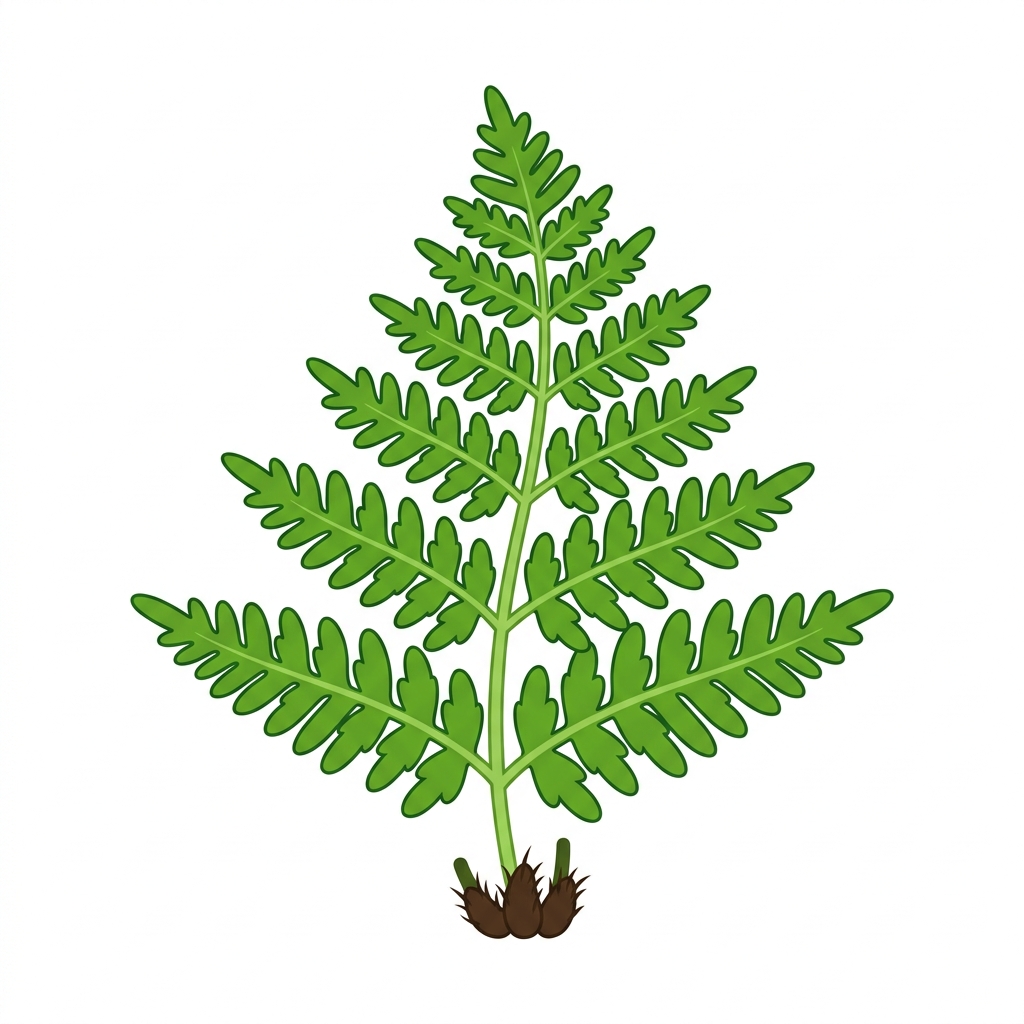
Bracken
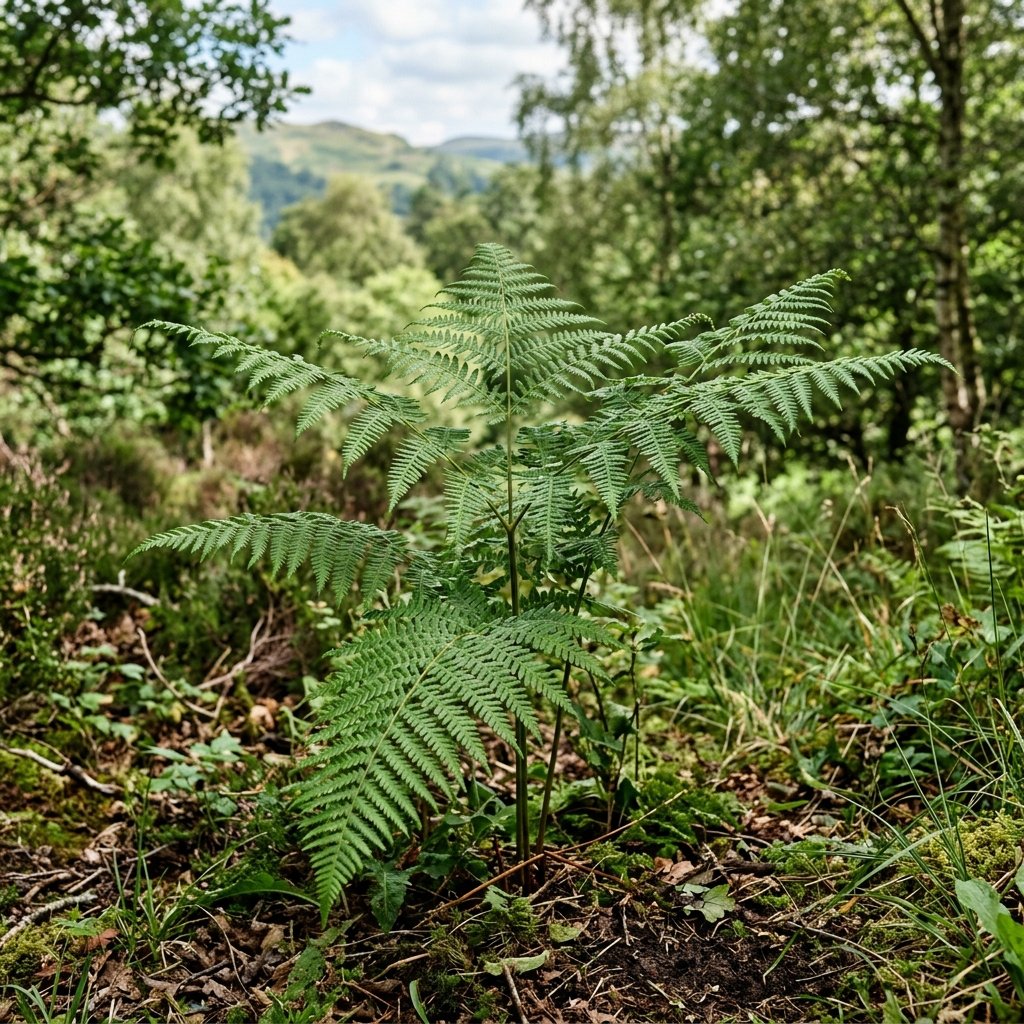
The big, feathery fern that carpets heaths and hillsides — tough, poisonous to grazers, and spreading underground right across the countryside.
💡 Fun Facts
- Bracken doesn't grow from flowers or seeds — it scatters millions of tiny, dust-like spores from the underside of its big feathery fronds.
- Almost nothing eats it: its leaves are full of natural poisons, so grazing animals leave it well alone.
- Hidden underground, its tough creeping stems can spread for years — so a single bracken plant may carpet a whole hillside.
📅 Through the Year
- Leaf-out:May
- Leaf fall:October to November
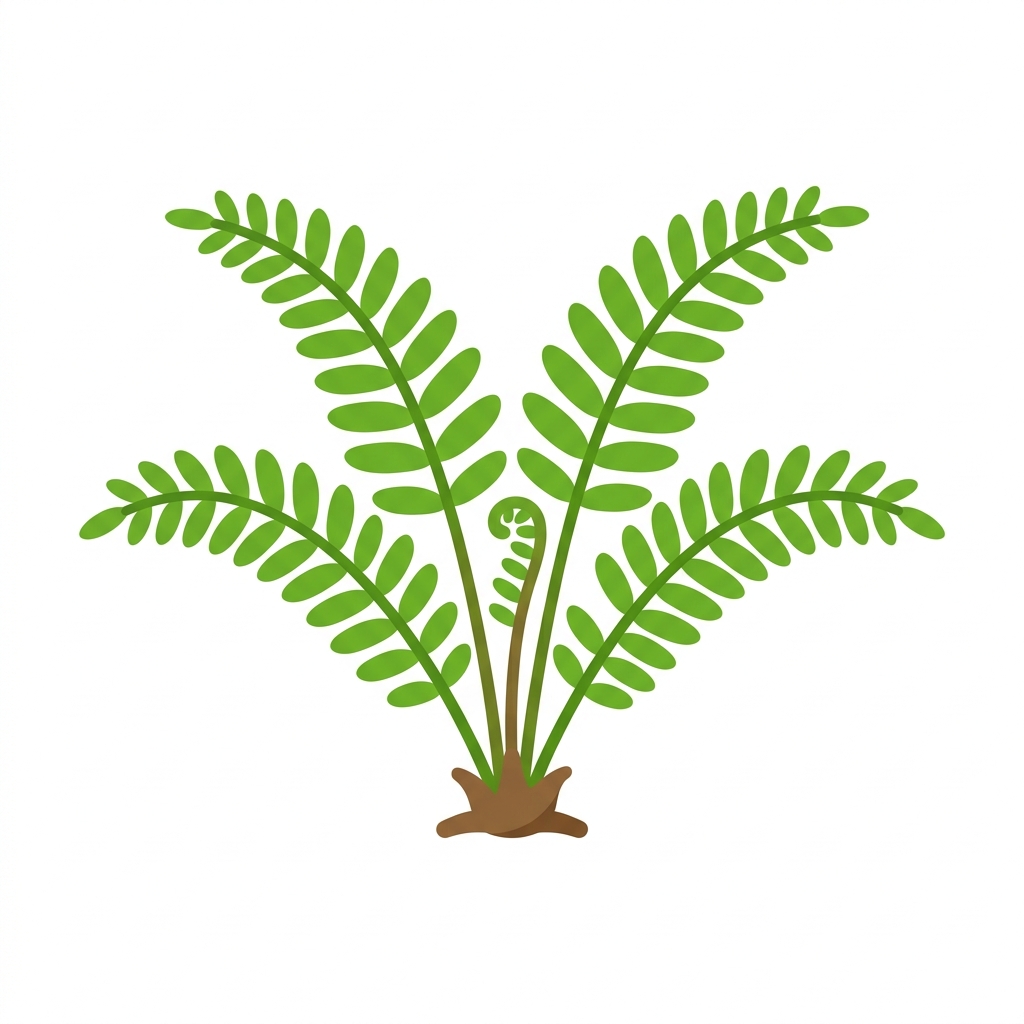
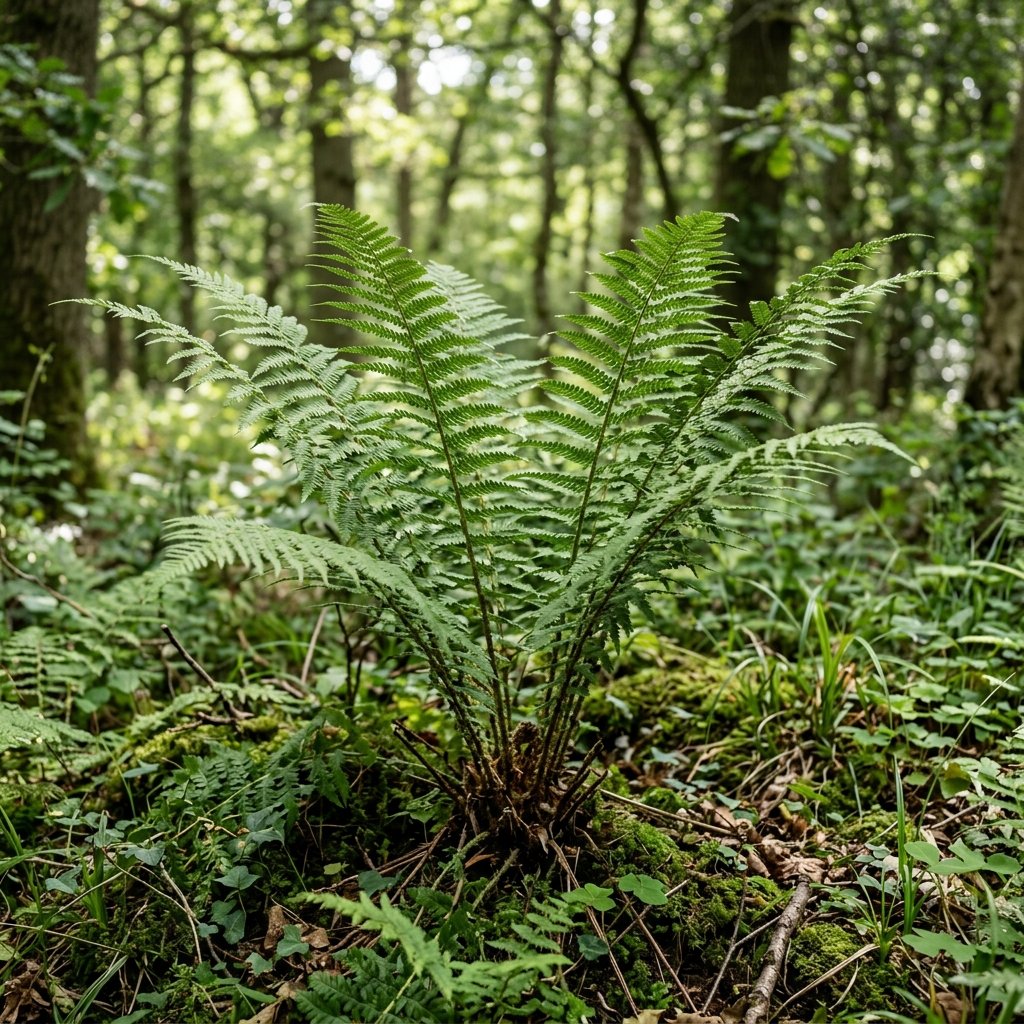
Male Fern
A big, hardy woodland fern whose fronds unfurl in a green shuttlecock each spring — one of Britain's commonest ferns.
💡 Fun Facts
- Its fronds grow in a neat circle, like a green shuttlecock, unfurling each spring from tightly coiled tips called fiddleheads.
- Like all ferns it makes no flowers or seeds — instead it releases millions of spores from rusty-brown dots on the back of its leaves.
- Its underground stem was once used as a medicine to get rid of tapeworms, but it is poisonous, so it is no longer used.
📅 Through the Year
- Leaf-out:April to May
- Leaf fall:November to December
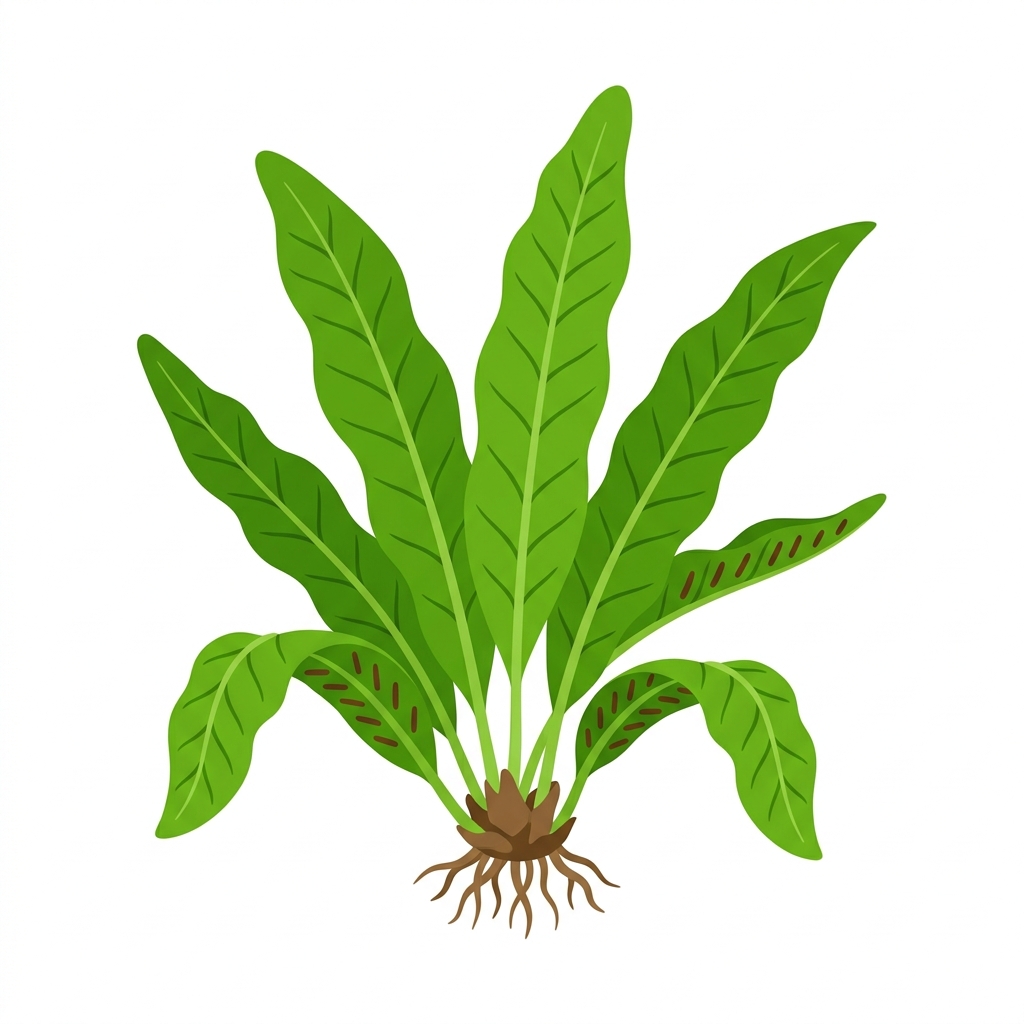
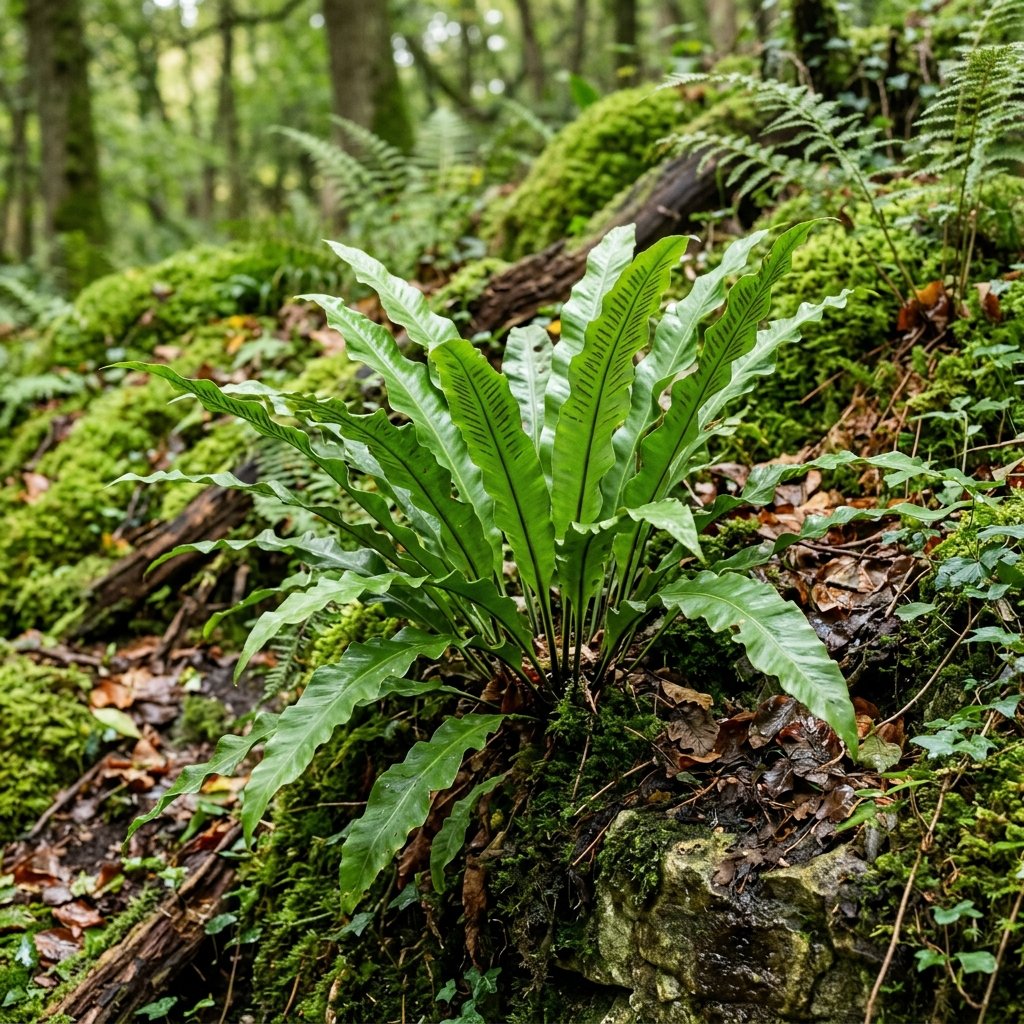
Hart's-tongue Fern
The evergreen fern with long, glossy, strap-like leaves — the only British fern whose fronds aren't feathery, often sprouting from shady walls.
💡 Fun Facts
- Unlike most ferns, its leaves aren't feathery at all — they are long, glossy, undivided straps, like green tongues.
- On the back of each frond, its spores line up in neat brown stripes arranged in a herringbone pattern.
- It stays green all year and loves damp, shady corners — you'll often find it growing straight out of old walls.
📅 Through the Year
- Leaf-out:April to June
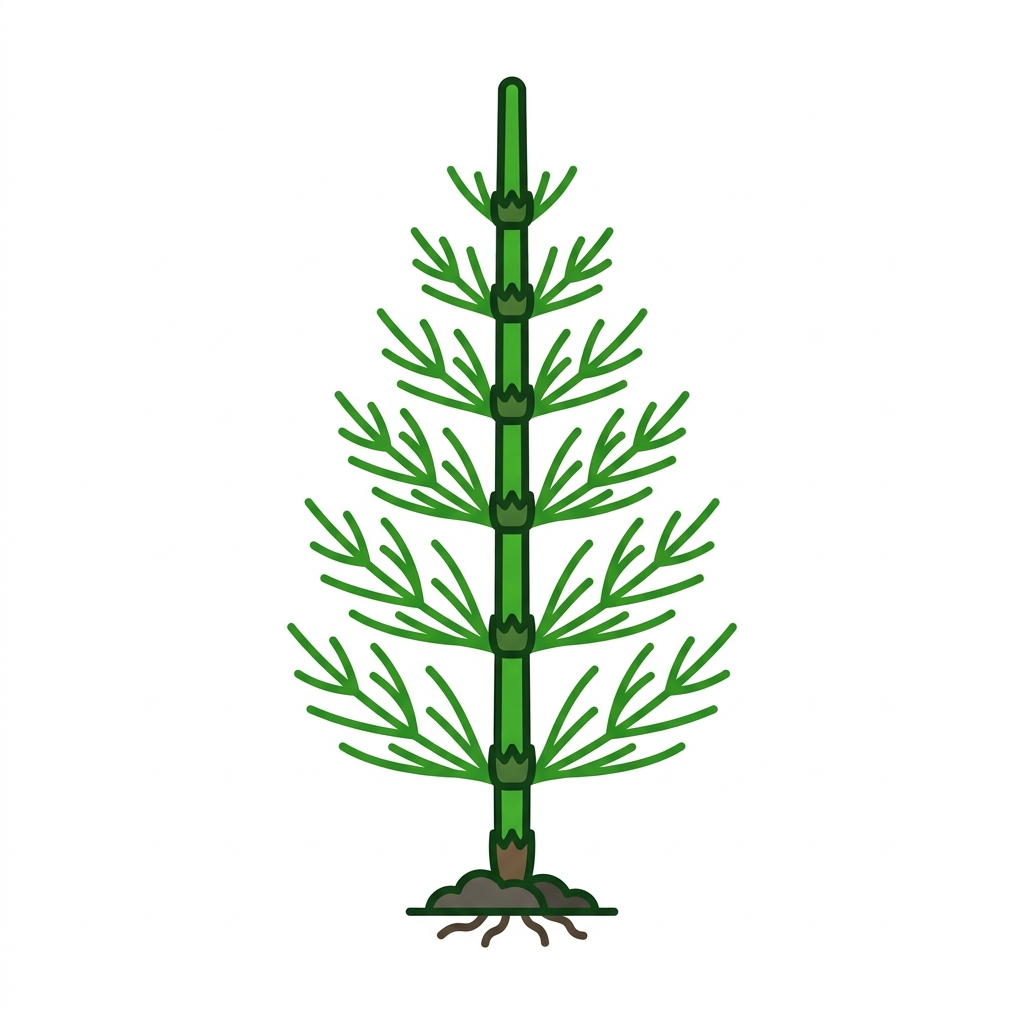
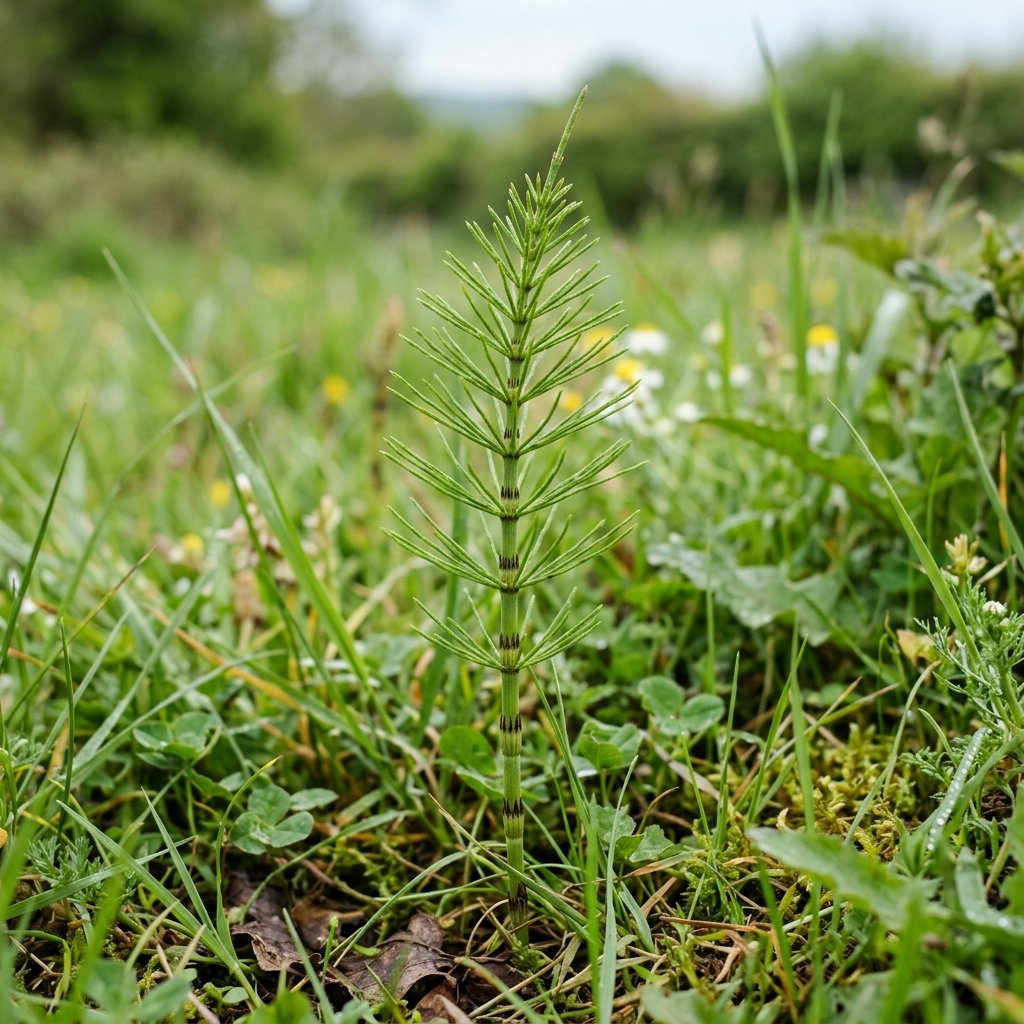
Field Horsetail
A living-fossil plant with feathery, bottlebrush stems stiffened by gritty silica — once used to scour pots, and almost impossible to dig out of a garden.
💡 Fun Facts
- Horsetails are living fossils — their ancestors grew as tall as trees over 300 million years ago, long before the dinosaurs.
- It makes no flowers or seeds: pale, cone-tipped stems pop up first in spring to scatter spores, then feathery green shoots follow.
- Its stems are stiffened with gritty silica (like tiny grains of glass), so people once used it to scrub and polish metal.
📅 Through the Year
- Leaf-out:March to April
- Leaf fall:October to November
Back to: Science