Wildflower Meadow 🌼
An open, grassy habitat bursting with colourful flowers that relies on traditional farming or grazing to survive.
📄 Educational Handout Available
Download the printable infographic for this habitat.
Climate & Environment
Temperate, requiring plenty of spring and summer sunshine for the massive variety of flowers to bloom.
Key Plants
A huge variety of native flowers like ox-eye daisies, buttercups, yellow rattle, and red clover, mixed with fine grasses.
💡 Fun Facts
- A healthy meadow can be home to over 100 different types of flowers, attracting thousands of buzzing pollinators.
- Since the 1930s, the UK has lost 97% of its wildflower meadows, making them one of our most threatened and precious habitats.
Key Creatures
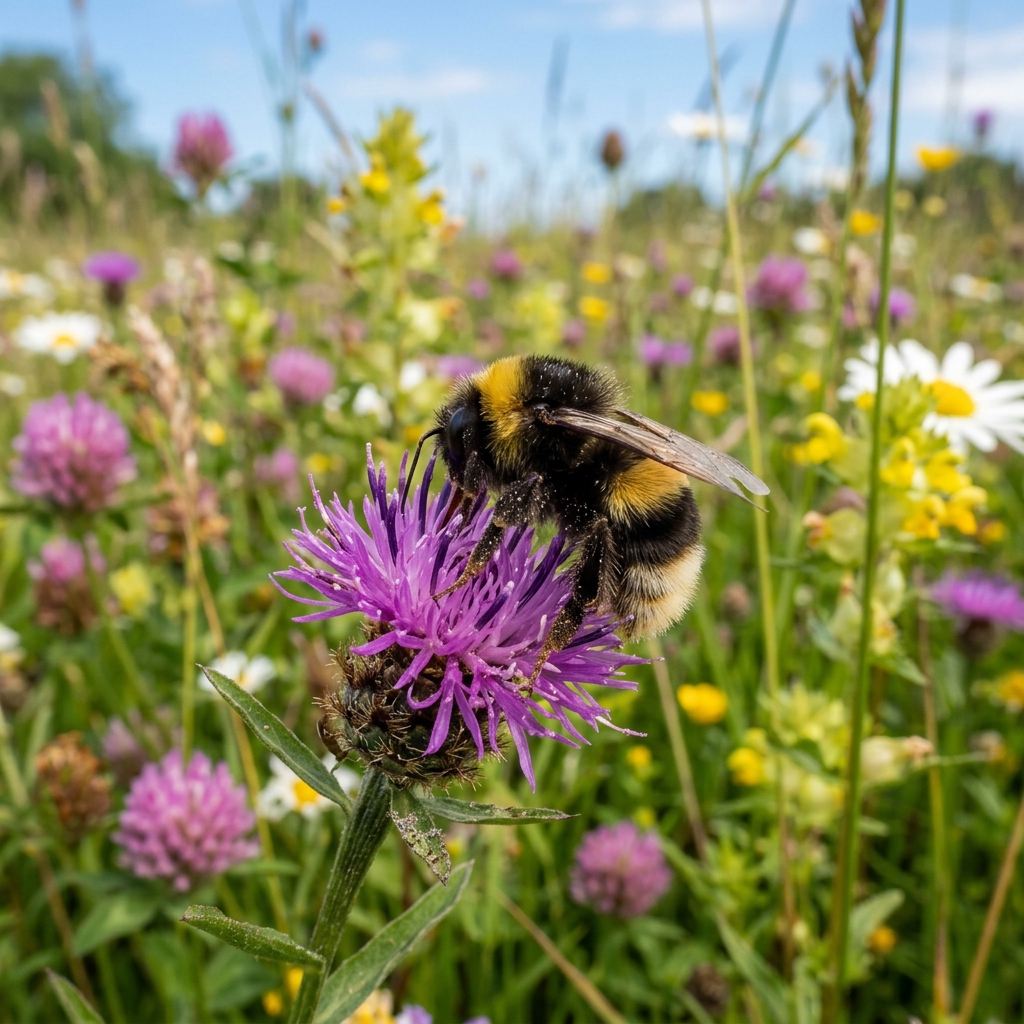
Buff-tailed Bumblebee
How it survives here:
Covered in thick hair to stay warm while flying from flower to flower, collecting nectar and accidentally pollinating the plants.
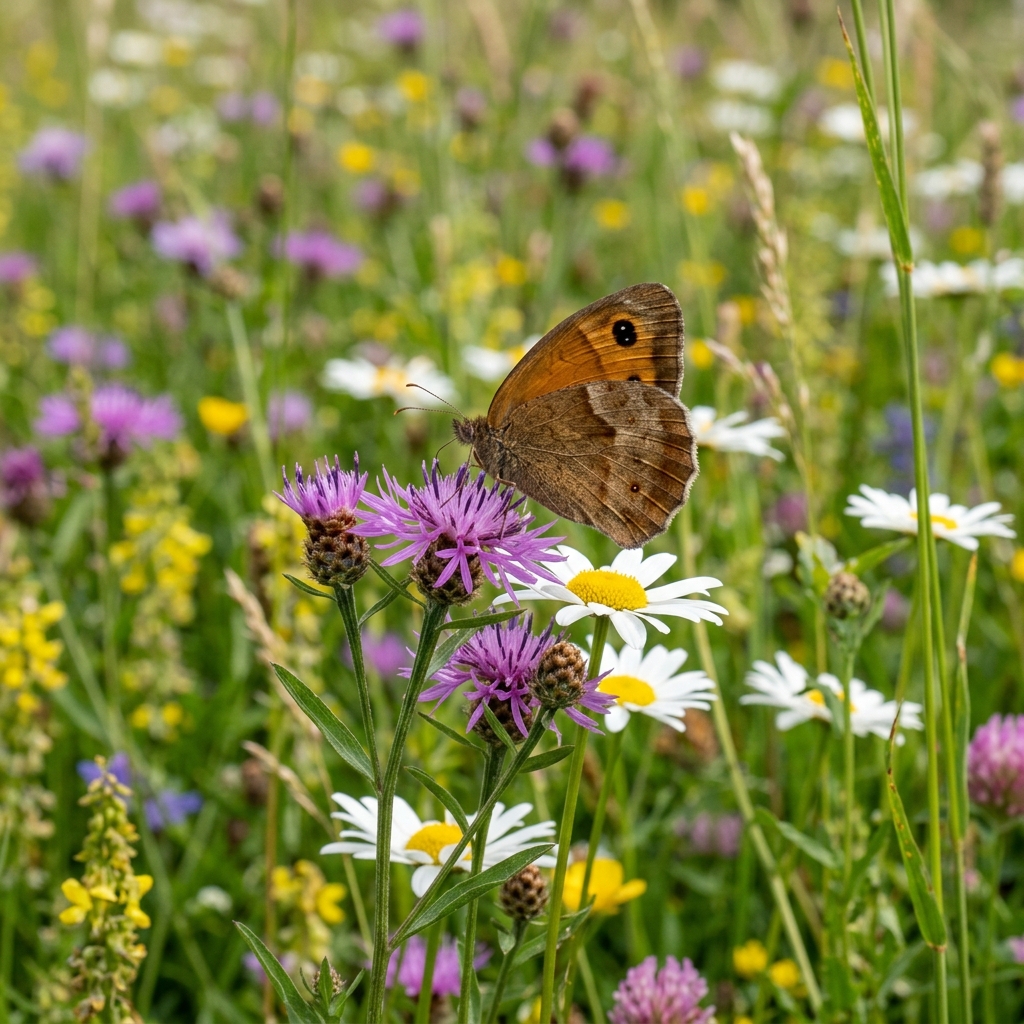
Meadow Brown Butterfly
How it survives here:
The caterpillars feed exclusively on the fine meadow grasses, perfectly camouflaged in the green stems.
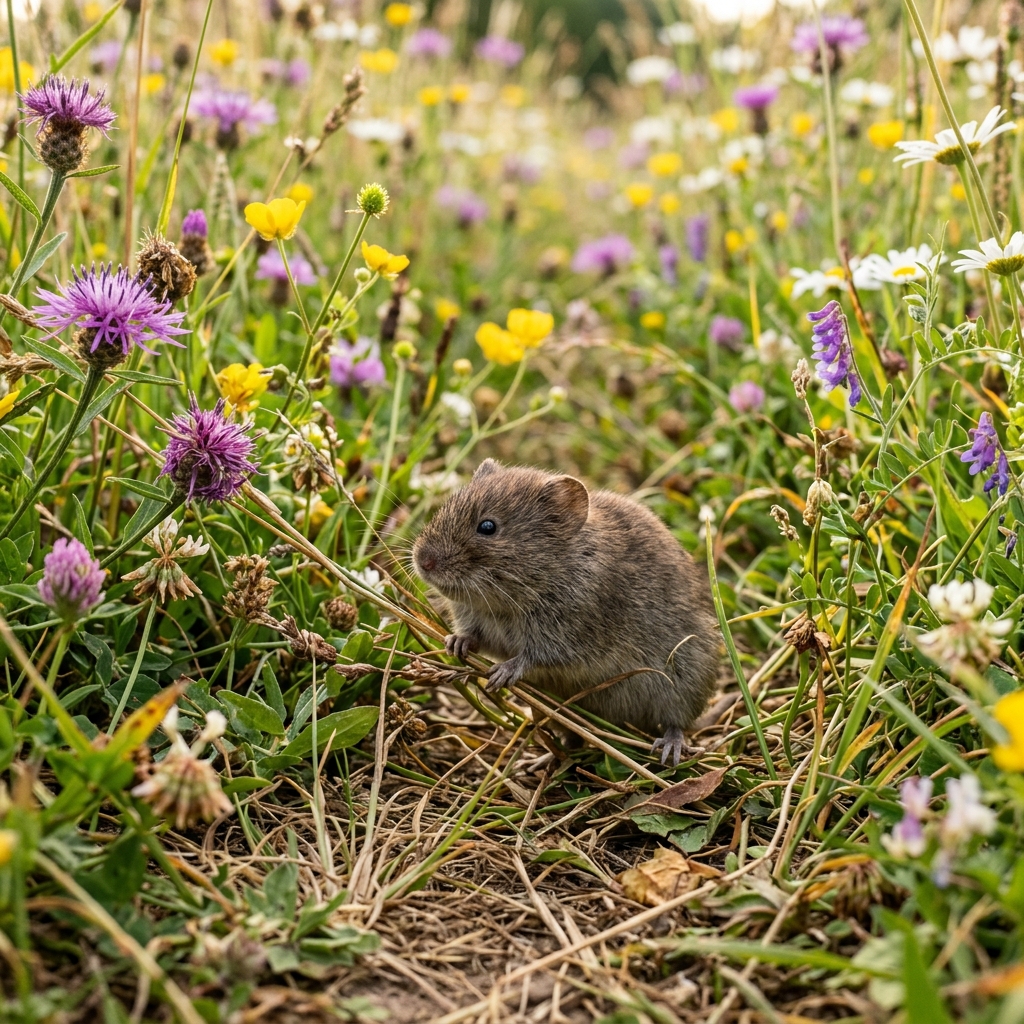
Field Vole
How it survives here:
Weaves intricate tunnel networks through the tall grass to safely hunt for seeds without being spotted by birds of prey above.
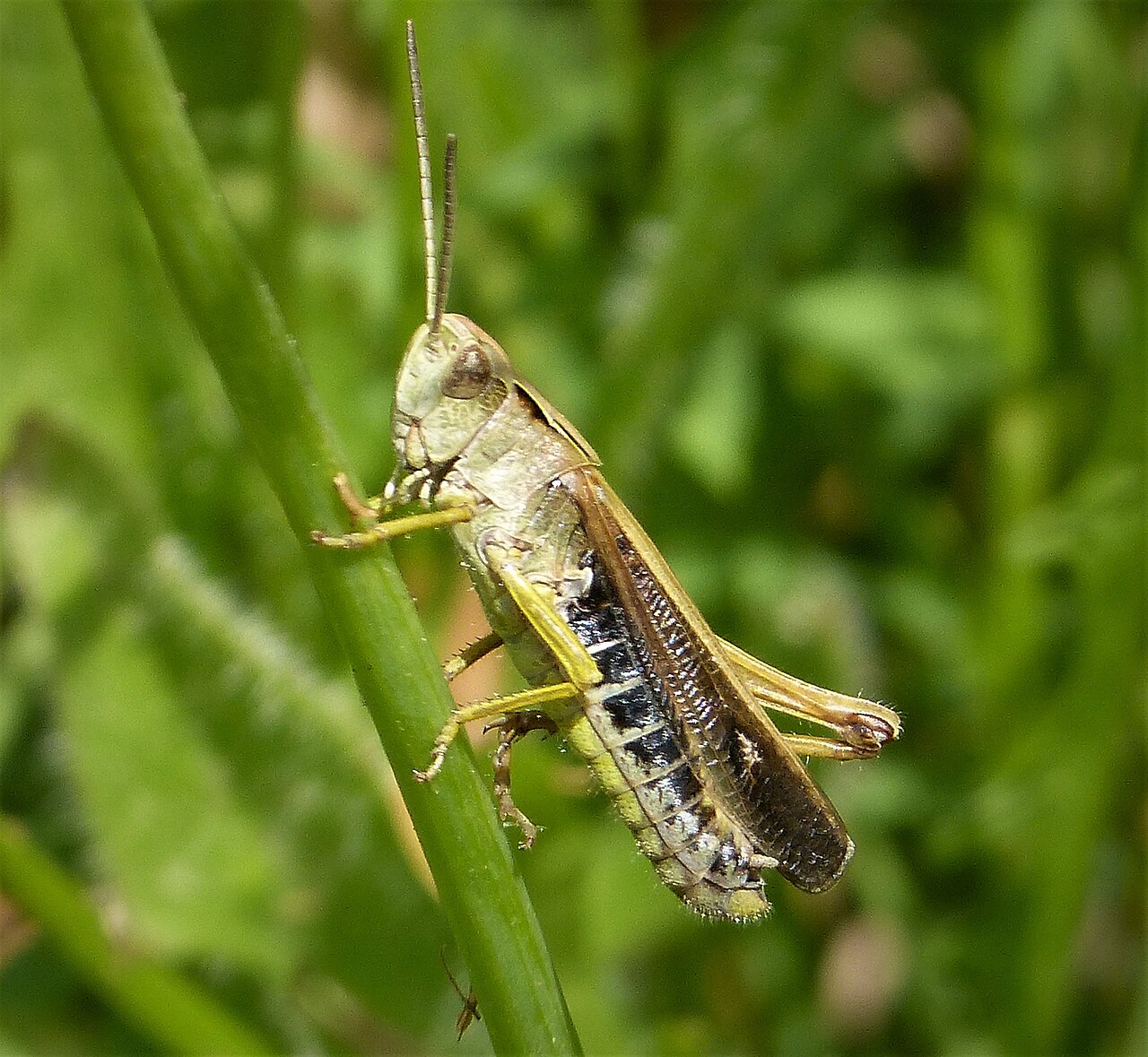
Grasshopper
How it survives here:
Has powerful back legs to leap huge distances away from danger in the tall grass.
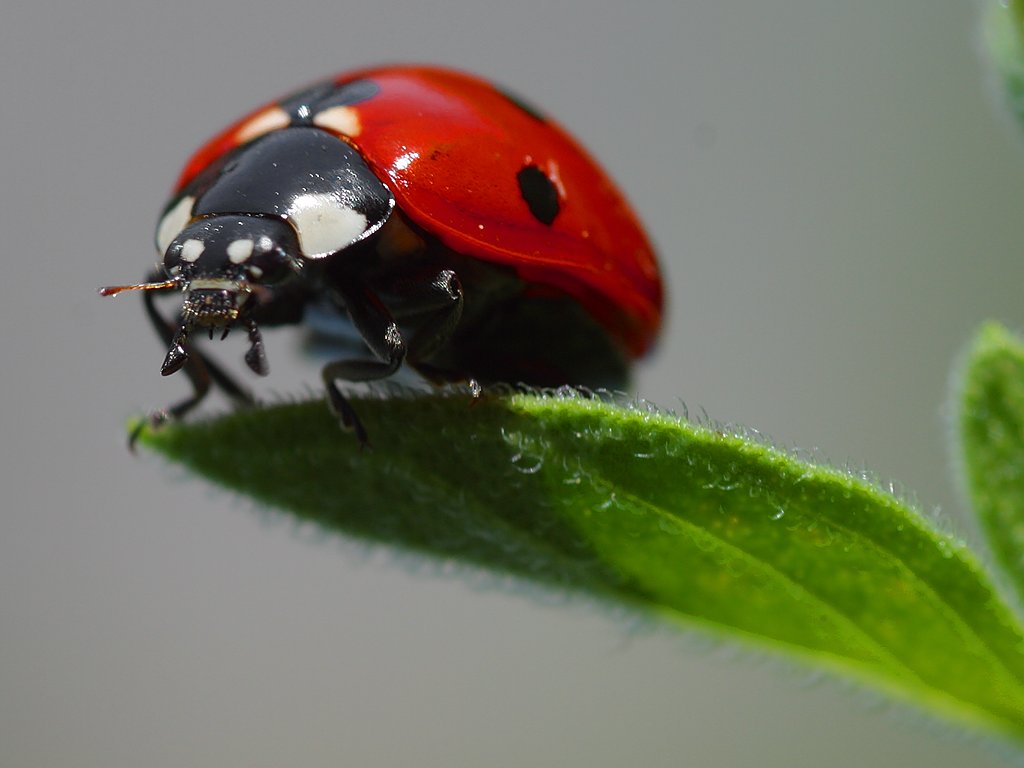
Ladybird
How it survives here:
Its bright red shell warns birds that it tastes terrible, keeping it safe while it hunts aphids.