
Brazilian Free-tailed Bat
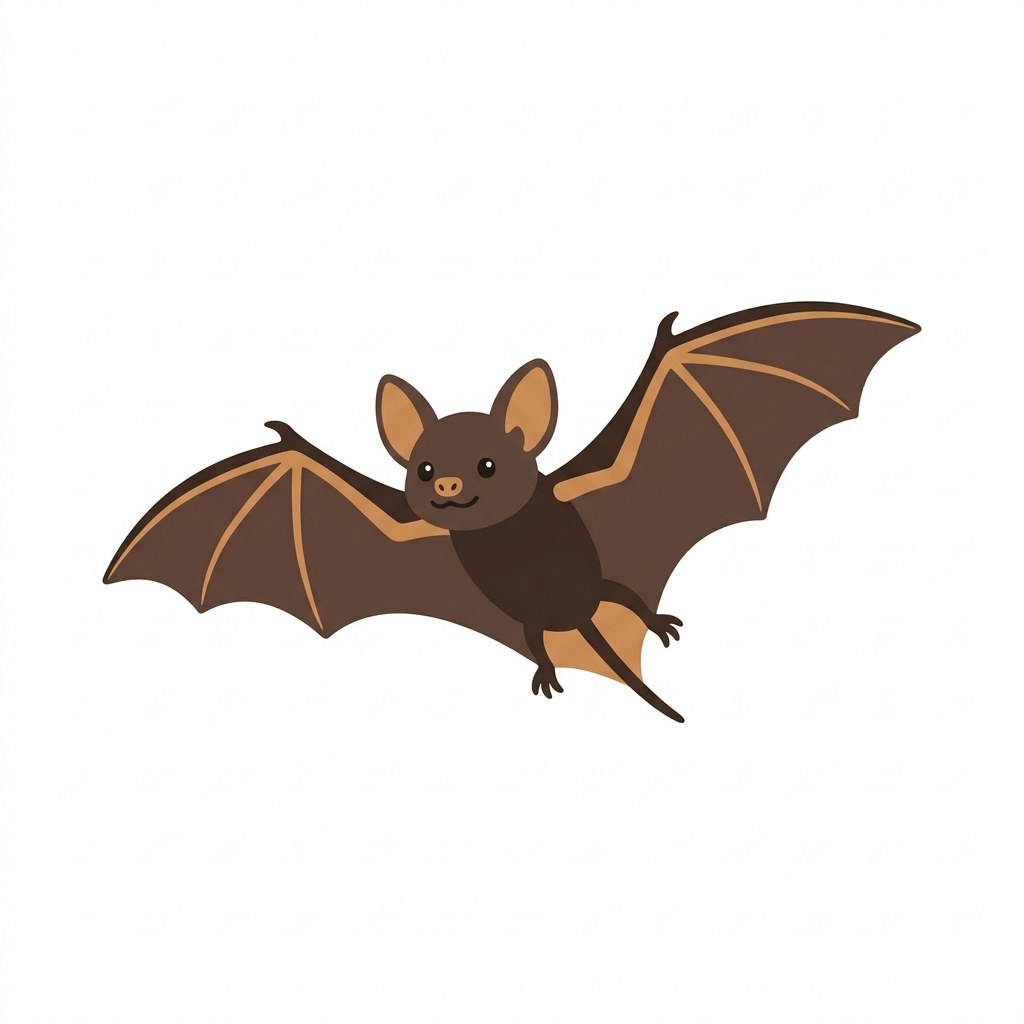
Brazilian Free-tailed Bat
Mammal
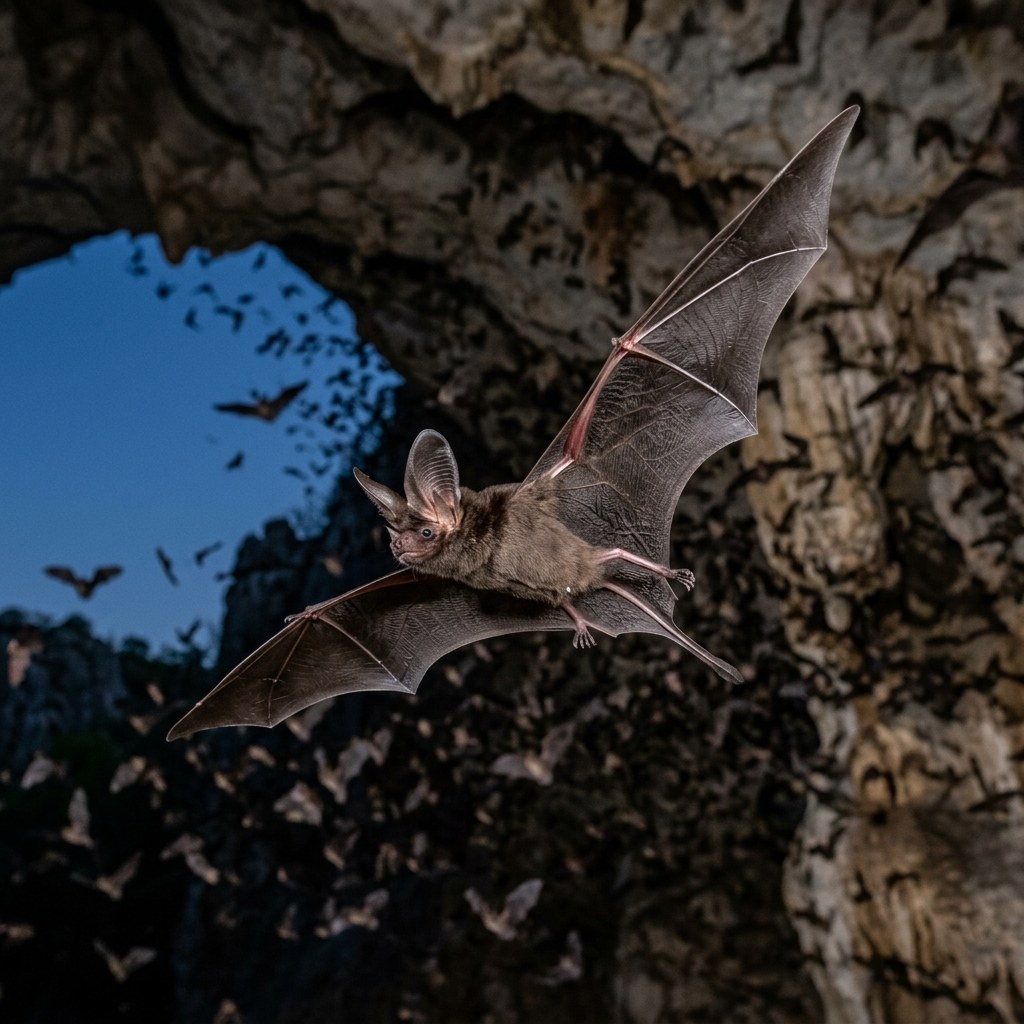
The Brazilian free-tailed bat holds the record for the fastest level flight of any animal, pouring out of caves at dusk in clouds of millions to hunt insects.
💡 Fun Facts
- The Brazilian free-tailed bat is the fastest animal in level, flat-out flight ever recorded — one was tracked zooming along at around 160 km/h (100 mph), with no wind to help it.
- It gathers in the biggest warm-blooded crowds on Earth: a single cave in Texas holds an estimated 15 to 20 million bats, which pour out at dusk in a living cloud so huge it shows up on weather radar.
- It hunts astonishingly high — up to about 3,000 m — snapping up clouds of migrating moths, which makes it a natural pest-controller worth a fortune to farmers.
- It can even jam the echolocation of rival bats with a special buzzing call, spoiling their aim so it can grab the insect first.
🔍 How to spot it
- Size
- Small — wingspan about 30 cm, about the weight of a £1 coin, but with unusually long, narrow wings.
- Markings
- Dark grey-brown to reddish fur, with broad, wrinkled lips and large rounded ears that nearly meet.
- Features
- Its tail sticks out well beyond the edge of its tail membrane — the 'free tail' that gives the family its name — and long, narrow, pointed wings built for speed.
- Behaviour
- Pours out of its roost at dusk in columns of millions, then flies fast, high and straight, climbing thousands of metres to feed.
- Where & when
- The warm Americas, from the southern USA to South America — not a UK bat; famous for its huge colonies in caves and under bridges in Texas.
- Easily confused with
- This is an American bat, so you won't meet it in Britain; among its American cousins, its size and wrinkly-lipped face set it apart.
Name Story
Tadarida brasiliensis
means “bat — the one from Brazil”
What does its name mean?
- Tadarida — batborrowed from an old Sicilian word for a bat (itself, far back, from Greek)
- brasiliensis — of BrazilLatin — the place where it was first described
A wonderfully plain name: the first word simply means ‘bat’, borrowed from an old Sicilian word, and the second means ‘of Brazil’, where scientists first described it. It actually lives right across the Americas — ‘Brazil’ just marks where it was first found.