
Cockchafer
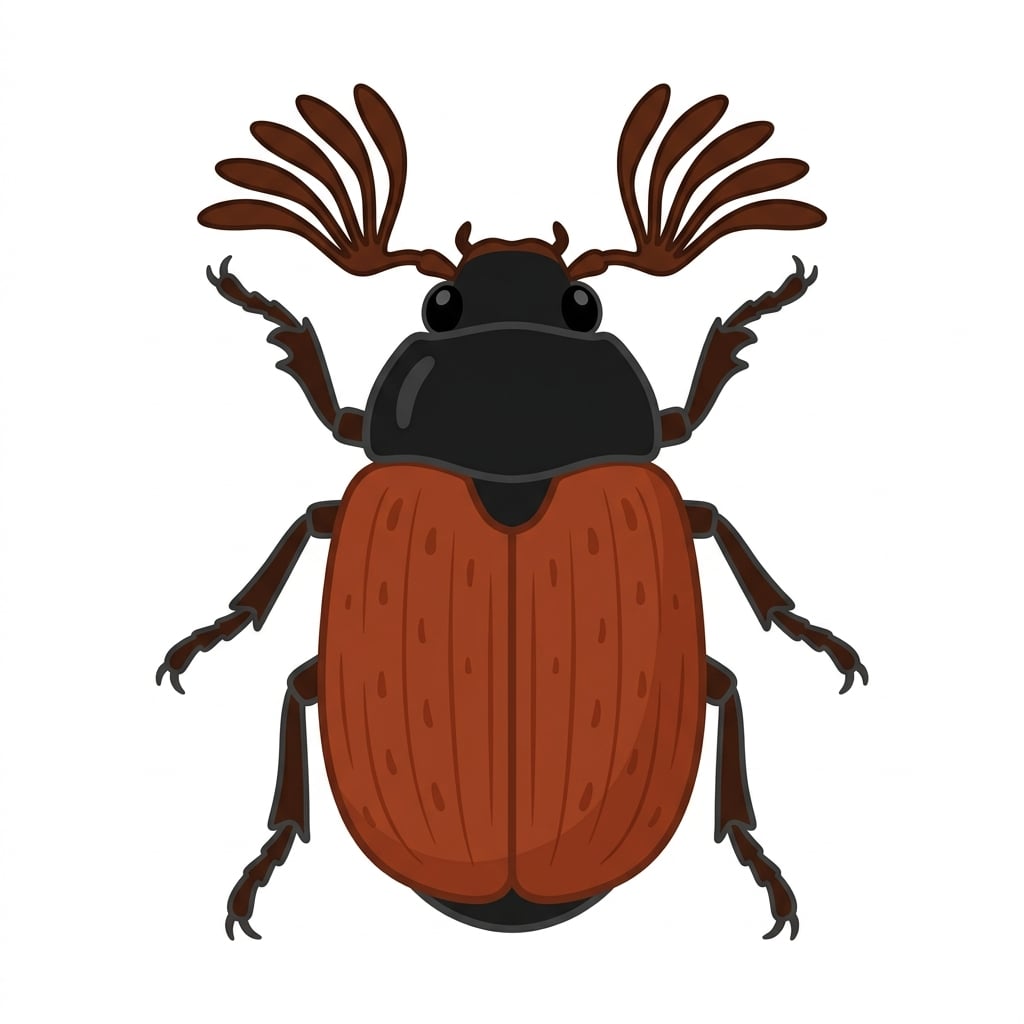
Cockchafer
Insect
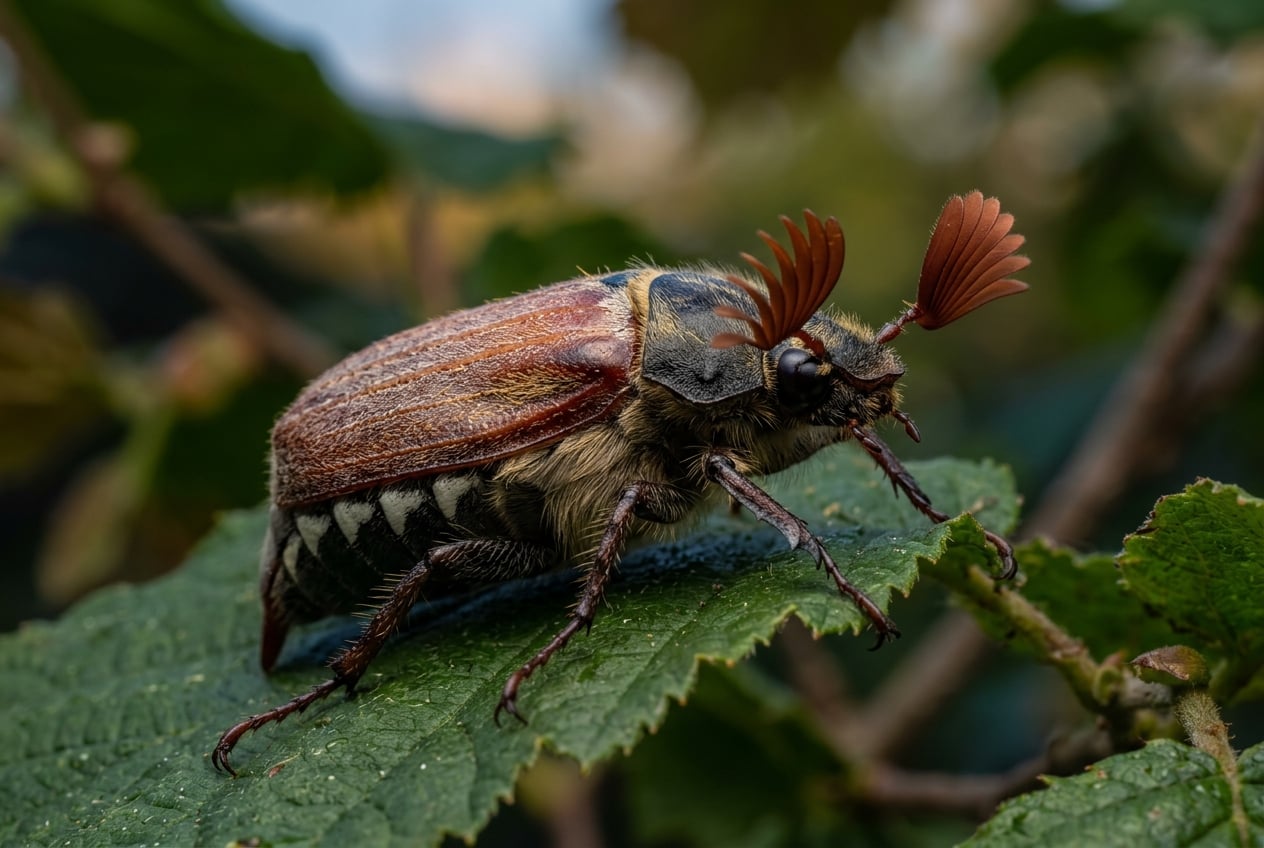
The cockchafer, or May bug, is a big, chunky, reddish-brown beetle that whirrs loudly around gardens on warm May evenings. It spends almost its whole life as a fat white grub underground, chewing roots for three or four years before finally taking to the air.
💡 Fun Facts
- The chubby white grub lives underground for three or four years, munching on roots in the dark — but the whirring beetle we see flying at dusk lives for only about five or six weeks.
- Its antennae open like tiny fans: a male spreads seven little leaf-shaped flaps to "smell" the evening air for a mate, and the more leaves it has, the better its sense of smell.
- Long ago there were so many cockchafers that people gathered them by the cartload — in France, whole tonnes were once collected in a single day!
🔍 How to spot it
- Size
- A big, chunky beetle about 2.5–3 cm long — one of the largest beetles you'll see flying in a British garden.
- Markings
- Reddish-brown wing-cases, a black head and thorax, and a distinctive pointed tail-tip (the 'pygidium'); black-and-white zig-zag triangles run along the sides of its body.
- Features
- Fan-shaped antennae that open into leaf-like plates, and strong, clinging legs.
- Behaviour
- Flies only at dusk on warm May evenings, with a loud whirring buzz, often clattering into lit windows.
- Where & when
- Near broadleaved trees over grassland — farmland, parks, gardens and woodland edges — across England and Wales, in May and June.
- Easily confused with
- The smaller summer chafer (Amphimallon solstitiale), which flies in June and July and has no long pointed tail-tip; and the metallic-green rose chafer, which flies by day.
Name Story
Melolontha melolontha
means “beetle beetle — an old Greek name, doubled”
What does its name mean?
- melolontha — the Ancient Greeks' own word for this very beetleAncient Greek
The Ancient Greeks had a special word for this big, bumbling beetle: melolontha. Scientists liked it so much they used it twice — so its name is really the same ancient word said two times, a word that is around 2,500 years old.