
Sidewinder Rattlesnake
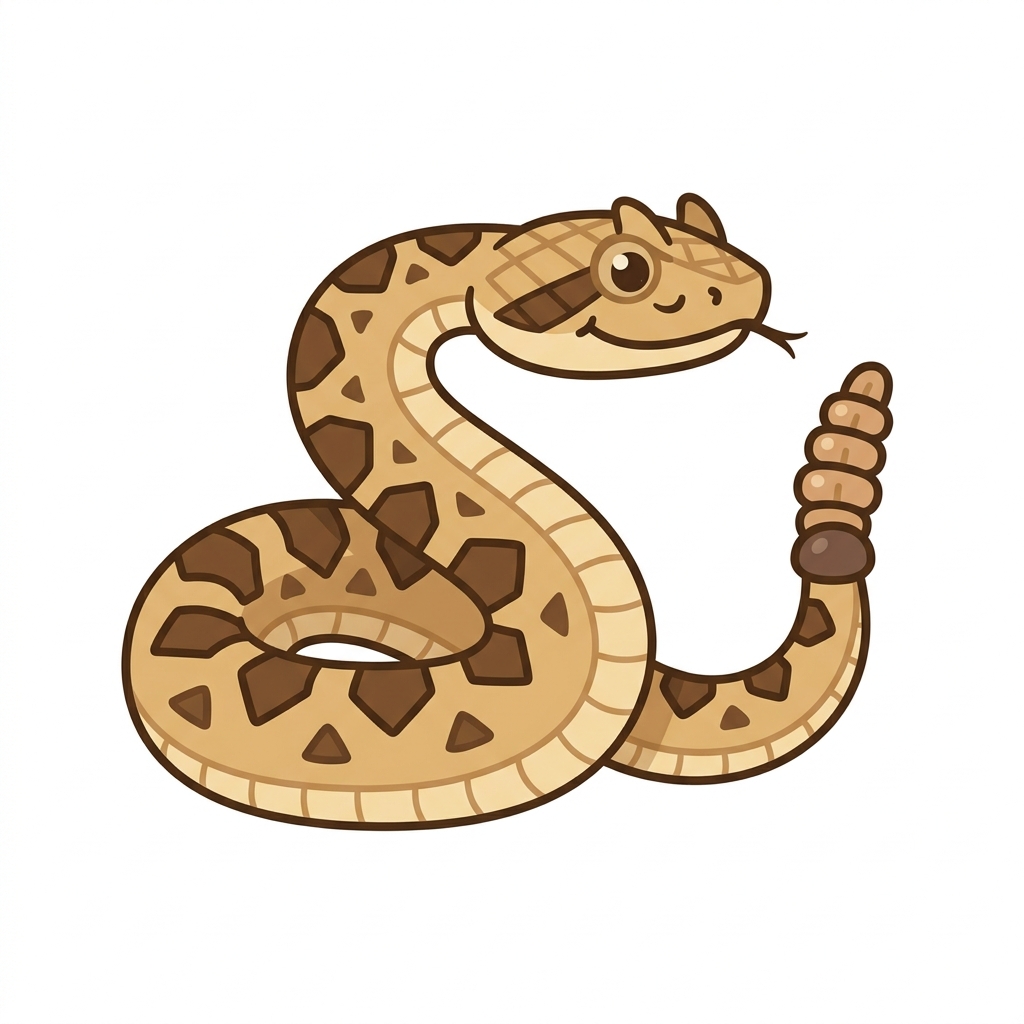
Sidewinder Rattlesnake
Reptile
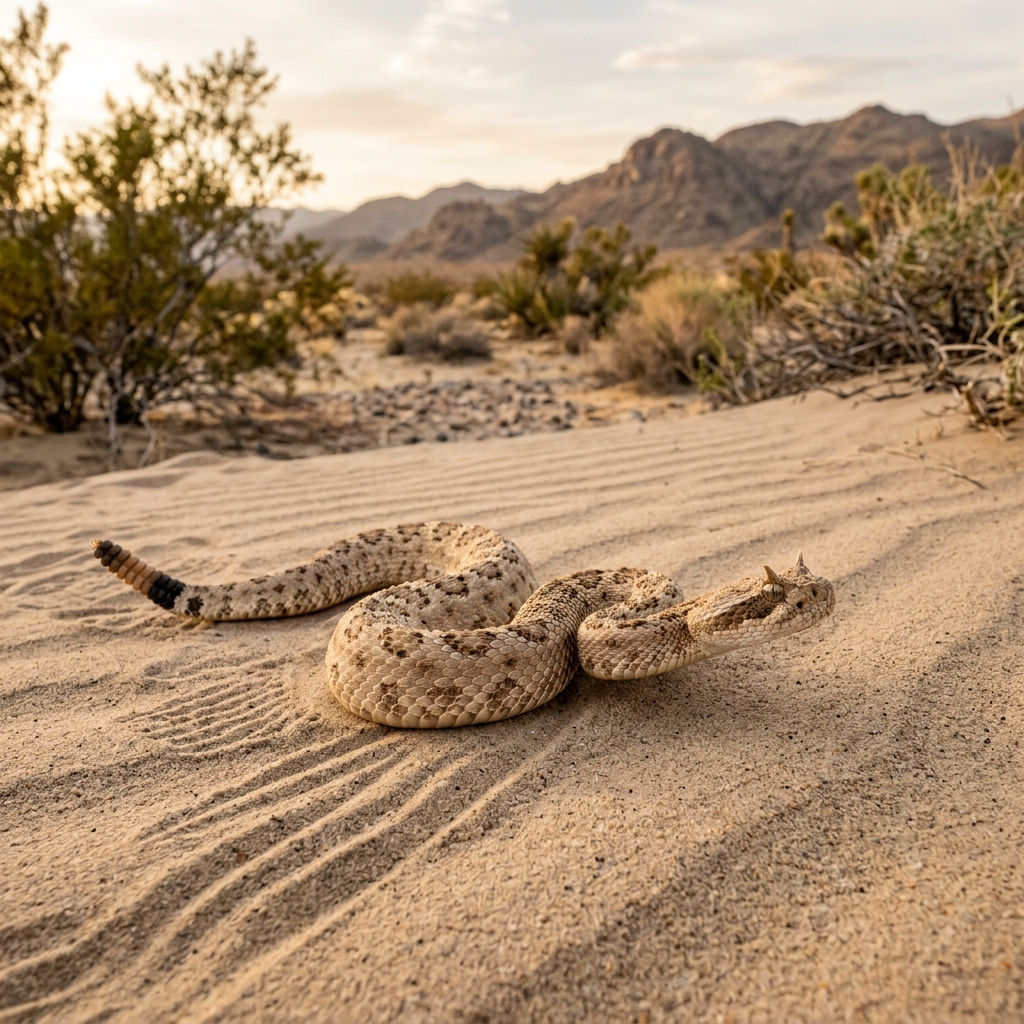
A desert snake that loops sideways so only two parts of its body touch the hot sand, burying itself to ambush prey beneath 'horns' that shade its eyes.
A venomous snake adapted to moving across loose desert sand.
💡 Fun Facts
- It moves sideways in a J-shaped pattern (sidewinding), so only two small parts of its body touch the hot sand at a time.
- They bury themselves in the sand with only their eyes and nostrils exposed to ambush prey.
- They have 'horns' over their eyes that act like sunshades and keep sand out.
Name Story
Crotalus cerastes
means “the horned rattle”
What does its name mean?
- Crotalus — a rattle or castanetGreek krotalon
- cerastes — hornedGreek keras 'horn', for the horn-like scales above its eyes
- sidewinder — for the way it loops sideways across the sandEnglish
Its name captures two features at once — the buzzing 'rattle' on its tail and the little 'horns' above its eyes. The English name adds a third: 'sidewinder', for the strange sideways-looping way it travels across loose desert sand.