
Wood Frog
Reading level:
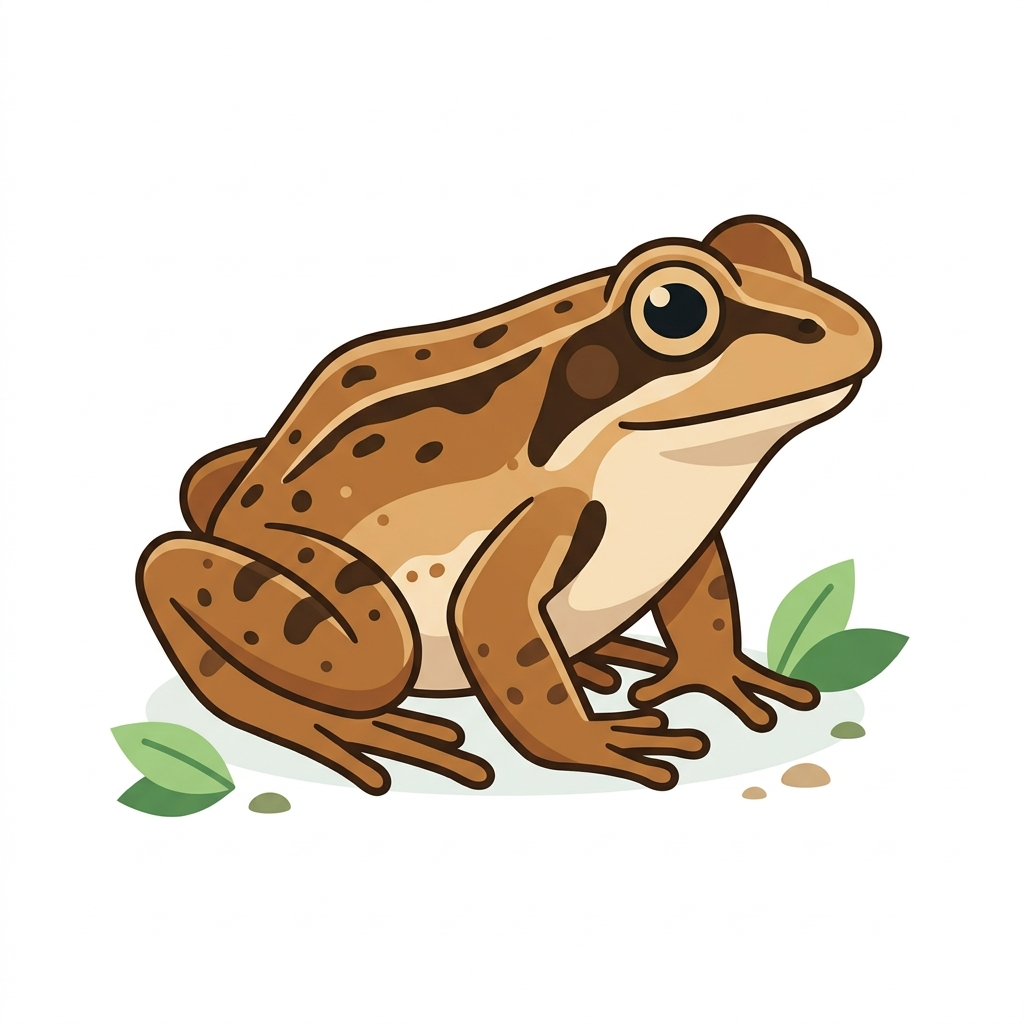
Wood Frog
Amphibian
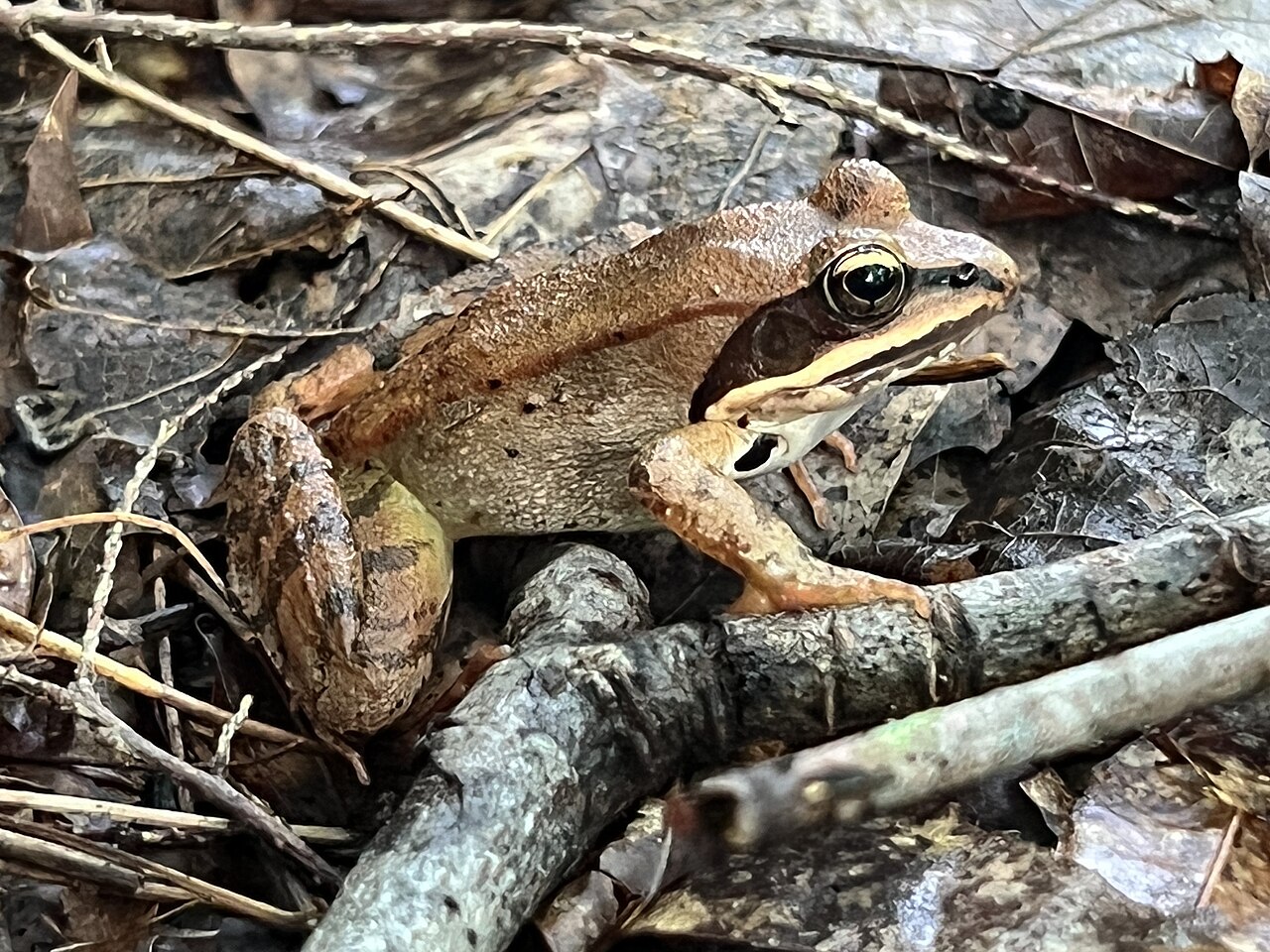
An amazing North American amphibian that can survive being frozen completely solid during the winter, thawing out in the spring to hop away.
💡 Fun Facts
- The frog's body can be more than 60% frozen solid in winter.
- This special trick is called cryoprotection ('cold protection').
- It has special sugar in its blood that protects its important organs from ice damage.
Name Story
Lithobates sylvaticus
means “the stone-climber of the woods”
likely meaningLithobates literally combines Greek roots for 'stone' and 'one that treads', but the genus was erected as a formal name and the 'rock-haunting' reading is etymological, not a literal account of the wood frog's behaviour — it is a frog of damp woodland and pools, not rocks. (Formerly Rana sylvatica; both names remain in use.)
What does its name mean?
- Lithobates — 'stone-goer' or 'one that treads the stones'Greek lithos 'stone' + bates 'one that treads/climbs' (genus coined by Fitzinger)
- sylvaticus — of the woods, of the forestLatin silva 'wood'Decode this word →
Its name reads as 'the stone-climber of the woods'. The second half, sylvaticus, is a settled and fitting word — this is a frog of damp woodland and pools. The first half is more of a puzzle: Lithobates literally joins Greek roots for 'stone' and 'one that treads', but the genus was coined as a formal scientific name, and the 'rock-haunting' reading is an etymologist's guess, not a real account of how this woodland frog lives.