
Common Ragwort
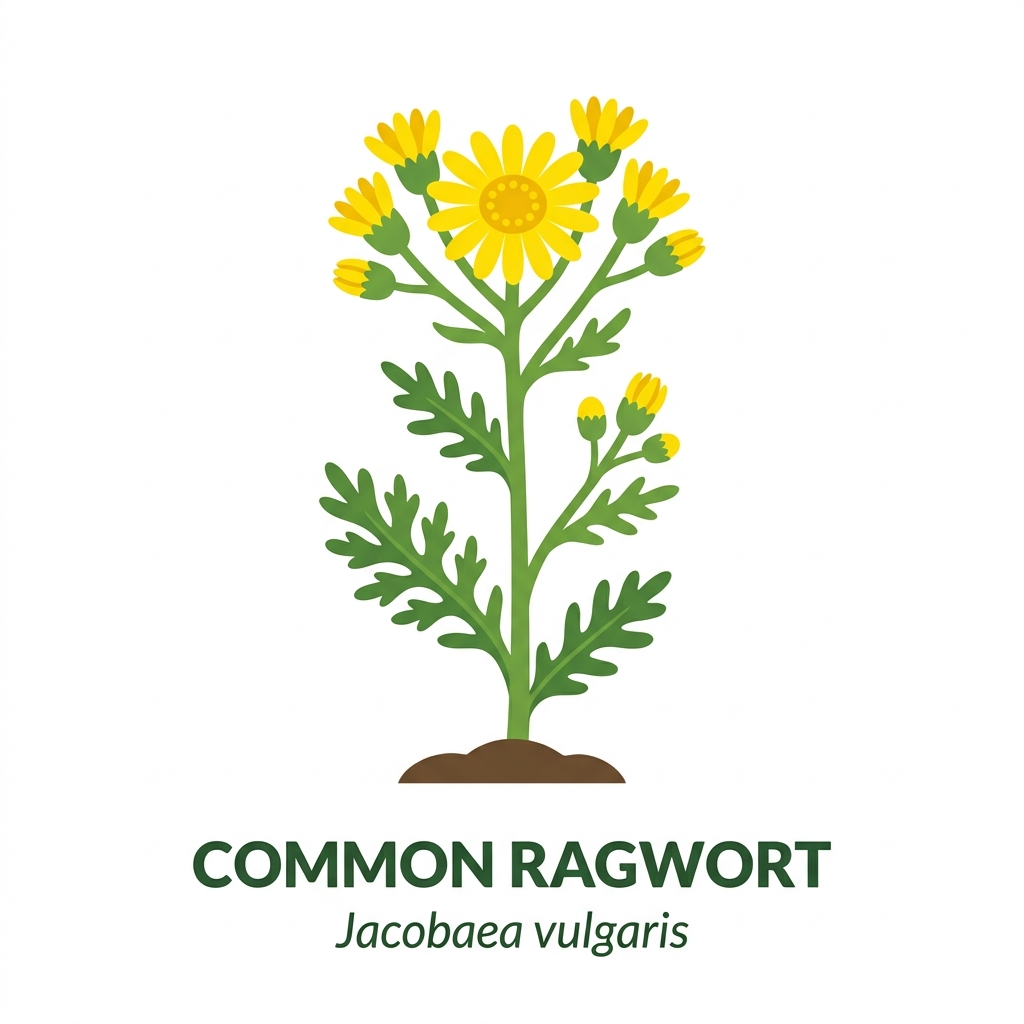
Common Ragwort
Wildflower
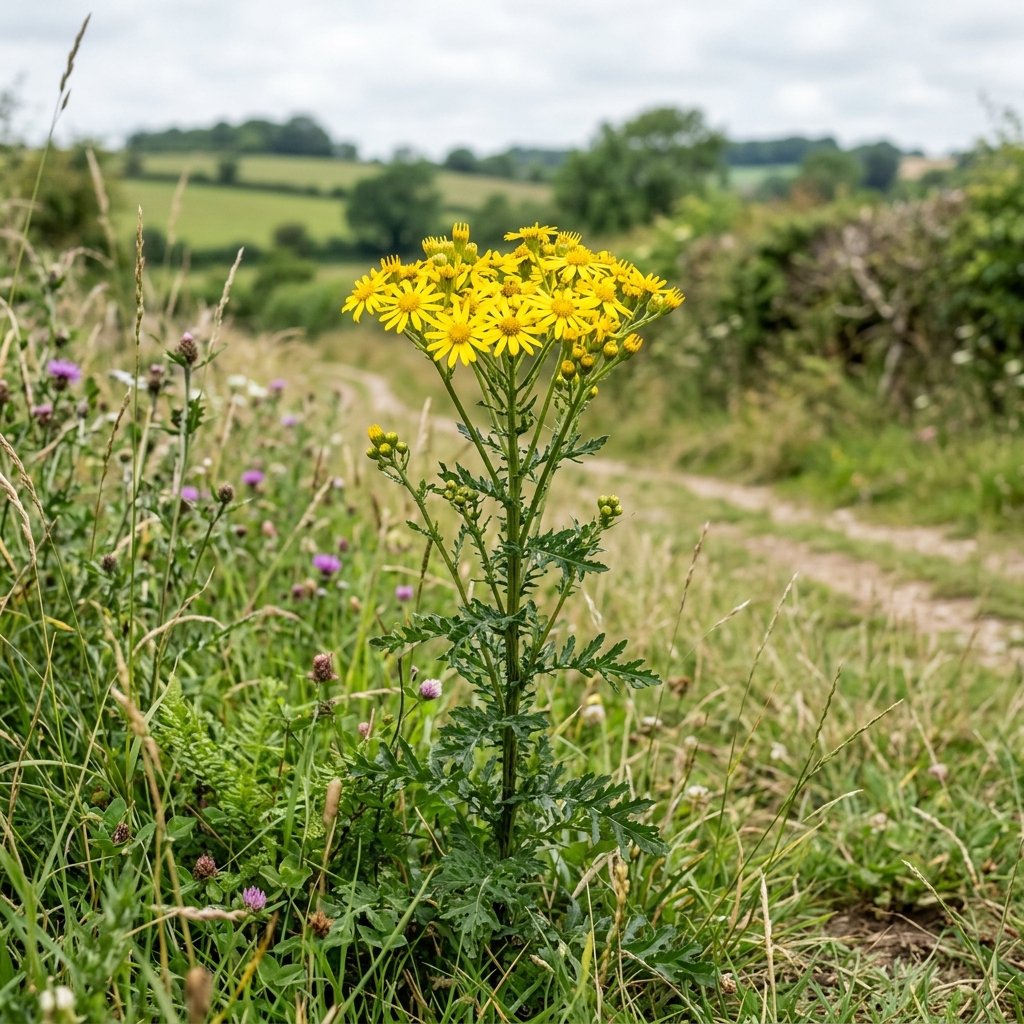
A tall golden wildflower of late summer — one of the most valuable nectar plants for insects, yet poisonous to grazing livestock.
💡 Fun Facts
- Its bright yellow flowers feed huge numbers of bees, butterflies and moths in late summer.
- The black-and-yellow striped caterpillars of the cinnabar moth live only on ragwort and store its poison to keep themselves safe.
- It is poisonous to horses and cattle, so farmers often have to control it — but it is precious for insects.
📅 Through the Year
- Flowering:June to October
- Fruiting:August to November
Name Story
Jacobaea vulgaris
means “The common plant of St James”
a traditional storyThe St James part is a traditional, calendar-based name: the plant flowers around St James's Day (25 July). Older books call it Senecio jacobaea.
What does its name mean?
- Jacobaea — of St James (Jacobus = James)Latin
- vulgaris — common, ordinaryLatinDecode this word →
This bright yellow roadside flower bursts into bloom in high summer — right around St James's Day, the 25th of July — which is how it came to carry the saint's name.