
Male Fern
Male Fern
Ferns & Moss
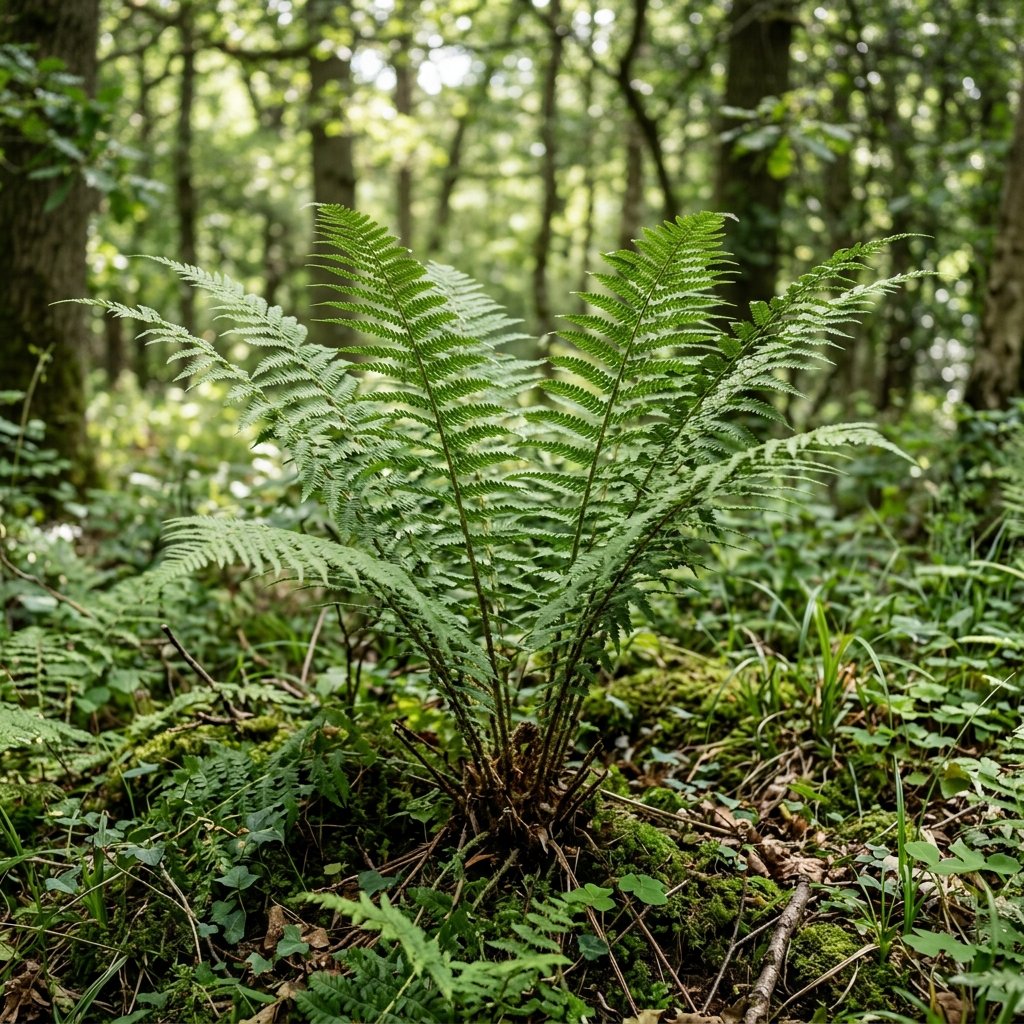
A big, hardy woodland fern whose fronds unfurl in a green shuttlecock each spring — one of Britain's commonest ferns.
💡 Fun Facts
- Its fronds grow in a neat circle, like a green shuttlecock, unfurling each spring from tightly coiled tips called fiddleheads.
- Like all ferns it makes no flowers or seeds — instead it releases millions of spores from rusty-brown dots on the back of its leaves.
- Its underground stem was once used as a medicine to get rid of tapeworms, but it is poisonous, so it is no longer used.
📅 Through the Year
- Leaf-out:April to May
- Leaf fall:November to December
Name Story
Dryopteris filix-mas
means “the woodland ‘male’ fern”
a traditional story‘Male’ is not a real botanical sex — ferns don’t work that way. It’s an old herbalists’ pairing of a robust fern (‘male’) with a delicate one (‘lady fern’), describing how they look, not any difference of sex.
What does its name mean?
- Dryopteris — woodland fernGreek drys ‘tree, oak-wood’ + pteris ‘fern’
- filix-mas — male fernLatin filix ‘fern’ + mas ‘male’
The first word means ‘tree-’ or ‘woodland fern’, pointing to the shady woods where it grows — not to oak trees, for it doesn’t grow on oaks. ‘Male’ is the puzzling part: ferns aren’t really male or female like this. Long ago, herbalists simply paired this sturdy, coarse fern as the ‘male’ against the delicate ‘lady fern’.