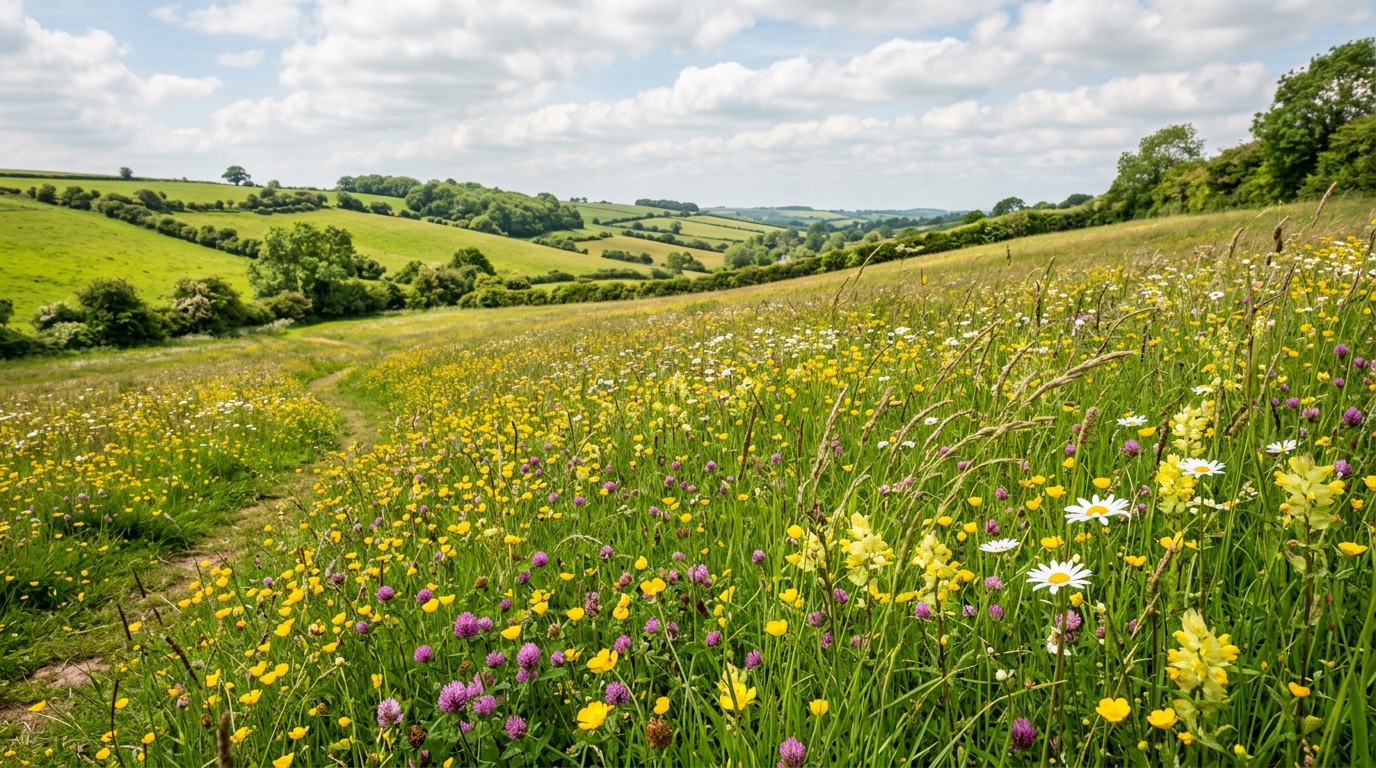
Meadows and grassy plains are vital for pollinators and small mammals. This page is part of our GCSE Natural History preparation, focusing specifically on UK native species and environments.
Wildlife in this Habitat
Grasslands support a bustling ecosystem of insects, grazing mammals, and fast-running predators.
UK Meadow Reptiles & Small Mammals
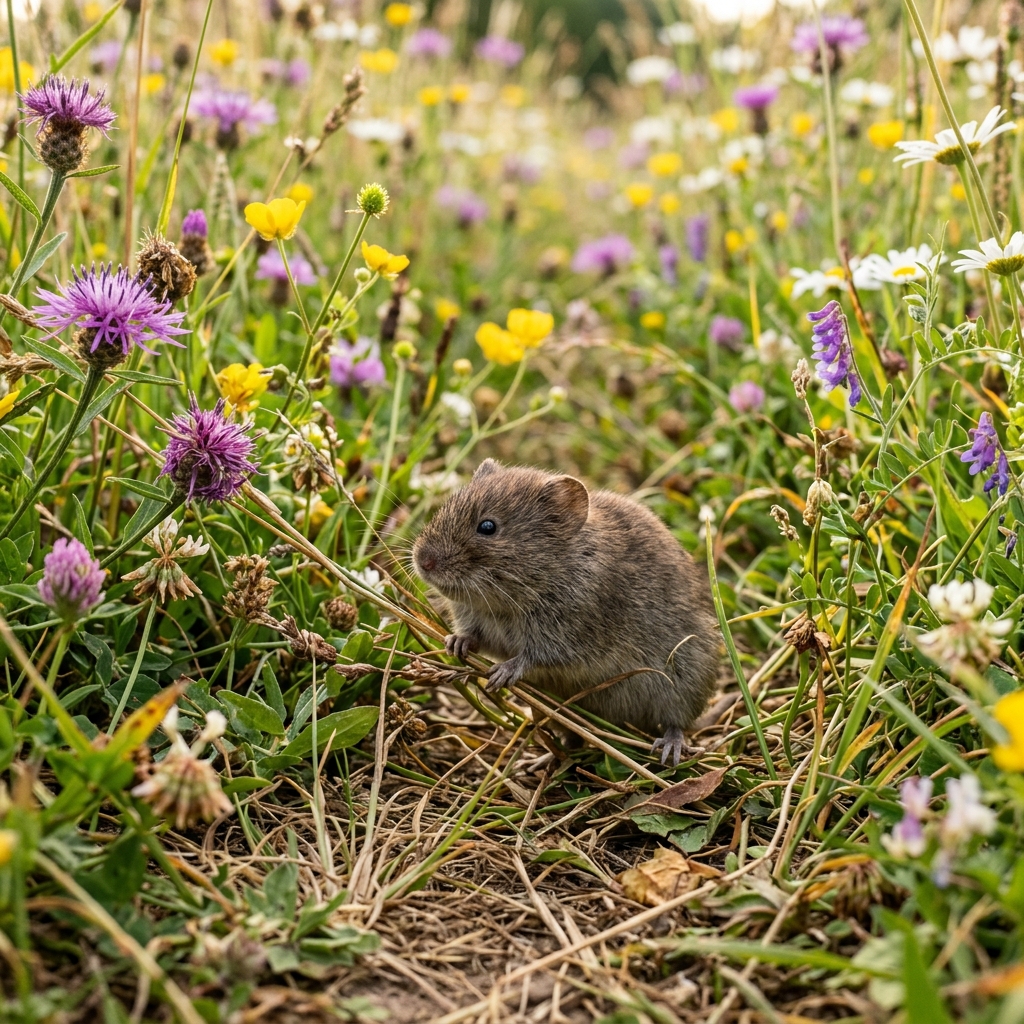
Field Vole
Small mammals that weave tunnels through the tall grass.
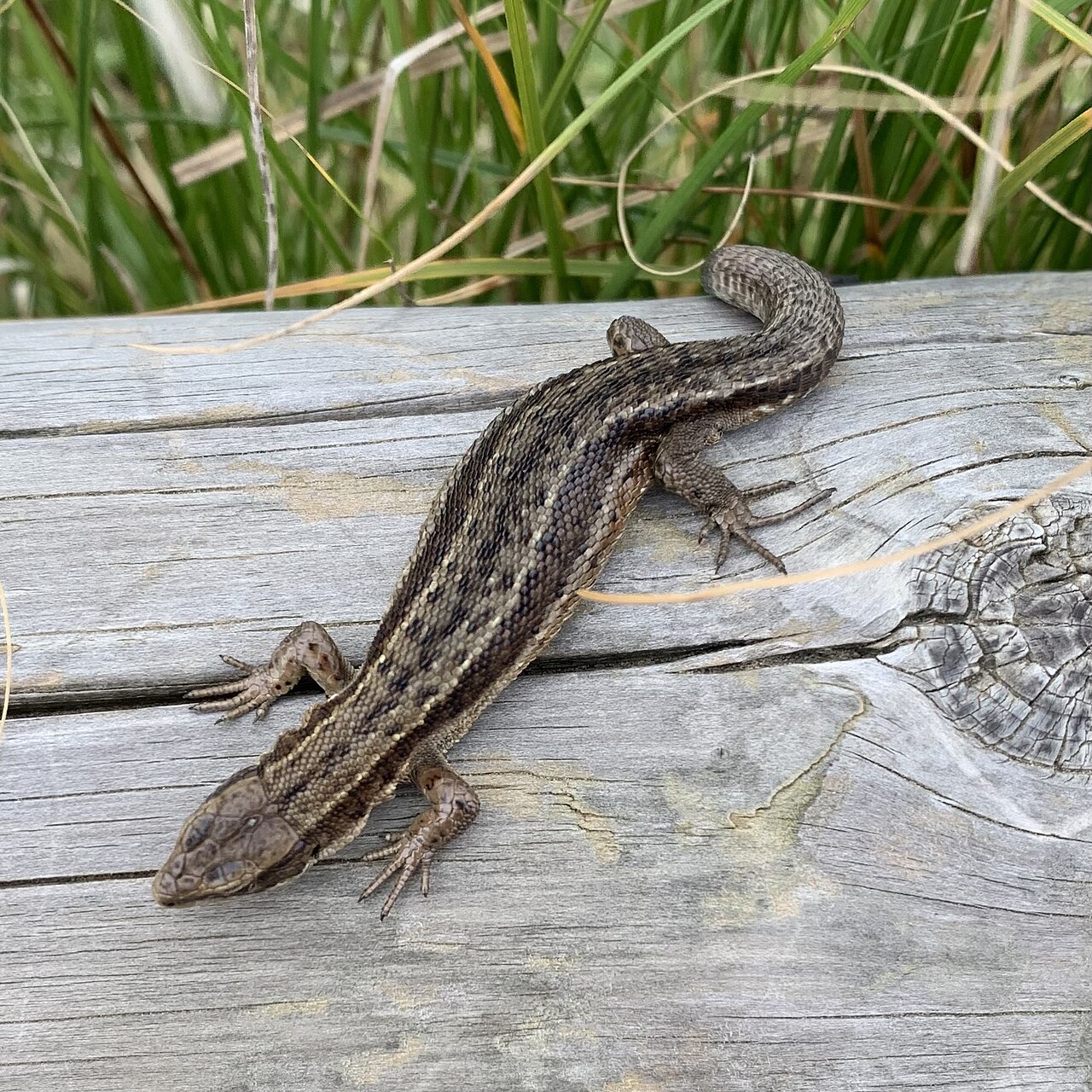
Common Lizard
Cold-blooded reptiles often seen basking on sun-warmed rocks.
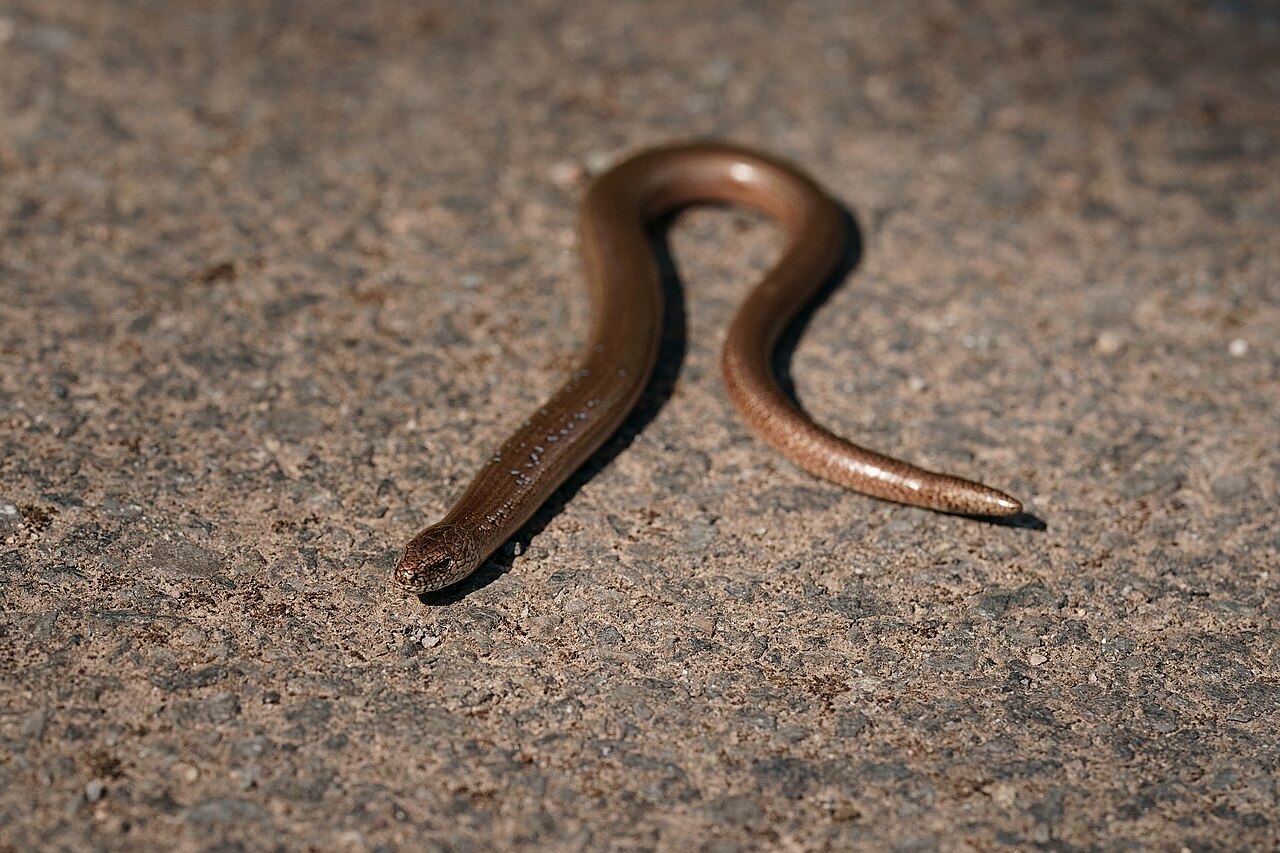
Slow Worm
Legless lizards that are often mistaken for snakes.
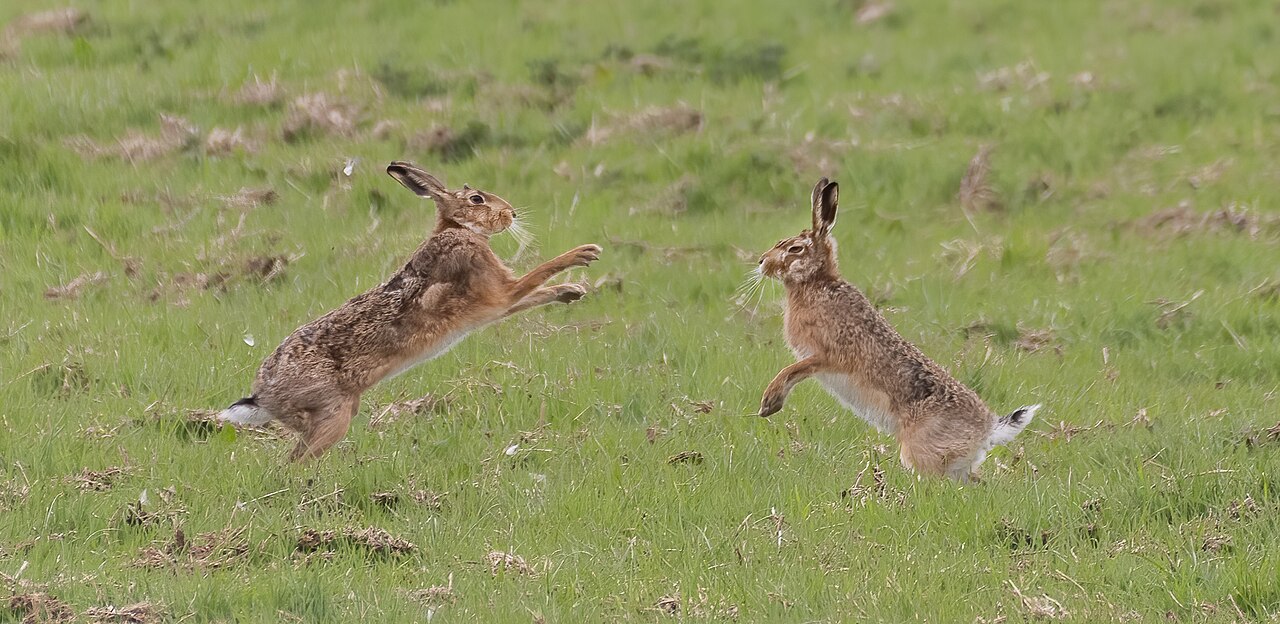
Brown Hare
Fast-running mammals with long, black-tipped ears.
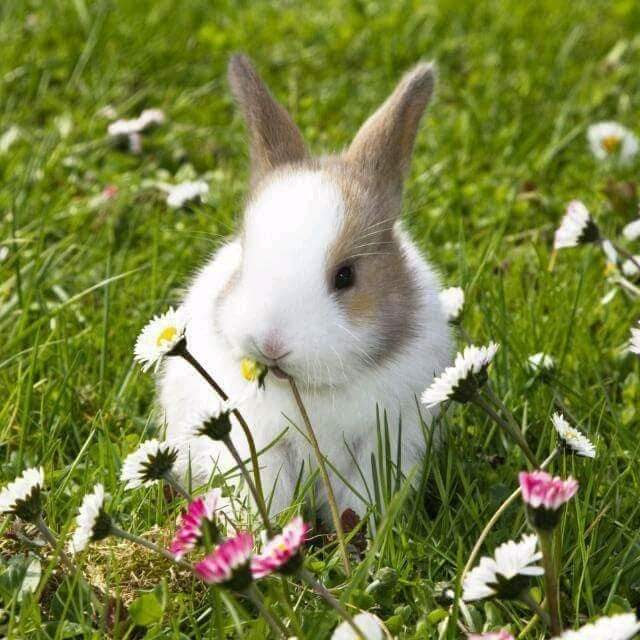
Rabbit
Burrowing herbivores that keep the grass short near their warrens.
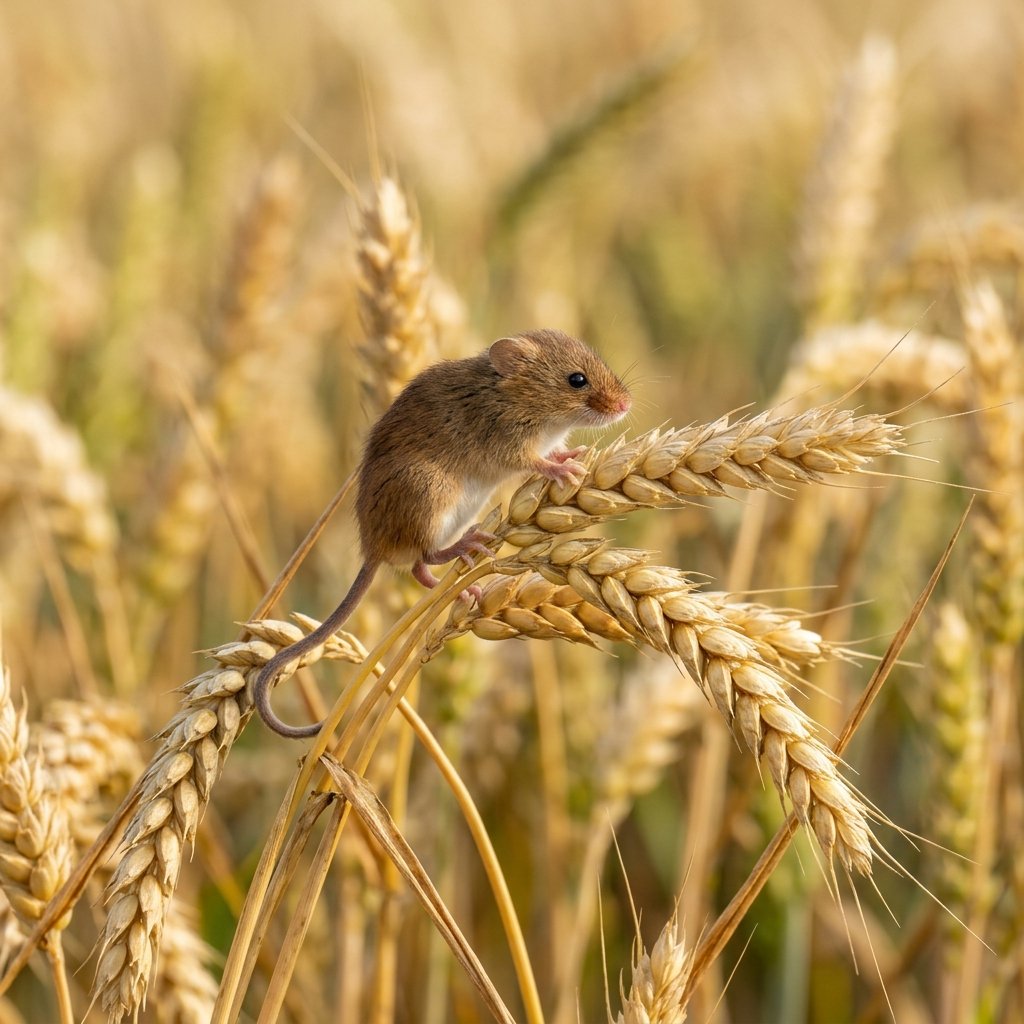
Harvest Mouse
Tiny, golden mice that build tennis-ball-sized nests high in the stalks.
UK Grassland Birds
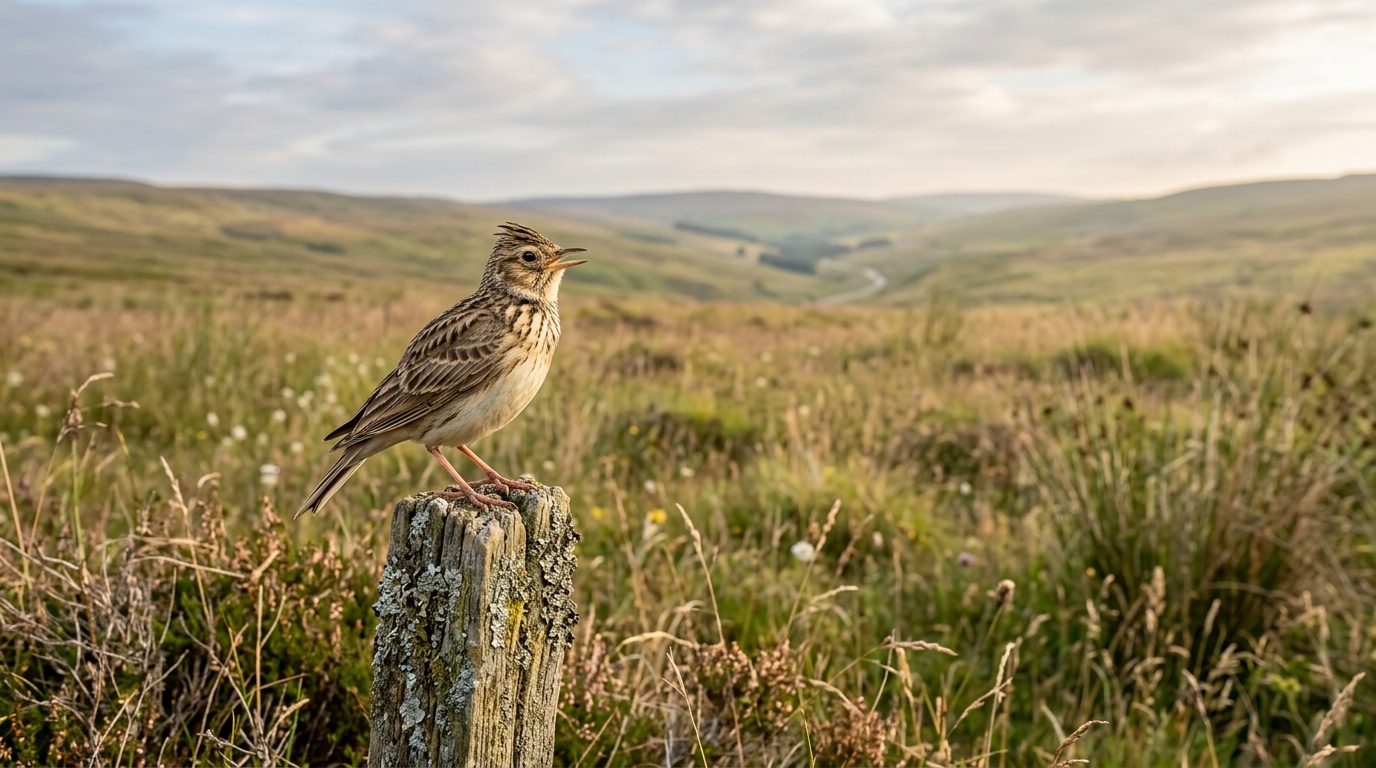
Skylark
Ground-nesting birds known for their spectacular singing flights high in the sky.
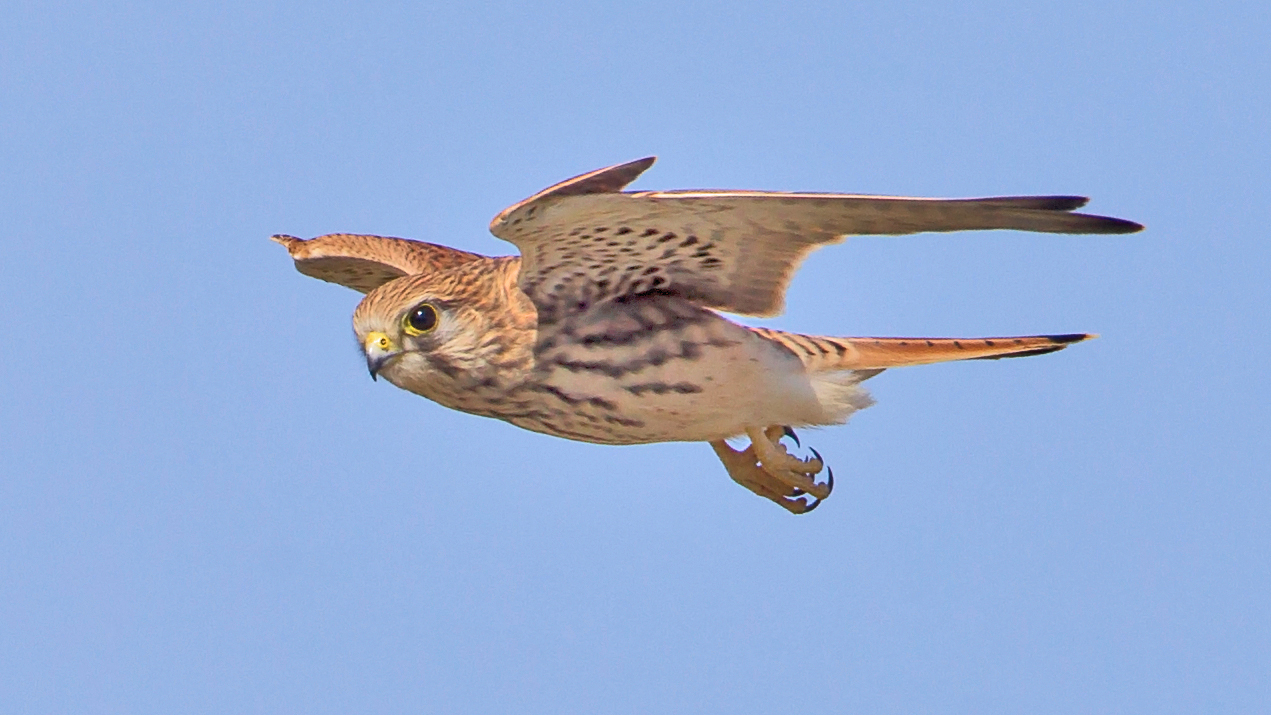
Kestrel
Small falcons famous for hovering perfectly still while hunting for voles.
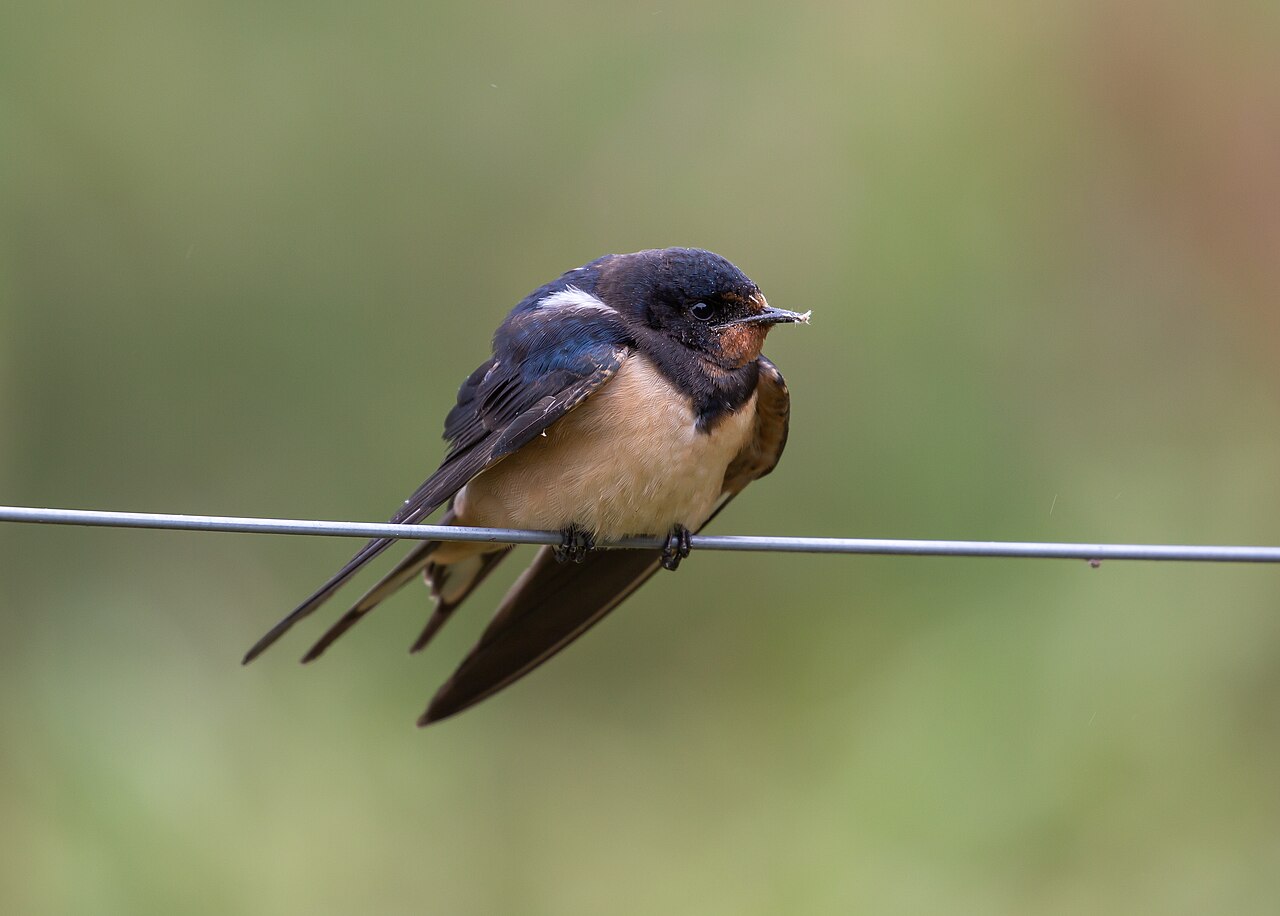
Swallow
Fast-flying summer visitors that swoop low over meadows to catch insects.
Meadow Pollinators & Minibeasts
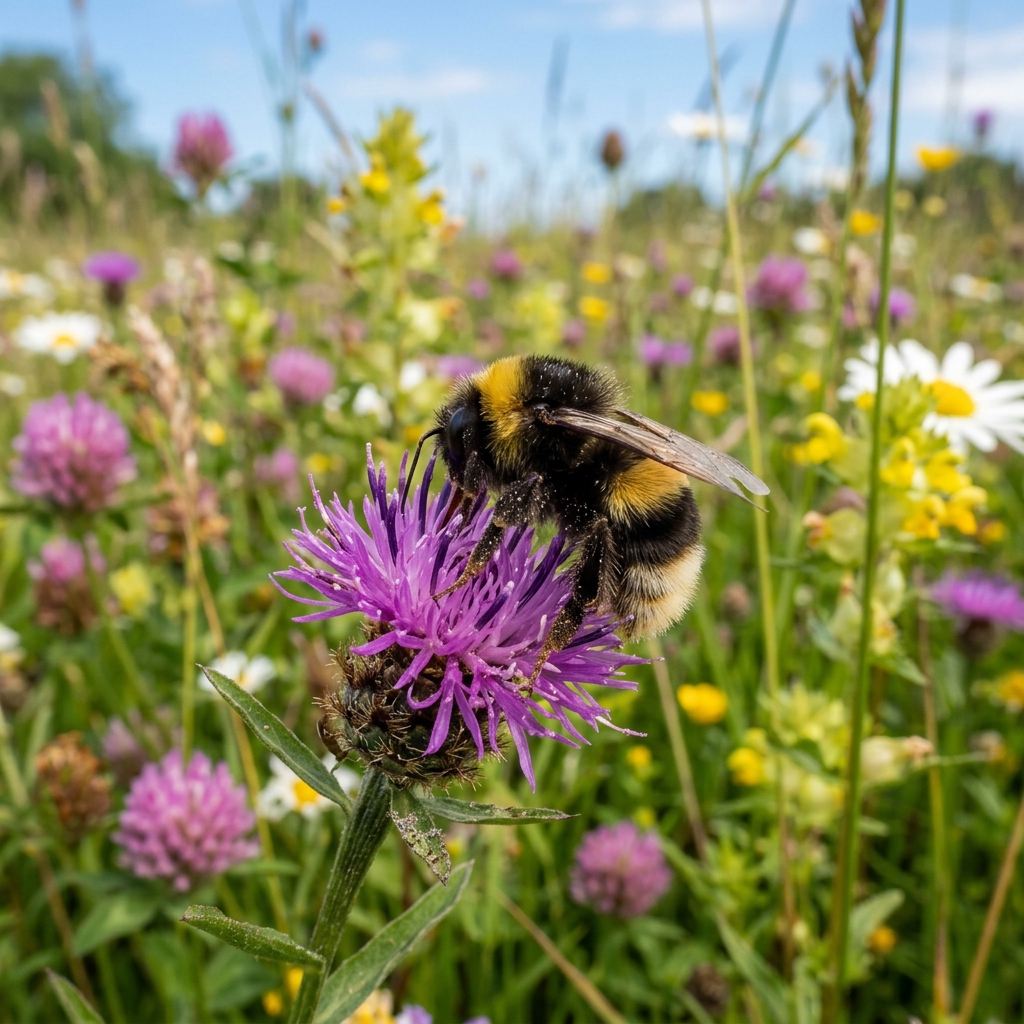
Buff-tailed Bumblebee
Essential pollinators for meadow flowers.
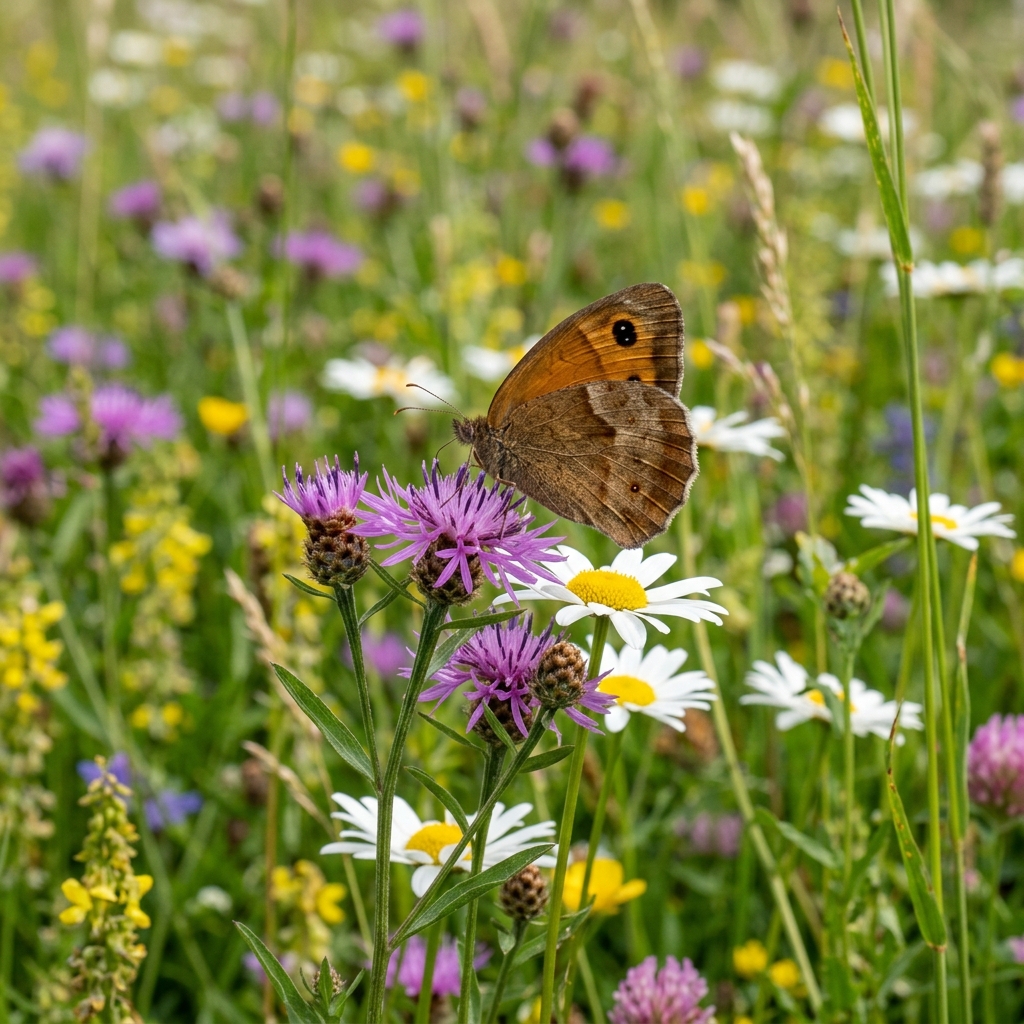
Meadow Brown Butterfly
Camouflaged butterflies whose caterpillars eat fine grasses.
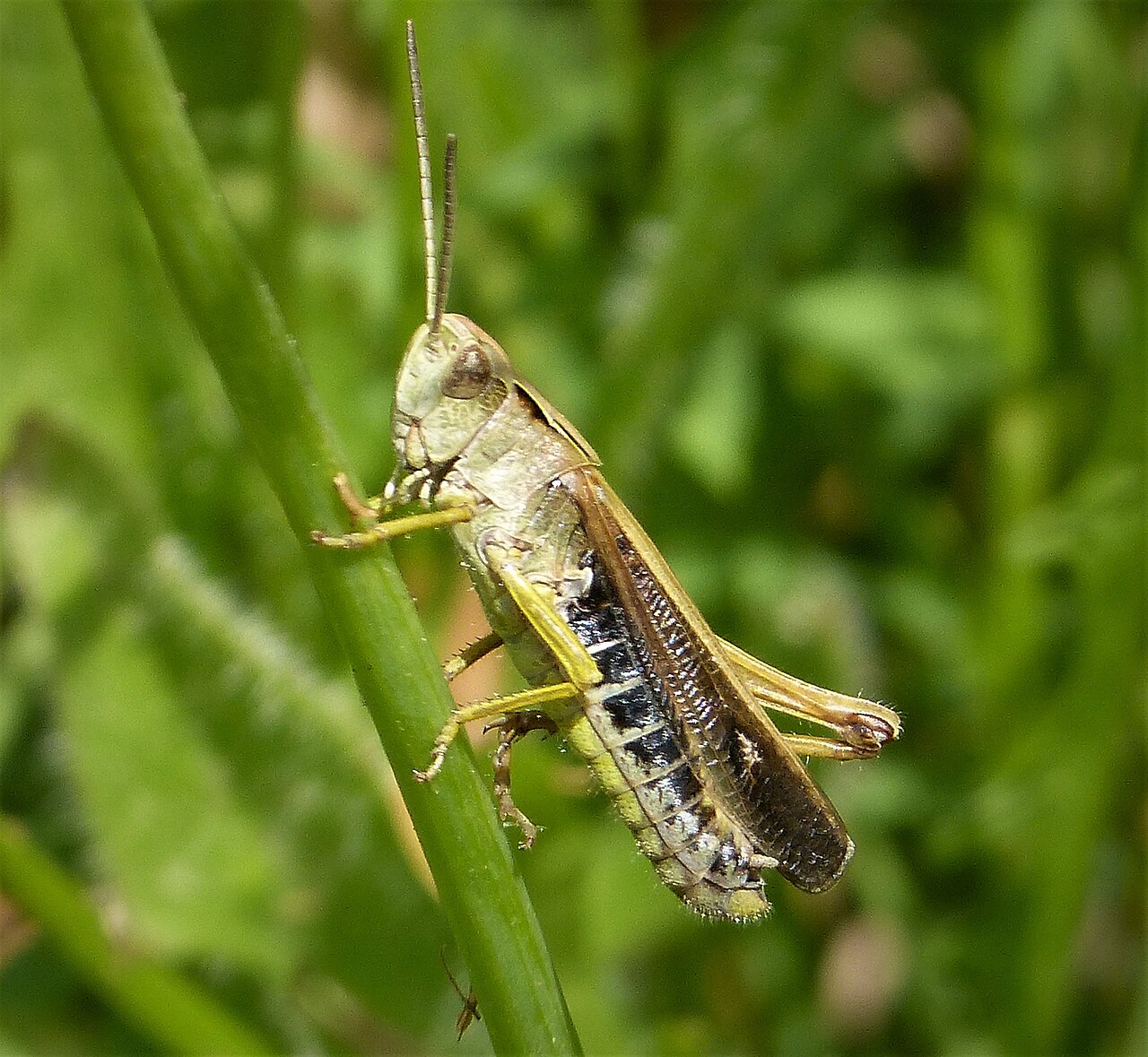
Grasshopper
Jumping insects that create a summer 'song' by rubbing their legs together.
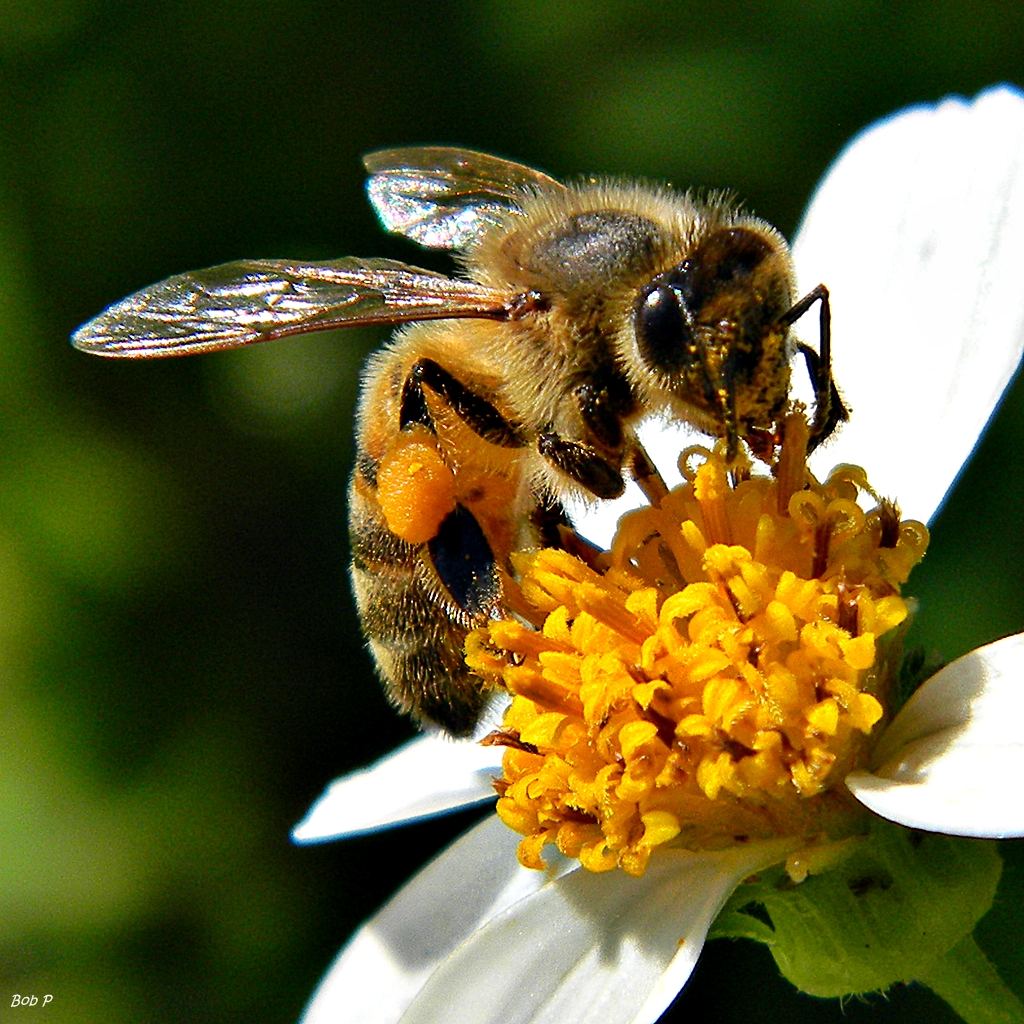
Bee
Hardworking insects critical for pollinating thousands of plant species.
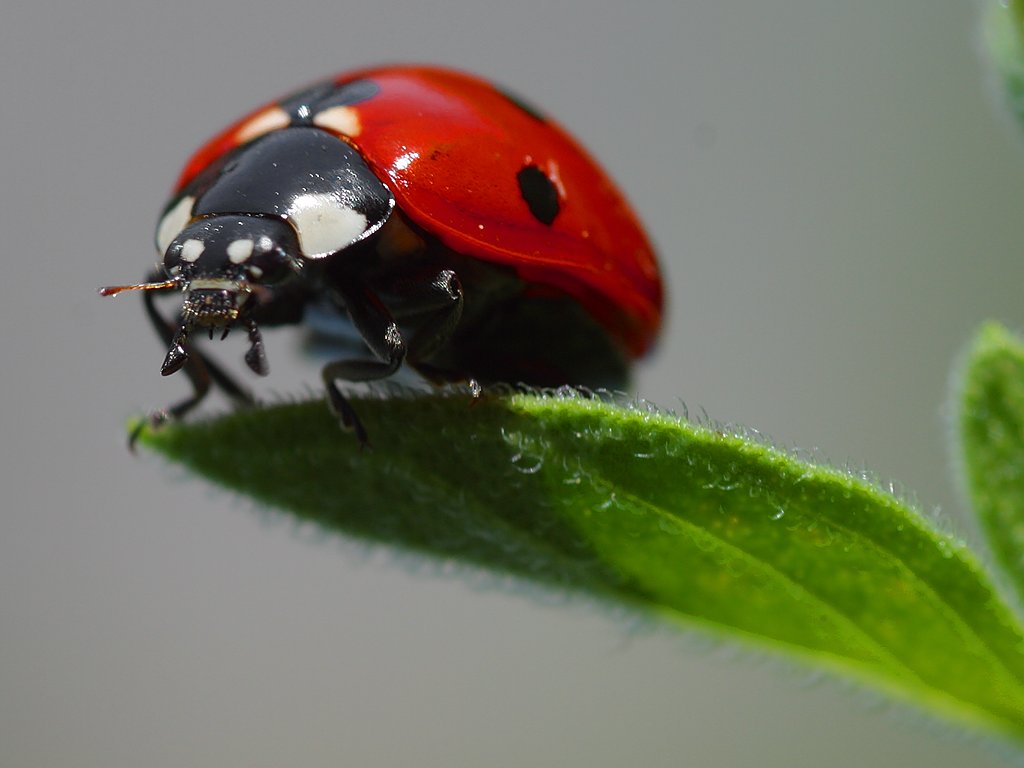
Ladybird
Brightly spotted beetles that are a gardener's best friend, eating aphids.
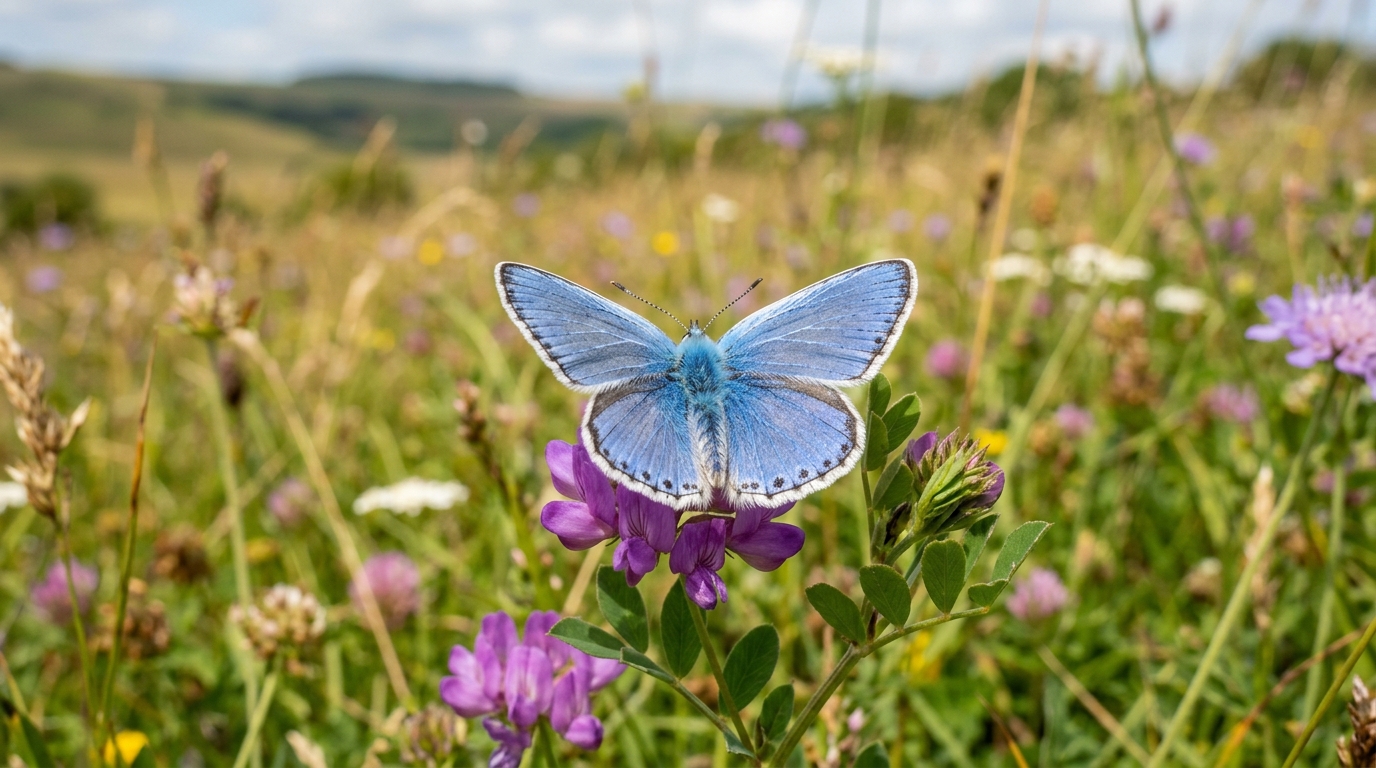
Adonis blue butterfly
Stunning bright blue butterflies found on chalk downland.
Global Savanna & Grassland Giants
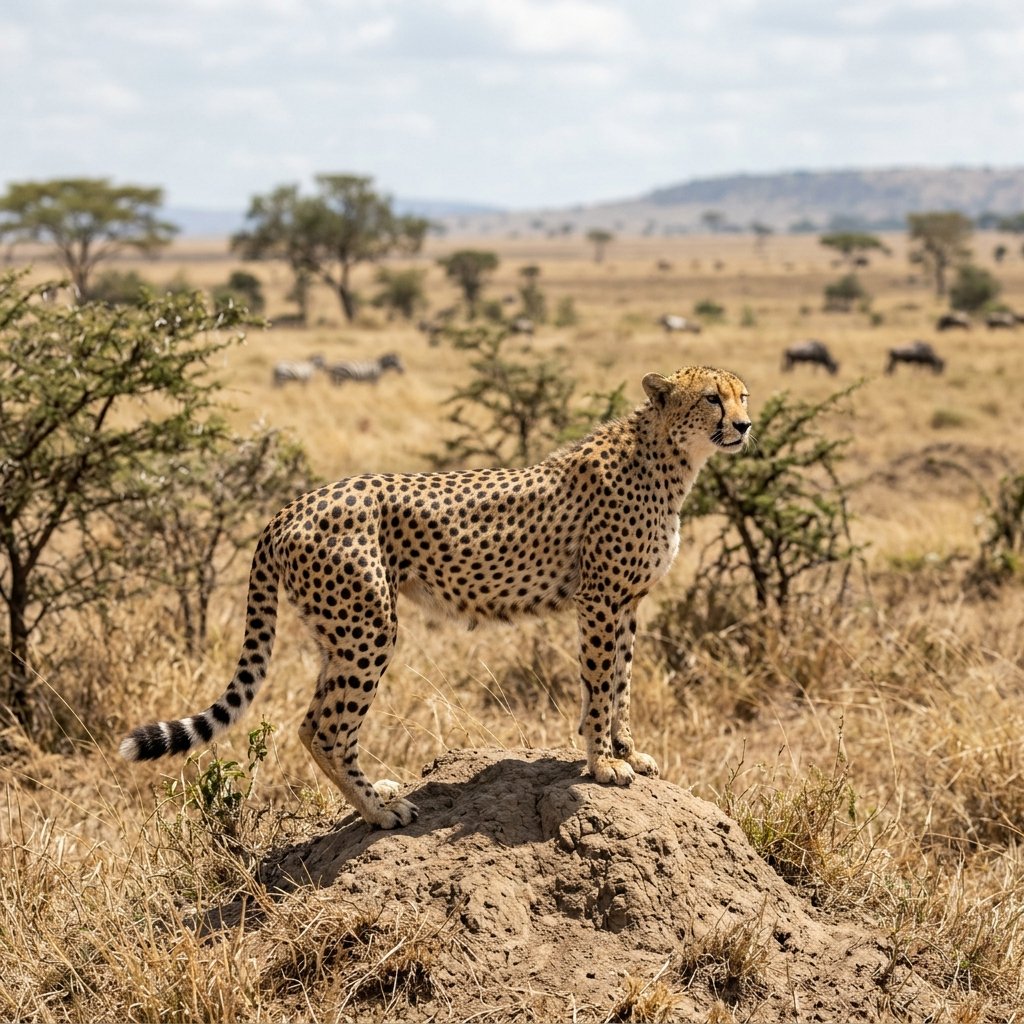
Cheetah
The world's fastest land mammal, built for sprinting across open plains.
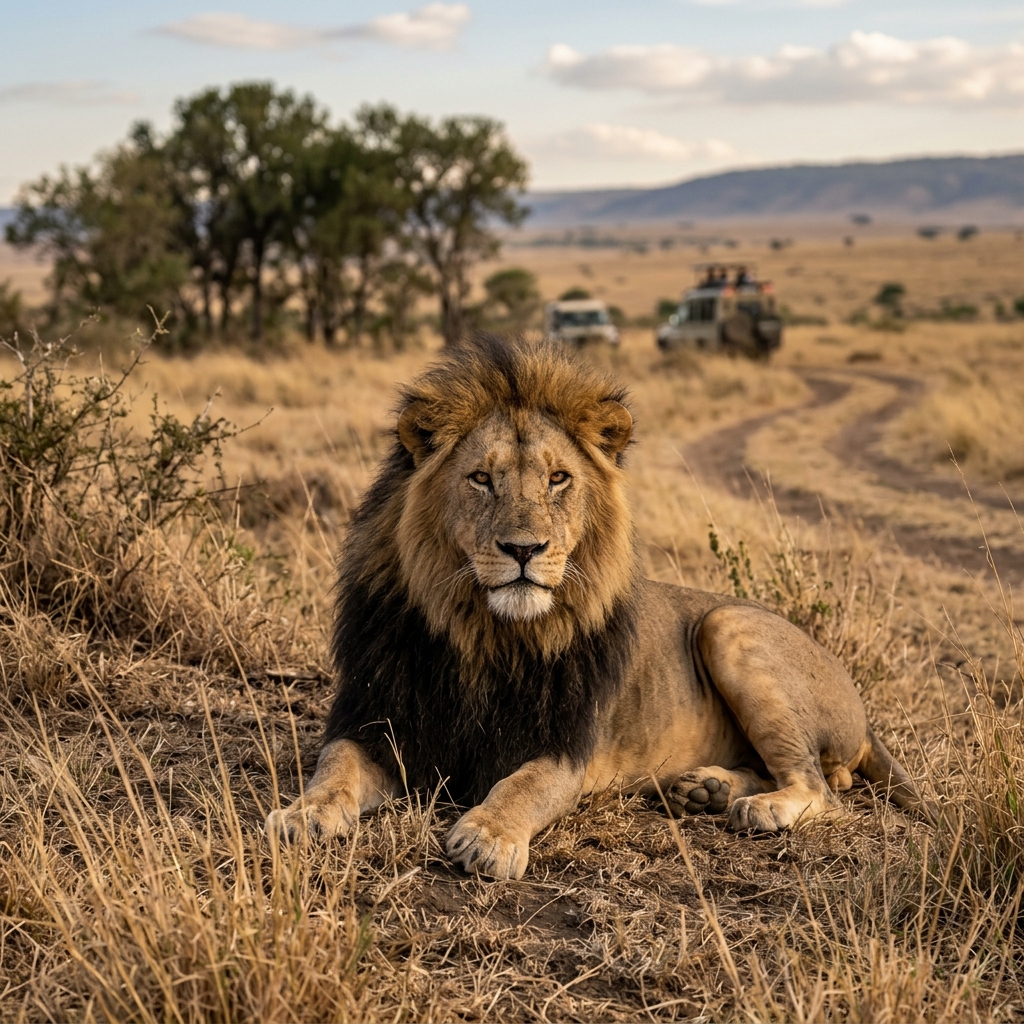
Lion
Highly social big cats that live and hunt in family prides.
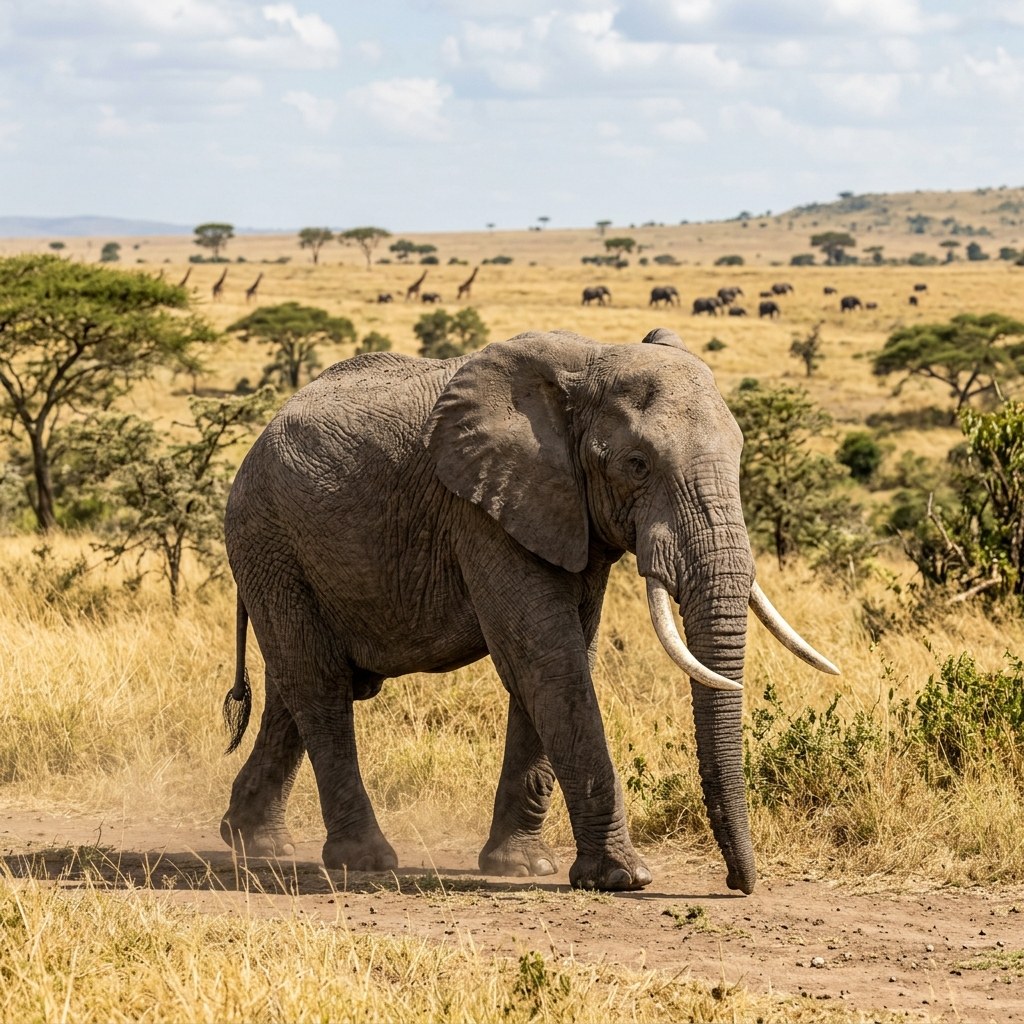
African Bush Elephant
The largest land animals on Earth, shaping the savanna ecosystem.
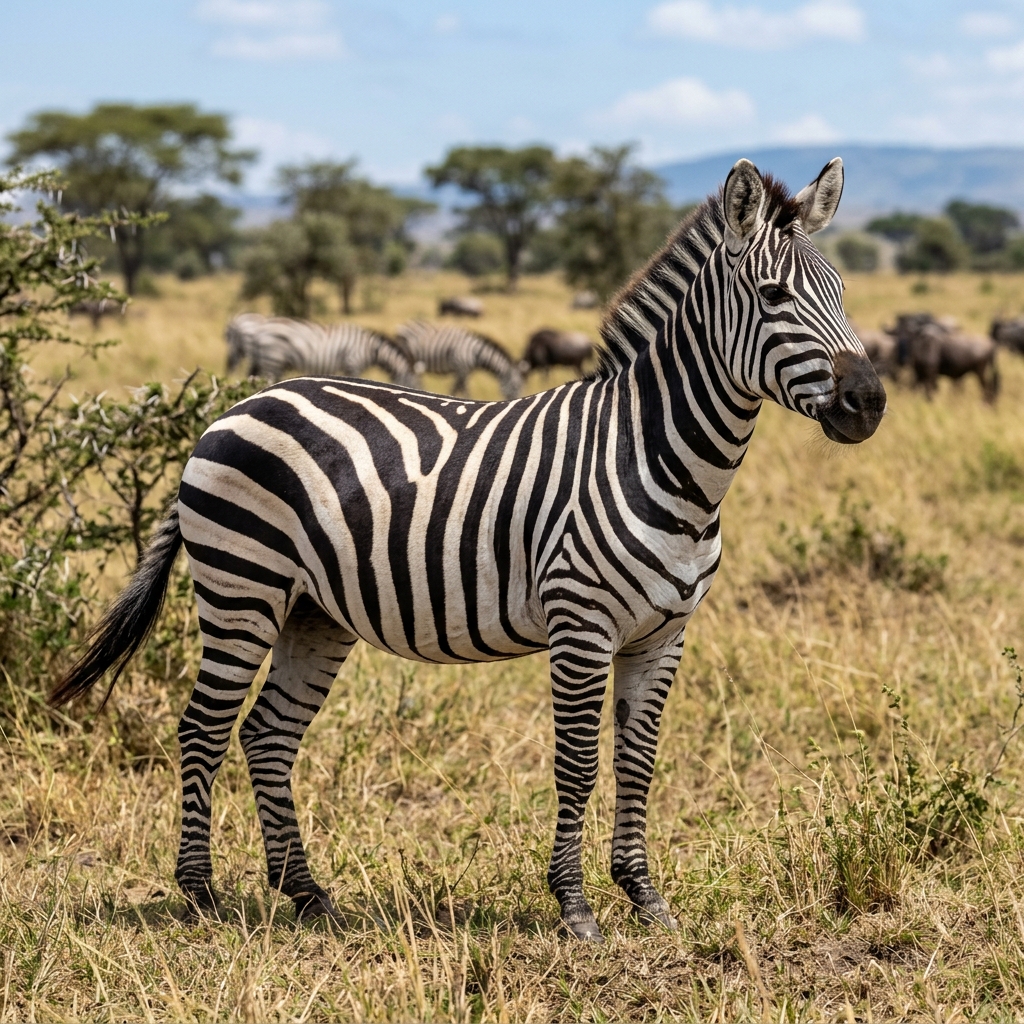
Zebra
Striped equines that gather in huge herds to confuse predators.
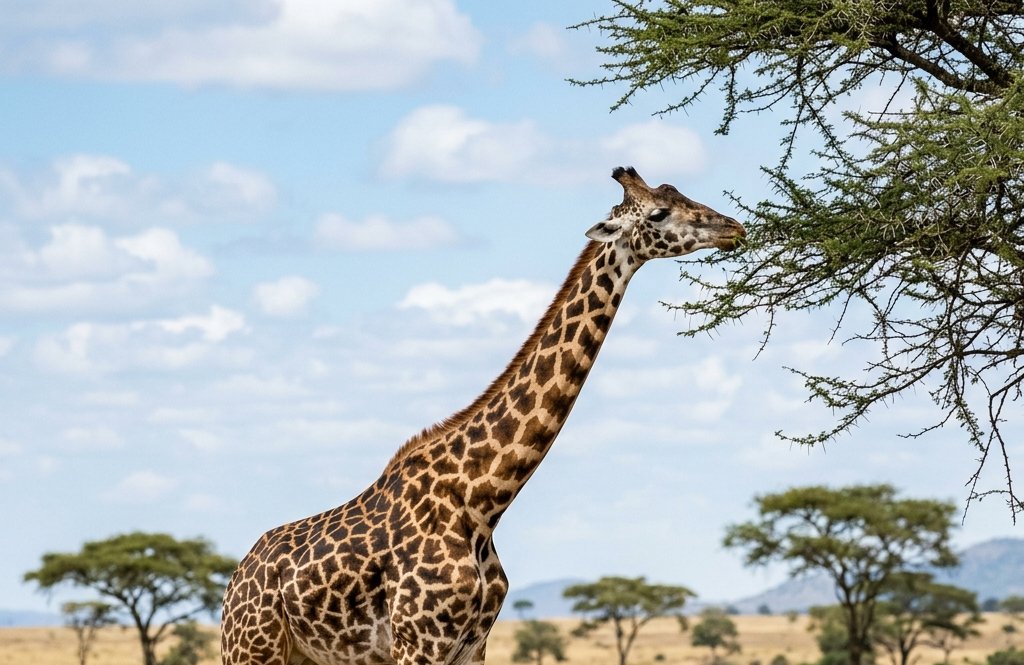
Giraffe
Towering herbivores with long necks to reach the highest acacia leaves.
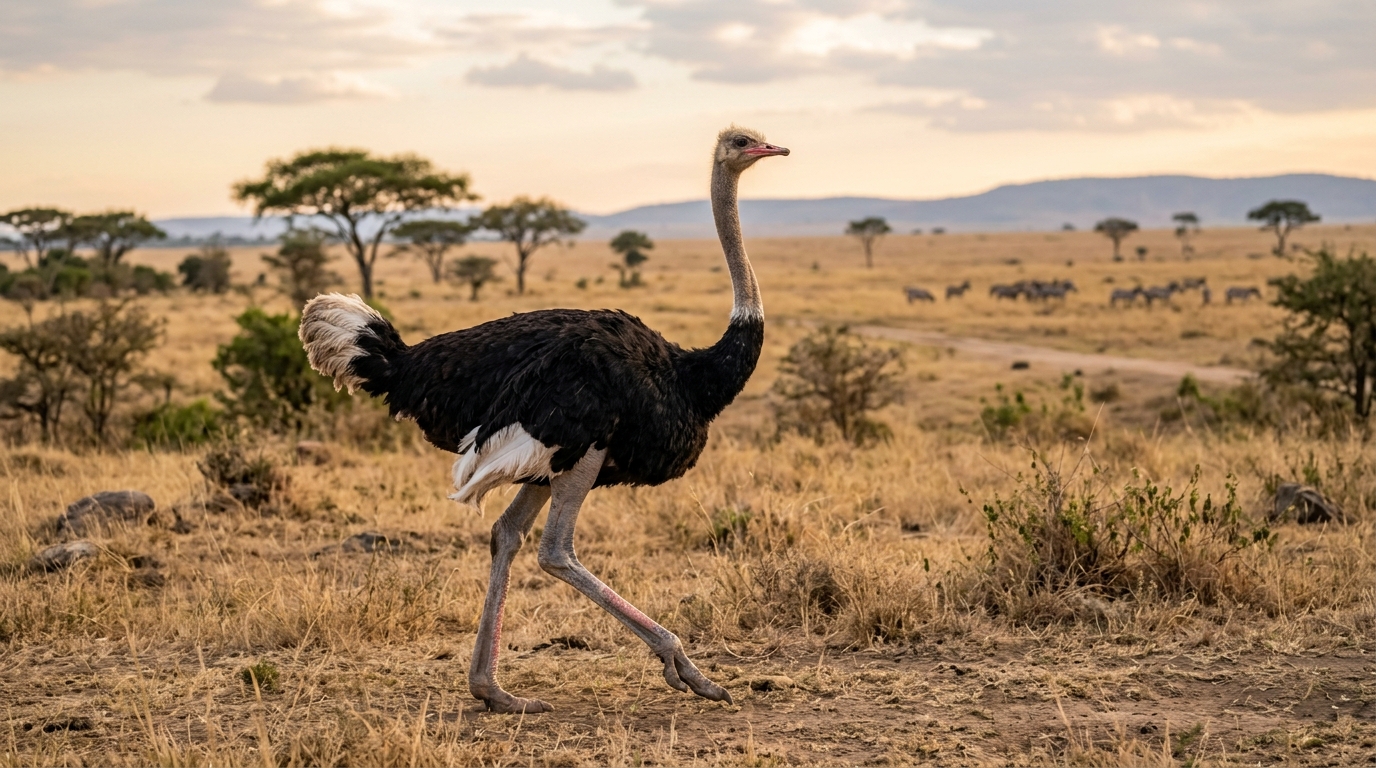
Ostrich
Huge, flightless running birds from the African plains.
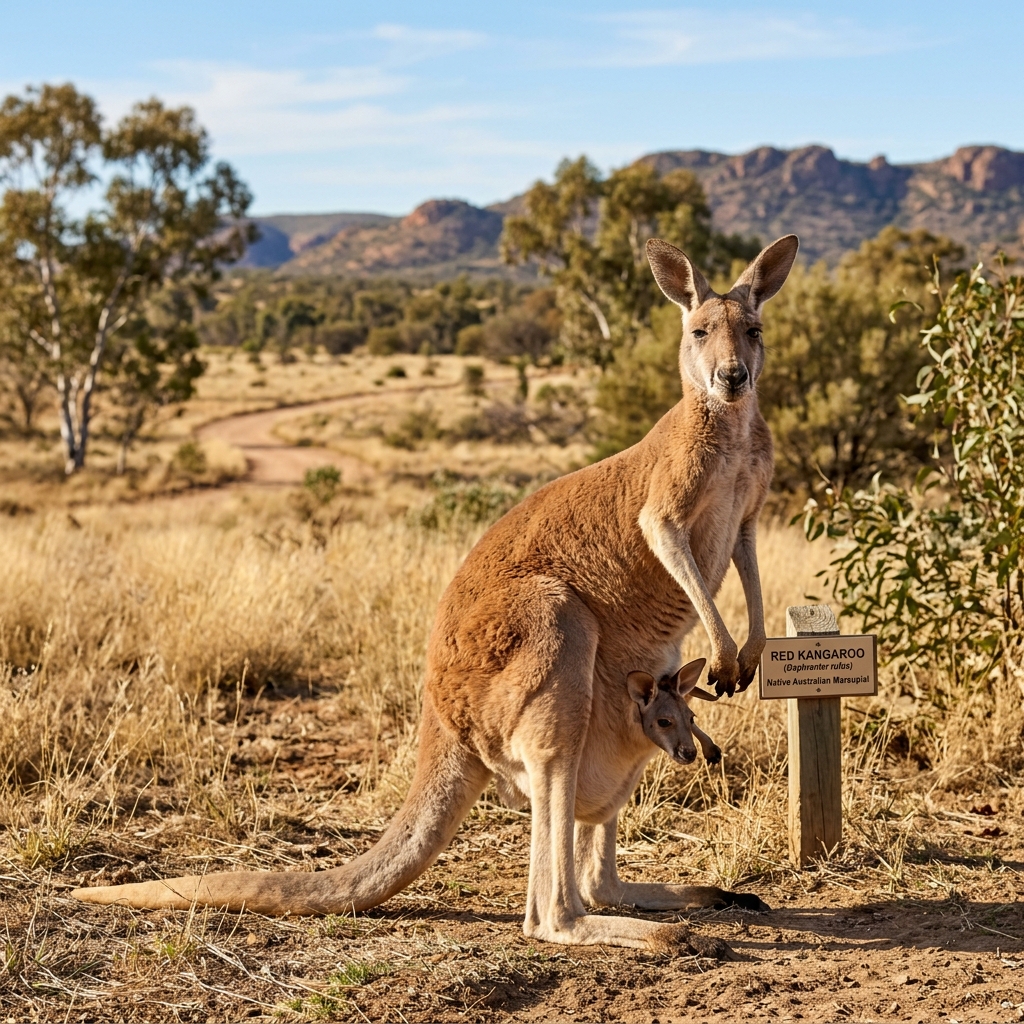
Kangaroo
Australian marsupials that use powerful hind legs to bound across the outback.
Plants of the grassland
Meadows and grassy places are full of flowers and grasses that feed insects and small animals. Here are some to find.
Wildflowers
The colourful flowers that bring a meadow to life and feed the pollinators.
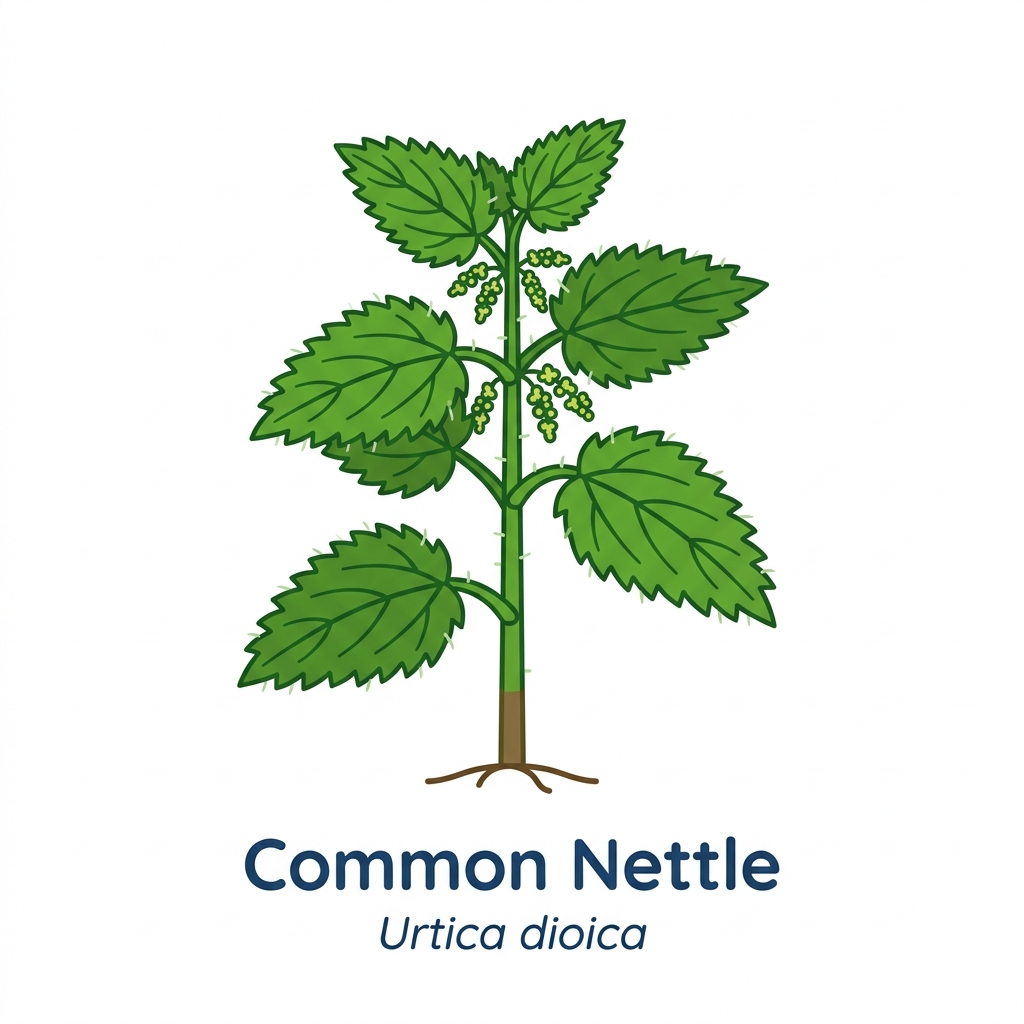
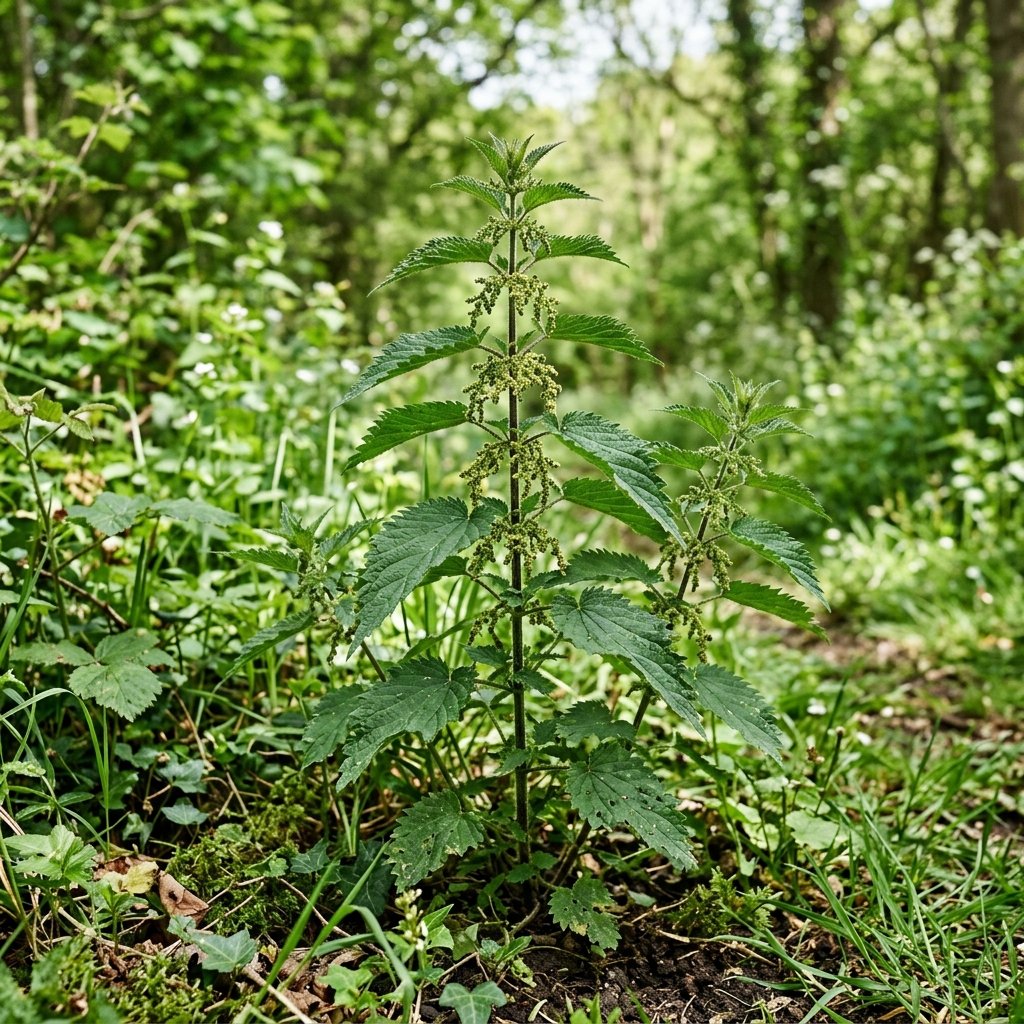
Common Nettle
The stinging plant of waste ground and gardens — covered in needle-like hairs, yet the single most important nursery plant for Britain's butterflies.
💡 Fun Facts
- Its leaves and stems are covered in tiny stinging hairs that work like miniature needles.
- It is the number-one plant for hungry caterpillars — peacock, small tortoiseshell, red admiral and comma butterflies all grow up on nettles.
- People have eaten it in soup and tea for hundreds of years — cooking it makes the sting disappear.
📅 Through the Year
- Leaf-out:March to April
- Flowering:June to September
- Dormant:November to February
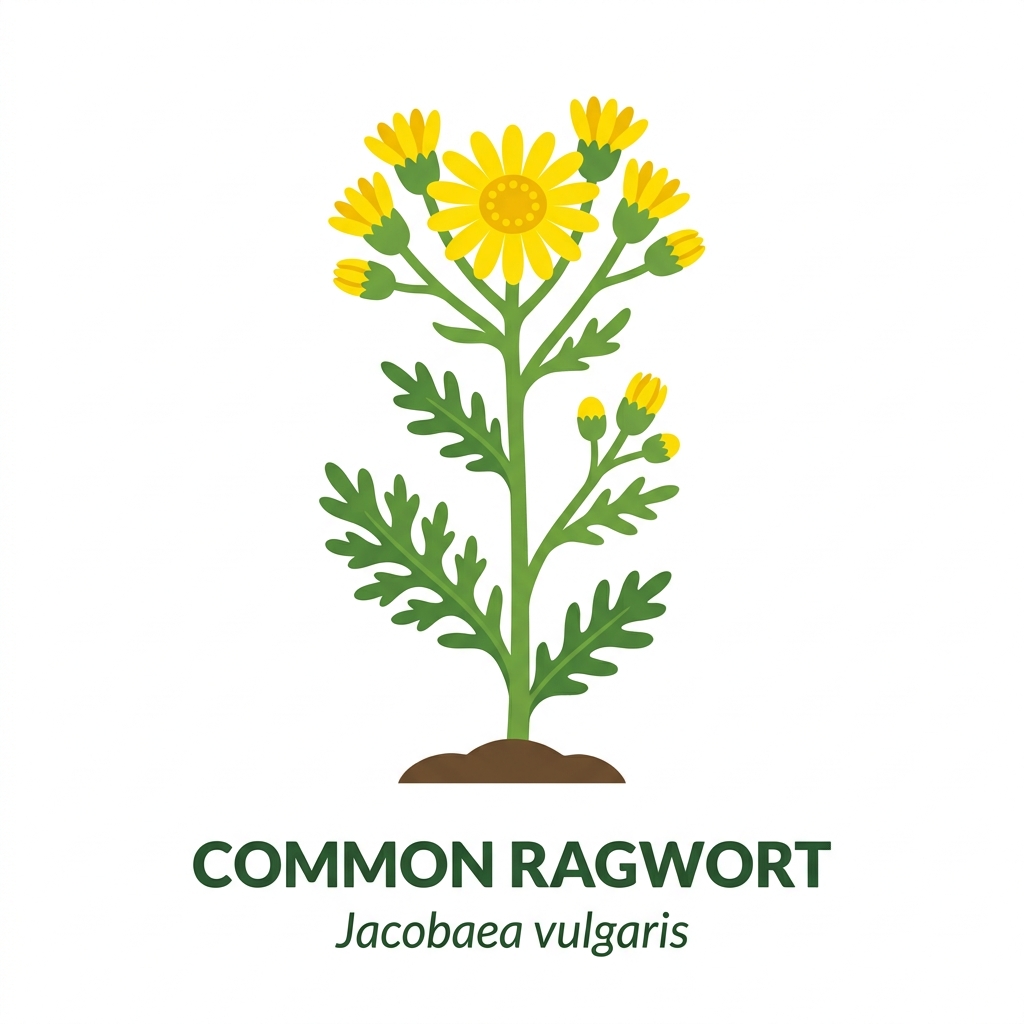
Common Ragwort
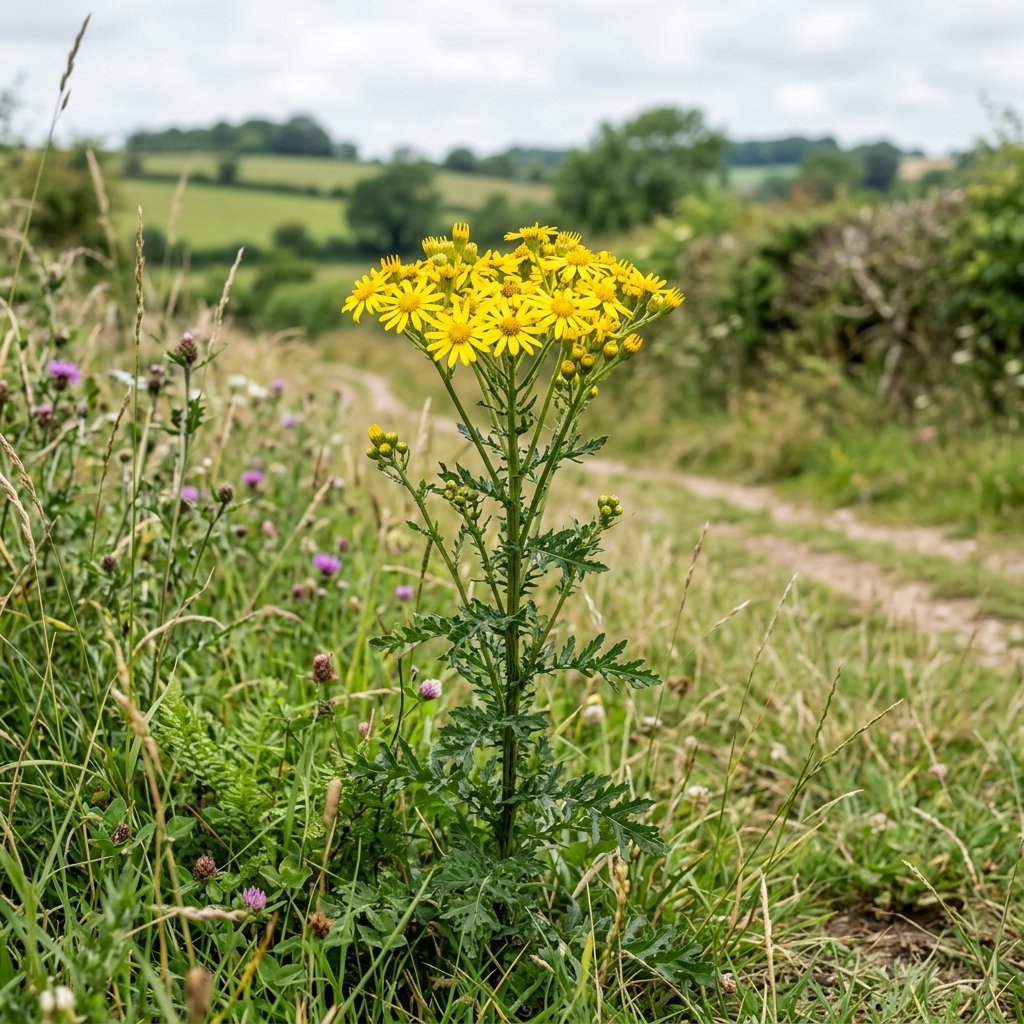
A tall golden wildflower of late summer — one of the most valuable nectar plants for insects, yet poisonous to grazing livestock.
💡 Fun Facts
- Its bright yellow flowers feed huge numbers of bees, butterflies and moths in late summer.
- The black-and-yellow striped caterpillars of the cinnabar moth live only on ragwort and store its poison to keep themselves safe.
- It is poisonous to horses and cattle, so farmers often have to control it — but it is precious for insects.
📅 Through the Year
- Flowering:June to October
- Fruiting:August to November
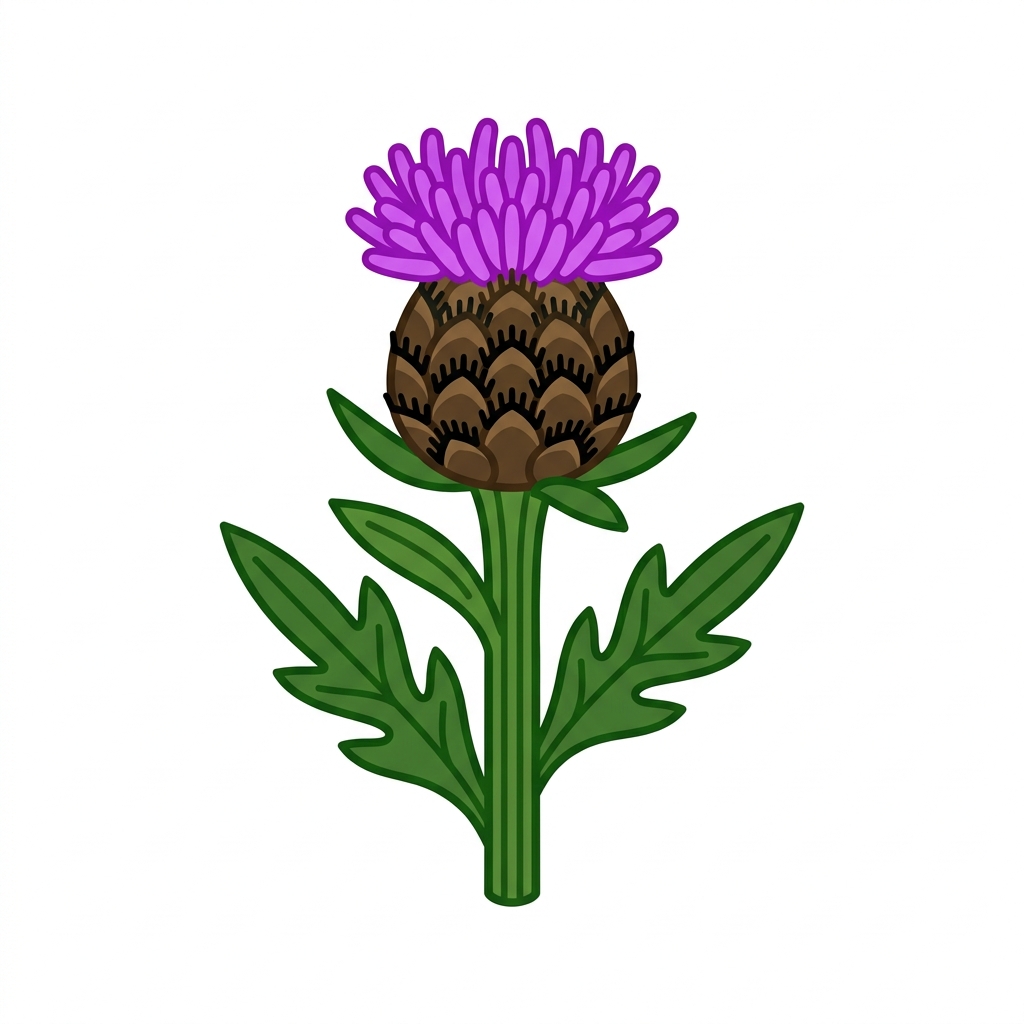
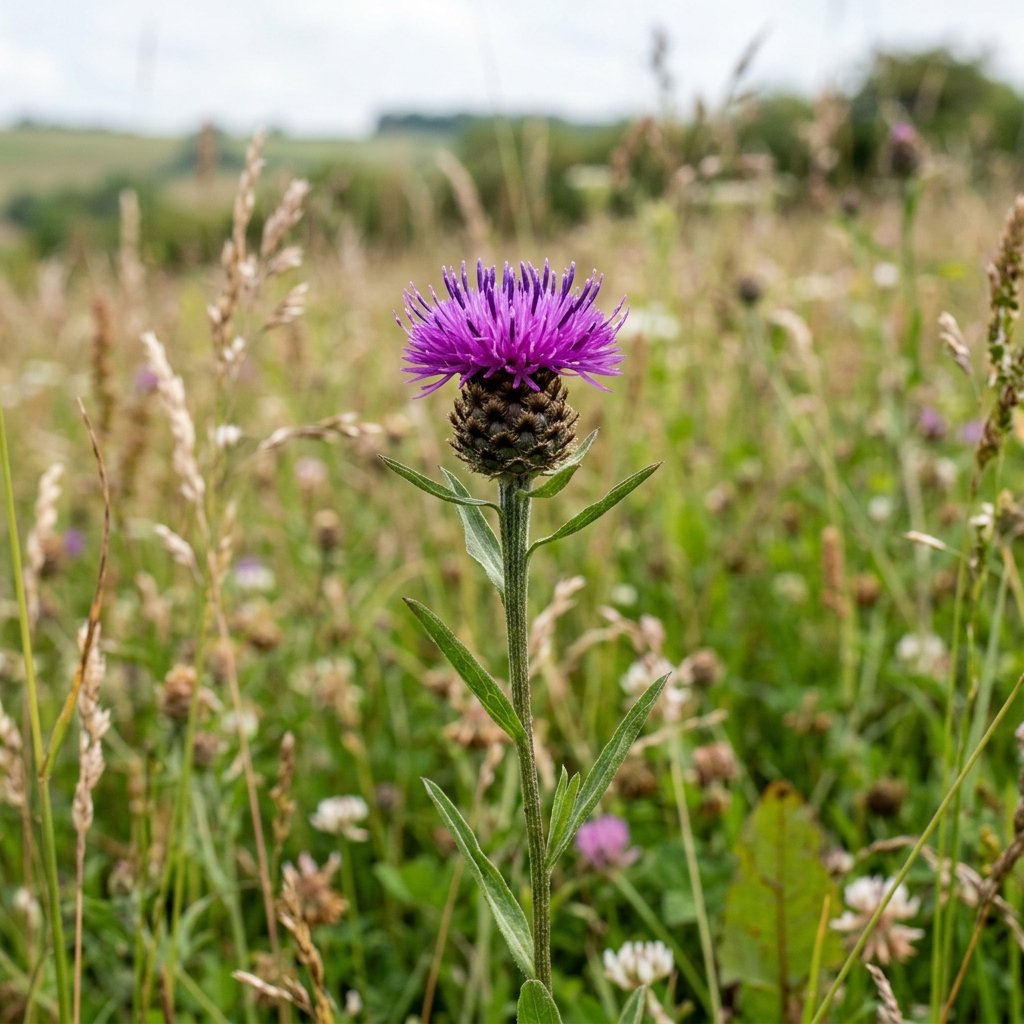
Common Knapweed
A tough purple meadow flower — rated among the best of all UK wildflowers for nectar, and a seed-store for goldfinches in autumn.
💡 Fun Facts
- Its tufty purple flowerheads look a little like a thistle, but it has no prickles to catch you.
- It is one of the very best wildflowers for nectar, buzzing with bees and butterflies all summer.
- When the flowers fade, goldfinches flock in to pick out the seeds.
📅 Through the Year
- Flowering:June to September
- Fruiting:August to October
Red Clover
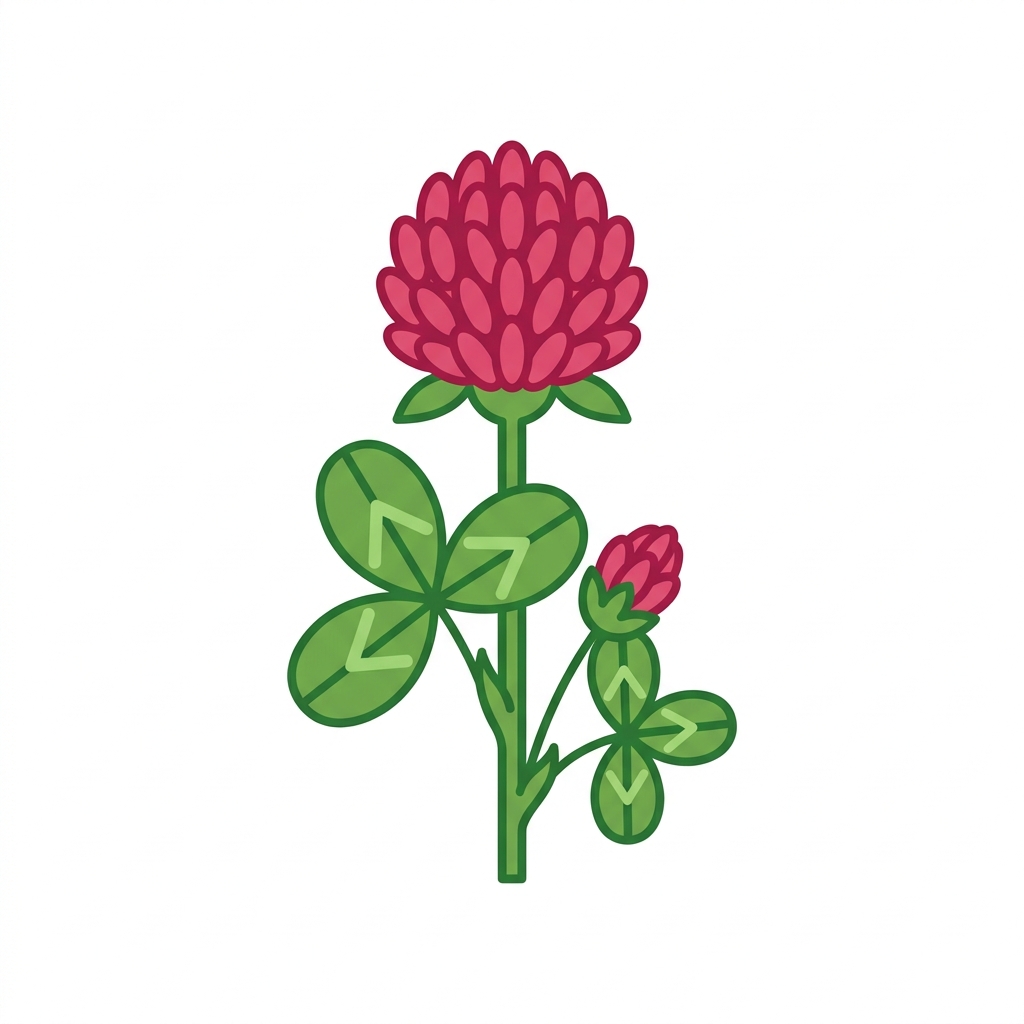
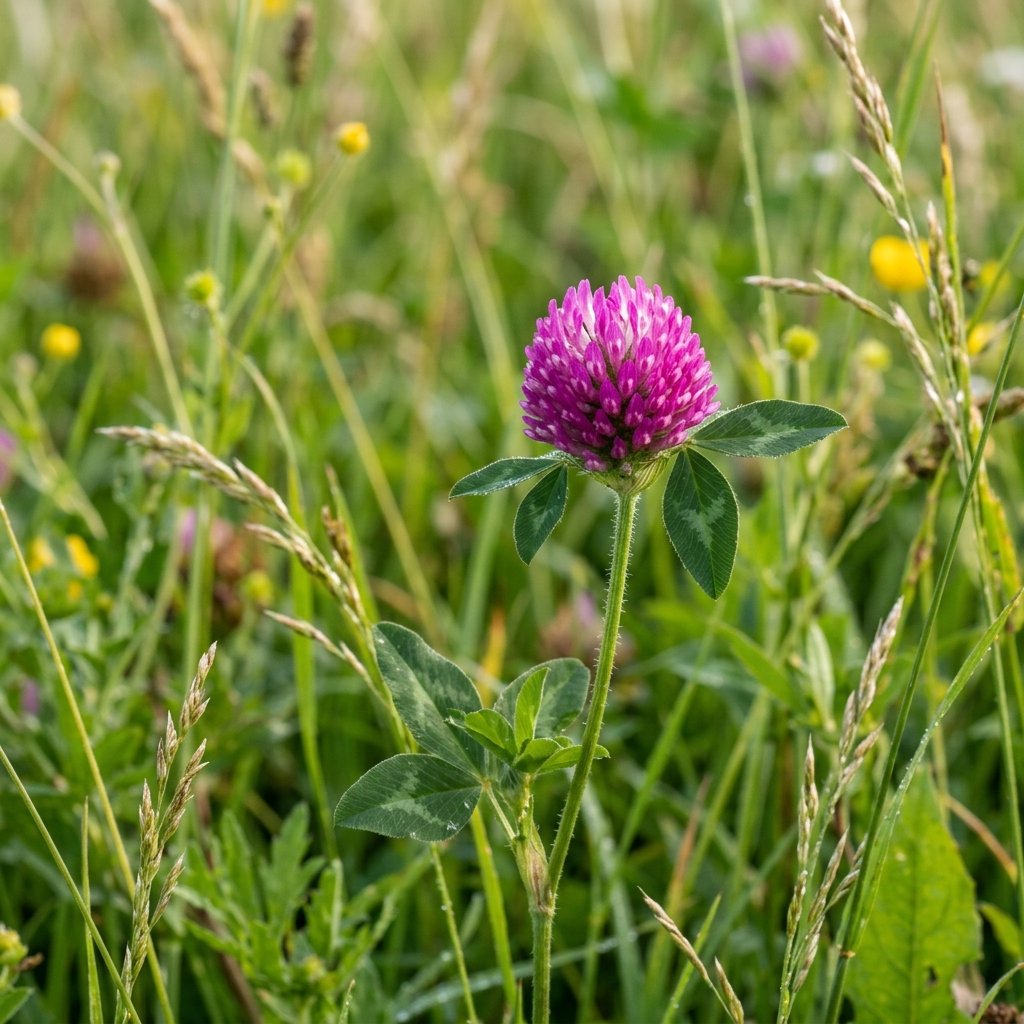
A deep-pink meadow legume beloved of bumblebees — and a natural fertiliser that pulls nitrogen from the air into the soil.
💡 Fun Facts
- Its deep pink flower is really a bundle of dozens of tiny tube-shaped flowers packed together.
- Long-tongued bumblebees reach deep inside to sip the nectar that shorter-tongued bees cannot.
- It takes nitrogen out of the air and feeds it into the soil, helping other plants grow.
📅 Through the Year
- Flowering:May to September
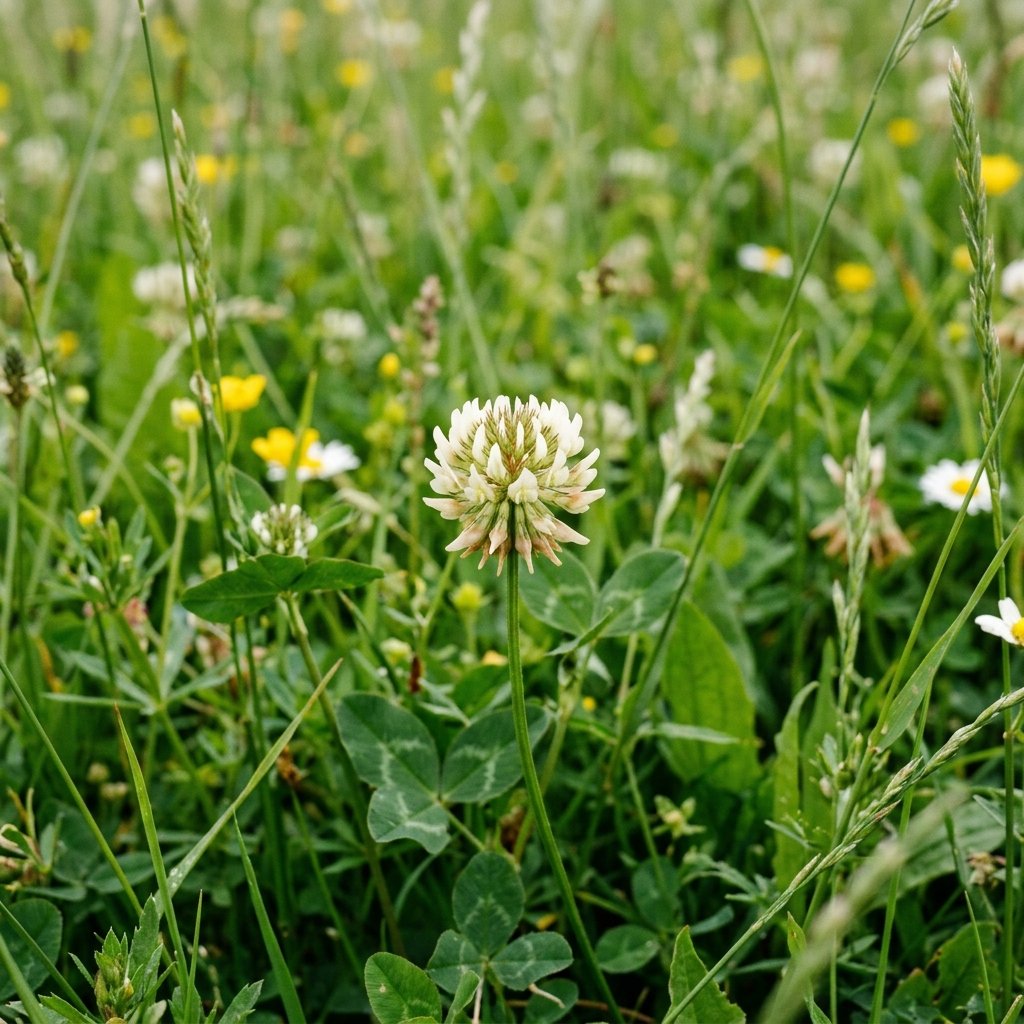
White Clover
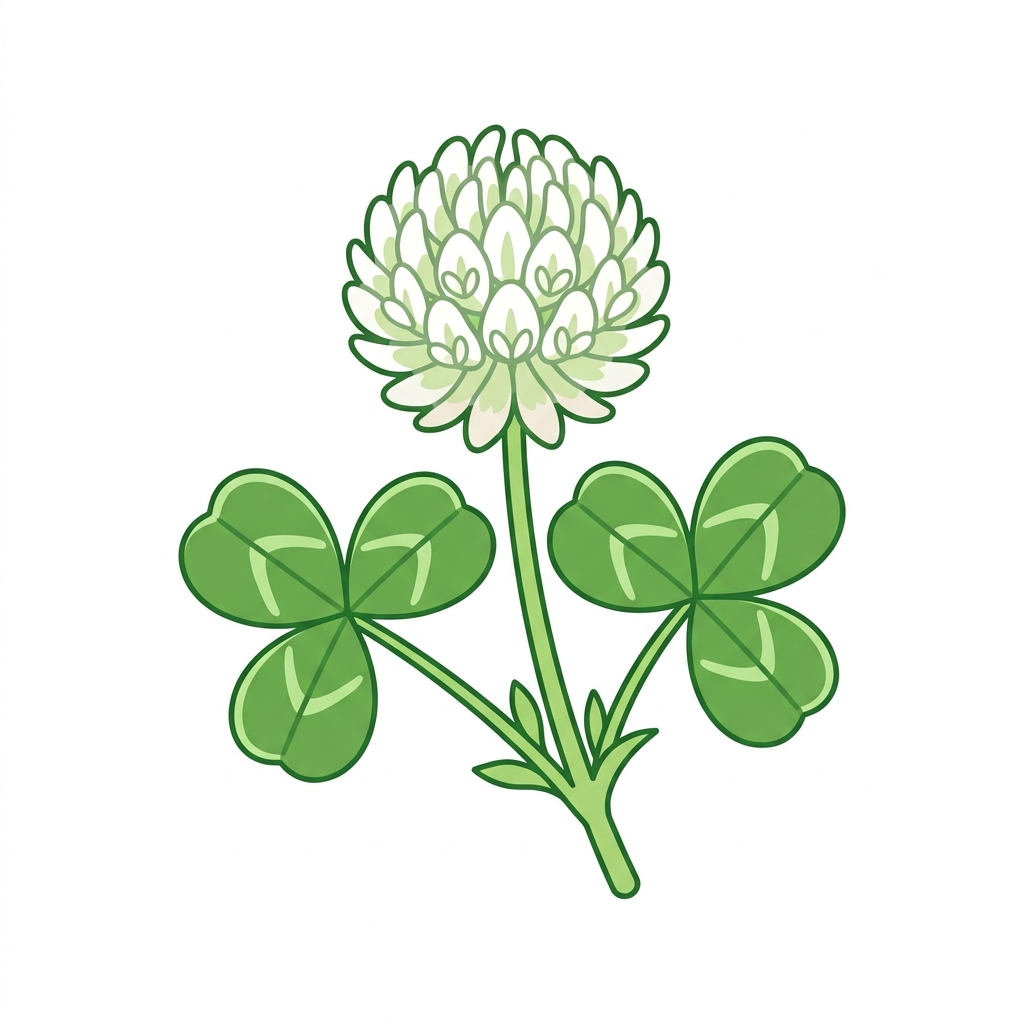
The creeping clover of lawns and pastures — it roots as it crawls, carpets the ground, and is one of the honeybee's favourite nectar plants.
💡 Fun Facts
- It creeps along the ground on runners, taking root wherever a stem touches the soil.
- Its white flower-balls are a favourite of honeybees, which turn the nectar into clover honey.
- It copes with being mown or nibbled again and again, which is why it turns up all over lawns.
📅 Through the Year
- Flowering:May to October
Ox-eye Daisy
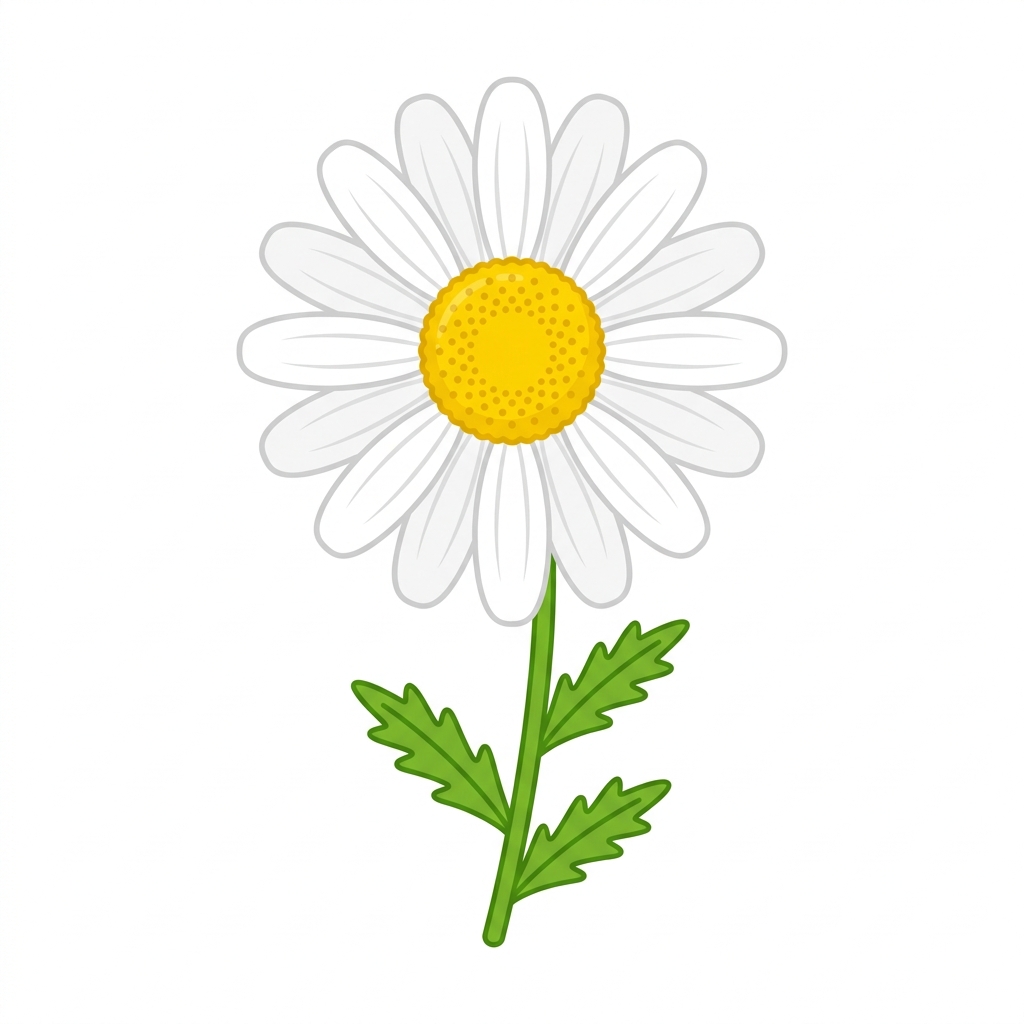
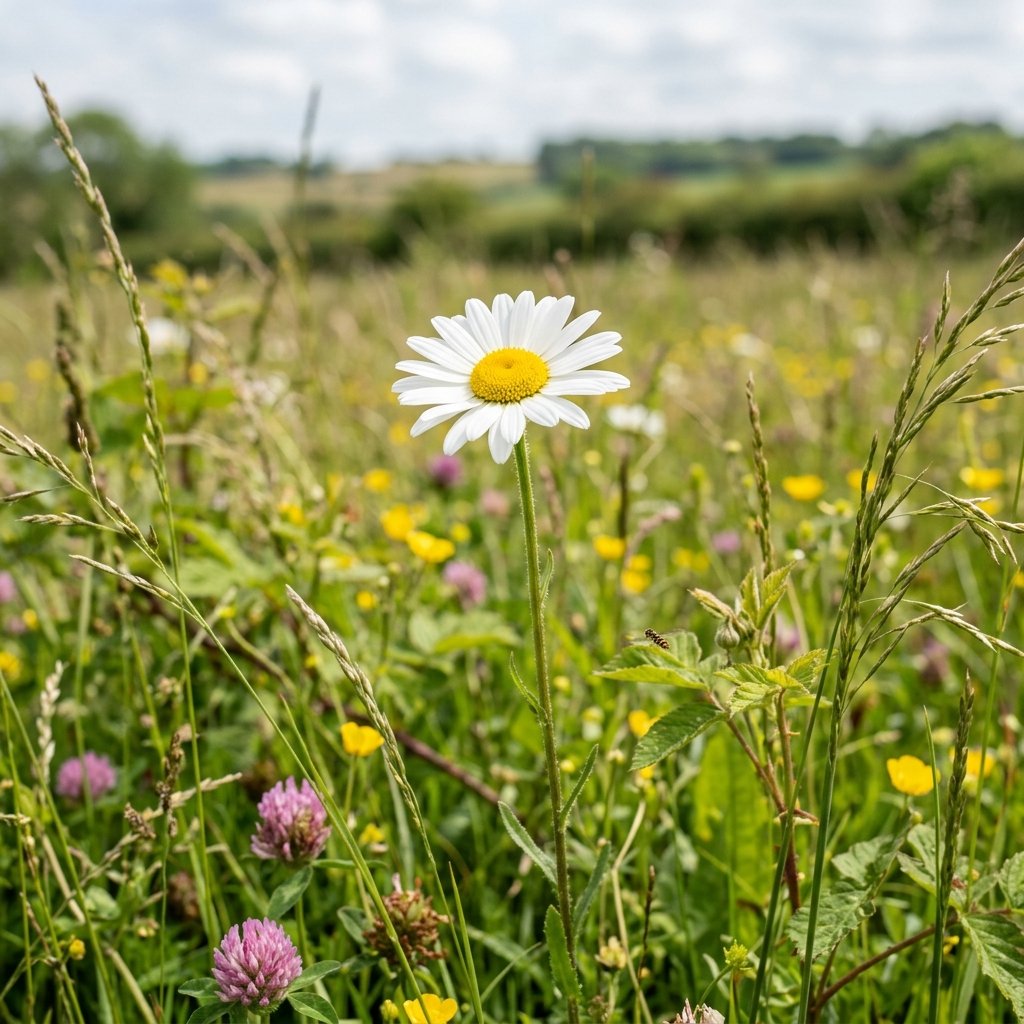
Britain's largest native daisy — a classic 'moon daisy' of hay meadows and verges, with a golden eye ringed by bright white petals.
💡 Fun Facts
- It is Britain's biggest native daisy — like a giant version of the little daisies in a lawn.
- Each 'flower' is really hundreds of tiny flowers: golden ones in the middle and white 'petals' around the edge.
- It is sometimes called the moon daisy because the white flowers seem to glow at dusk.
📅 Through the Year
- Flowering:May to September
- Fruiting:July to September
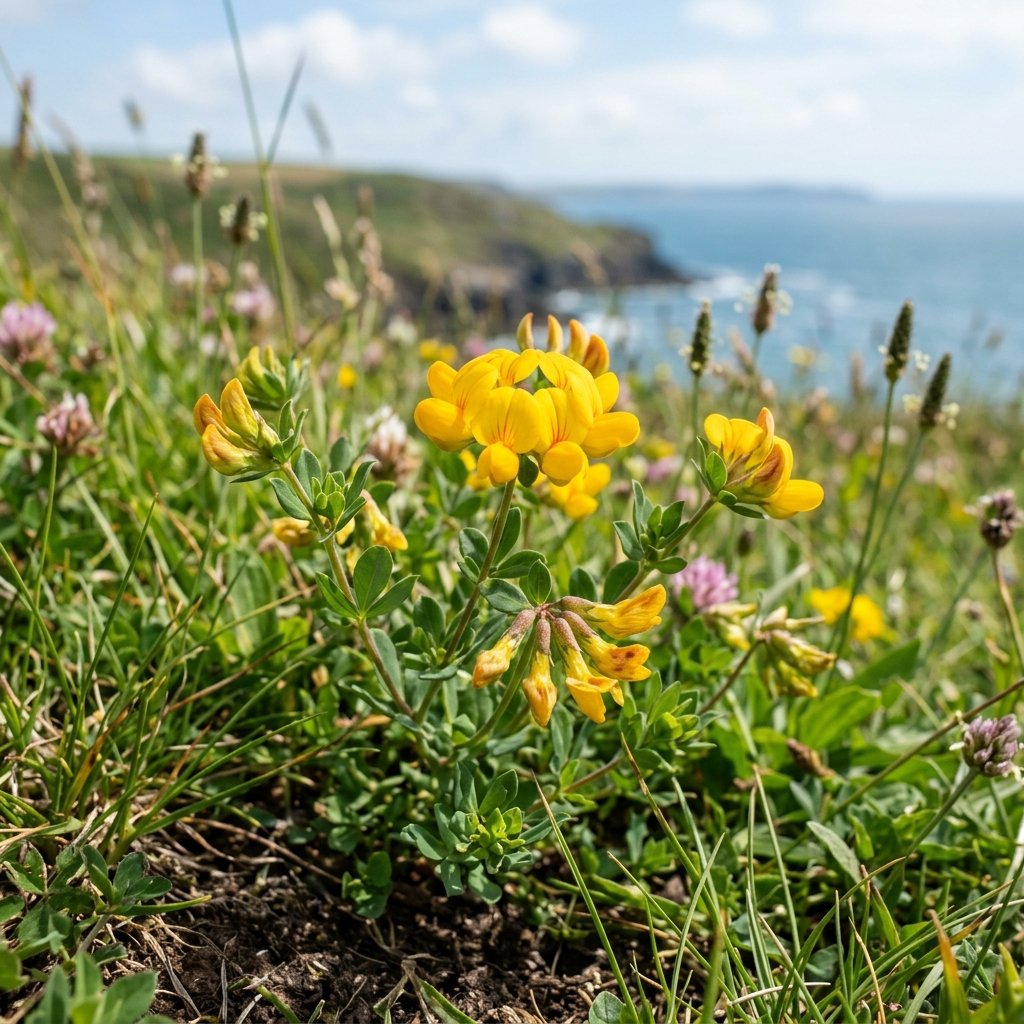
Bird's-foot-trefoil
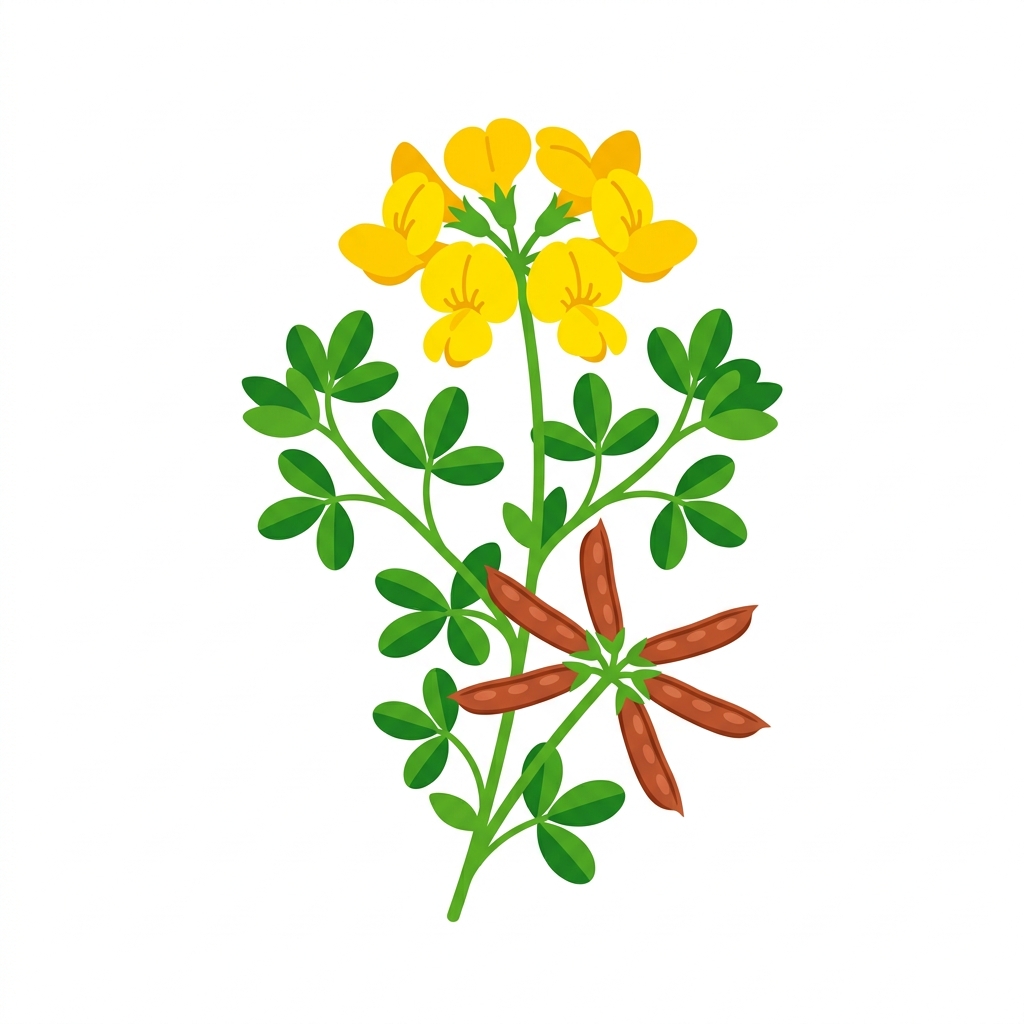
A low, sprawling yellow pea-flower of grassland — nicknamed 'eggs and bacon', with seed pods shaped like a bird's foot and a starring role for the common blue butterfly.
💡 Fun Facts
- Its seed pods splay out like the toes of a bird's foot — that is how it got its name.
- The yellow-and-orange flowers give it the nickname 'eggs and bacon'.
- It is the special foodplant for the caterpillars of the beautiful common blue butterfly.
📅 Through the Year
- Flowering:May to September
Teasel
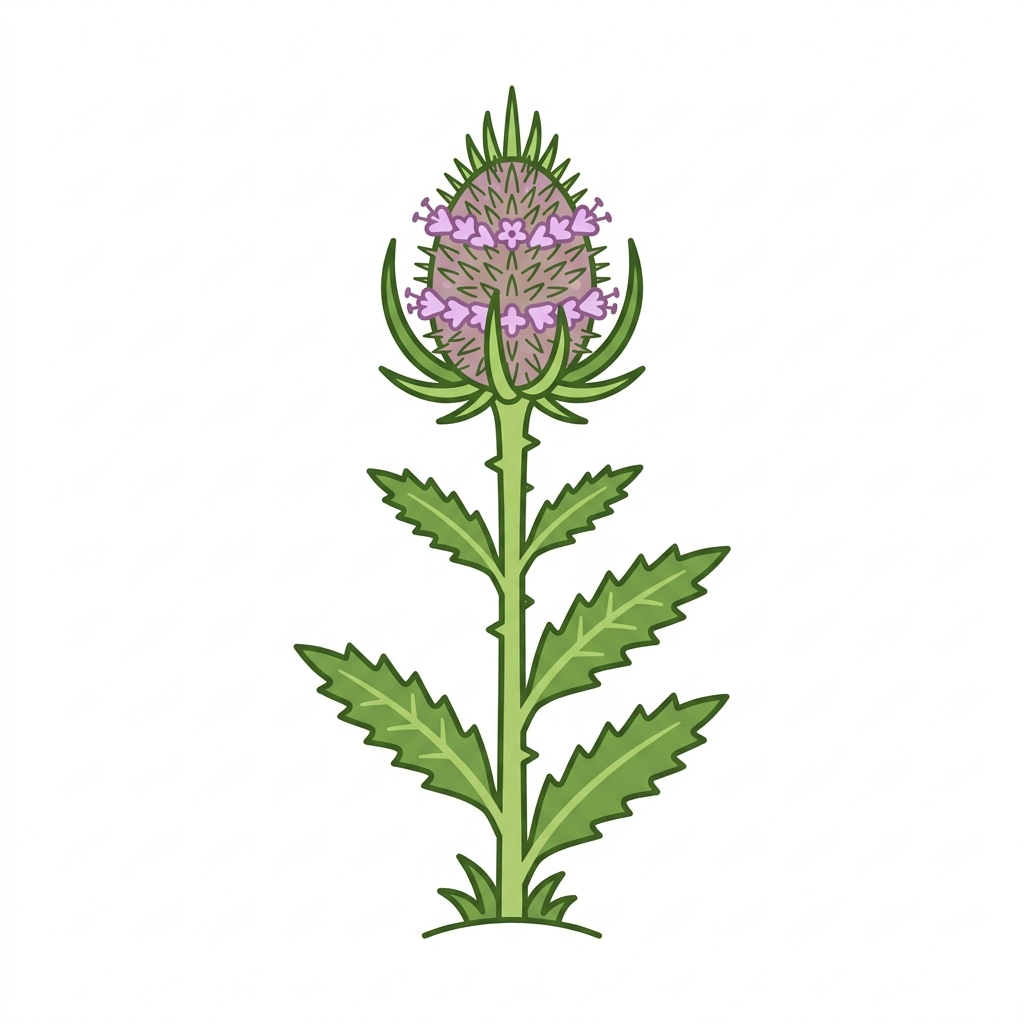
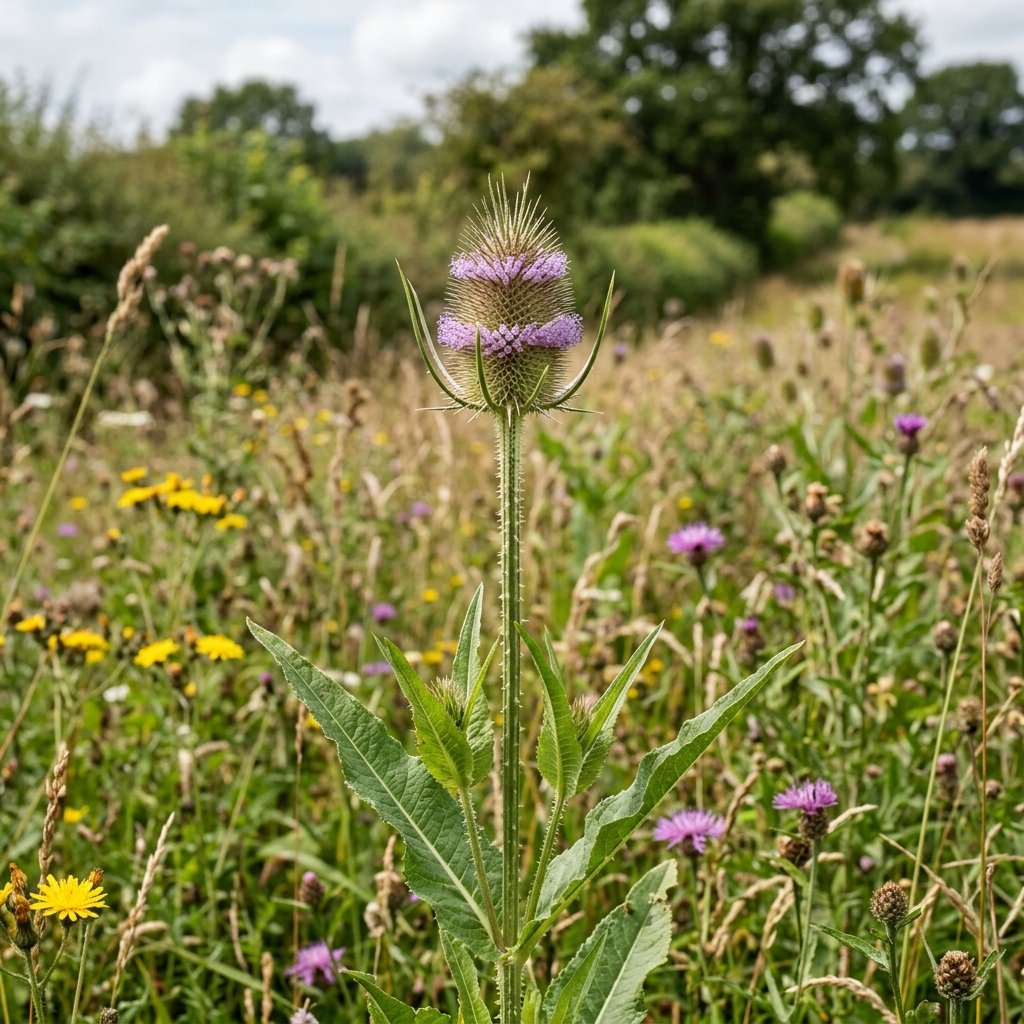
A tall, prickly plant whose spiny seed heads once combed wool for cloth and now feed goldfinches through winter, with leaf-cups that catch the rain.
💡 Fun Facts
- Its spiky egg-shaped flowerheads bristle like a hairbrush and stand tall through the winter.
- Pairs of leaves join around the stem to make little cups that fill with rainwater.
- Goldfinches cling to the dry seed heads all winter to pull out the seeds.
📅 Through the Year
- Flowering:July to August
- Fruiting:August to February
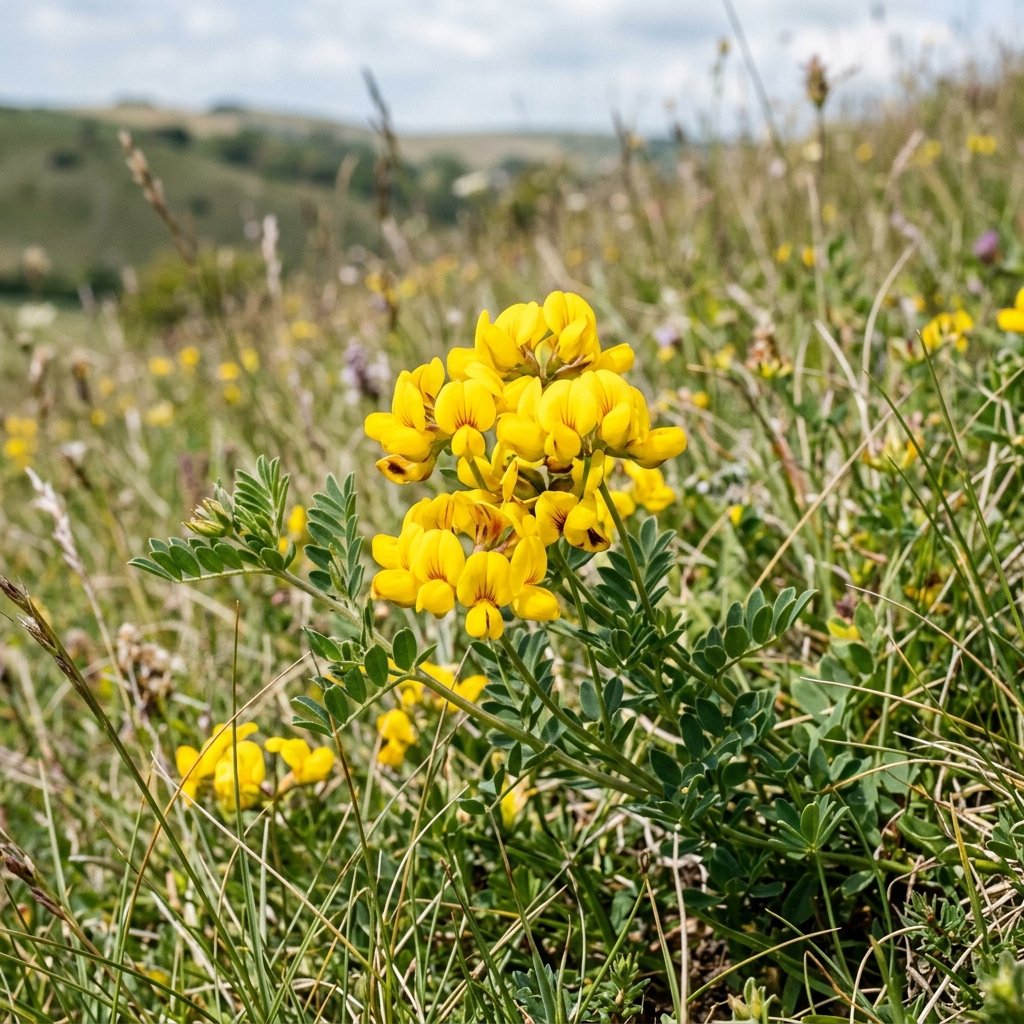
Horseshoe Vetch
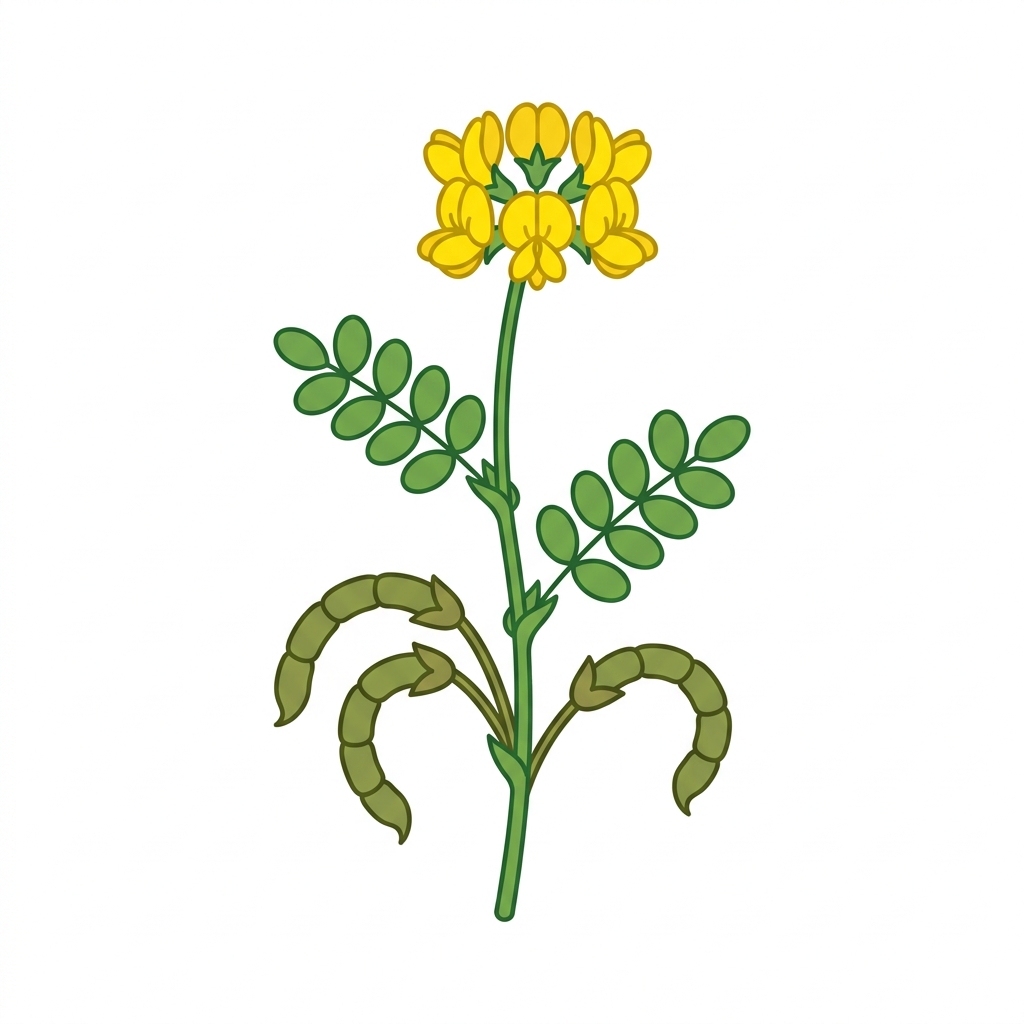
A low golden pea-flower of chalk downland — named for its horseshoe-shaped seed pods and the sole foodplant of the rare Adonis blue and chalkhill blue butterflies.
💡 Fun Facts
- Its seed pods break into little curved pieces, each shaped like a tiny horseshoe.
- It grows only on chalk and limestone grassland in the warm south of Britain.
- It is the one and only plant that Adonis blue and chalkhill blue caterpillars will eat.
📅 Through the Year
- Flowering:May to July
Gorse
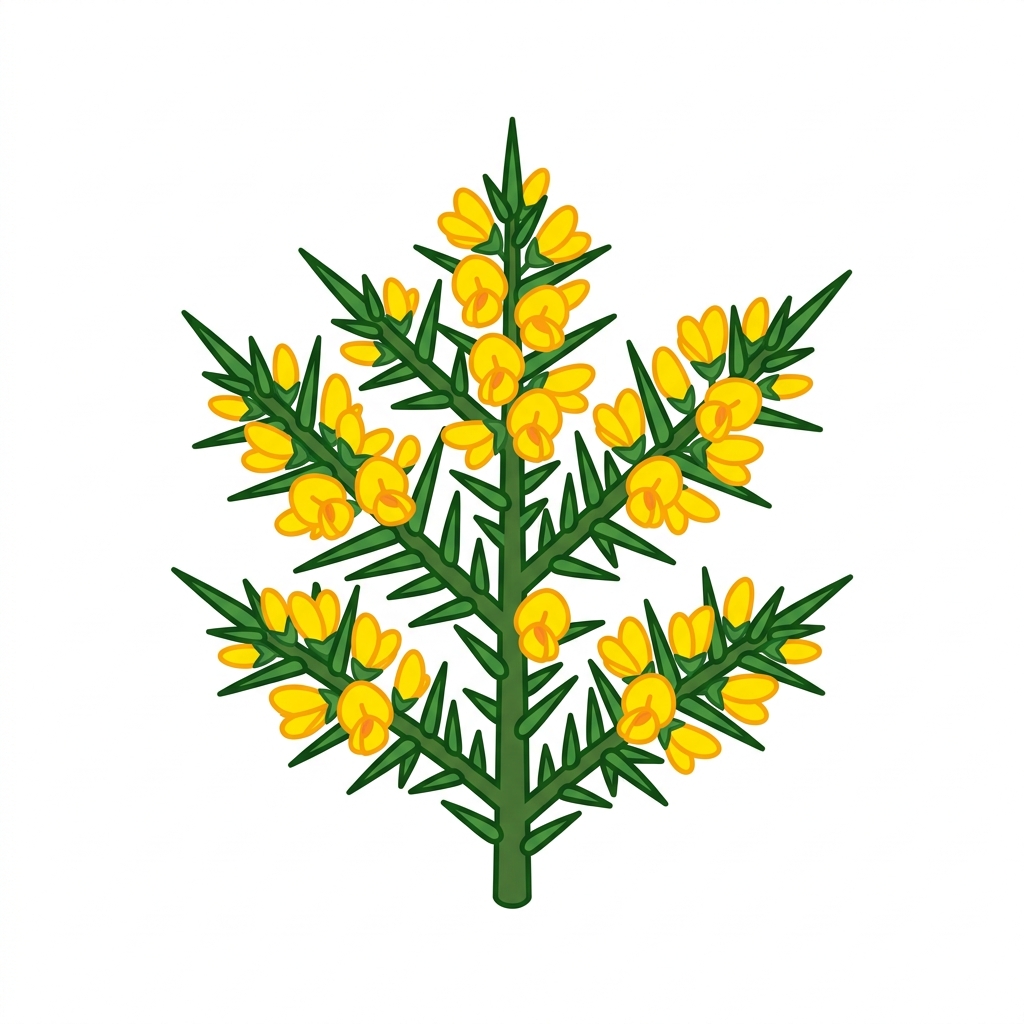
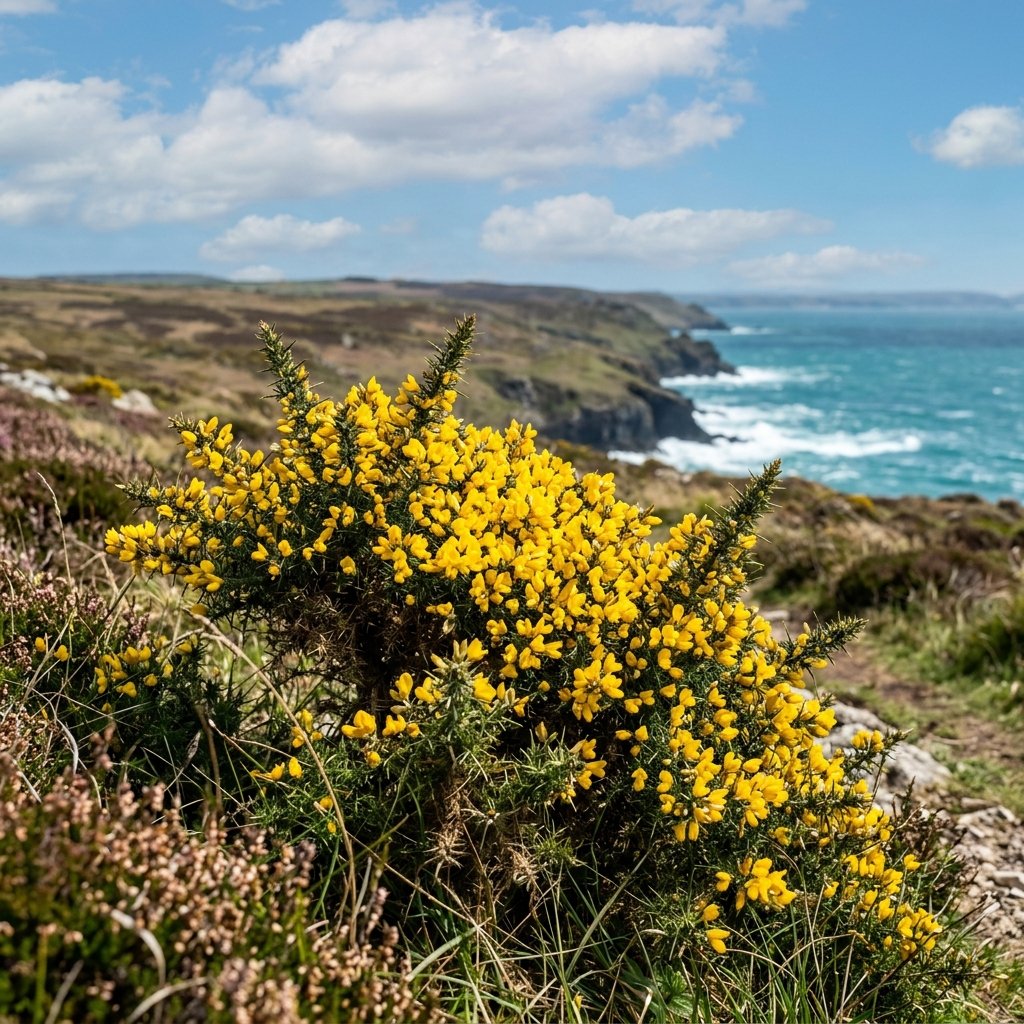
A spiny, evergreen heathland shrub whose coconut-scented yellow flowers appear in almost every month of the year, and whose seed pods burst open with an audible crack.
💡 Fun Facts
- Gorse flowers in almost every month of the year — there is an old saying that 'when gorse is out of bloom, kissing is out of fashion'.
- Its bright yellow flowers smell just like coconut on a warm day.
- Instead of soft leaves it has thousands of sharp green spines, making it a spiky fortress for nesting birds.
📅 Through the Year
- Flowering:January to December
- Fruiting:May to August
Grasses
The grasses that give this habitat its name and carpet the ground.
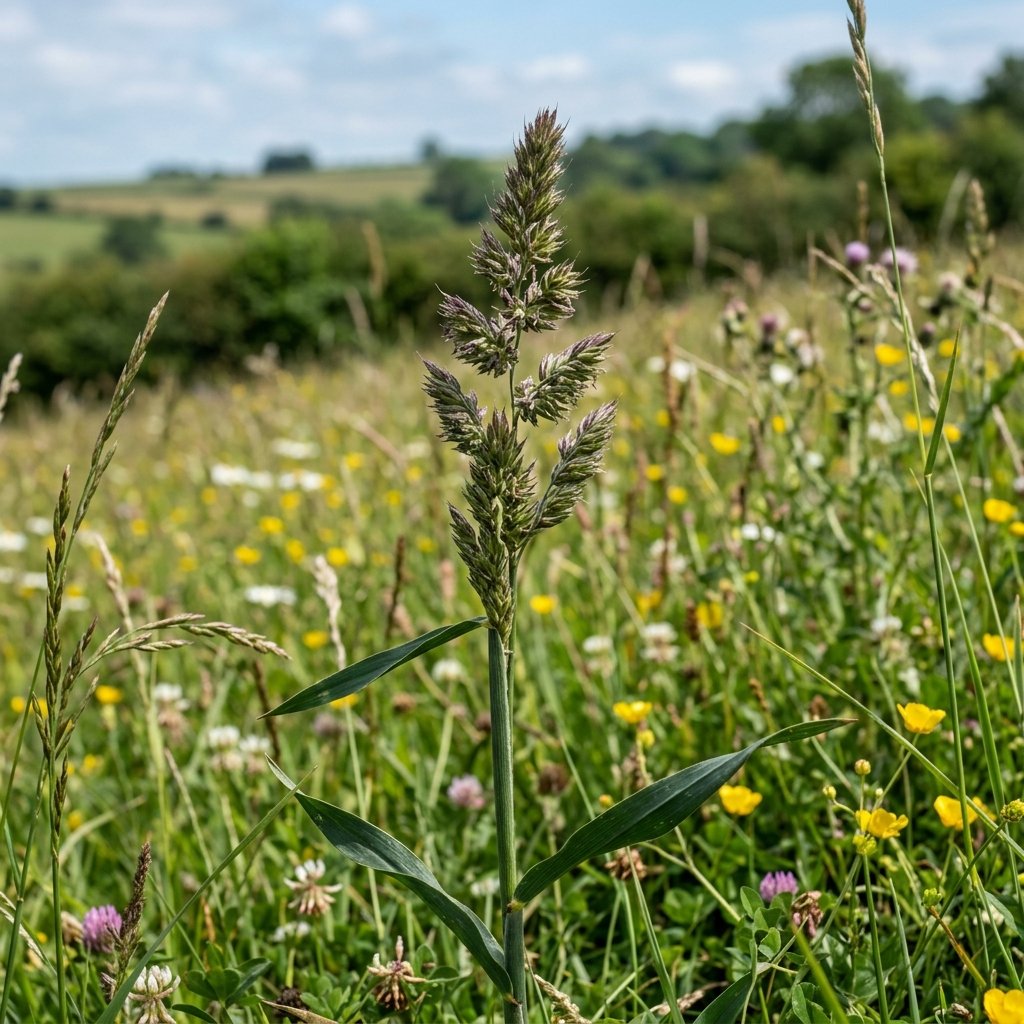
Cock's-foot
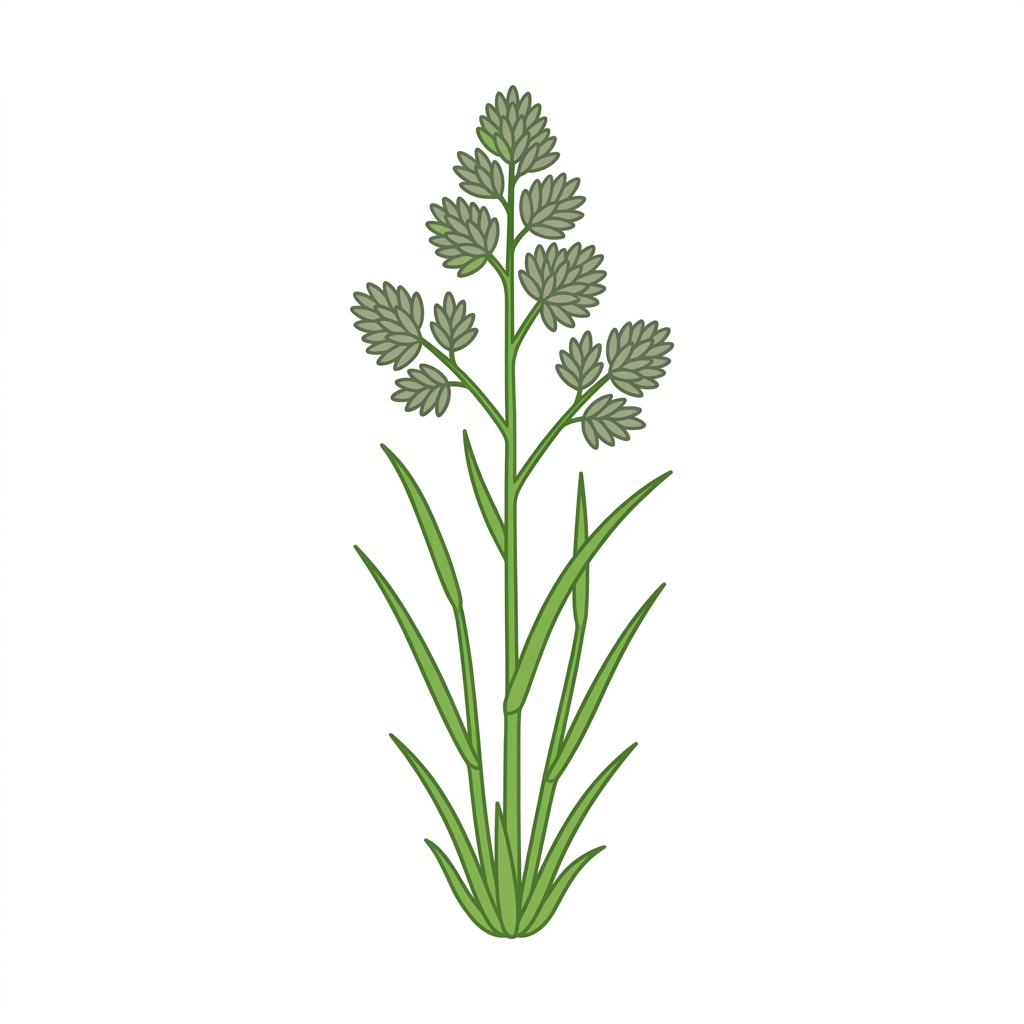
A coarse, tussocky meadow grass named for its splayed, clumped flower head — and a vital food plant for skipper butterfly caterpillars.
💡 Fun Facts
- This common meadow grass is named after its flower head, which is clumped and splayed like a cockerel's foot.
- It grows in tough tussocks with roots reaching about a metre down, so it keeps going even in a drought.
- Its leaves are the main food for the caterpillars of the Large Skipper butterfly.
📅 Through the Year
- Flowering:June to August
- Fruiting:July to September
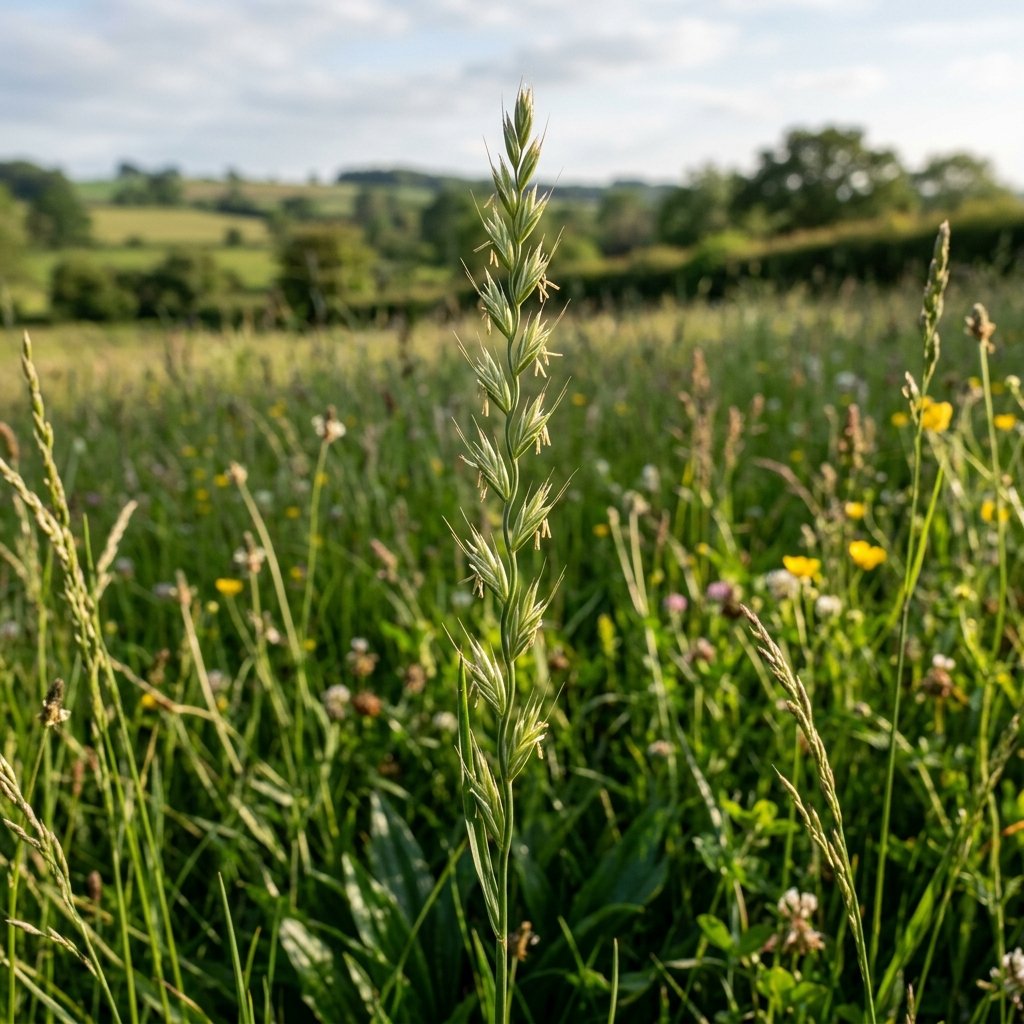
Perennial Rye-grass
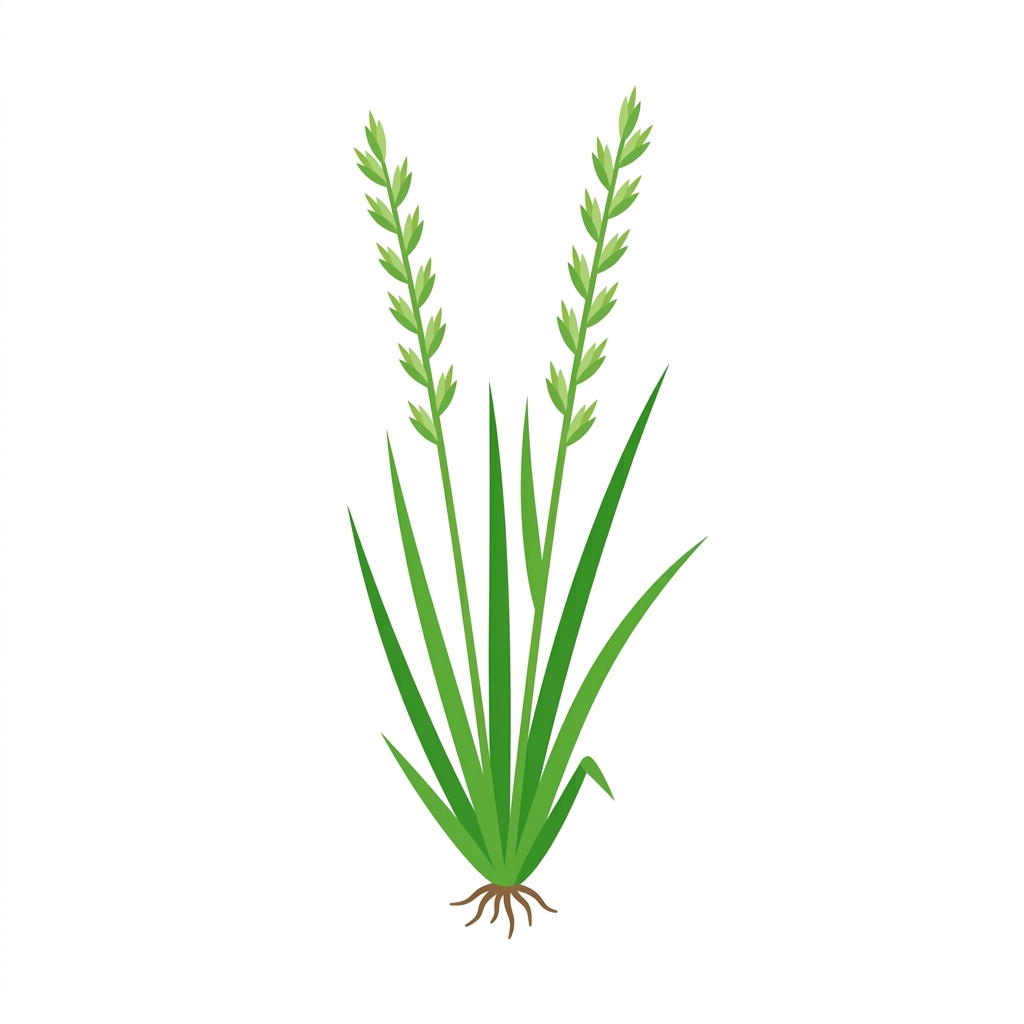
The hard-wearing grass of lawns, pastures and sports pitches — it springs back from cutting and trampling better than almost any other, and is the most widely sown grass in the temperate world.
💡 Fun Facts
- This is the grass of most lawns, football pitches and farm fields — the one you probably walk on most often.
- It grows back fast after being cut, grazed or trampled, which is why it is sown almost everywhere.
- It is the most widely planted grass in the whole temperate world.
📅 Through the Year
- Flowering:May to July
- Fruiting:July to August
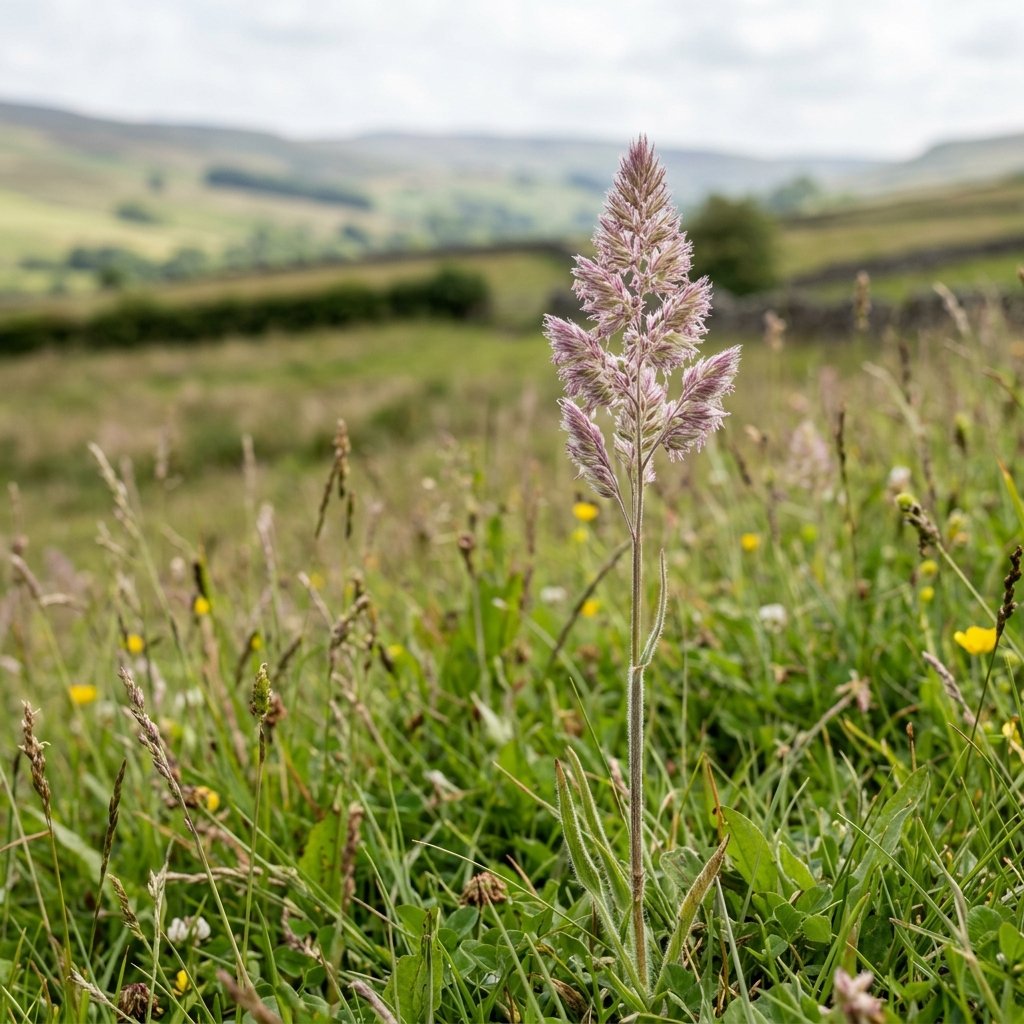
Yorkshire Fog
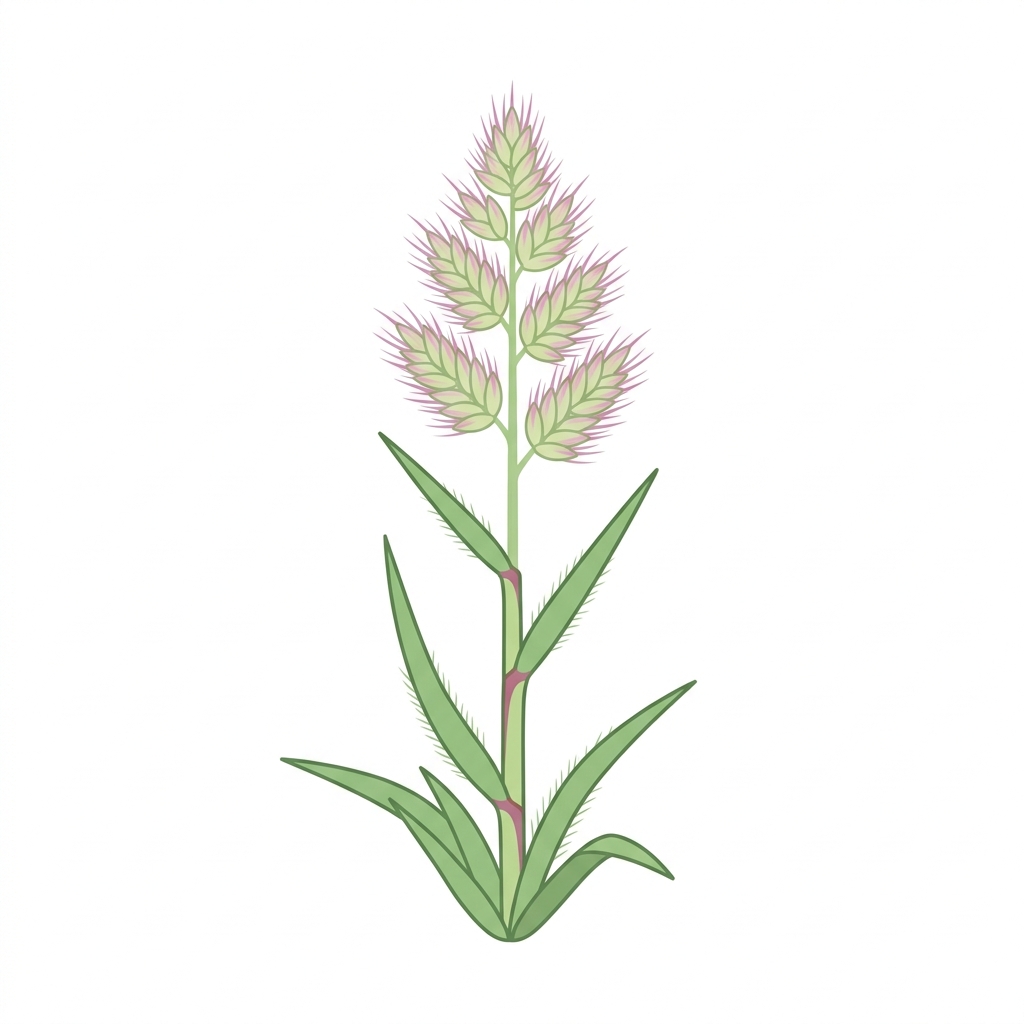
A soft, woolly, grey-green grass of damp meadows whose flower heads flush pink-purple — and one of the most prolific seeders of any UK grass, shedding up to a quarter of a million seeds a year.
💡 Fun Facts
- This soft, grey-green grass is covered in fine woolly hairs — its Latin name 'lanatus' means 'woolly'.
- Its flower heads flush a pretty pink-purple, like a soft fog drifting over a damp meadow.
- A single plant can scatter up to a quarter of a million seeds in one year.
📅 Through the Year
- Flowering:June to July
- Fruiting:July to September
Ferns and horsetails
An ancient, flowerless plant that still thrives in grassy places.
Field Horsetail
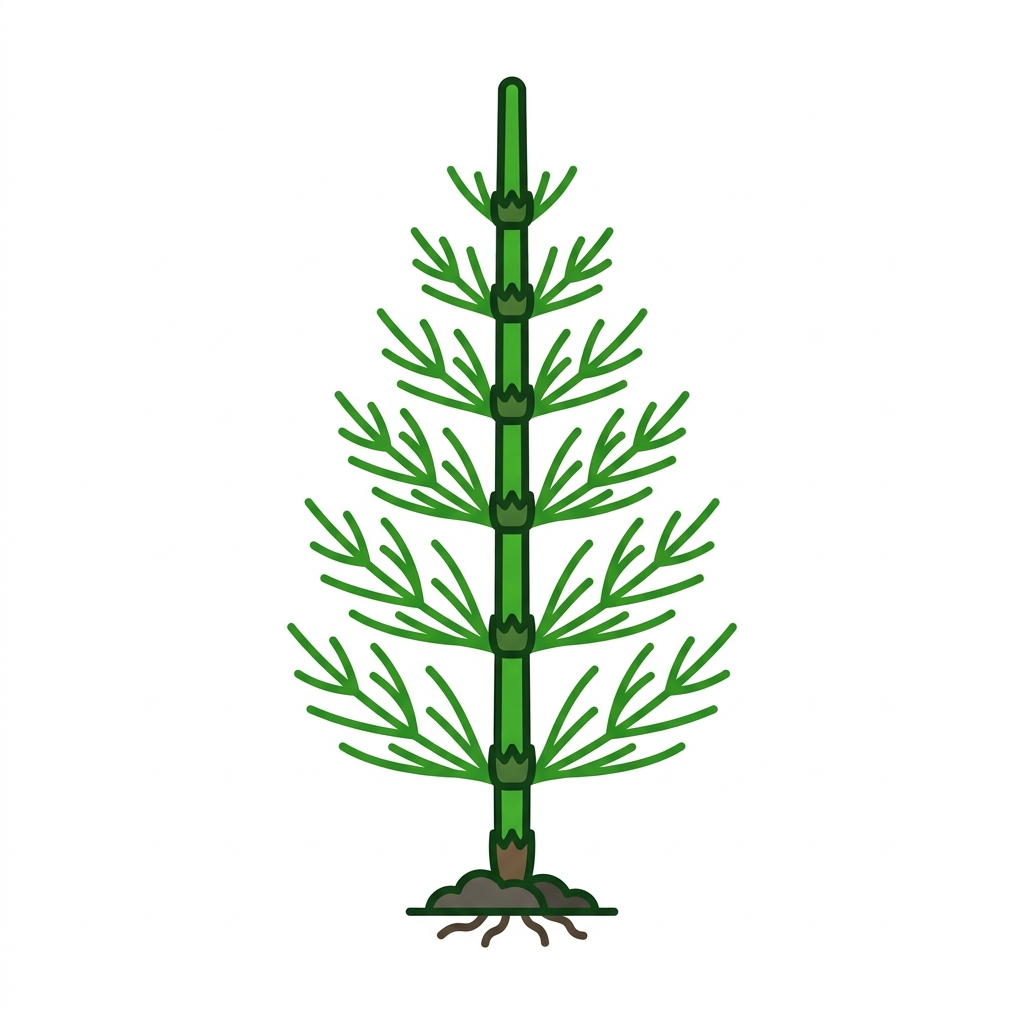
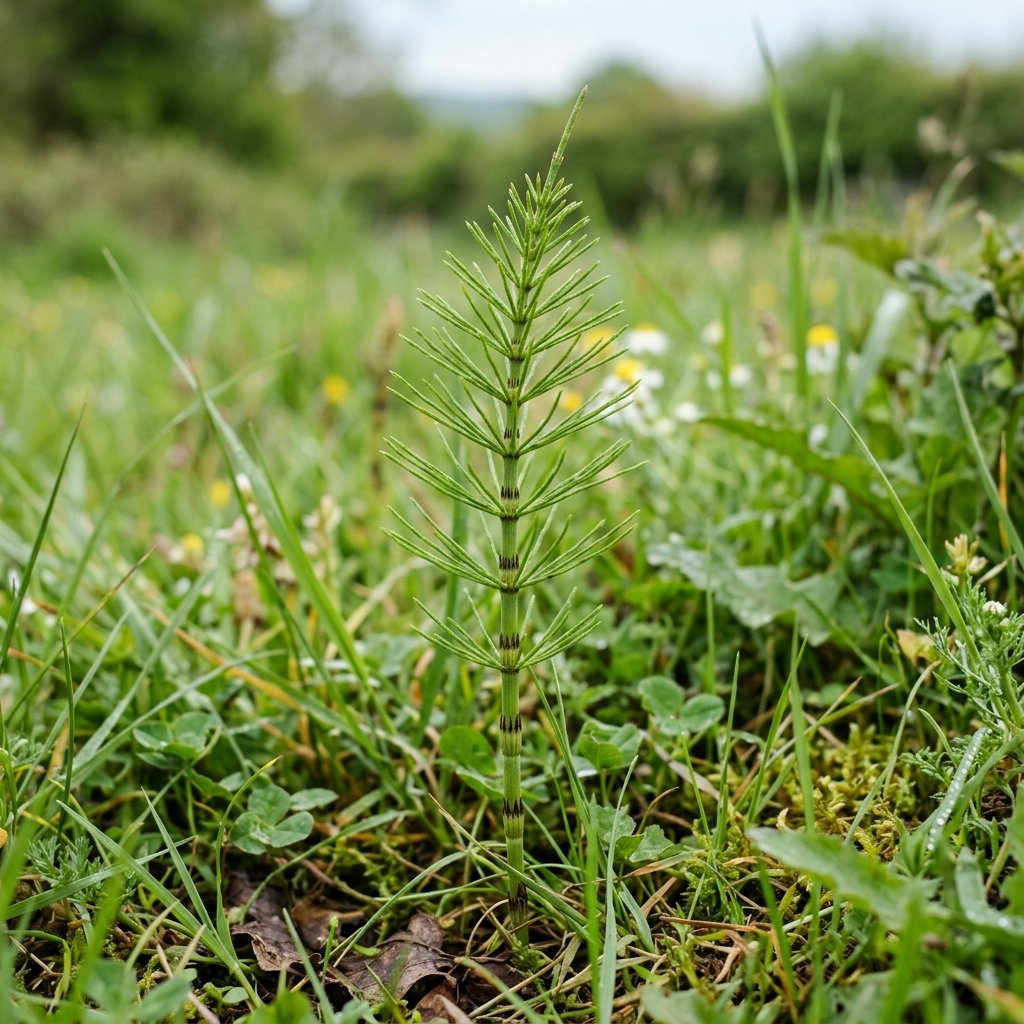
A living-fossil plant with feathery, bottlebrush stems stiffened by gritty silica — once used to scour pots, and almost impossible to dig out of a garden.
💡 Fun Facts
- Horsetails are living fossils — their ancestors grew as tall as trees over 300 million years ago, long before the dinosaurs.
- It makes no flowers or seeds: pale, cone-tipped stems pop up first in spring to scatter spores, then feathery green shoots follow.
- Its stems are stiffened with gritty silica (like tiny grains of glass), so people once used it to scrub and polish metal.
📅 Through the Year
- Leaf-out:March to April
- Leaf fall:October to November
Animals you might meet
Butterflies and bees that visit the meadow flowers.
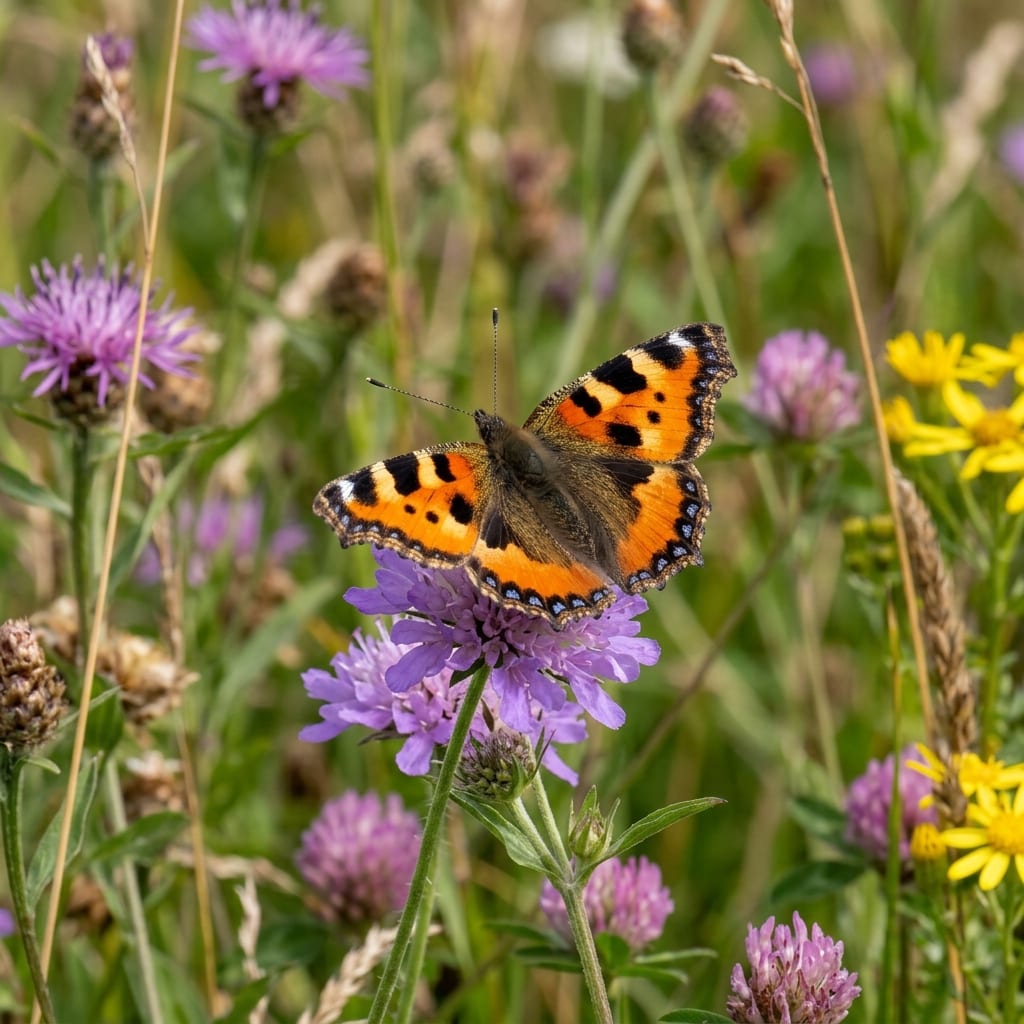
Small Tortoiseshell
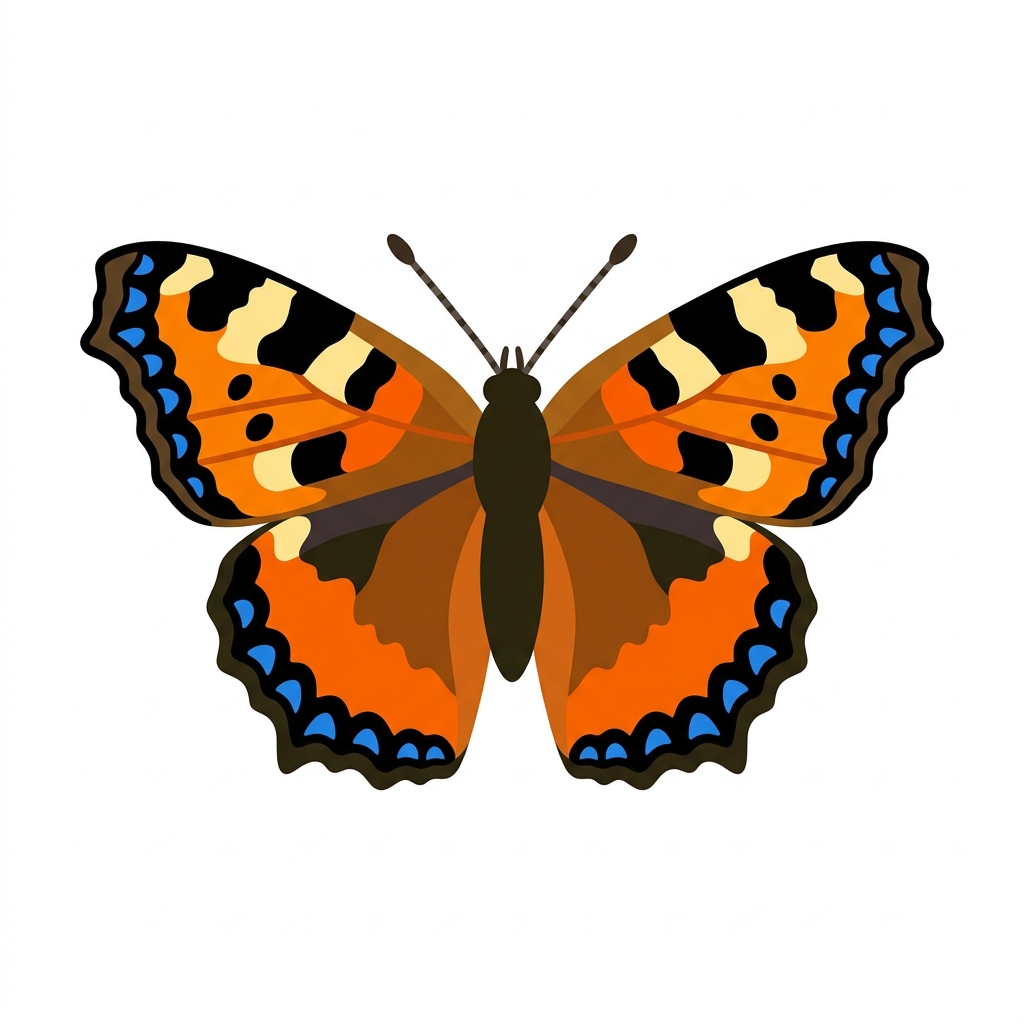
A beautiful orange butterfly patterned with black, yellow and a row of blue spots. One of the first butterflies seen in spring, having slept through the winter as an adult.
💡 Fun Facts
- The Small Tortoiseshell is one of our most familiar garden butterflies, with warm orange wings edged in blue spots.
- Its spiky black caterpillars live together in a silk web on common nettles before turning into butterflies.
- Adults survive the winter by hibernating in sheds, lofts and hollow trees, then wake on the first warm days of spring.
📅 Through the Year
- Hibernation:November to February
- Active:March to October
Peacock Butterfly
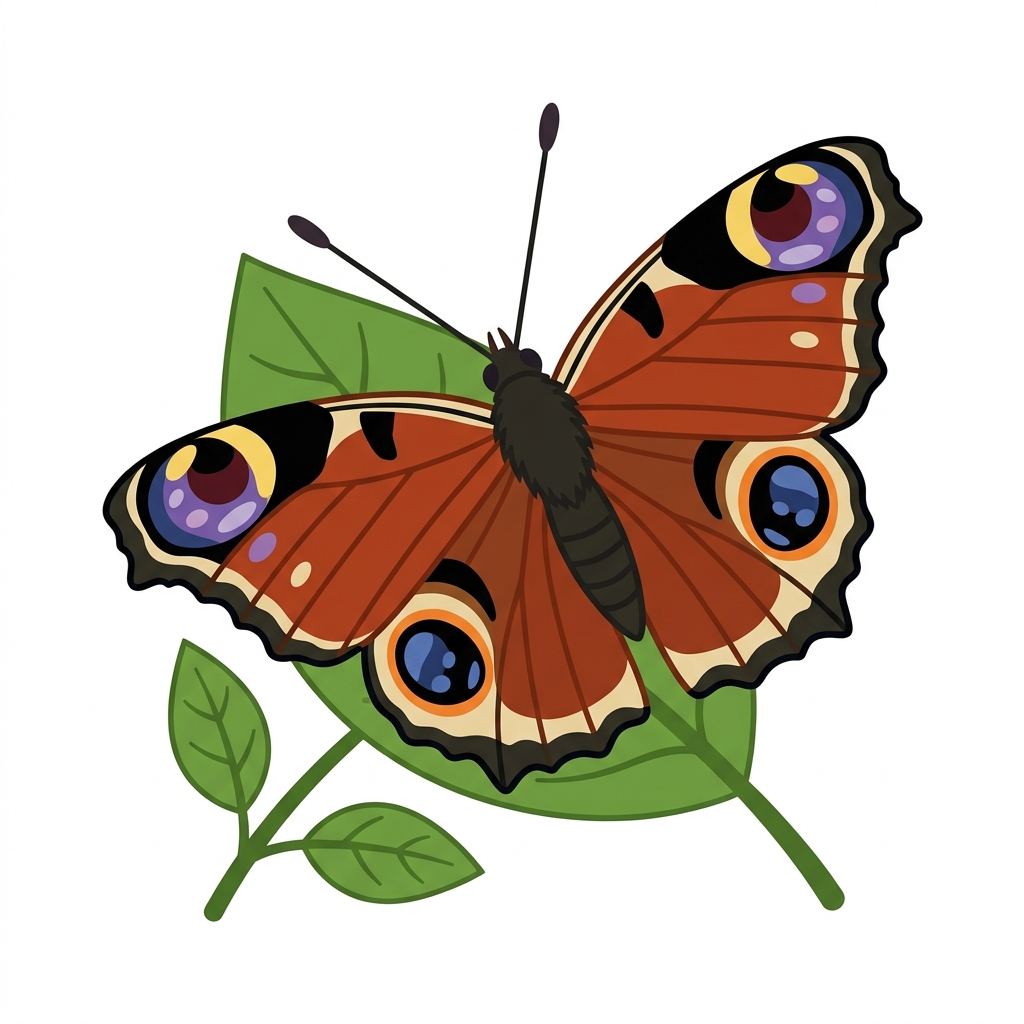
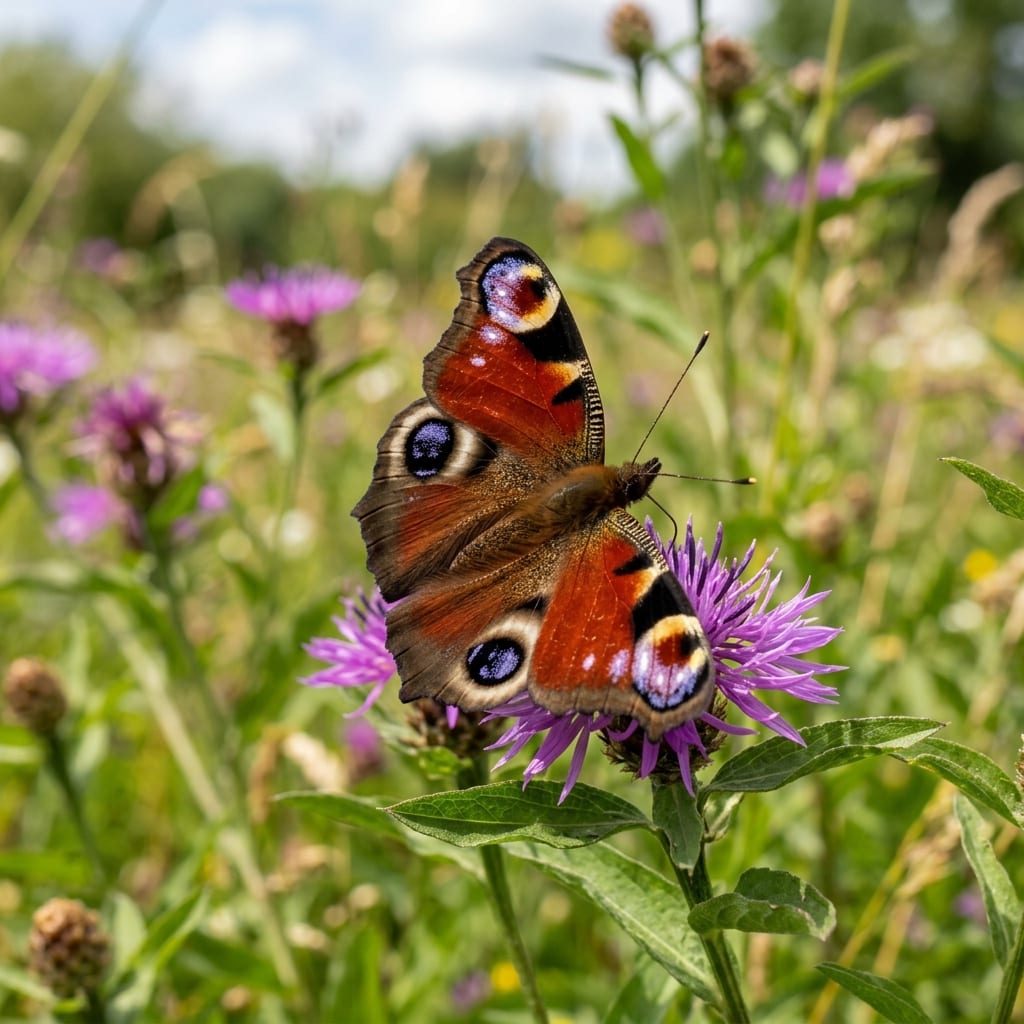
A stunning deep-red butterfly with four eye-like spots that flash to startle predators. Shut tight, its wings look like a dead leaf as it sleeps through the winter.
💡 Fun Facts
- The Peacock has four big, bright eyespots on its wings that look like staring eyes to scare away hungry birds.
- If a predator gets too close, it rubs its wings together to make a hissing, rustling sound.
- With its wings shut, the Peacock looks just like a dark dead leaf, perfect camouflage while it hibernates through winter.
📅 Through the Year
- Hibernation:October to February
- Active:March to September
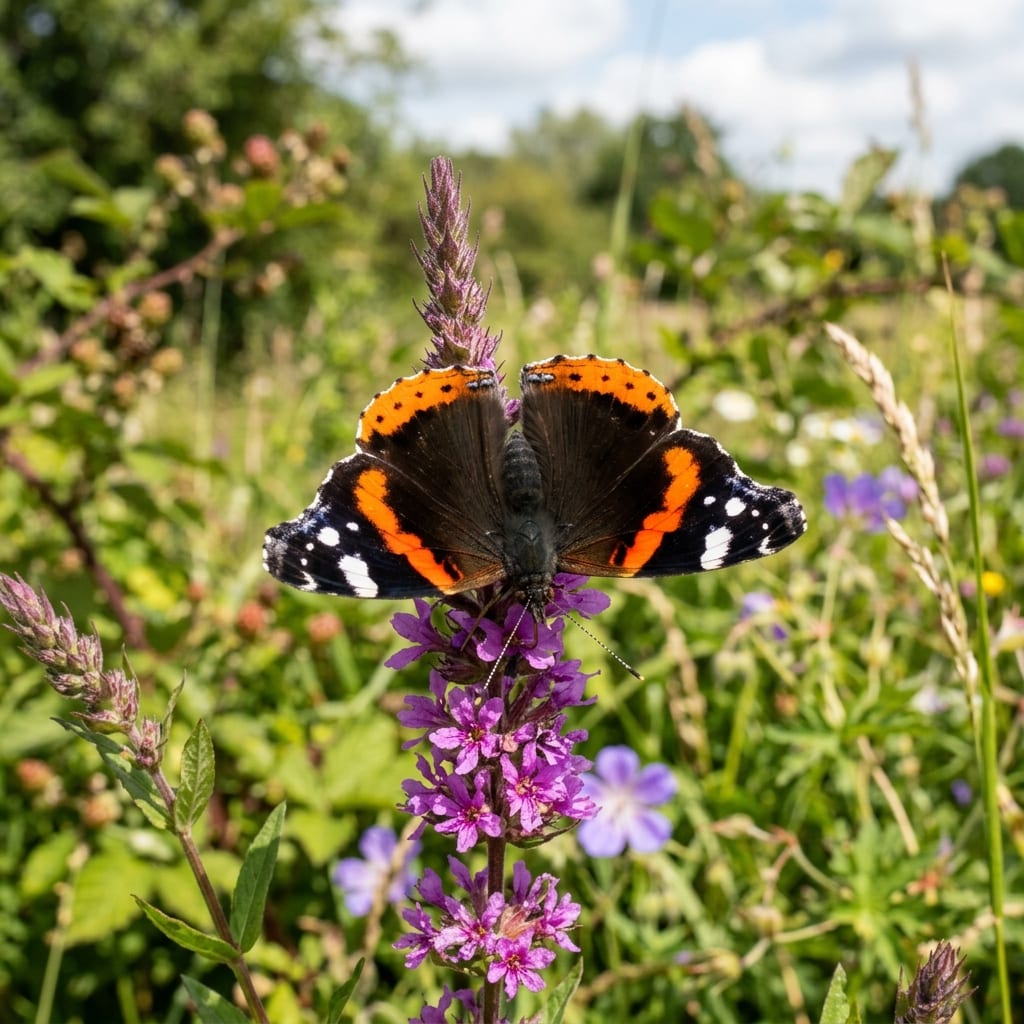
Red Admiral
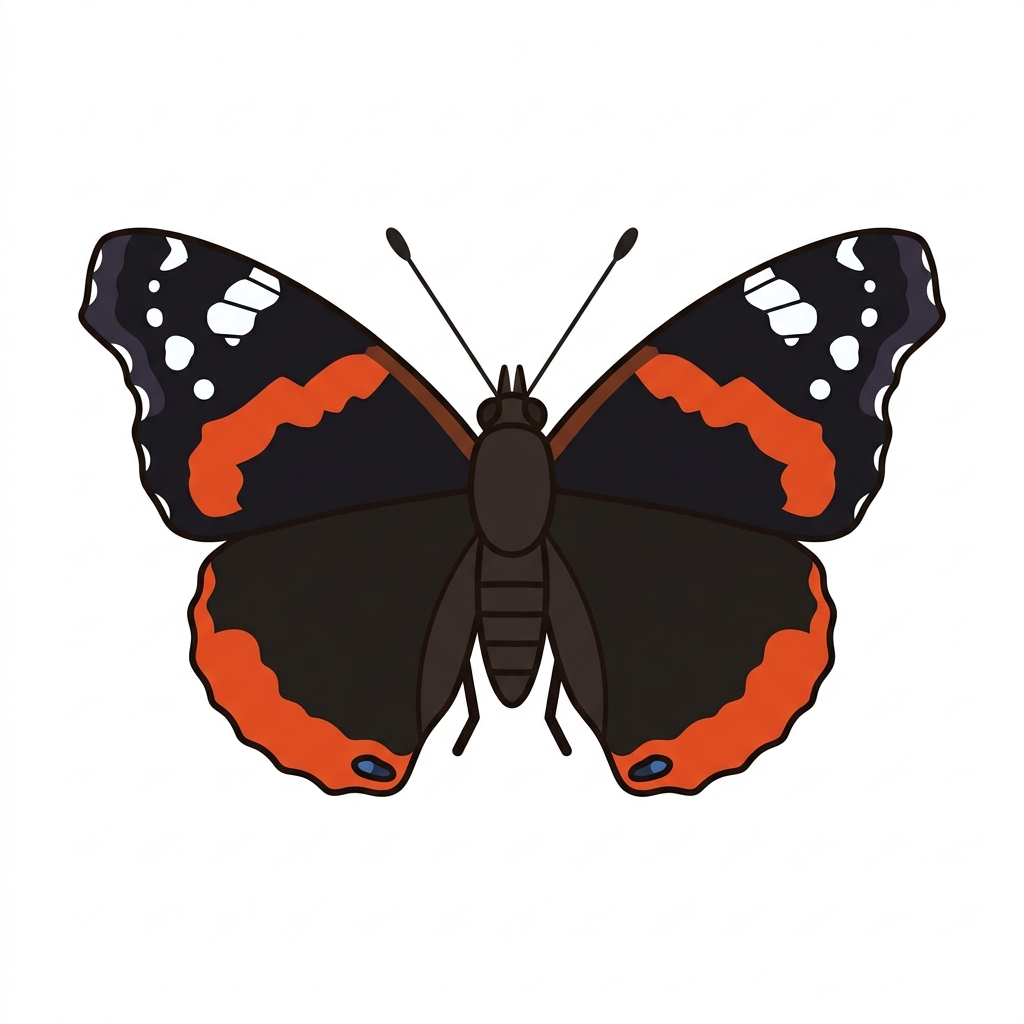
A striking black butterfly banded with scarlet, a strong flier that migrates to Britain each spring. In autumn it feasts on windfall fruit and ivy blossom.
💡 Fun Facts
- The Red Admiral is a bold black butterfly with bright red bands and crisp white spots on its wings.
- Many arrive each spring after an astonishing journey, flying all the way from southern Europe and North Africa.
- In autumn it loves to feed on fallen, fermenting fruit and on the last nectar of ivy flowers.
📅 Through the Year
- Migration:May to June
- Active:April to October
Comma Butterfly
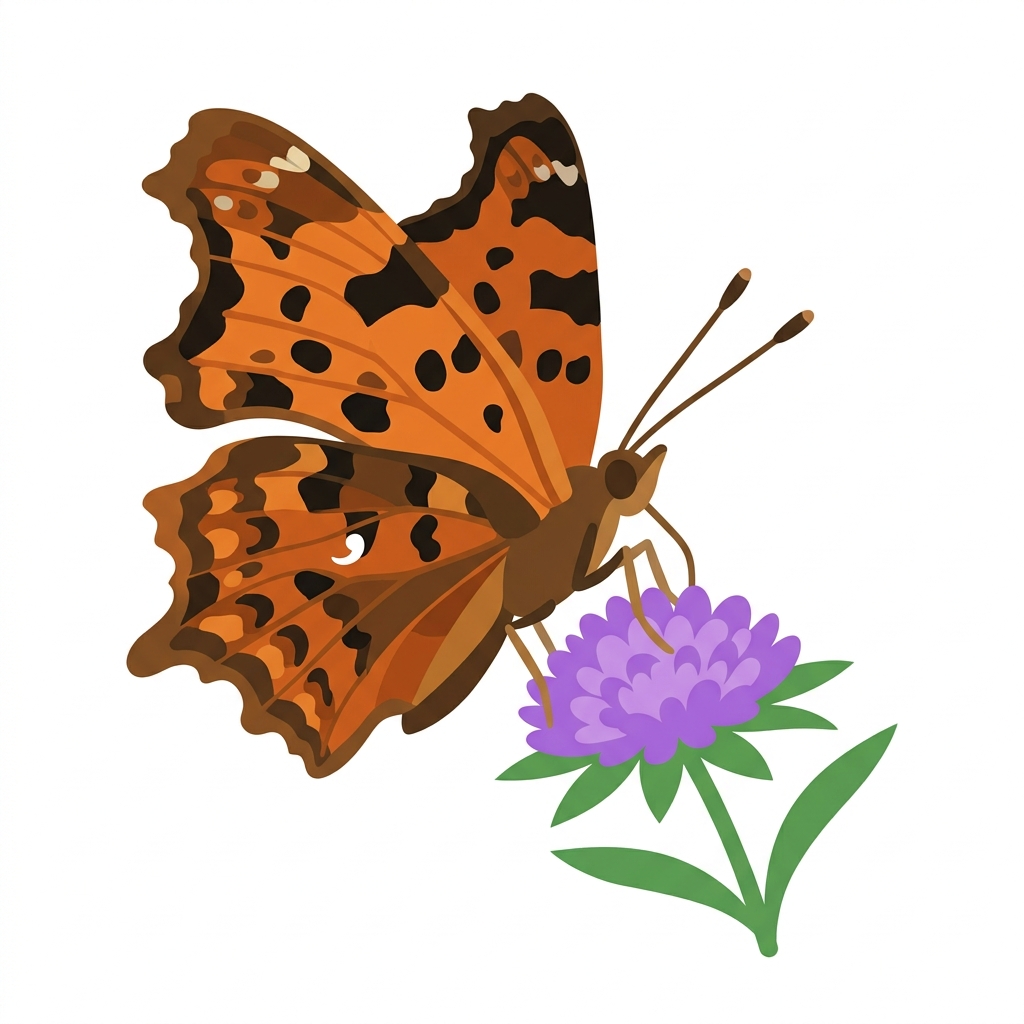
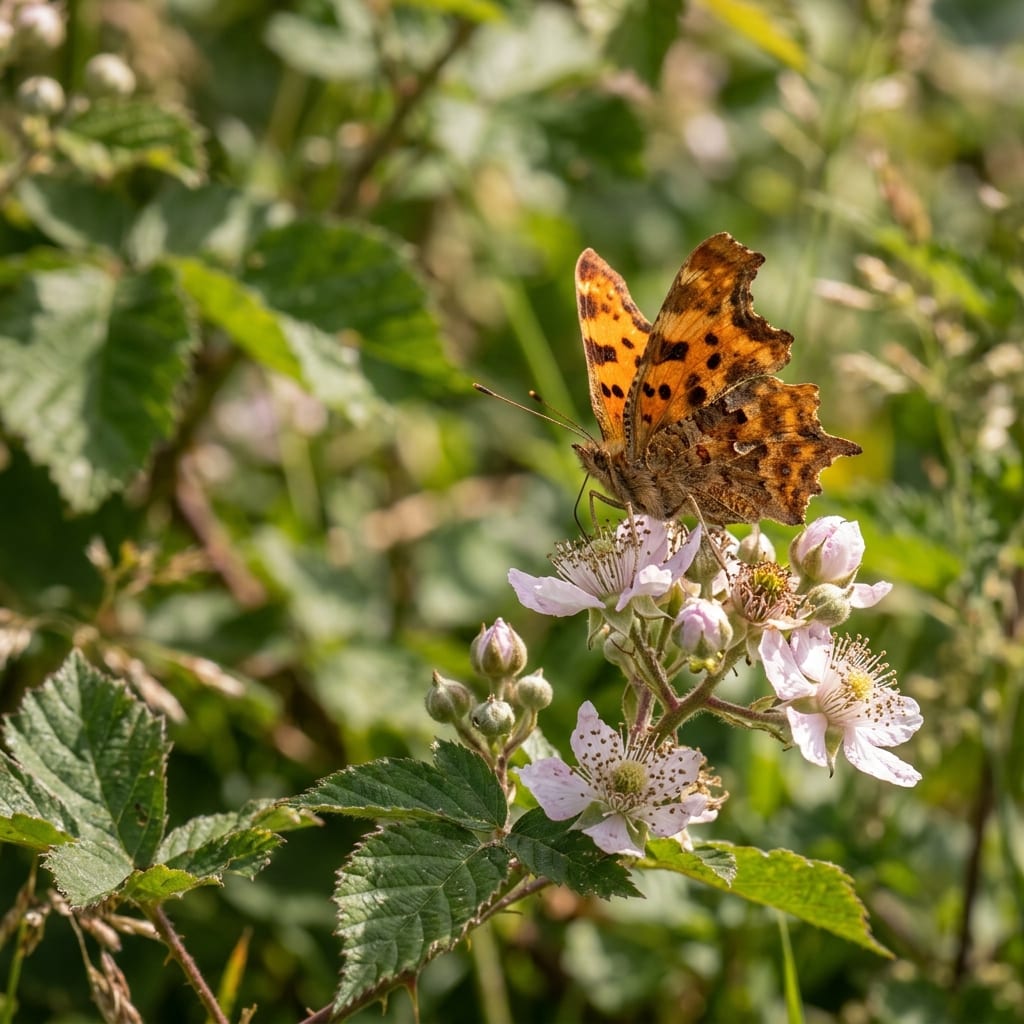
An orange butterfly with deeply ragged wing edges and a tiny white comma mark beneath. Folded shut, it vanishes among dead leaves as it hibernates through winter.
💡 Fun Facts
- The Comma is named after the small white 'comma' mark on the underside of each wing.
- Its ragged, scalloped wing edges make it look exactly like a crinkled dead leaf when it rests, a brilliant disguise.
- The caterpillar is a clever copycat too, looking just like a bird dropping so predators leave it alone.
📅 Through the Year
- Hibernation:November to February
- Active:March to October
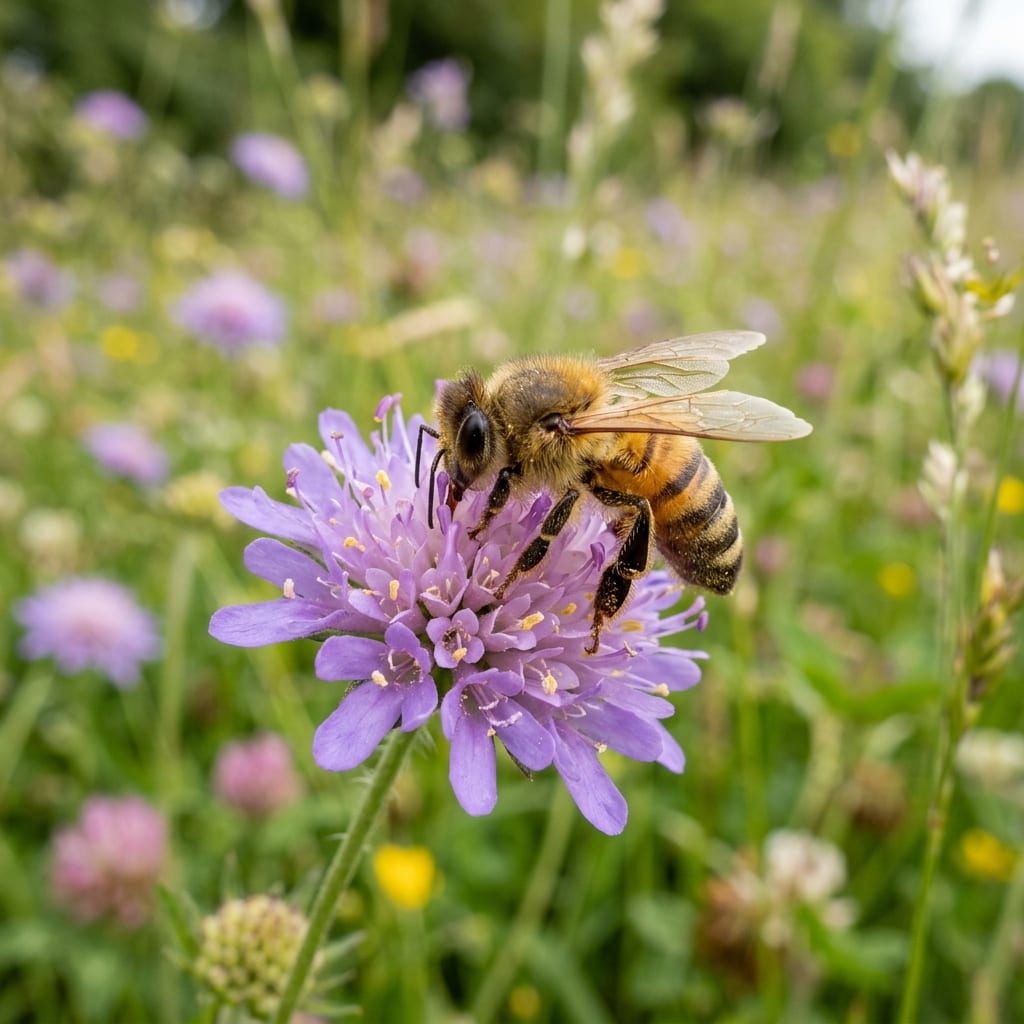
Honeybee
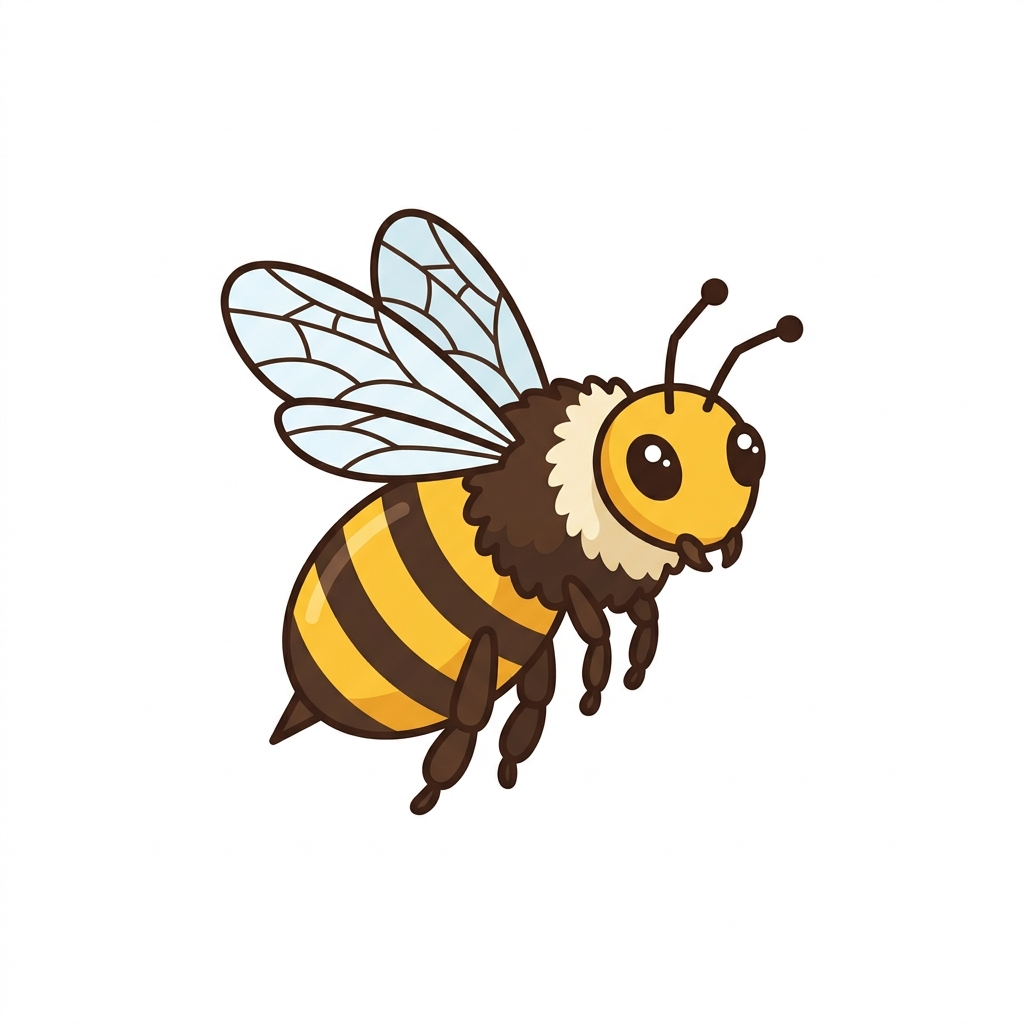
The busy golden-and-brown bee that lives in huge colonies and makes honey. A vital pollinator, it visits millions of flowers and dances to share where the best ones are.
💡 Fun Facts
- A single honeybee colony can be home to tens of thousands of bees, all working together as one big family.
- Honeybees tell each other where to find flowers by dancing a special 'waggle dance' inside the hive.
- To make just one jar of honey, the bees of a hive must visit around two million flowers.
📅 Through the Year
- Active:March to October
Common Blue
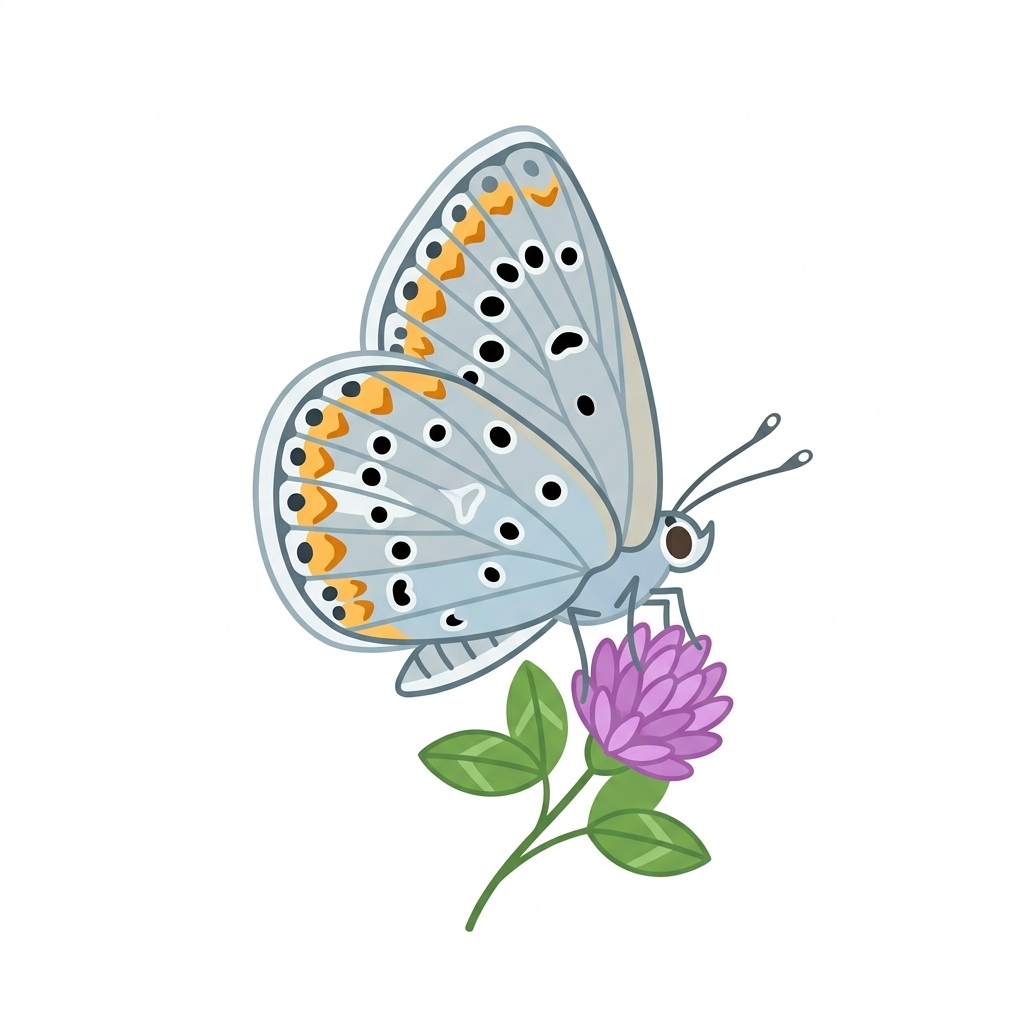
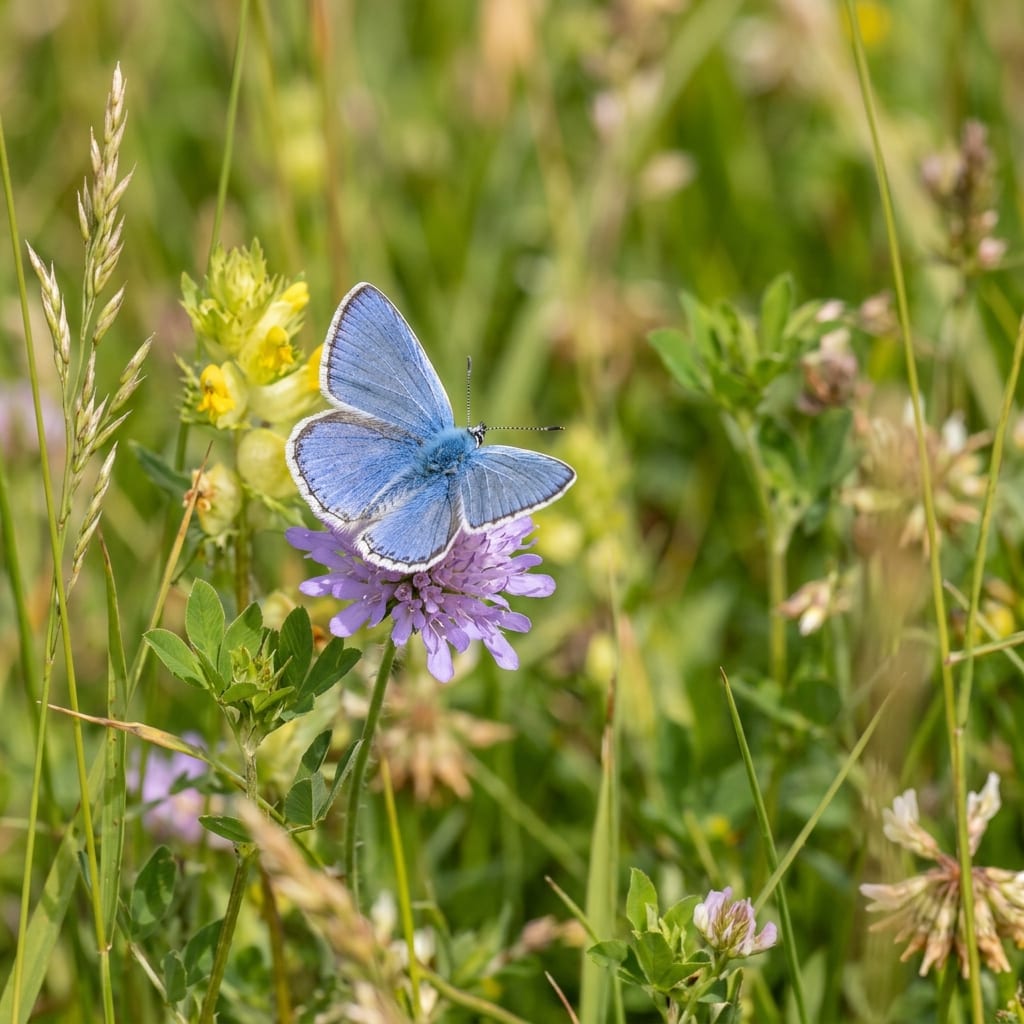
Britain's most widespread blue butterfly. The males flash dazzling violet-blue over grassy meadows, while their caterpillars strike up a sweet partnership with ants.
💡 Fun Facts
- The male Common Blue shines a brilliant violet-blue, while the female is browner with pretty orange spots.
- Its caterpillars feed on bird's-foot-trefoil and are often looked after by ants in return for a sweet syrup they make.
- This little butterfly loves sunny grassy places and basks with its wings open to soak up the warmth.
📅 Through the Year
- Active:May to September
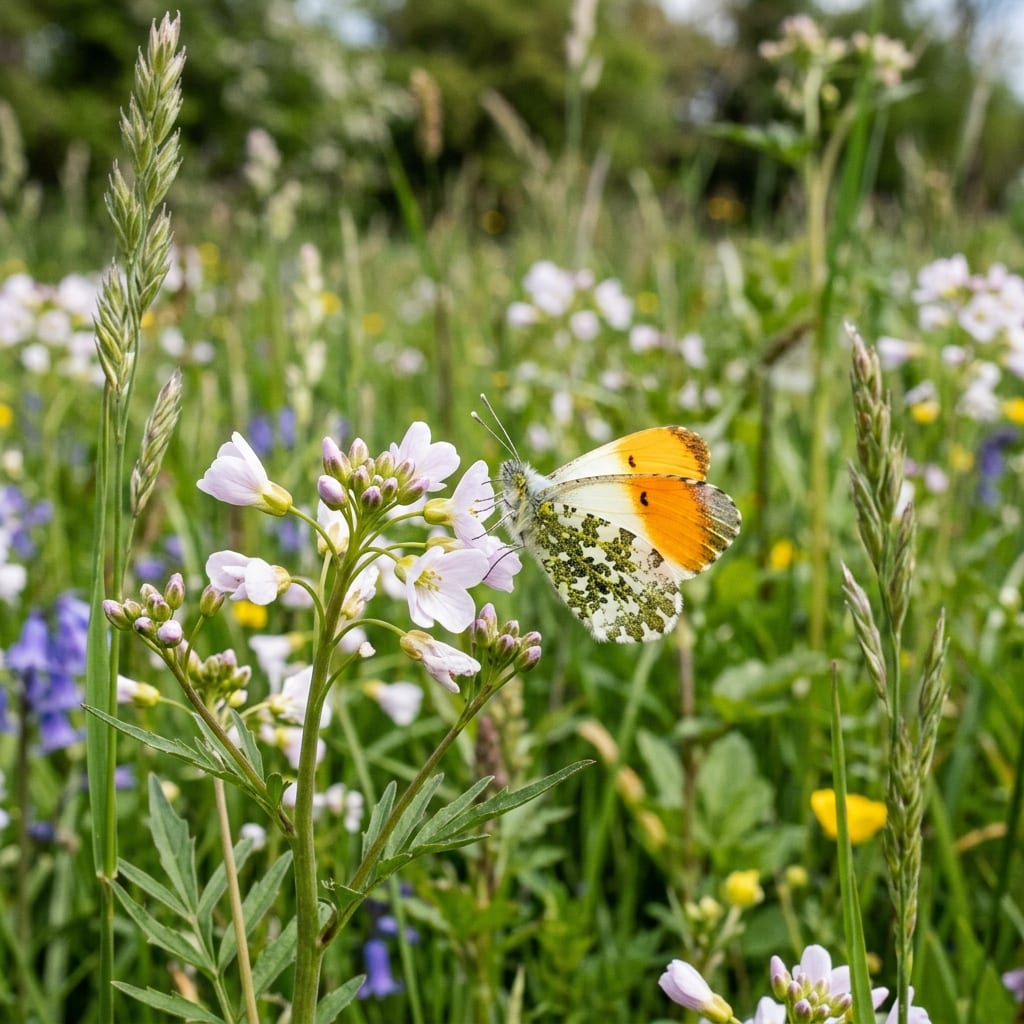
Orange-tip
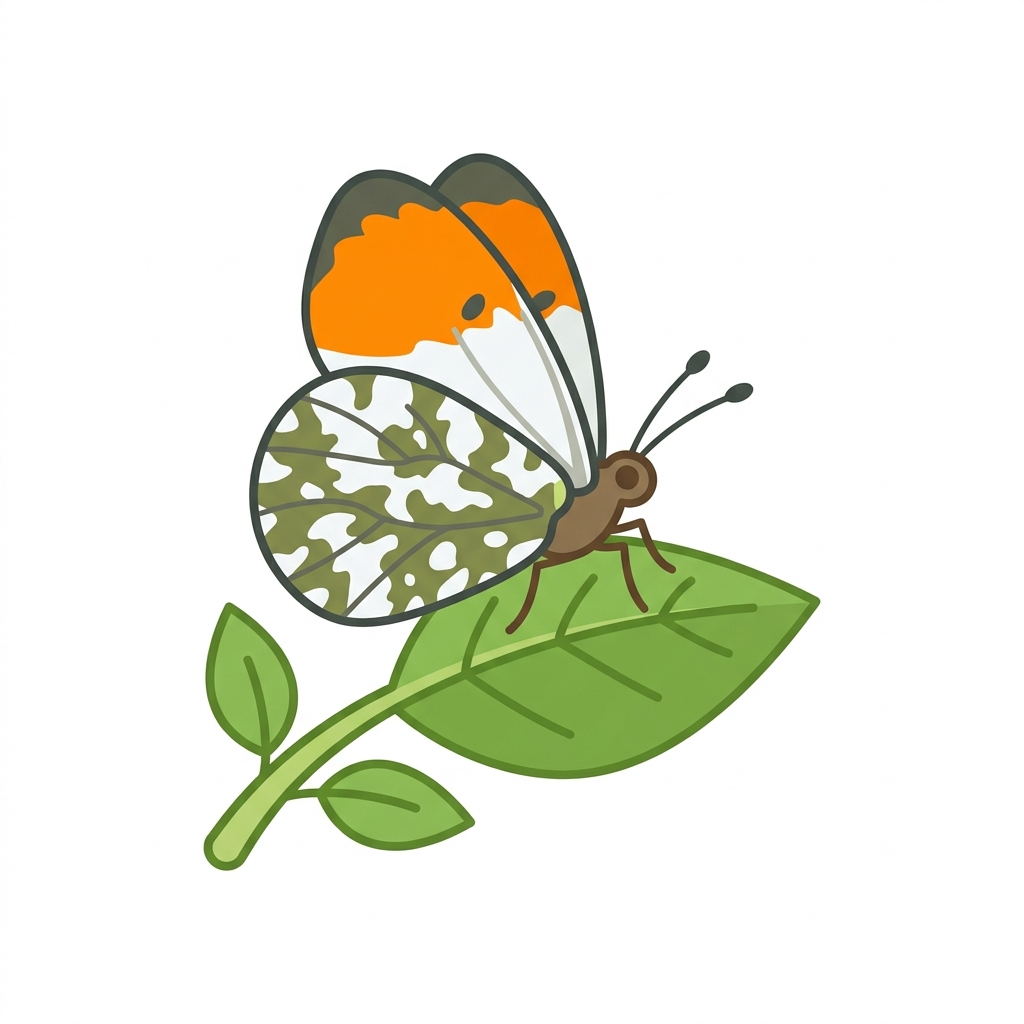
A true herald of spring. The male's wings are tipped with vivid orange, while both sexes show a lacy green camouflage underneath when they rest on flowers.
💡 Fun Facts
- The male Orange-tip has bright orange wingtips, a cheerful sign that spring has truly arrived.
- The underside of its wings is a mottled green-and-white pattern, perfect for hiding on flower heads.
- Females lay single eggs on cuckooflower, and the hungry caterpillars will even eat other eggs they meet.
📅 Through the Year
- Active:April to June
Identification Activity
Spot the Grassland Wildlife
Can you find three different types of plants or animals the next time you visit a Grassland habitat? Record them in your Field Journal!
Outdoor Observation
10-Minute Grassland Survey
Sit quietly in this habitat for 10 minutes. Write down everything you hear, see, and smell. What is the most abundant species?
Explore our specific Grassland habitat profiles in the Habitats Directory.