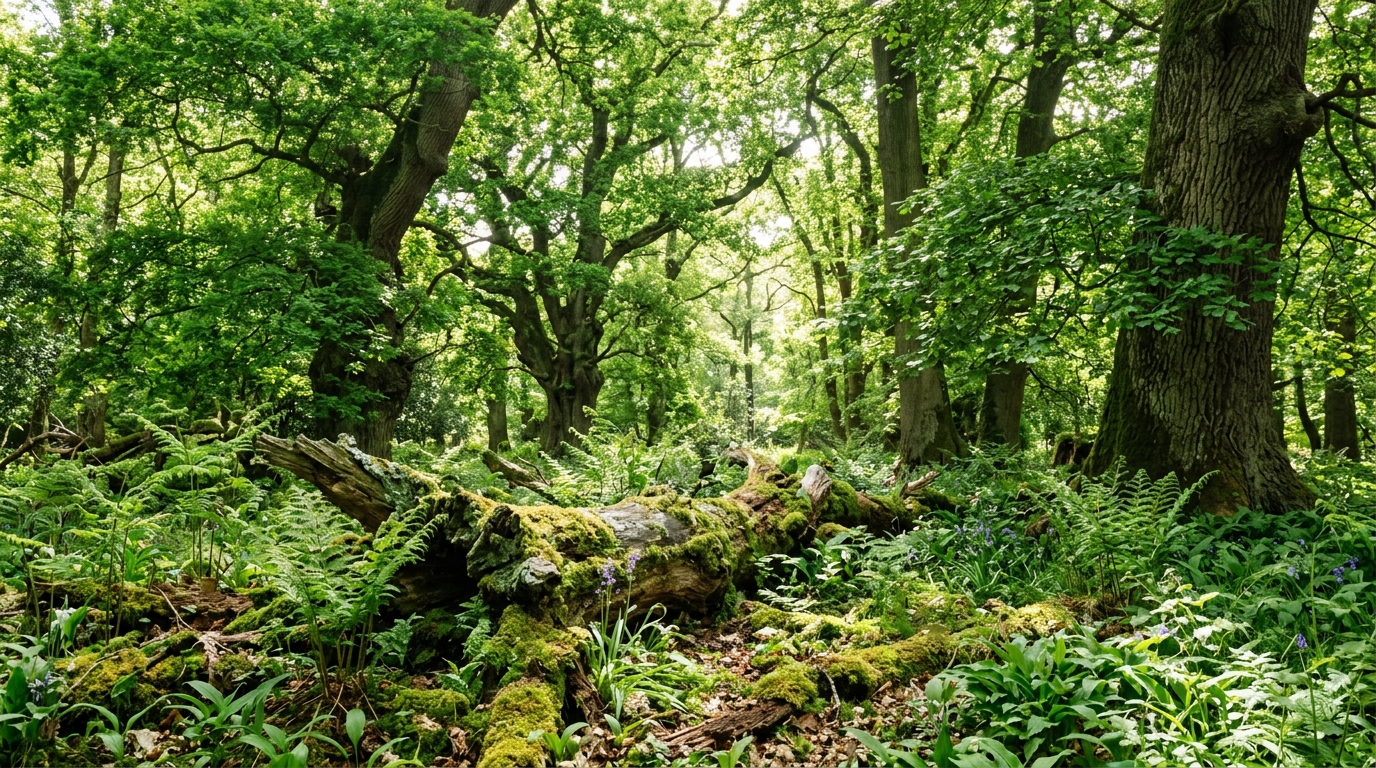
Forests and woods offer layers of shelter from the canopy to the forest floor. This page is part of our GCSE Natural History preparation, focusing specifically on UK native species and environments.
Wildlife in this Habitat
Forests are highly structured habitats, from the burrowing earthworms below to the birds in the canopy above.
UK Forest Floor & Undergrowth
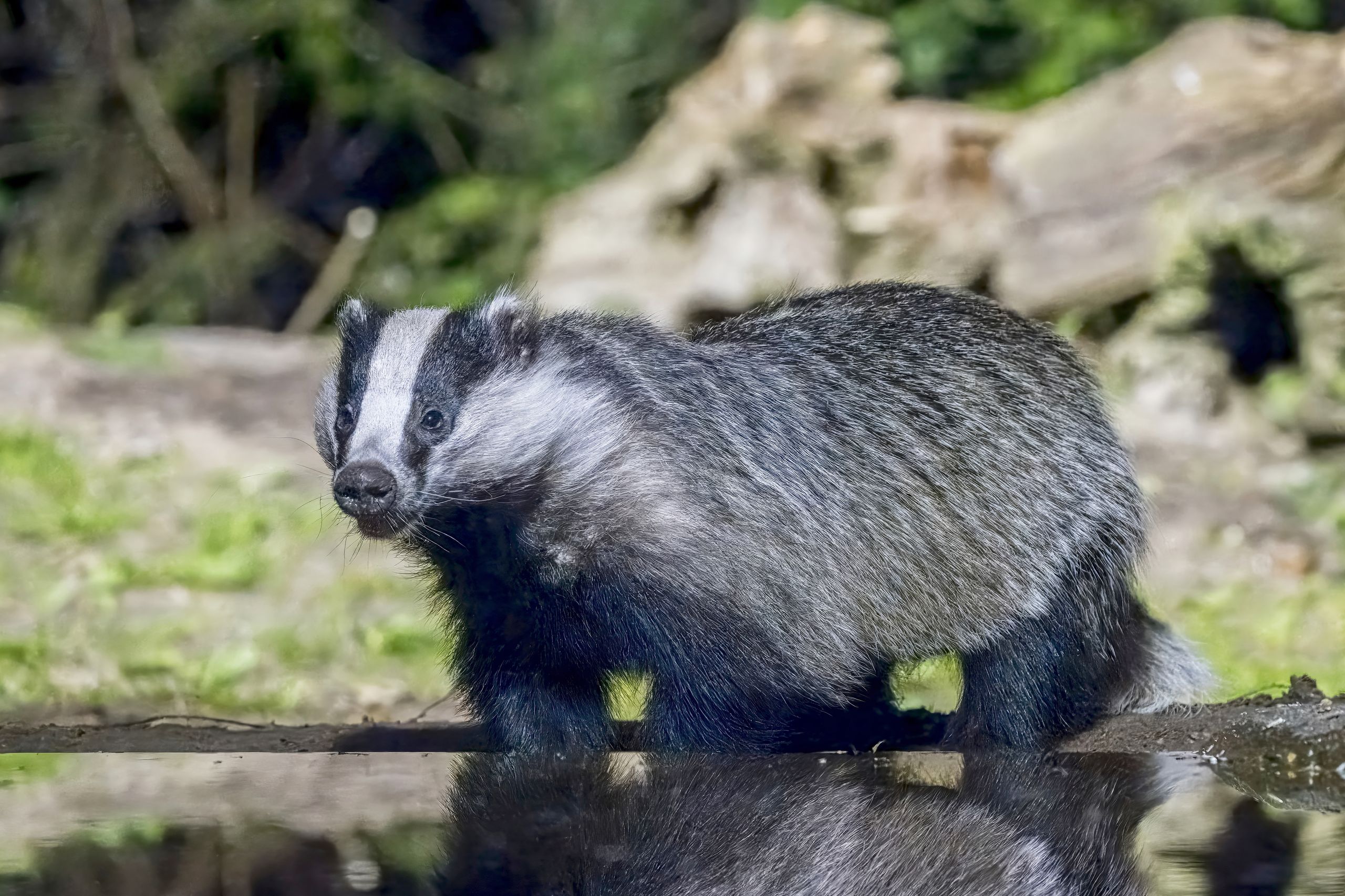
Eurasian badger
Nocturnal mammals living in underground family setts.
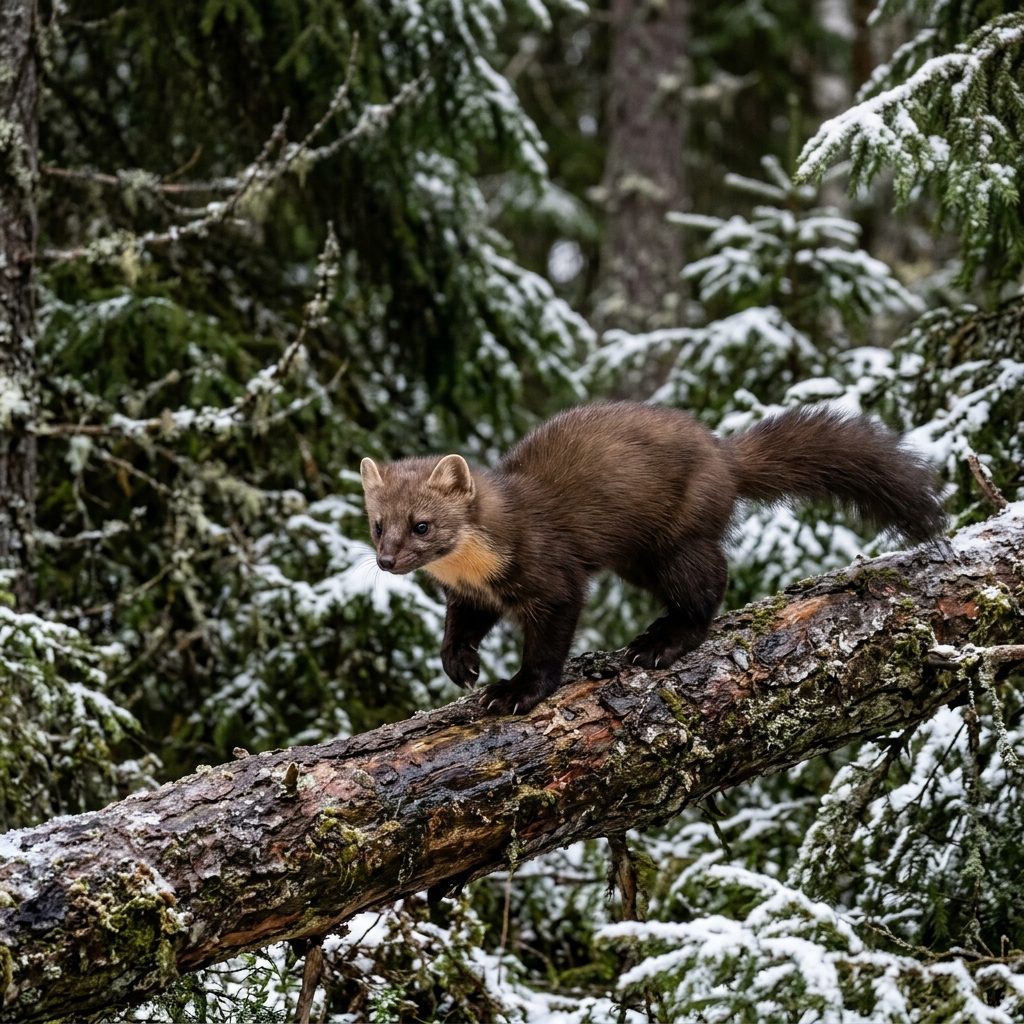
Pine Marten
Agile, tree-climbing members of the weasel family found in remote forests.
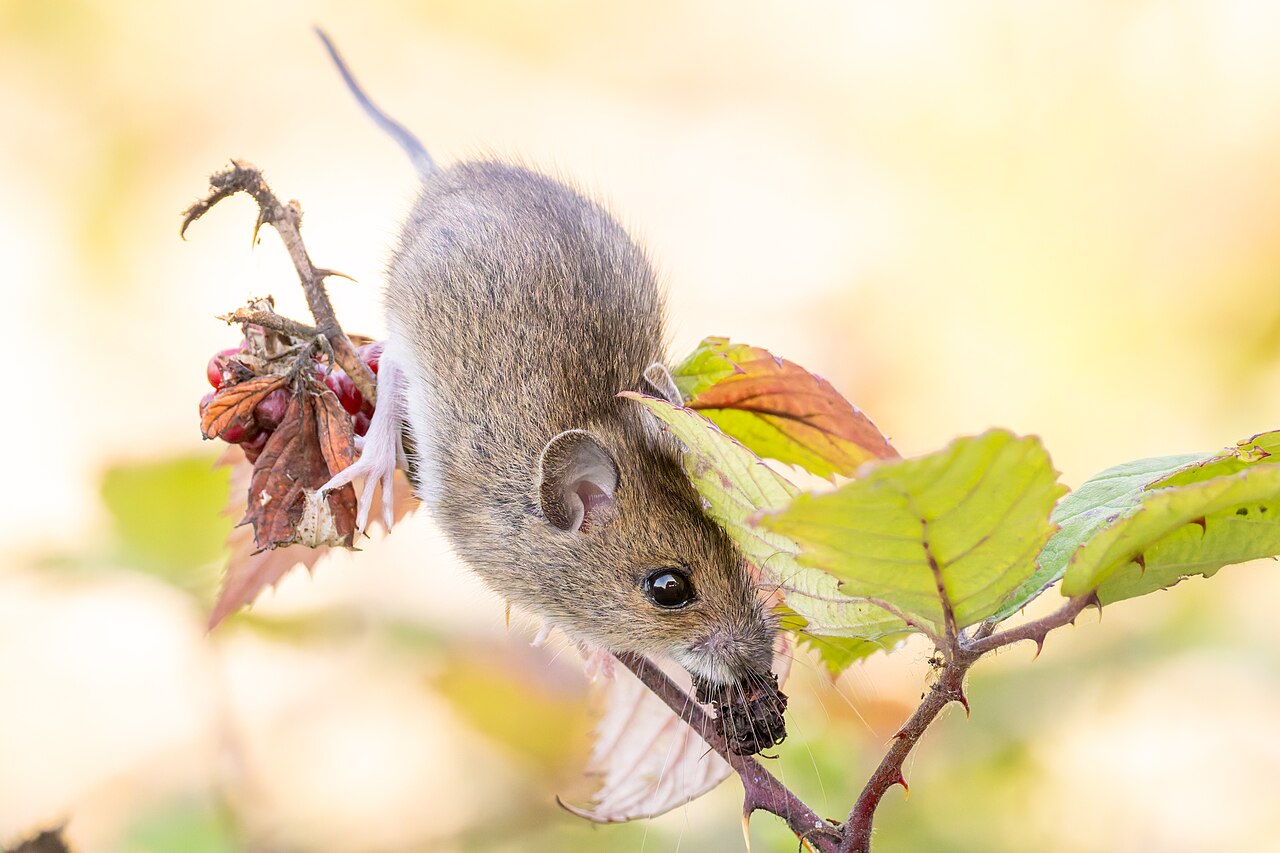
Wood Mouse
Large-eared, leaping mice that forage for seeds and berries at night.
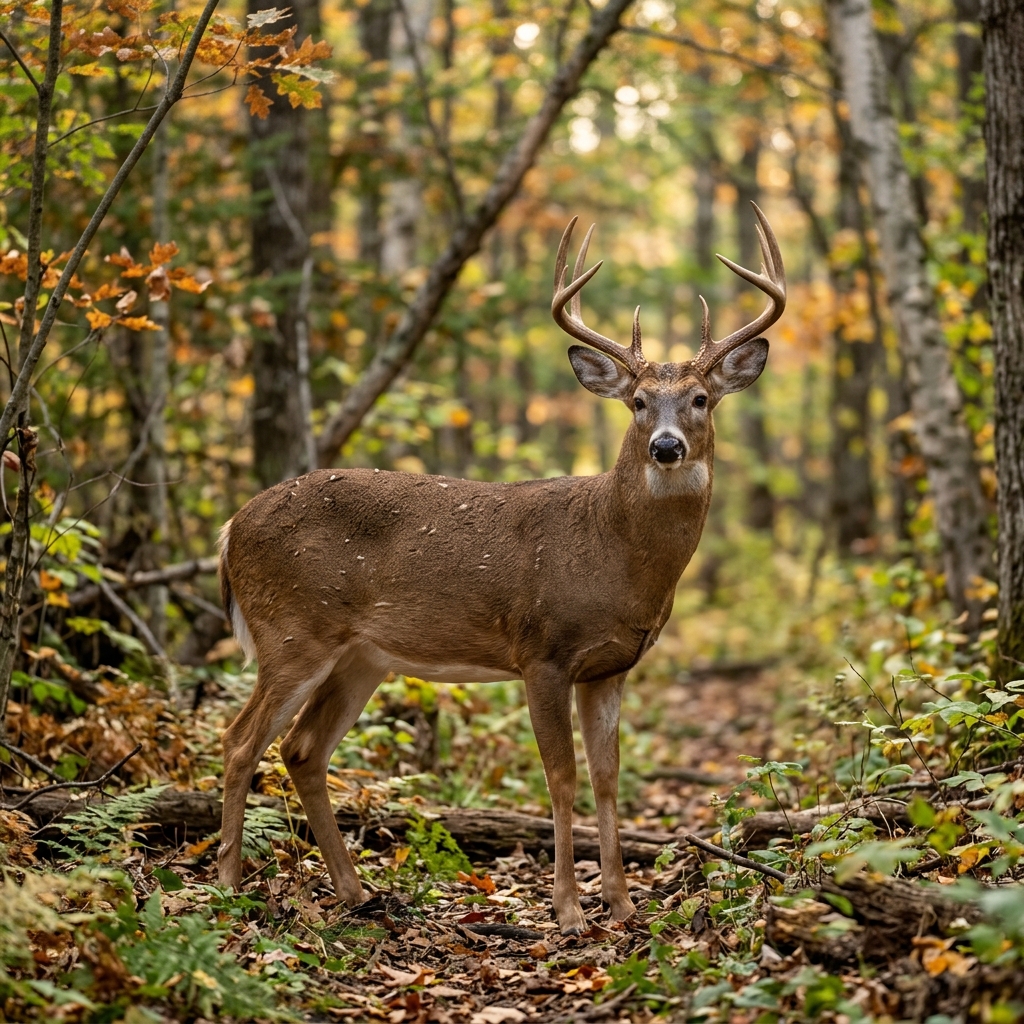
Deer
Graceful herbivores that browse on leaves, shoots, and tree bark.
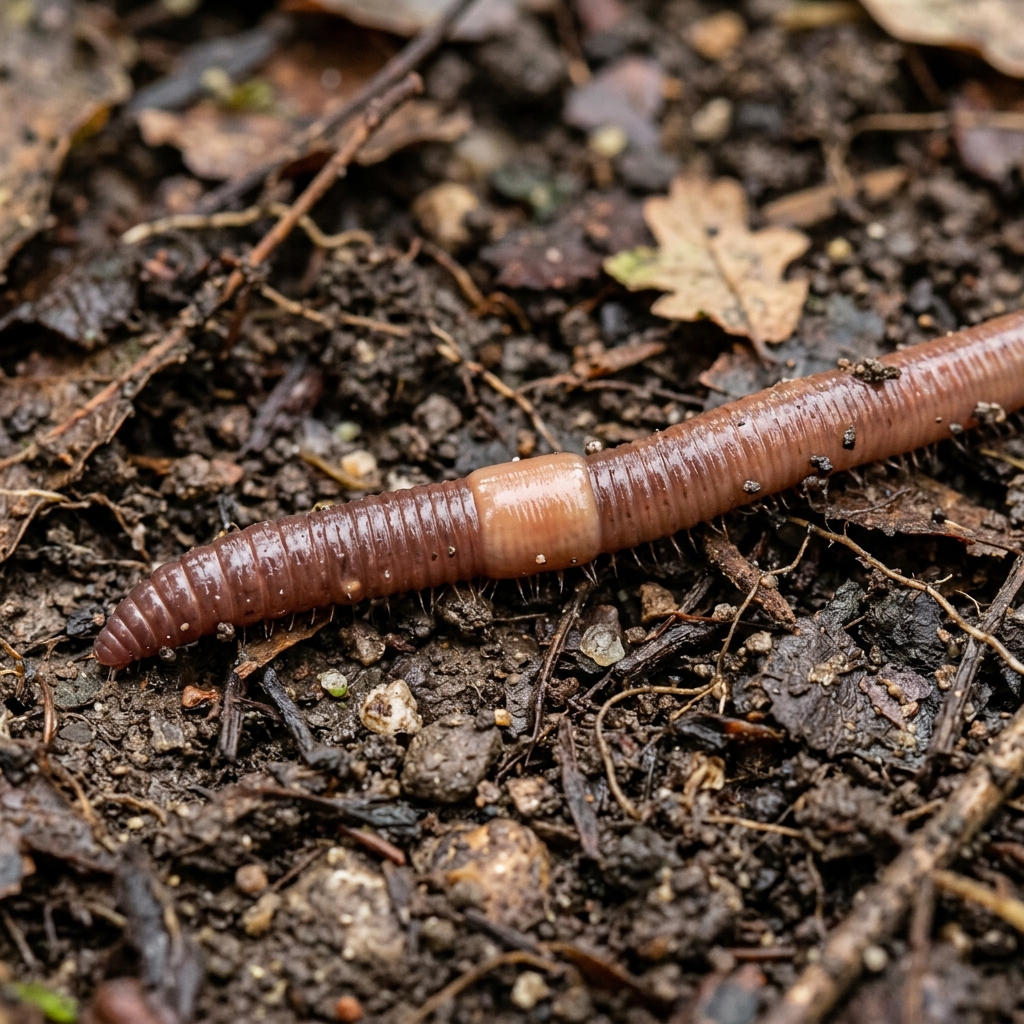
Earthworm
Nature's ploughs, constantly churning and improving the forest soil.
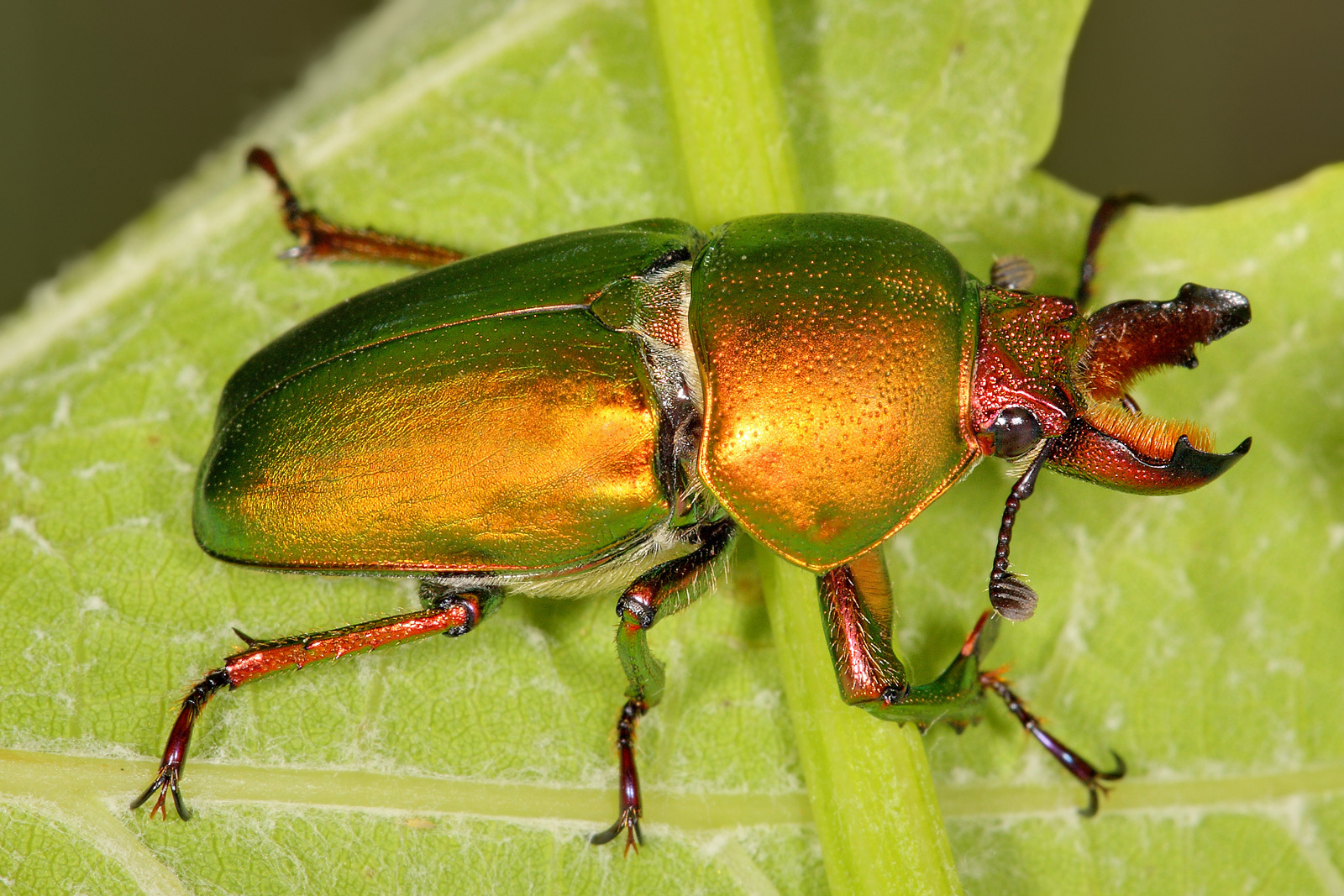
Stag beetle
The UK's largest insect, relying on rotting wood.
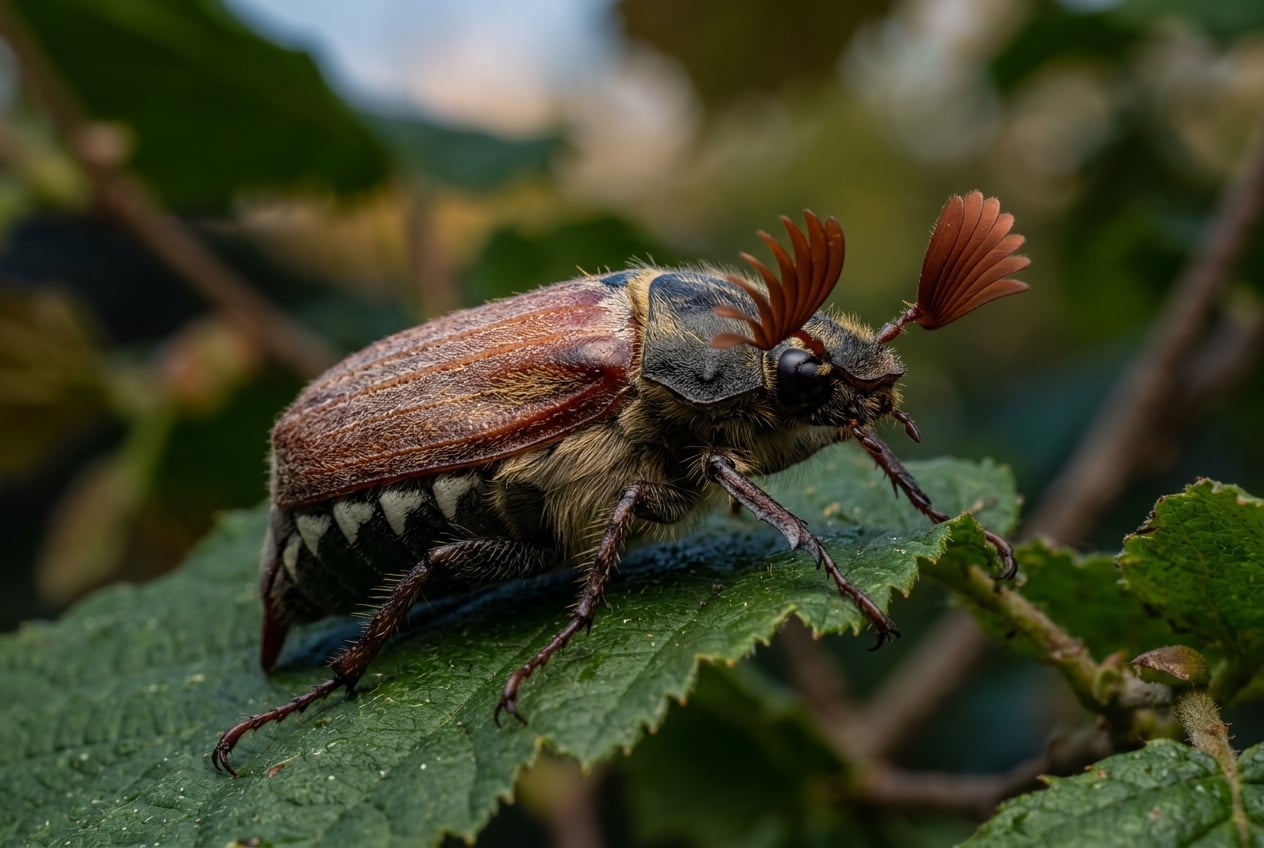
Cockchafer
Melolontha melolontha
Big, whirring beetles that bumble around the treetops on warm May evenings.
UK Canopy & Airborne Species
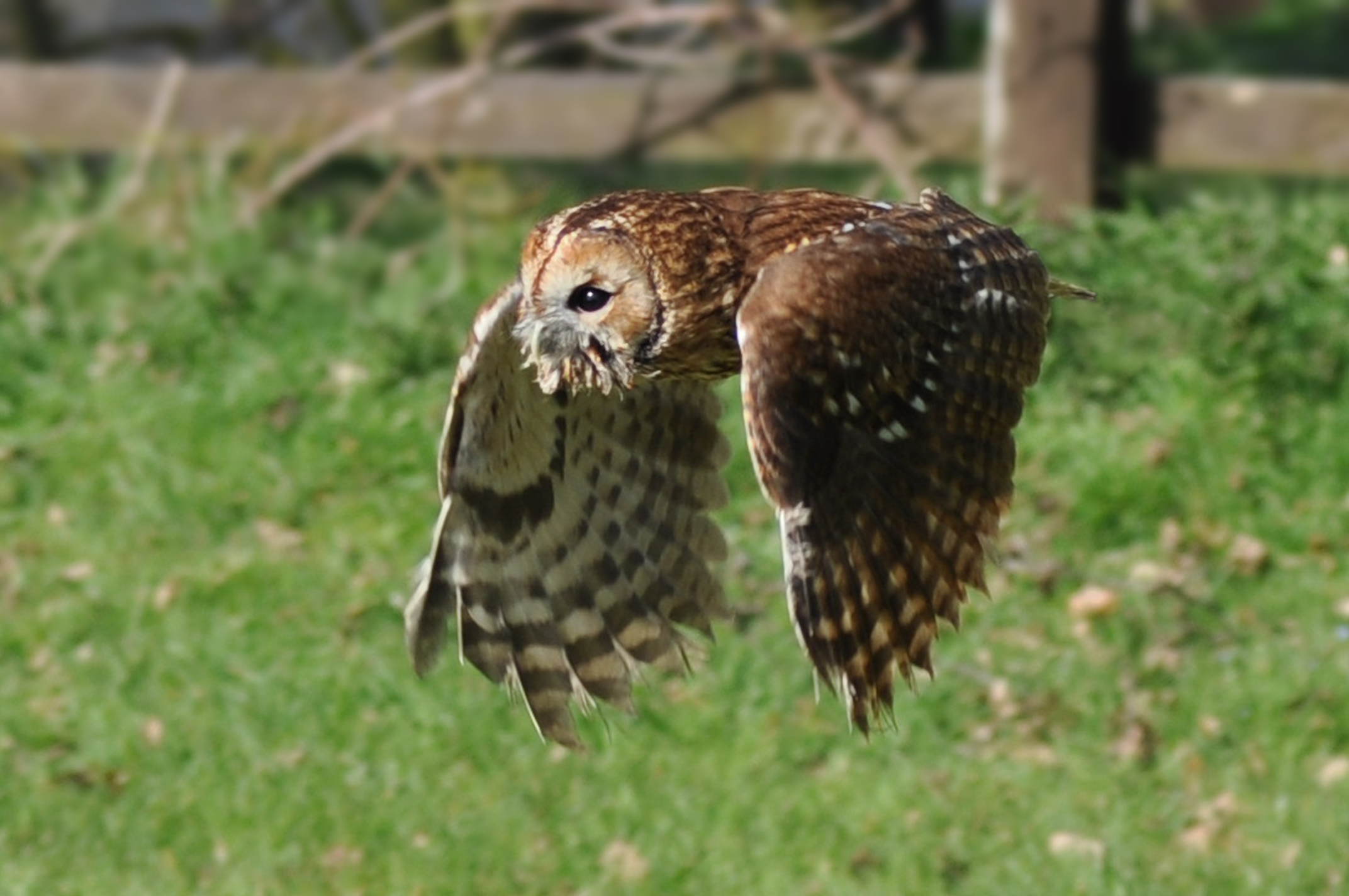
Tawny owl
The classic 'twit-twoo' calling owl of the deep woods.
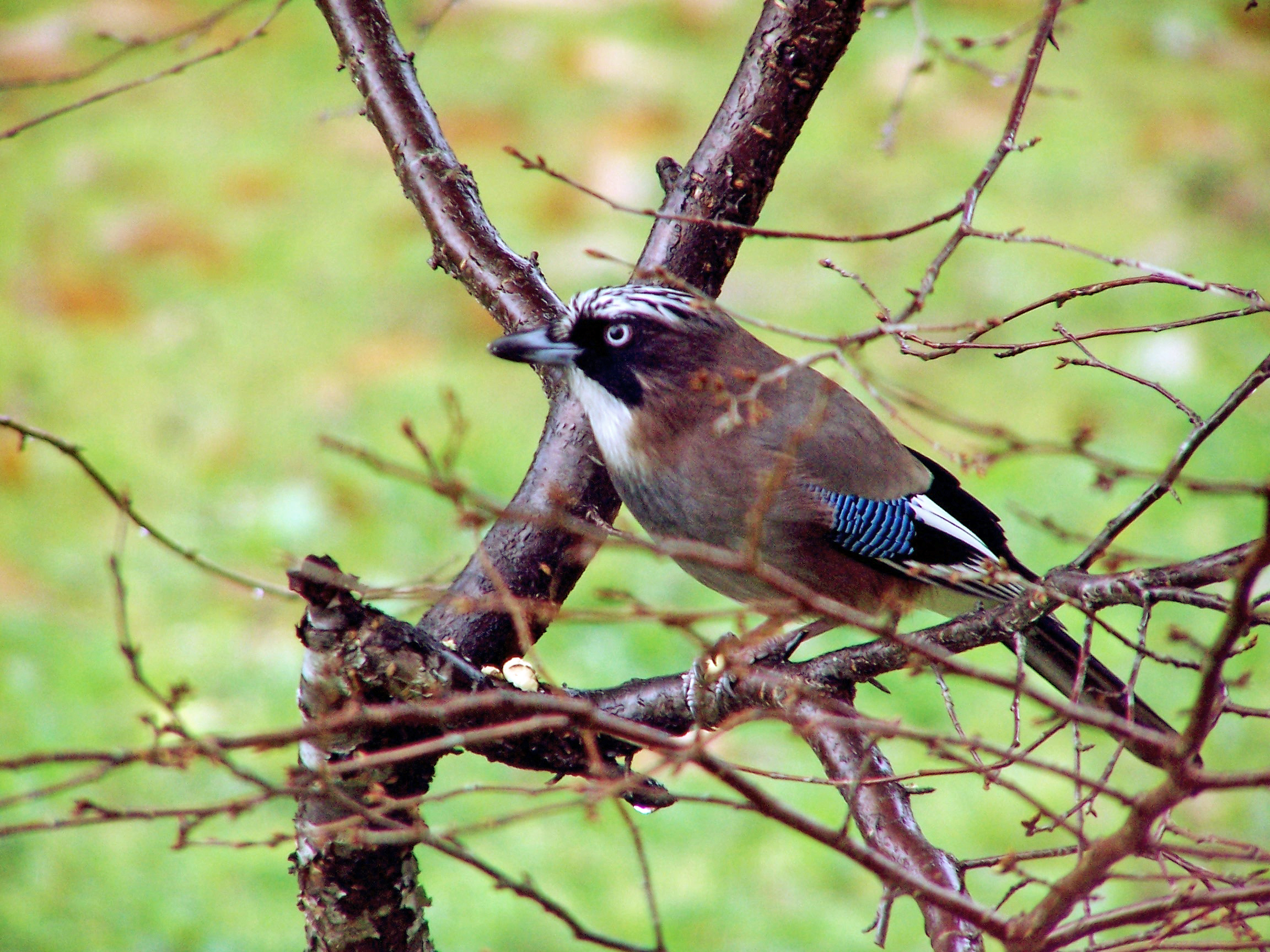
Eurasian jay
Colourful members of the crow family that bury acorns for winter.
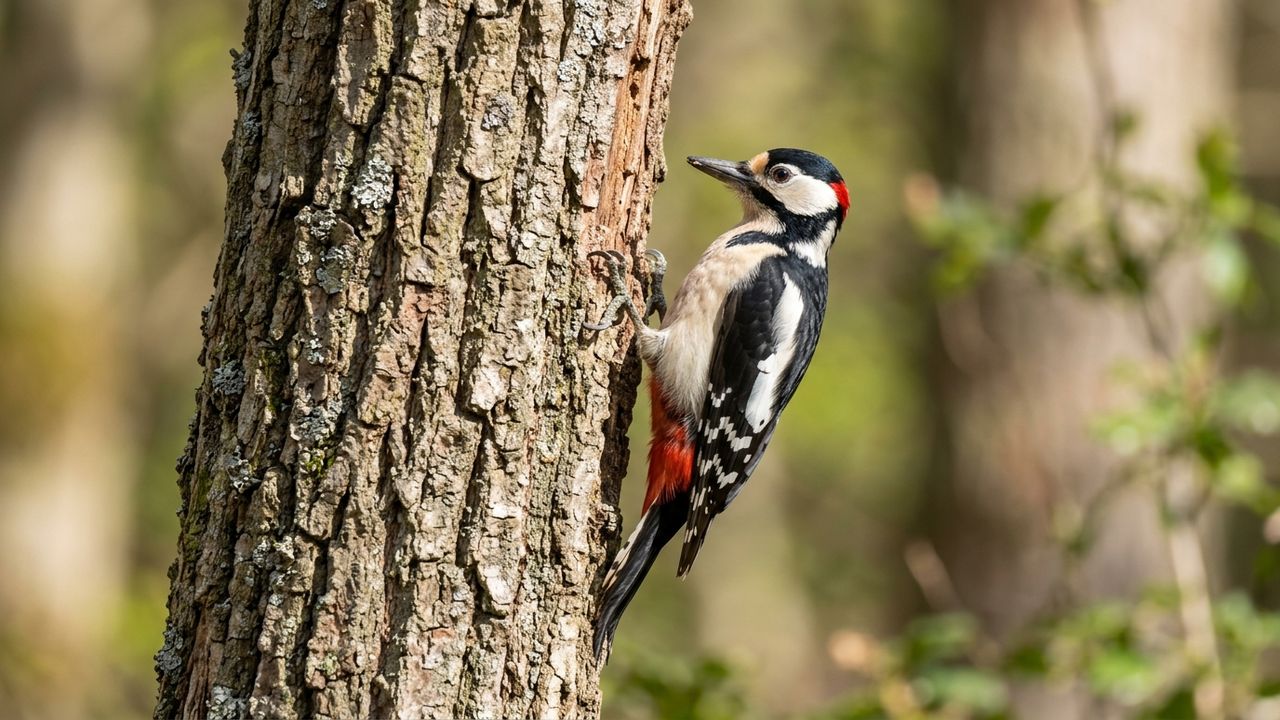
Woodpecker
Birds equipped with shock-absorbing skulls for drumming on tree trunks.
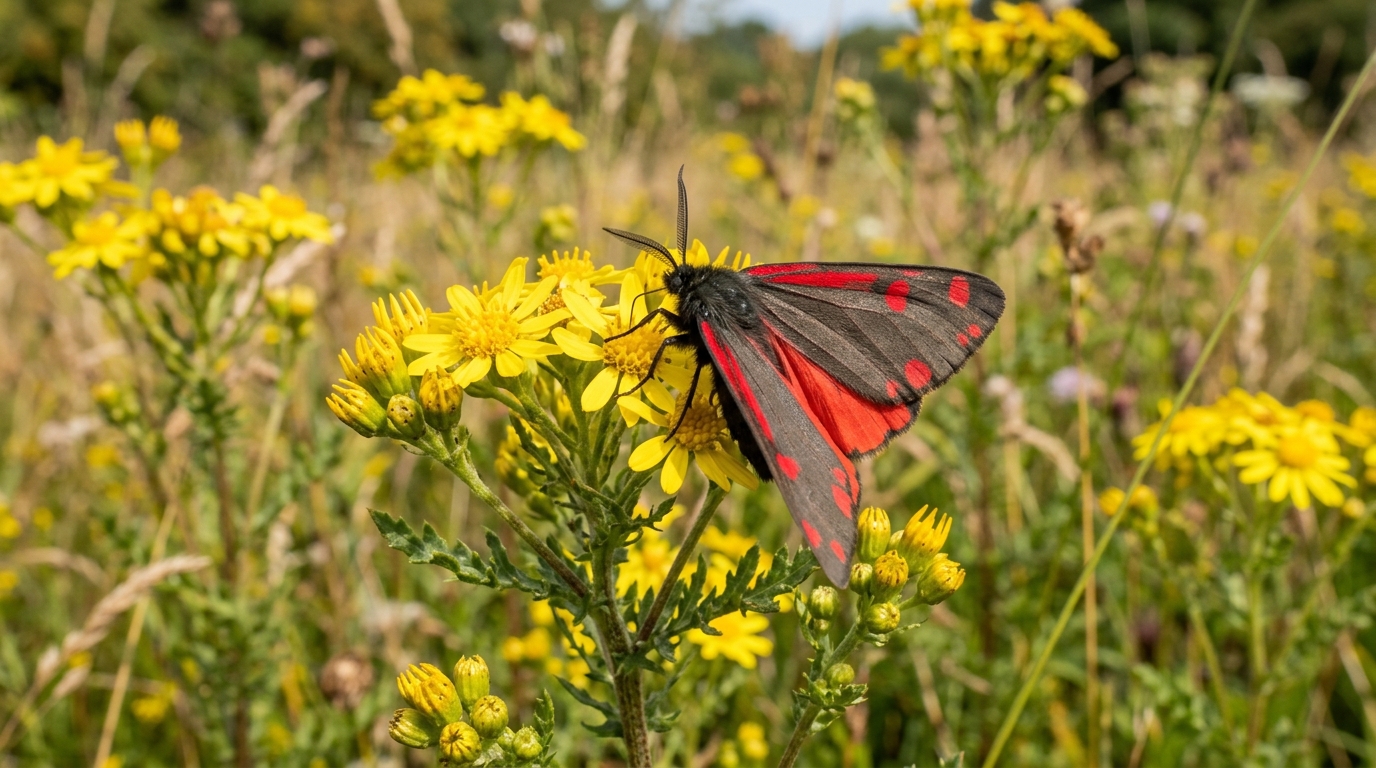
Cinnabar moth
Striking black-and-red moths that warn predators of their foul taste.
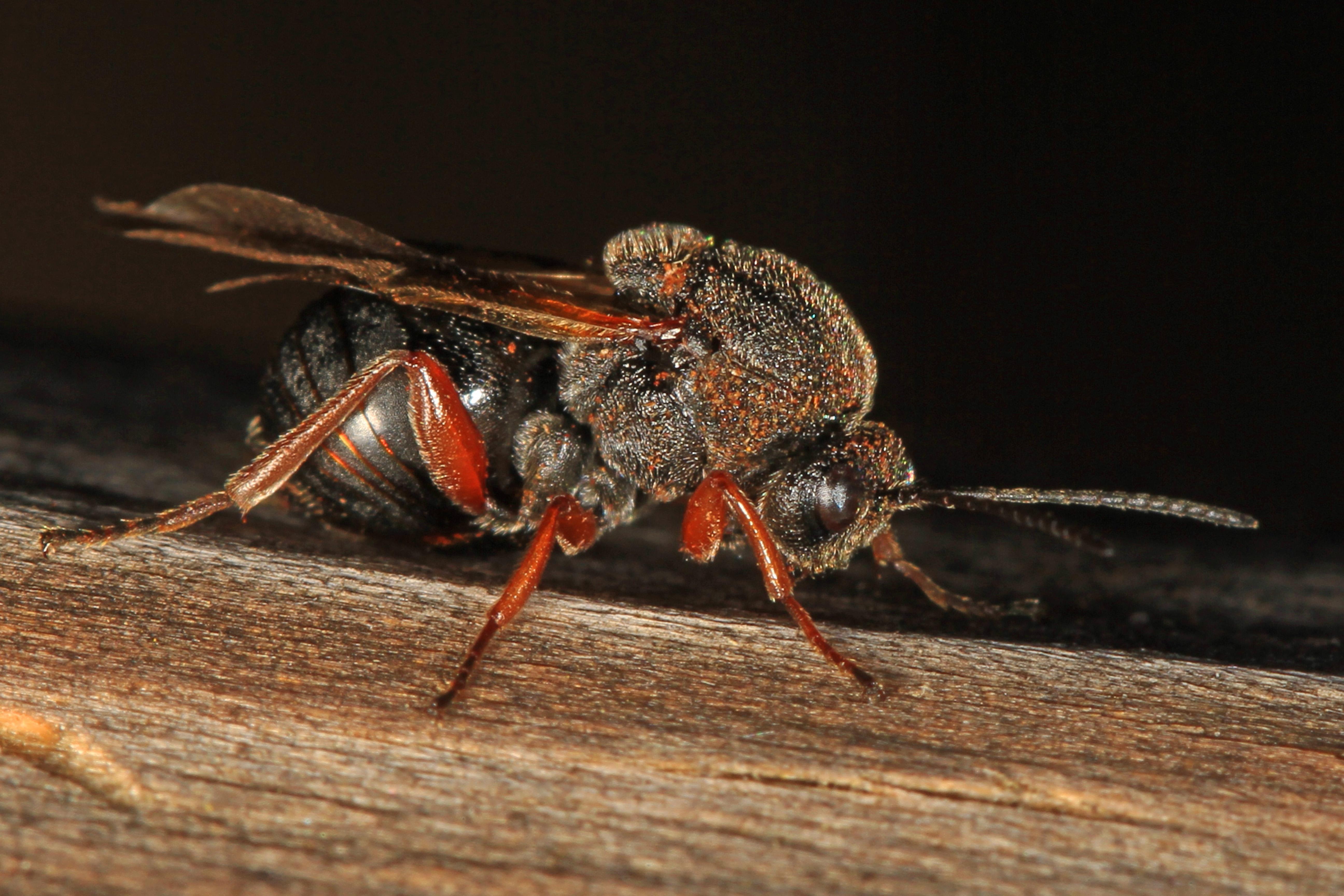
Gall wasp
Tiny insects that cause oak trees to grow round 'apple' galls.
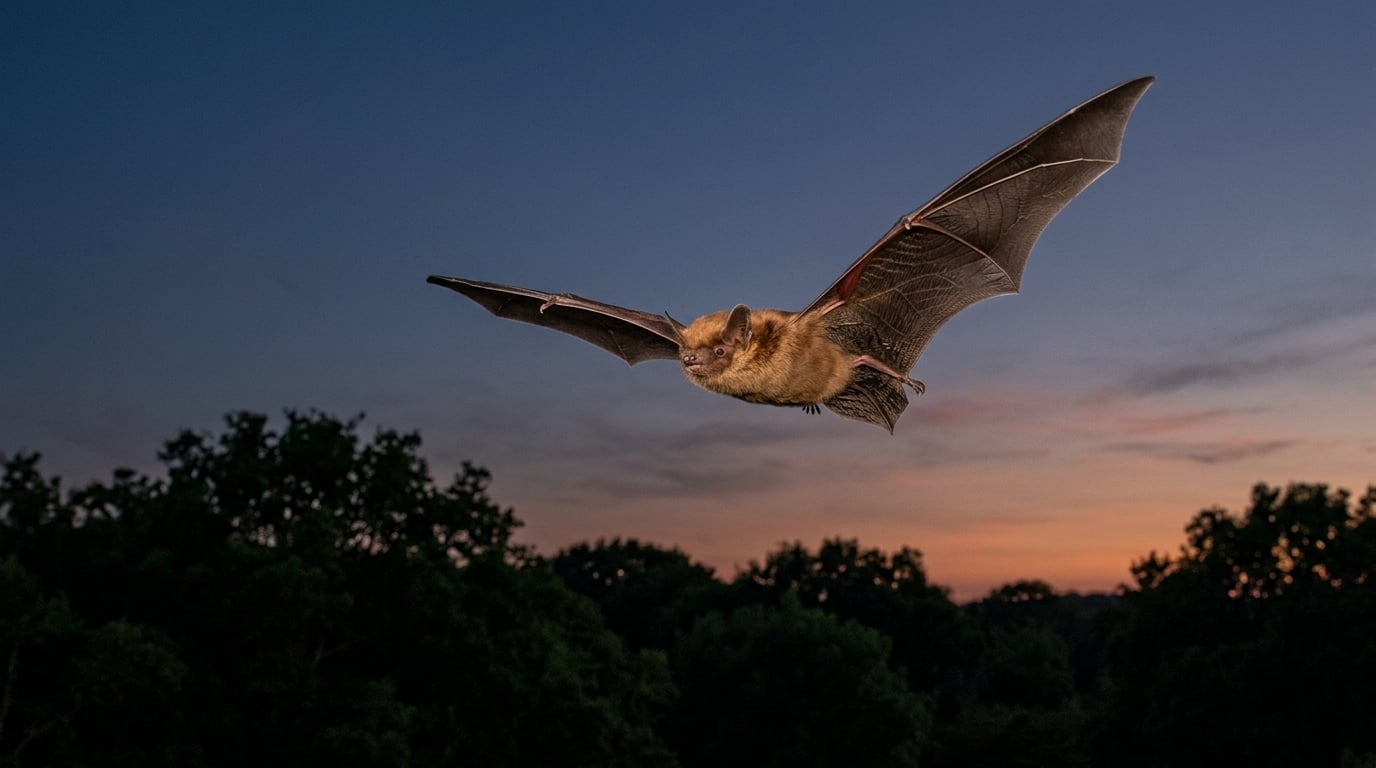
Noctule
Nyctalus noctula
One of the UK's largest bats, flying high and fast above the treetops at dusk.
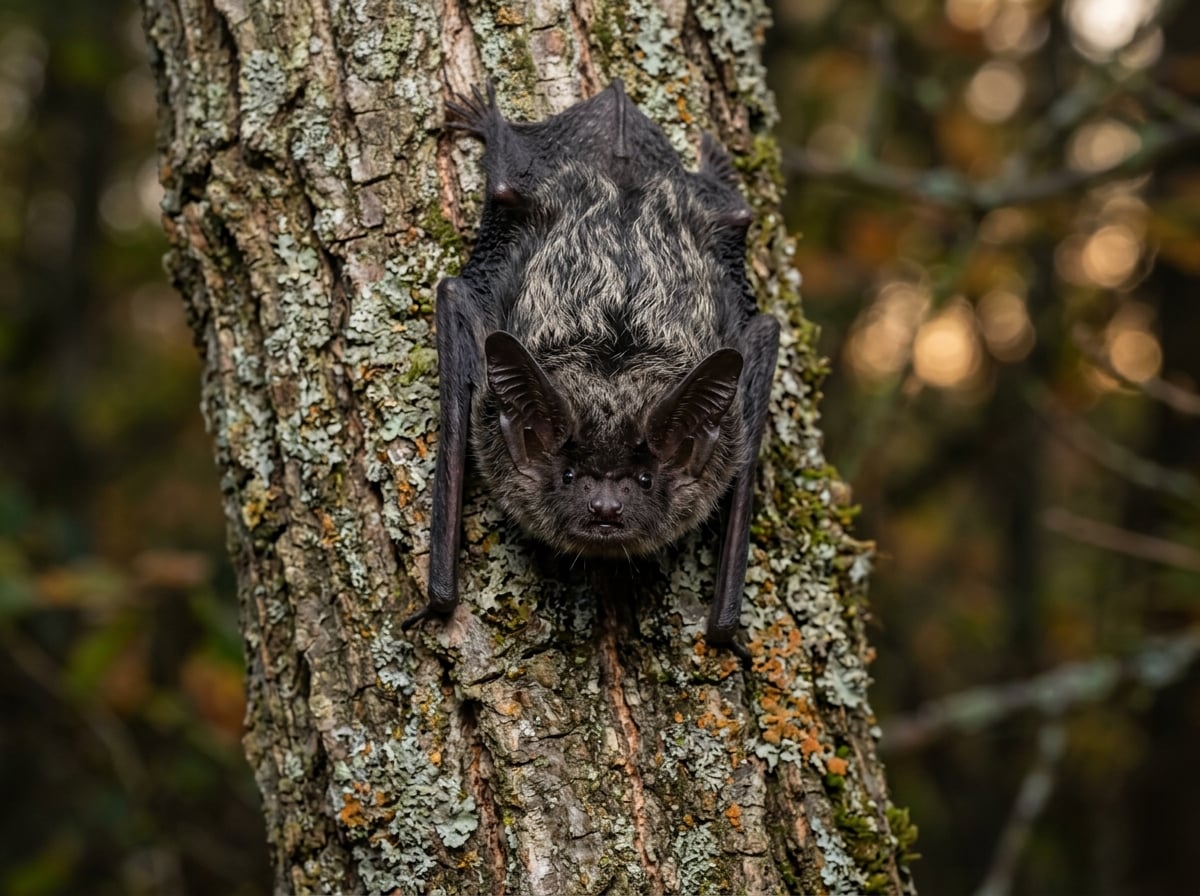
Barbastelle
Barbastella barbastellus
A rare, pug-faced bat that sneaks up on moths with whisper-quiet calls in old woodland.
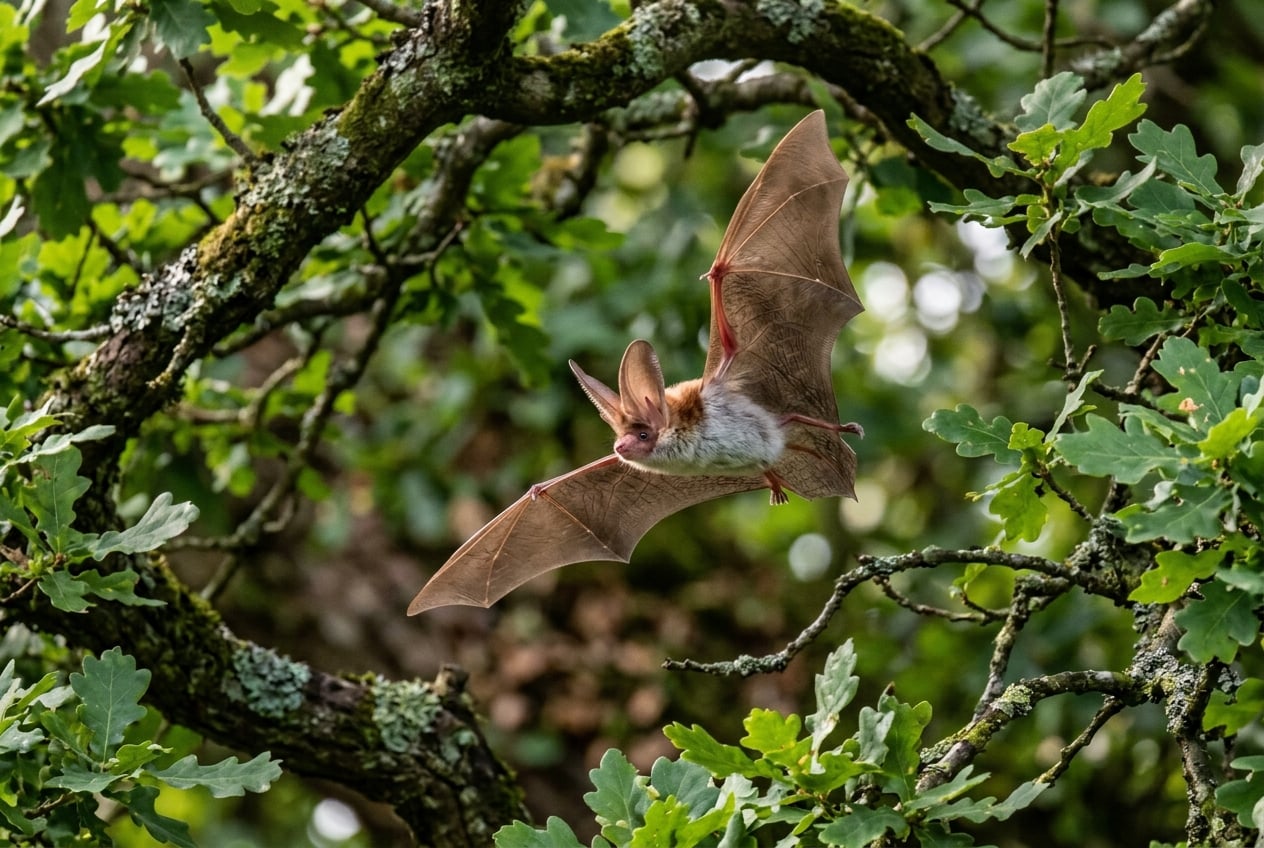
Bechstein's Bat
Myotis bechsteinii
A rare woodland bat that plucks resting insects straight off the leaves with its long ears.
Locally Extinct Species (Historical UK)
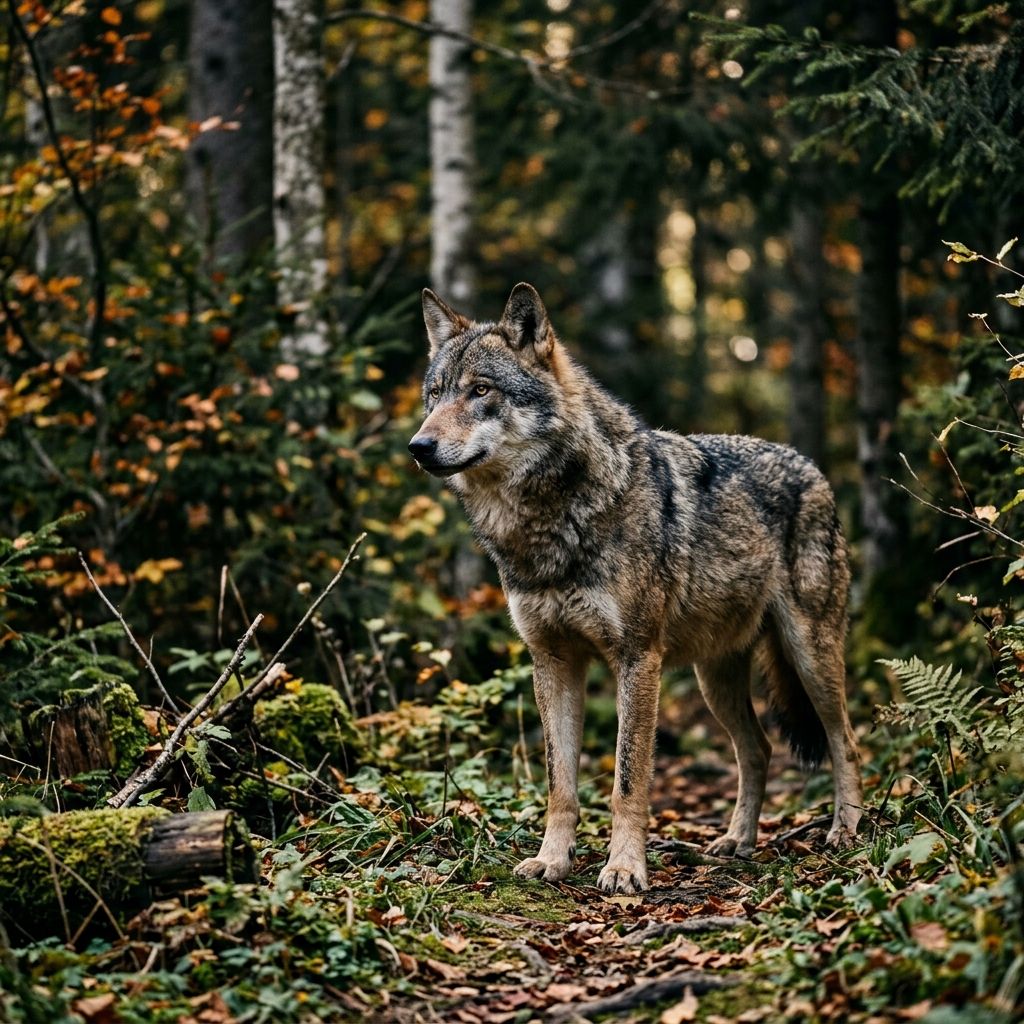
Wolf
Apex pack predators that once roamed ancient British woodlands.
Lynx
Solitary, tufted-eared wildcats that vanished from the UK centuries ago.
Global Forest Giants
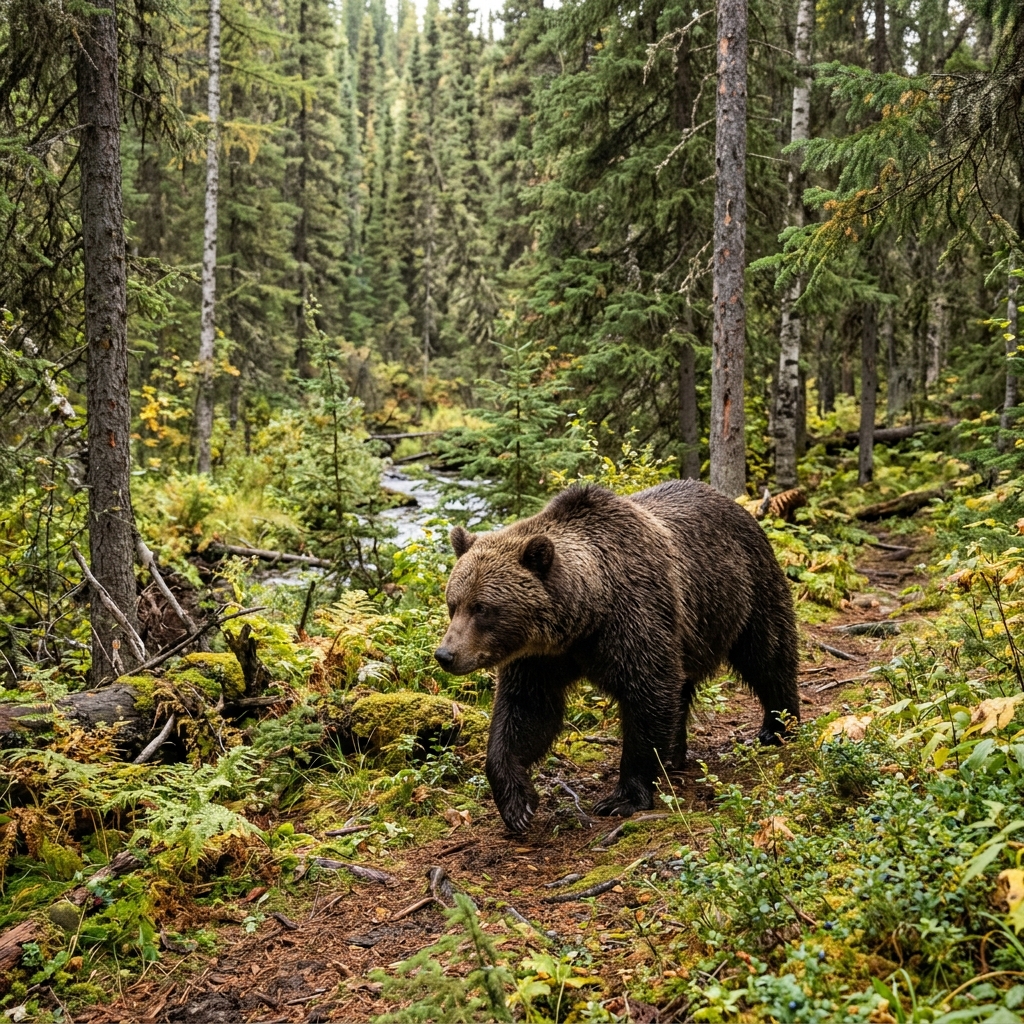
Brown Bear
Powerful omnivores that forage through Northern hemisphere forests.
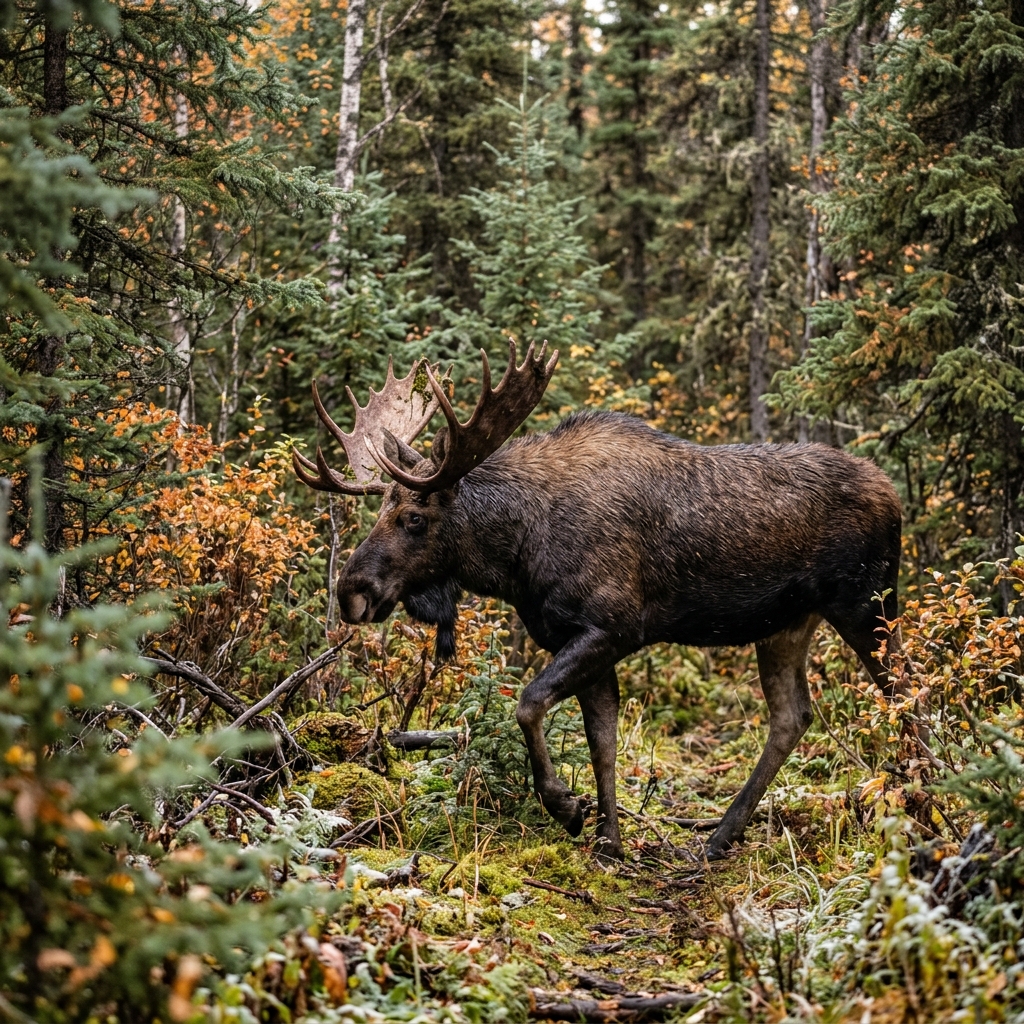
Moose
The largest deer species, wading through Taiga forest wetlands.
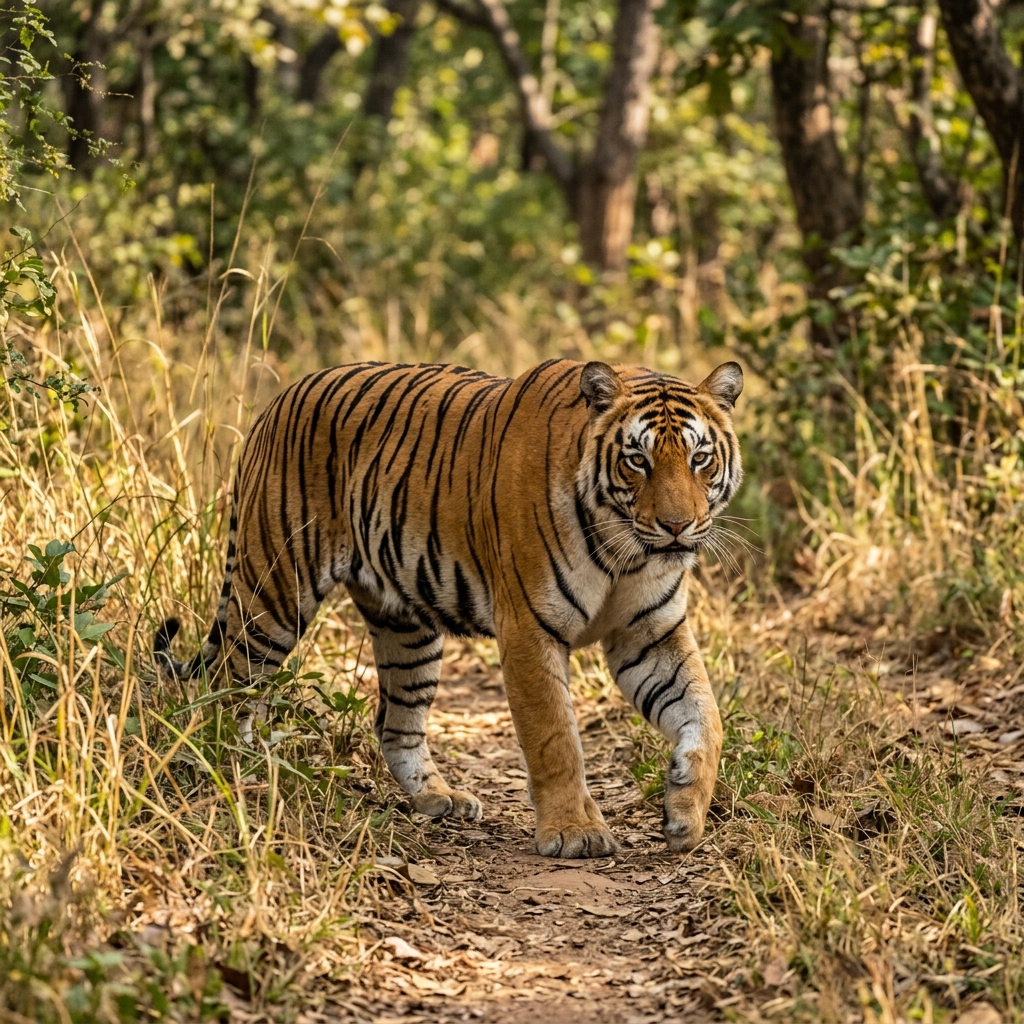
Tiger
Huge, striped ambush predators prowling the jungles of Asia.
Plants of the woodland
Woodlands are built from plants — tall trees overhead, flowers on the floor, and ferns in the damp shade. Here are some to discover.
Trees and shrubs
The woody plants that form the canopy and understorey.
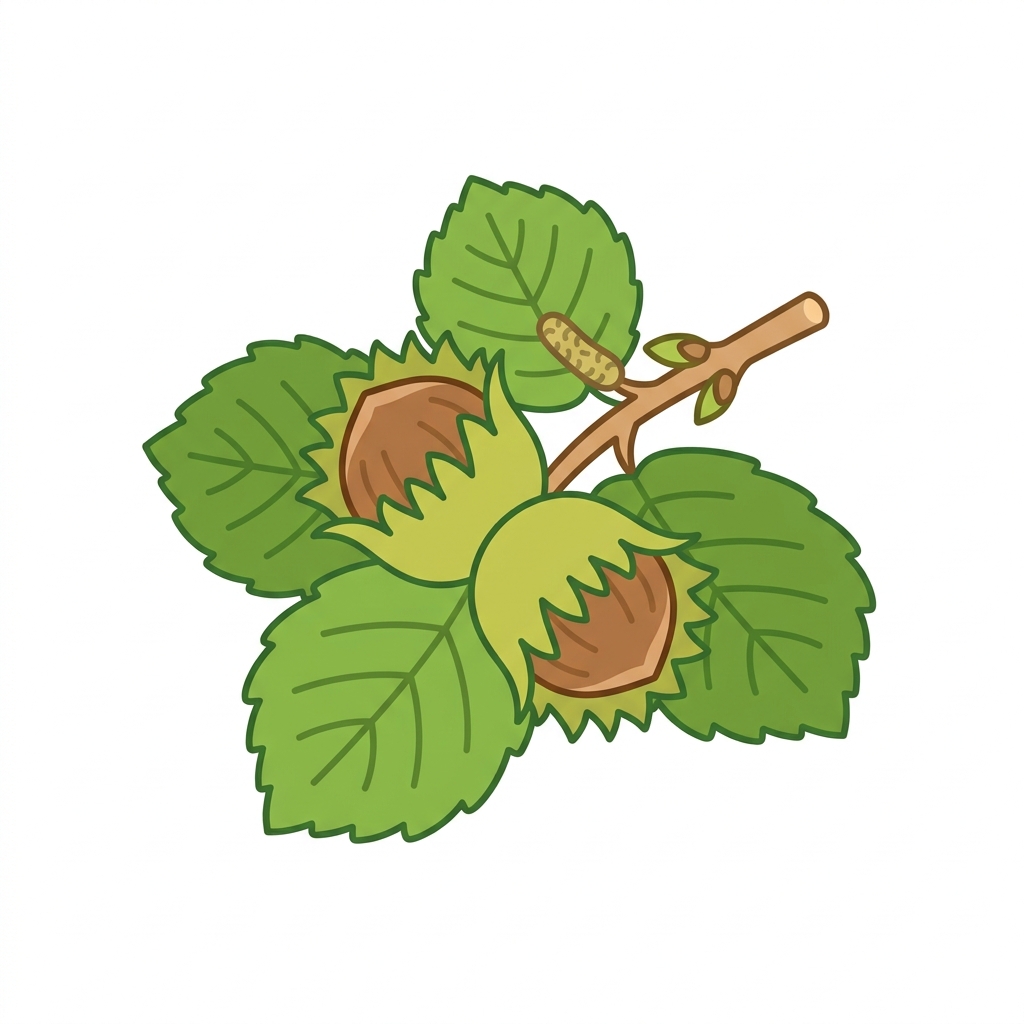
Hazel
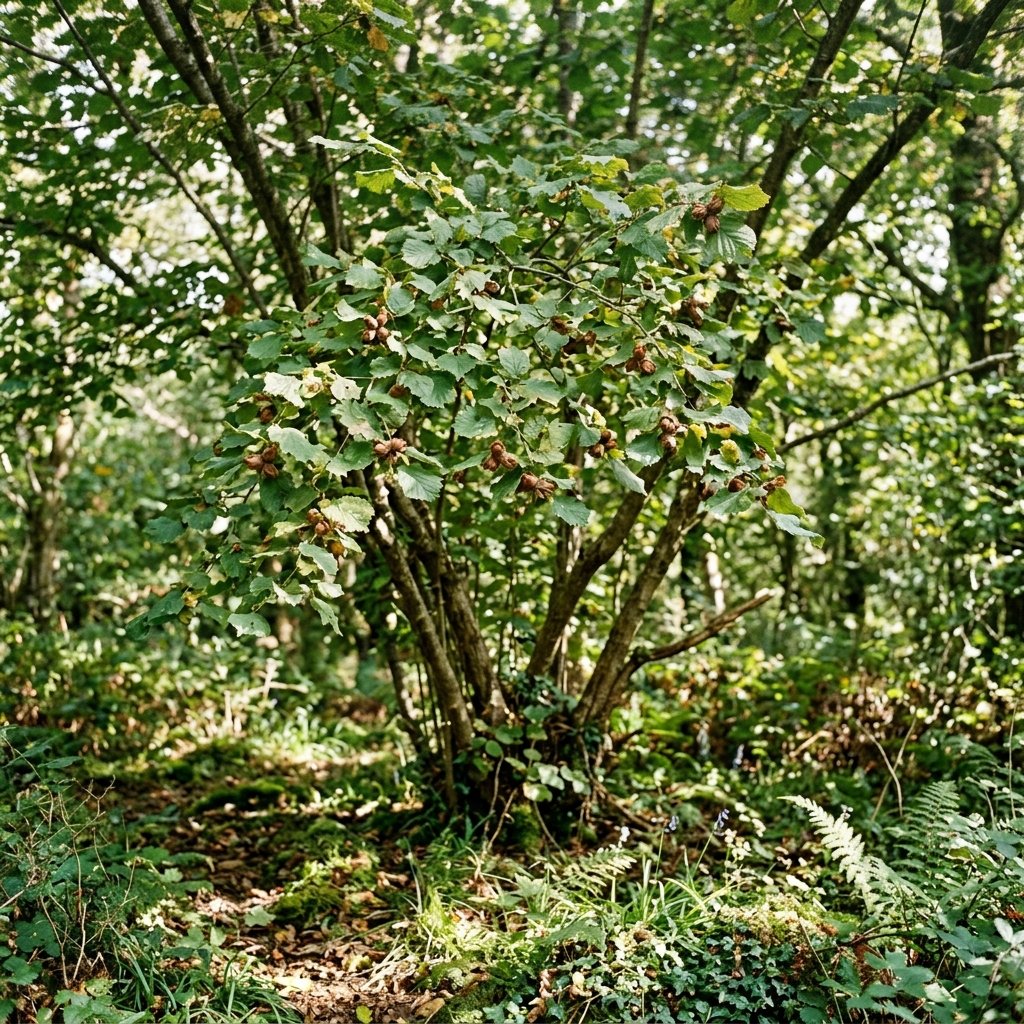
A bushy, many-stemmed tree that dangles golden 'lamb's-tail' catkins in late winter and ripens sweet hazelnuts in autumn — a feast for dormice, squirrels and jays.
💡 Fun Facts
- In the depths of winter, hazel hangs out dangly yellow catkins called 'lamb's-tails' — some of the very first flowers of the year.
- Its hidden female flowers are tiny crimson tufts, no bigger than a splash of nail varnish, that later grow into hazelnuts.
- Cut hazel down and it doesn't die — it springs back with a burst of new stems, a trick called coppicing that people have used for thousands of years.
📅 Through the Year
- Leaf-out:April
- Flowering:January to March
- Fruiting:September to October
- Leaf fall:October to November
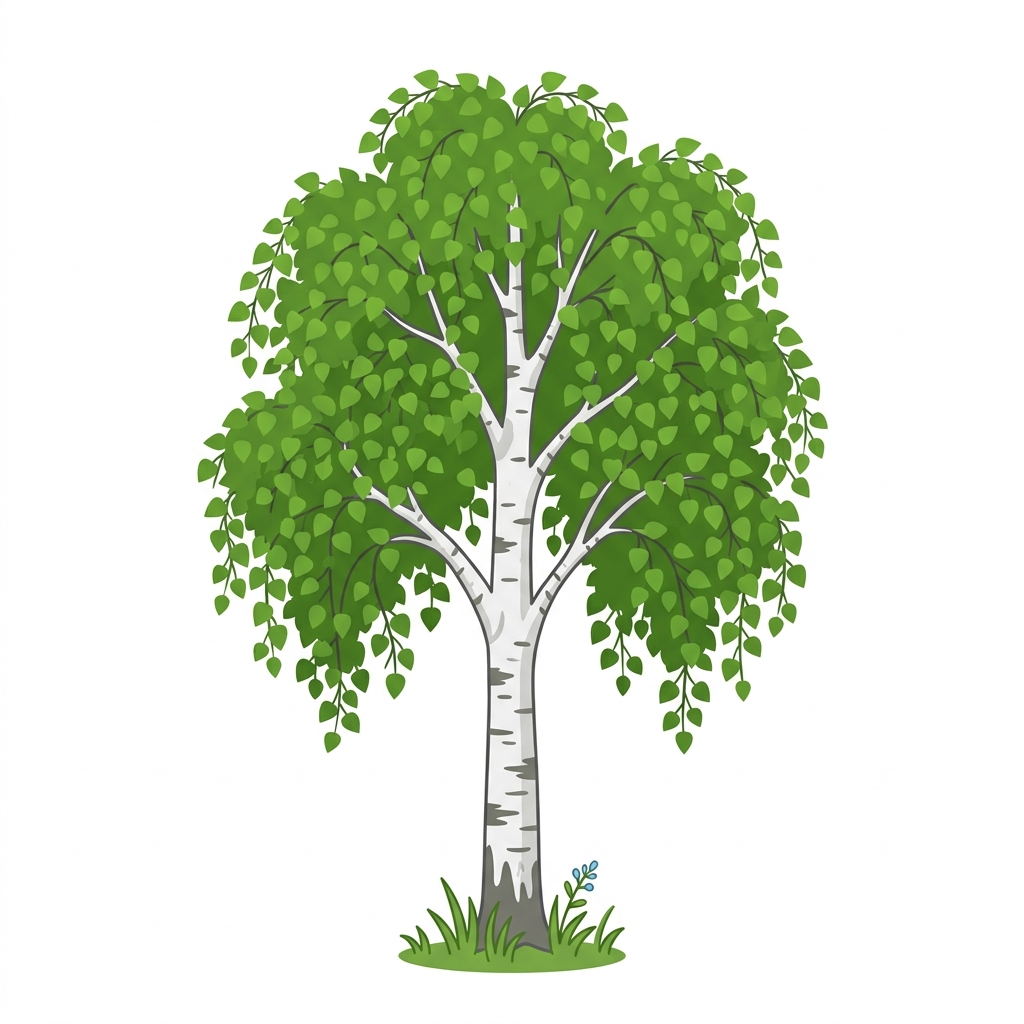
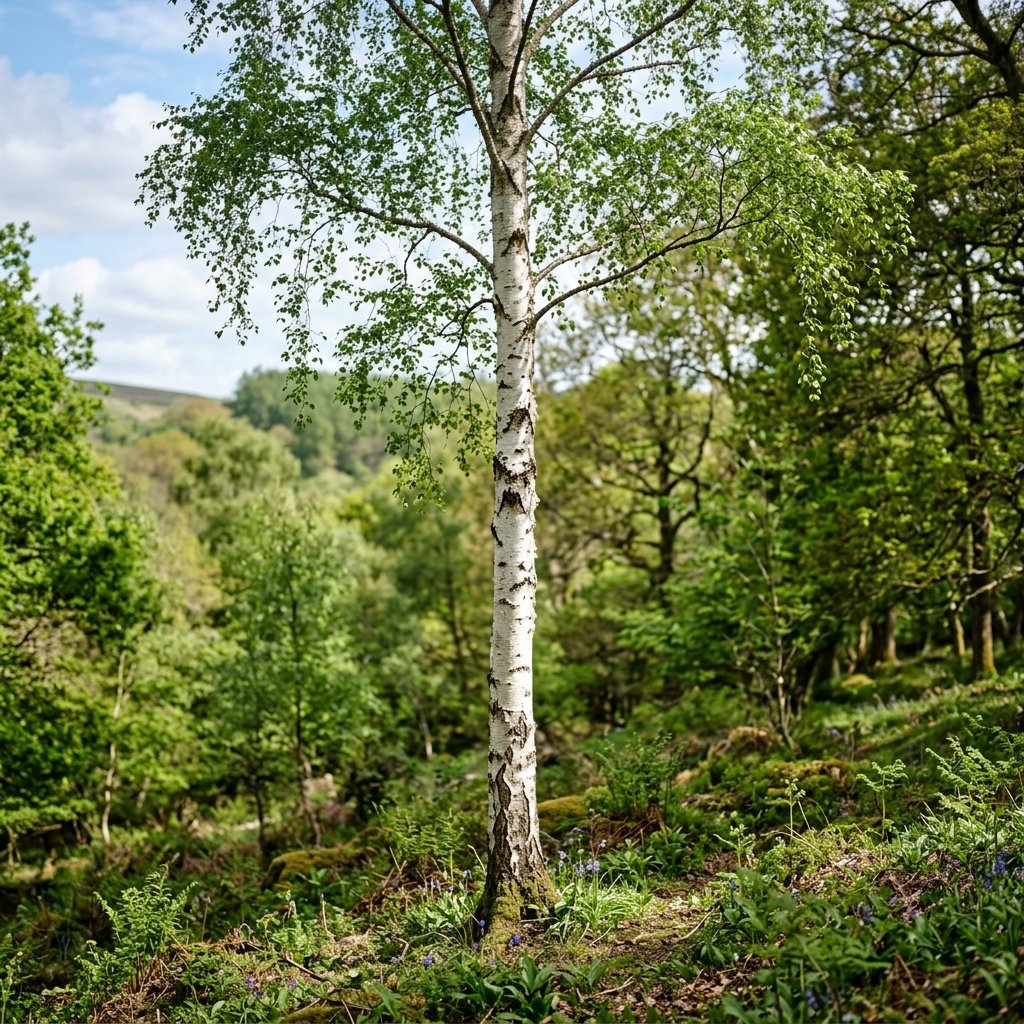
Silver Birch
The graceful tree with gleaming white bark and drooping twigs, first to colonise bare ground and scatter millions of tiny winged seeds on the wind.
💡 Fun Facts
- You can spot a silver birch from far away by its bright white, papery bark that peels off in thin ribbons.
- It is a 'pioneer' tree — its tiny winged seeds blow onto bare, empty ground and start a brand-new wood.
- One birch can scatter millions of seeds in a single autumn, each one small enough to ride the wind like dust.
📅 Through the Year
- Leaf-out:April
- Flowering:April to May
- Fruiting:July to September
- Leaf fall:October to November
Ash
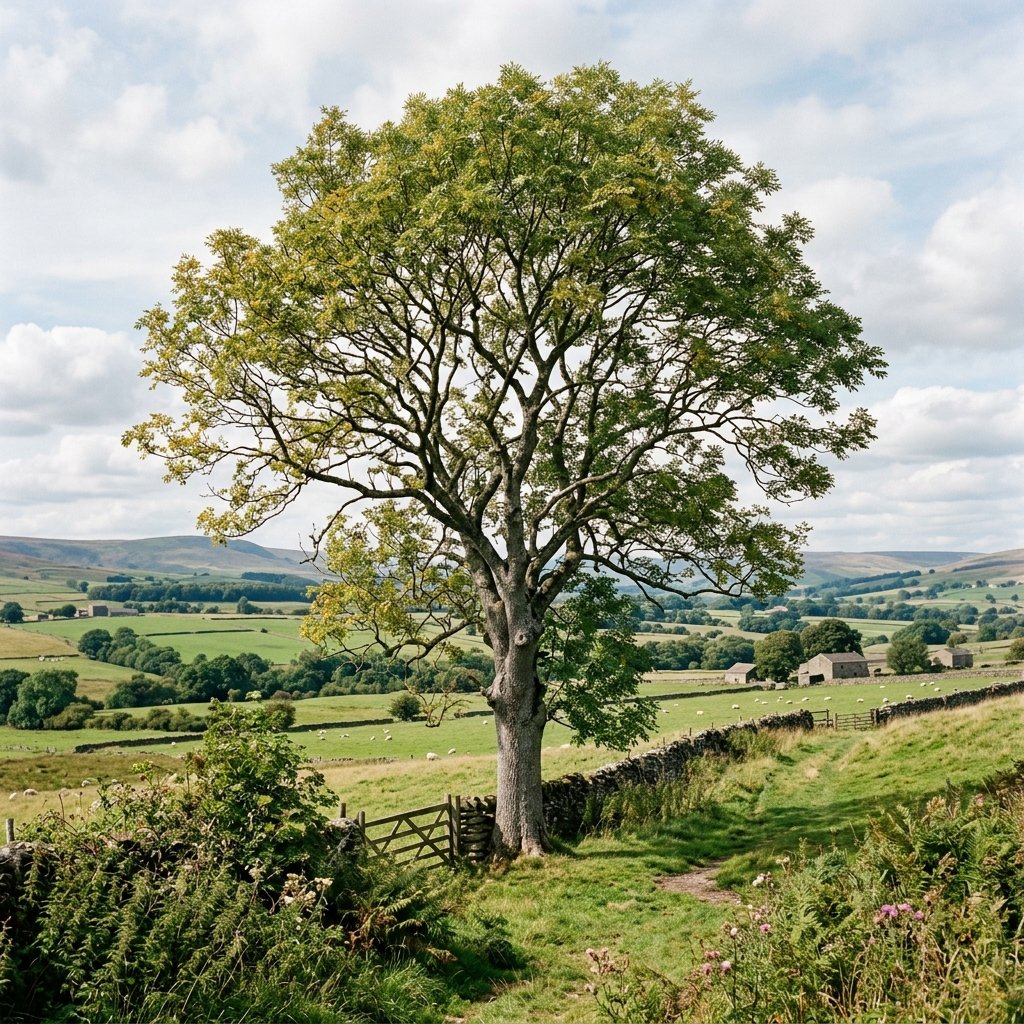
A tall, airy woodland tree known for its jet-black winter buds and bunches of winged 'keys' that spin to the ground like tiny helicopters.
💡 Fun Facts
- In winter you can name an ash tree by its buds — they are jet black, like little blobs of velvet on the twigs.
- Its seeds grow in bunches called 'keys', each with a long wing that spins like a helicopter as it falls.
- Ash is almost always the last tree to grow its leaves in spring and one of the first to drop them in autumn.
📅 Through the Year
- Leaf-out:May
- Flowering:April to May
- Fruiting:September to October
- Leaf fall:October
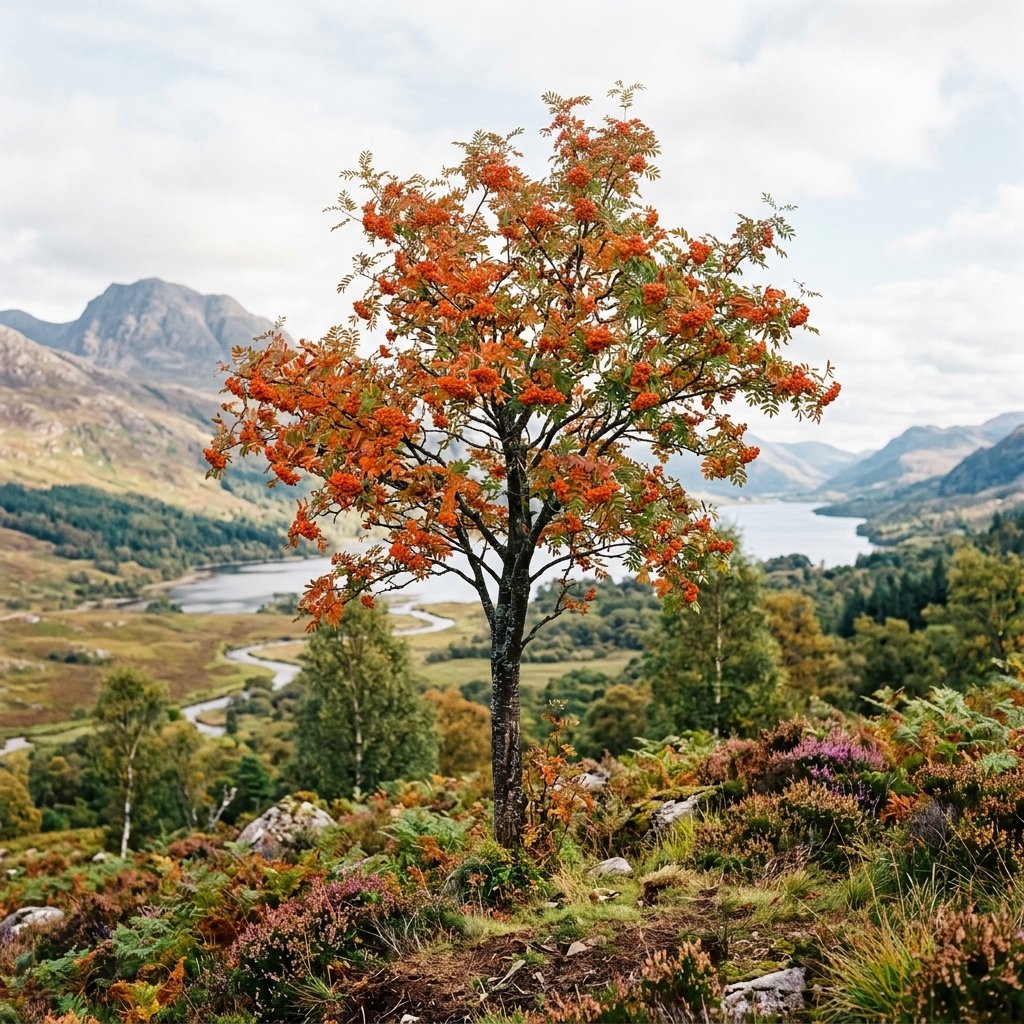
Rowan
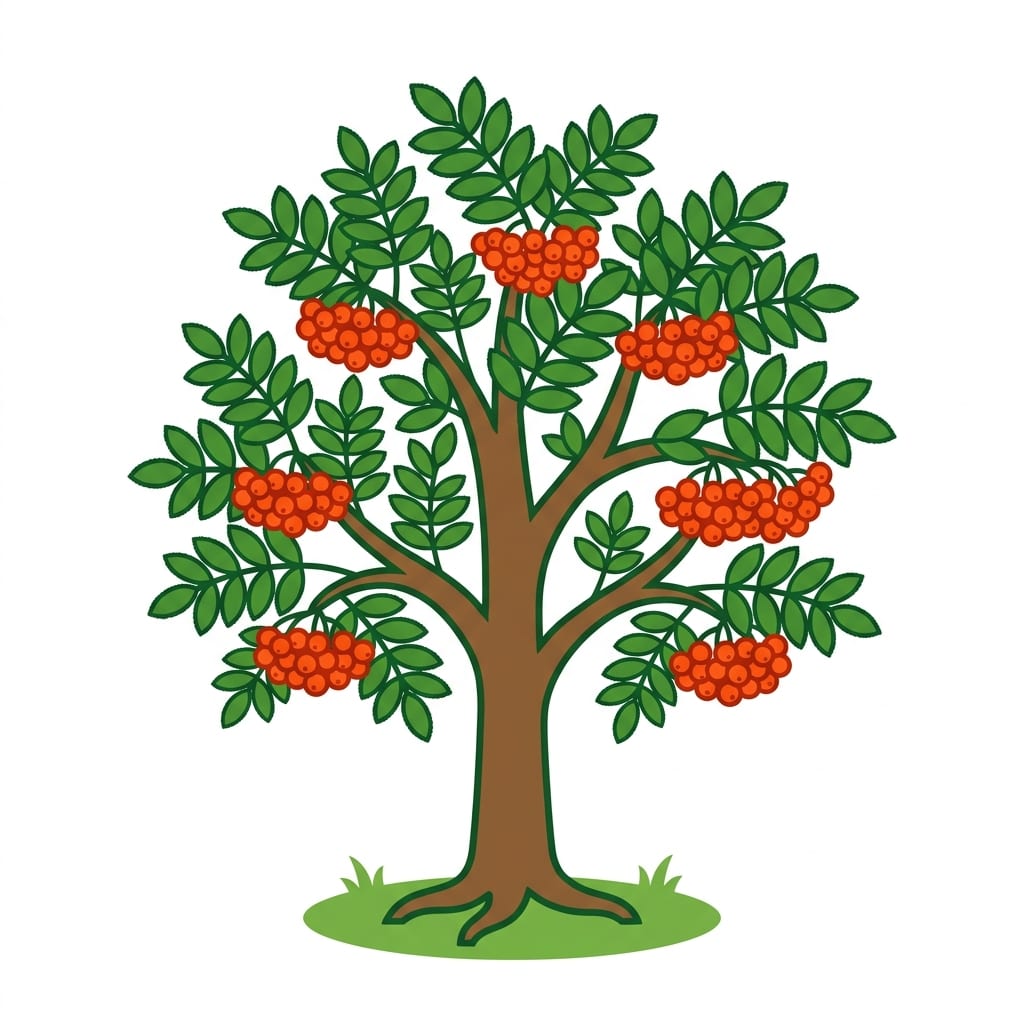
A hardy little tree, at home high on the mountainside, that blazes with clusters of scarlet berries loved by thrushes and blackbirds in autumn.
💡 Fun Facts
- Rowan is also called the 'mountain ash' because it can grow higher up a mountainside than almost any other tree.
- In late summer it is loaded with clusters of brilliant scarlet berries that birds absolutely love.
- Blackbirds, fieldfares and redwings gobble the berries, then fly off and 'plant' the seeds in their droppings.
📅 Through the Year
- Leaf-out:April
- Flowering:May to June
- Fruiting:August to September
- Leaf fall:October
Field Maple
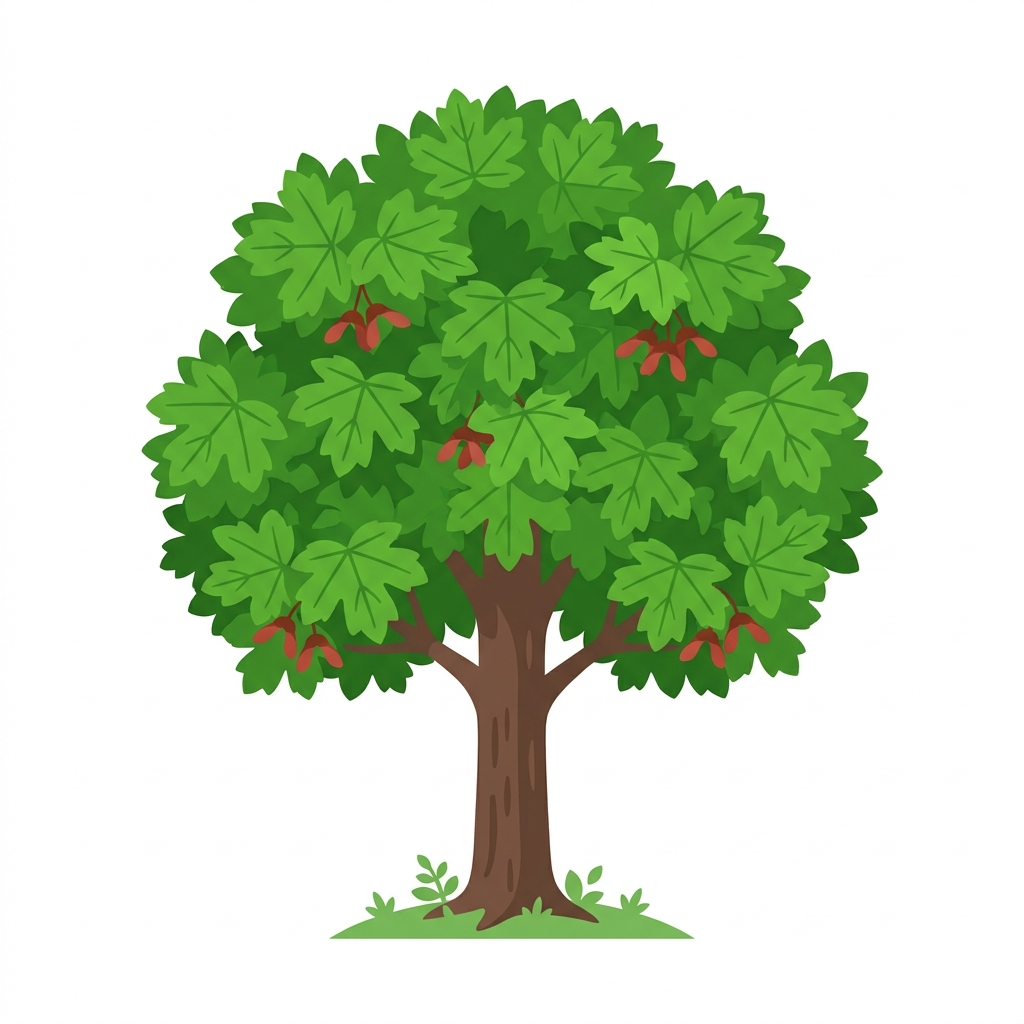
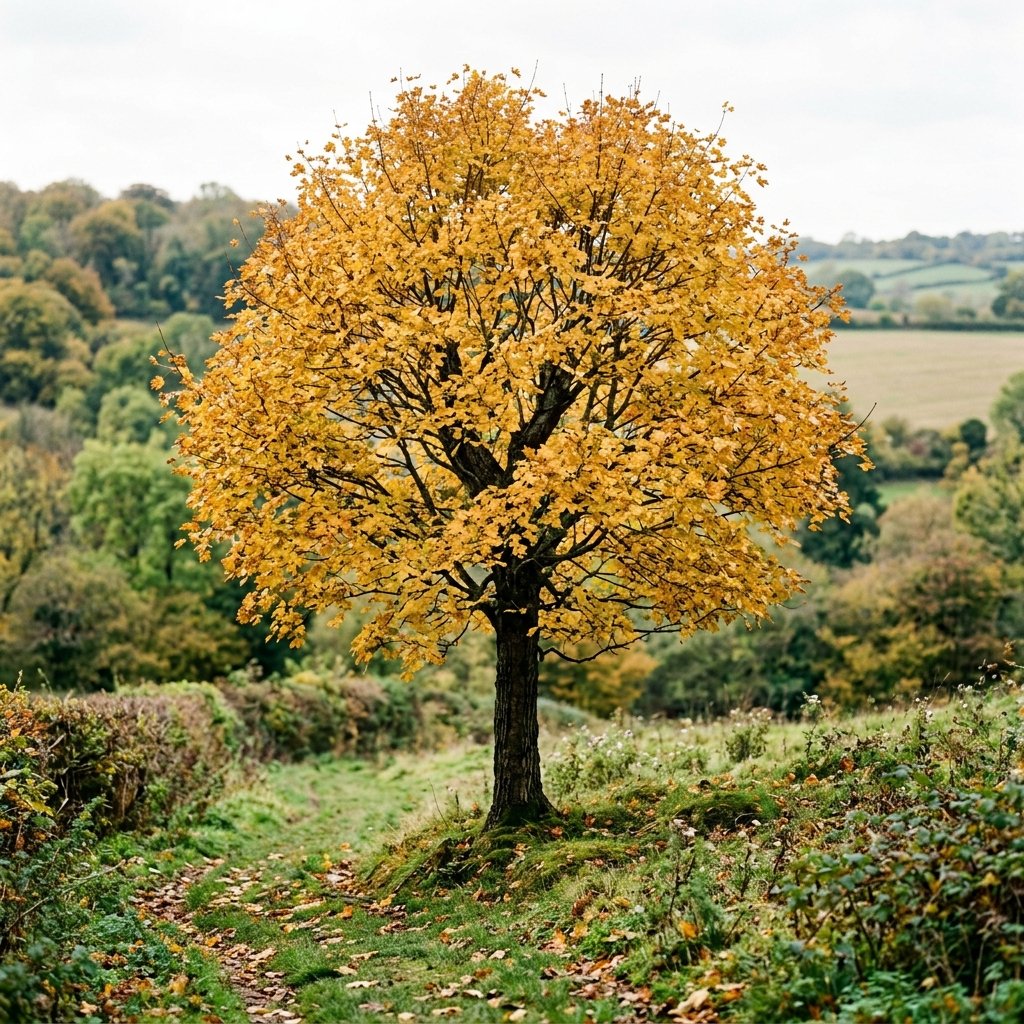
Britain's only native maple — a neat hedgerow tree with small lobed leaves that glow butter-yellow in autumn and paired, spinning winged seeds.
💡 Fun Facts
- Field maple is the only maple tree that is truly wild and native to Britain.
- Its winged seeds, called 'keys', often come in pairs set in a straight line, like a tiny aeroplane propeller.
- In autumn its leaves turn a glowing butter-yellow, lighting up hedgerows all over the countryside.
📅 Through the Year
- Leaf-out:April
- Flowering:May
- Fruiting:September to October
- Leaf fall:October to November
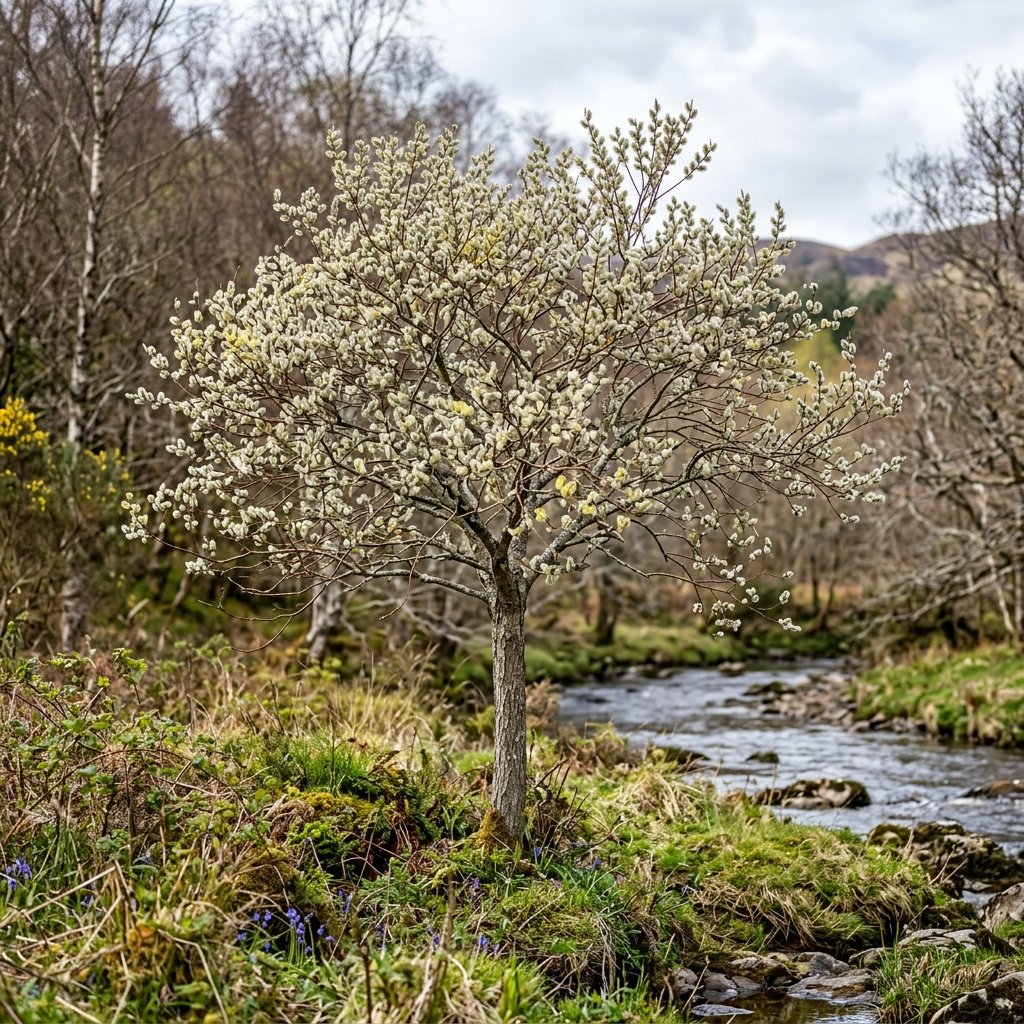
Goat Willow
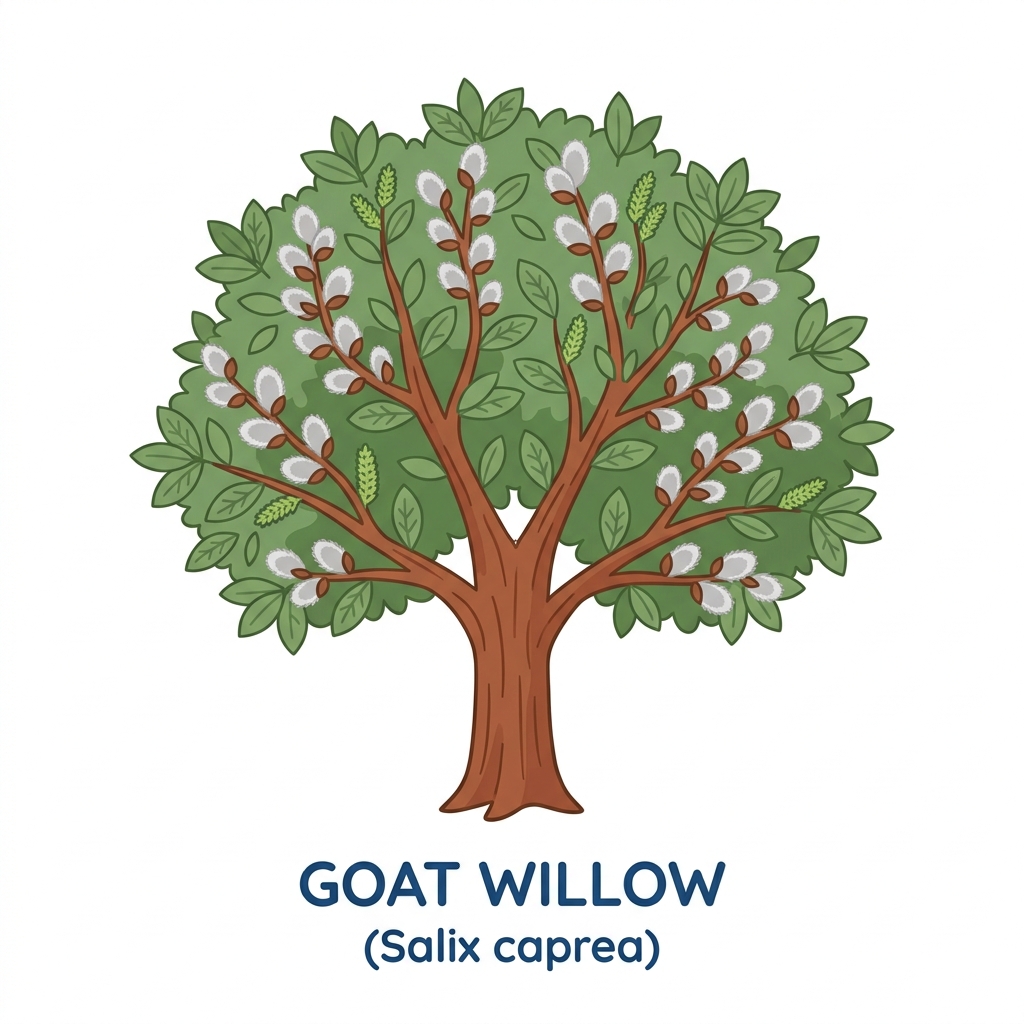
The 'pussy willow' tree — its soft, silvery spring buds burst into golden catkins that give bees one of their first feasts of the year.
💡 Fun Facts
- In early spring goat willow grows soft, silvery buds called 'pussy willow' because they feel just like a kitten's paw.
- The silver buds burst into fluffy golden catkins that offer bees one of the very first meals of the year.
- Goat willow trees are either boys or girls — only the male trees make the bright yellow, pollen-dusted catkins.
📅 Through the Year
- Leaf-out:April
- Flowering:February to April
- Fruiting:May to June
- Leaf fall:October
Crab Apple
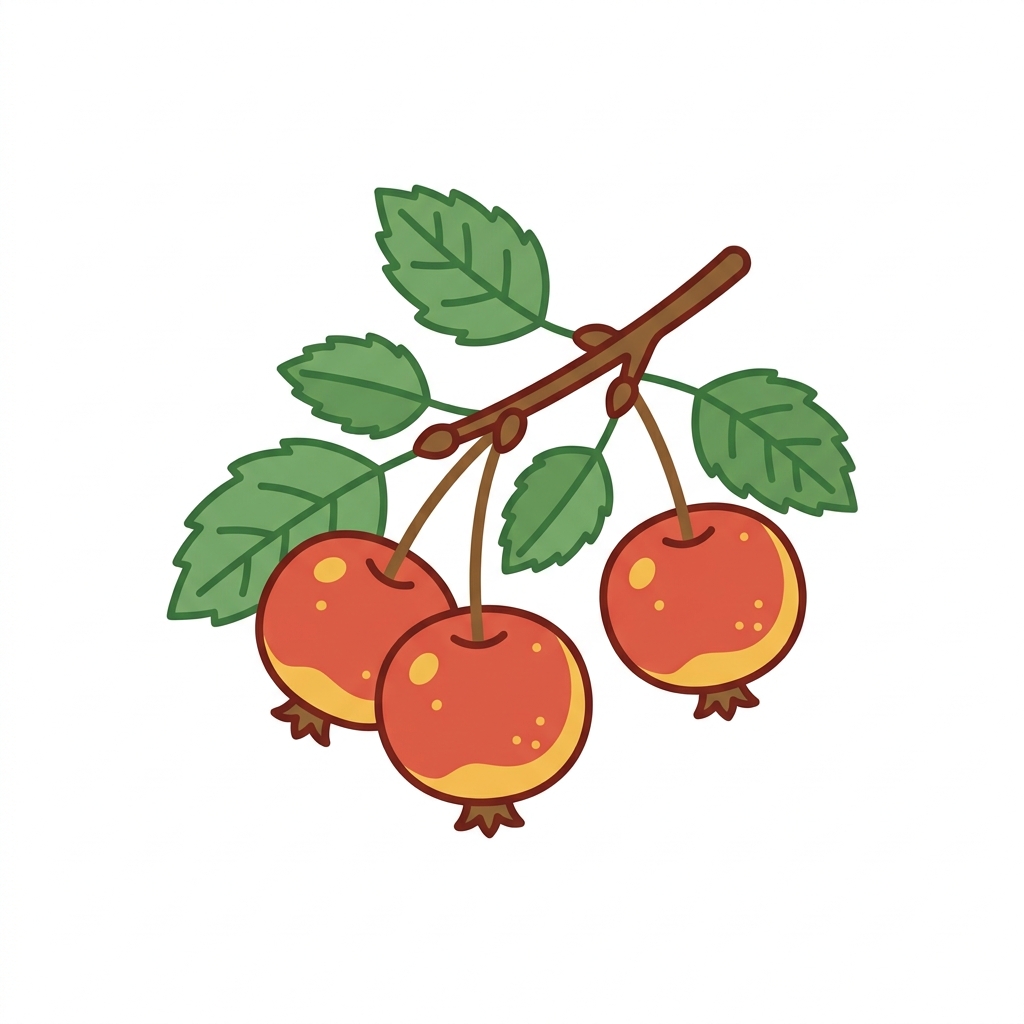
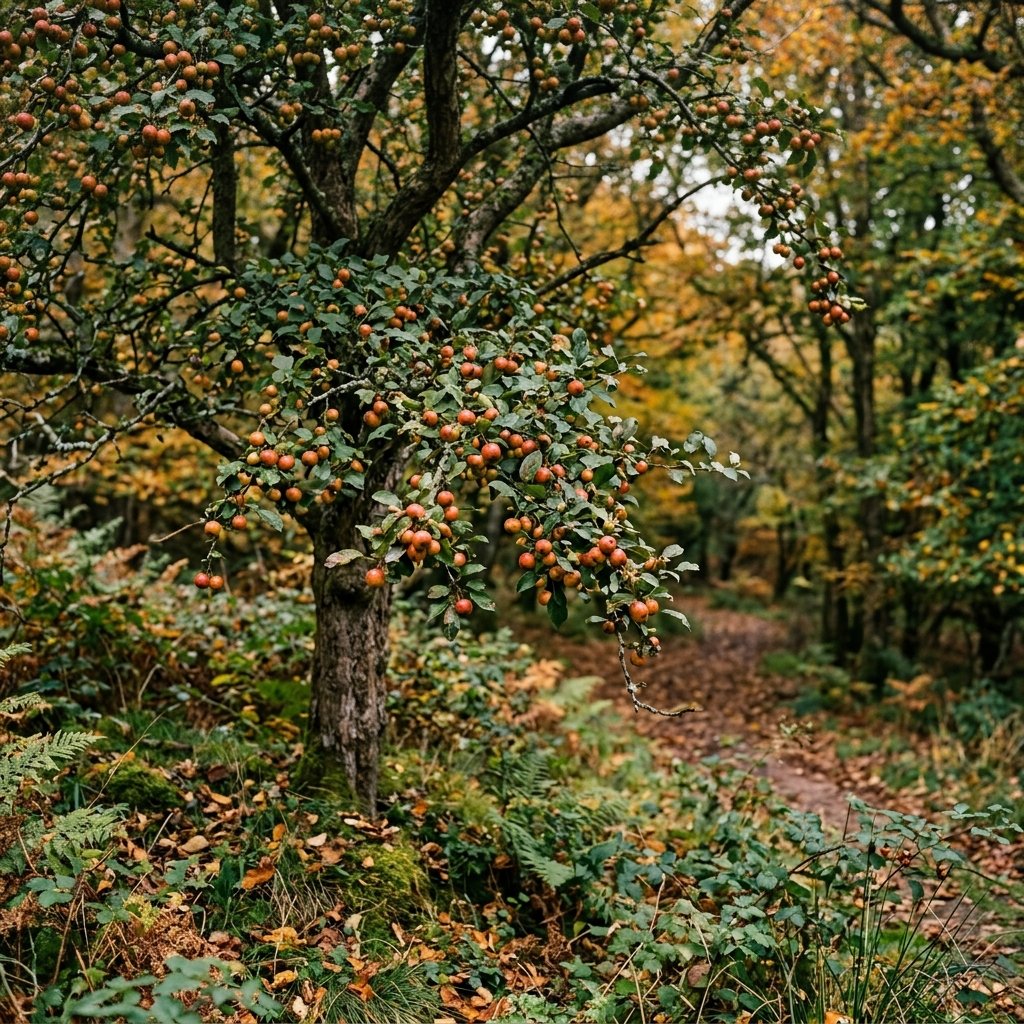
The wild ancestor of the orchard apple — a small, often thorny tree with pink-white spring blossom and hard, sour little apples that feed birds and mammals in autumn.
💡 Fun Facts
- The crab apple is the wild ancestor of all the juicy eating apples we grow in orchards today.
- Its little apples are so sharp and sour that the word 'crabby', meaning grumpy, may come from their taste.
- In spring it is smothered in pink-and-white blossom; in autumn its windfall fruit feeds birds, badgers and foxes.
📅 Through the Year
- Leaf-out:April
- Flowering:April to May
- Fruiting:September to October
- Leaf fall:October to November
Woodland flowers and climbers
Smaller plants of the forest floor and the plants that scramble up the trees.
Primrose
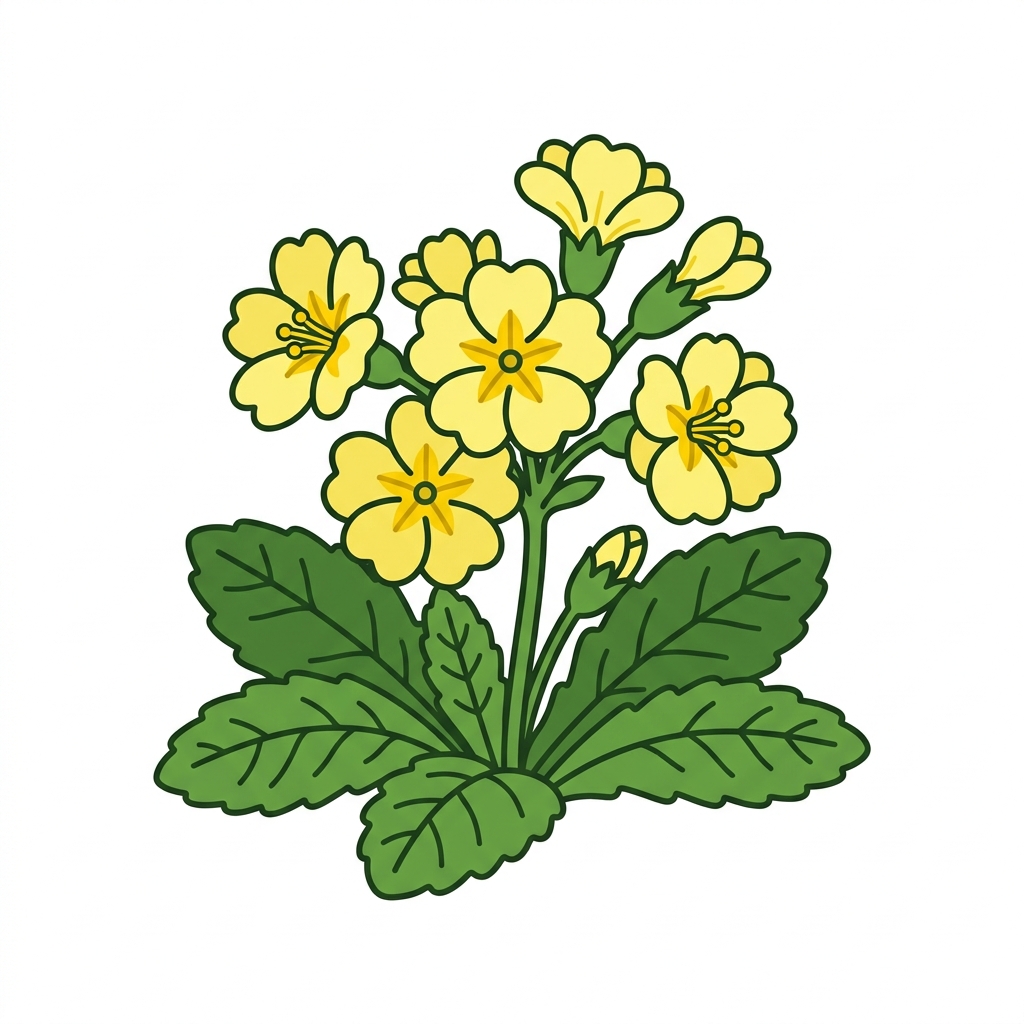
A pale-yellow harbinger of spring on woodland banks — with two flower types that must cross-pollinate, and seeds planted by ants.
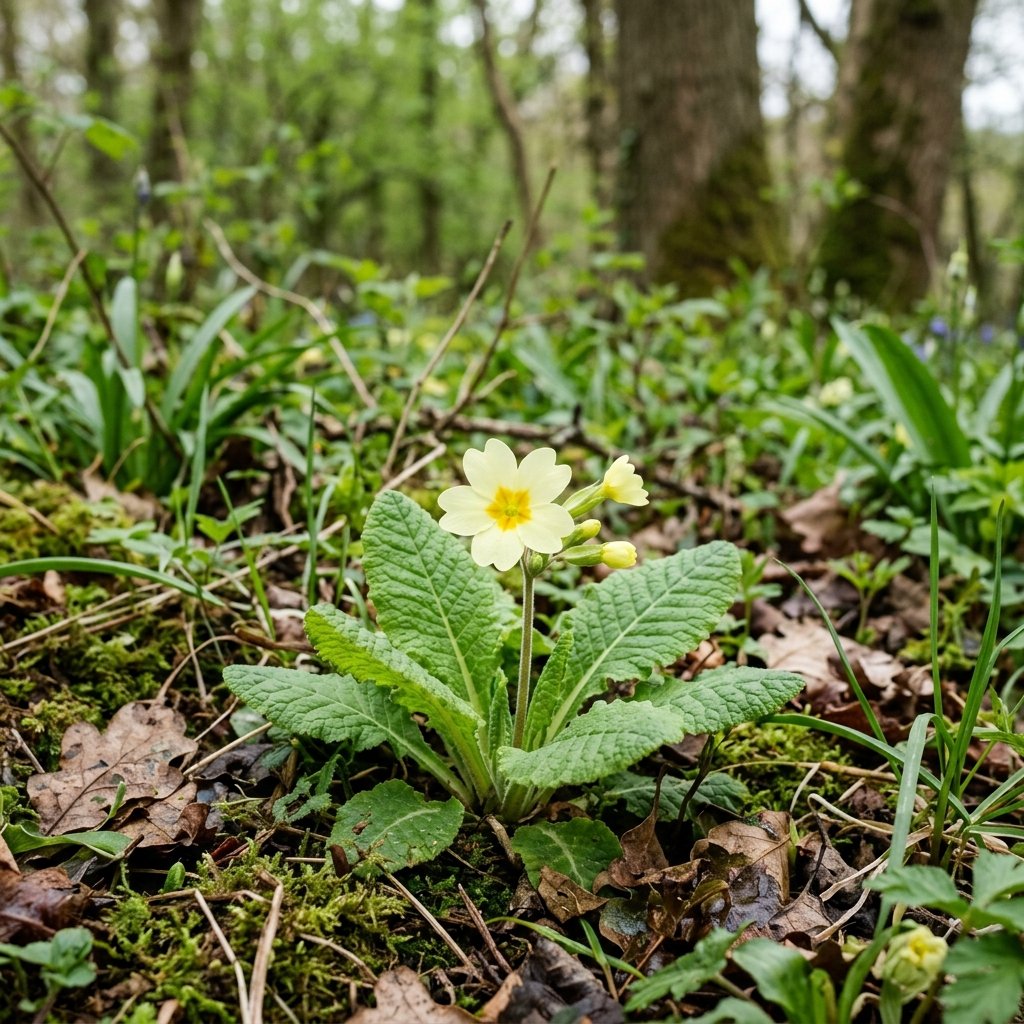
💡 Fun Facts
- It is one of the very first flowers of spring, opening pale yellow on woodland banks.
- Primroses come in two kinds, 'pin' and 'thrum', which must swap pollen with each other to make seeds.
- Ants carry the seeds away to eat a tasty oily lump on them, planting new primroses as they go.
📅 Through the Year
- Flowering:March to May
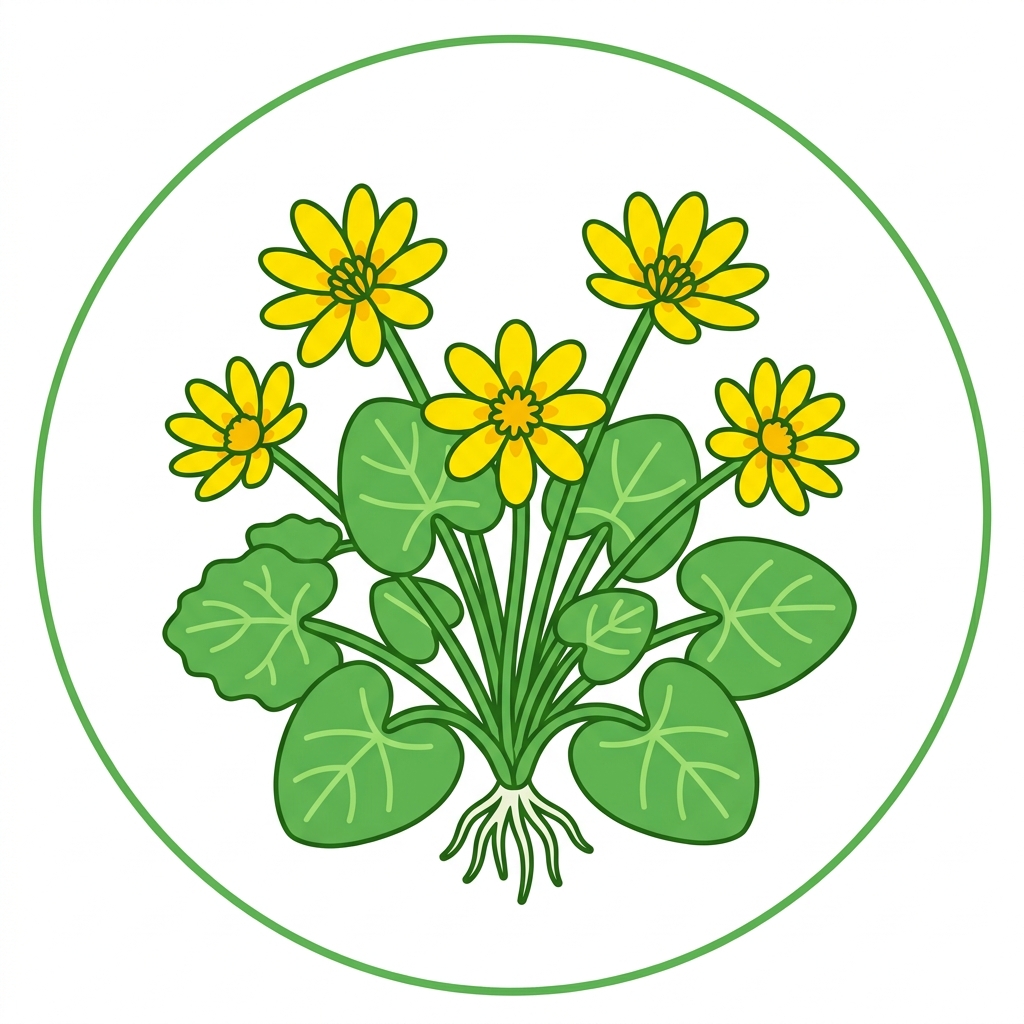
Lesser Celandine
A spring ephemeral that carpets damp woodland floors in glossy golden stars before the trees come into leaf, then disappears underground by summer.
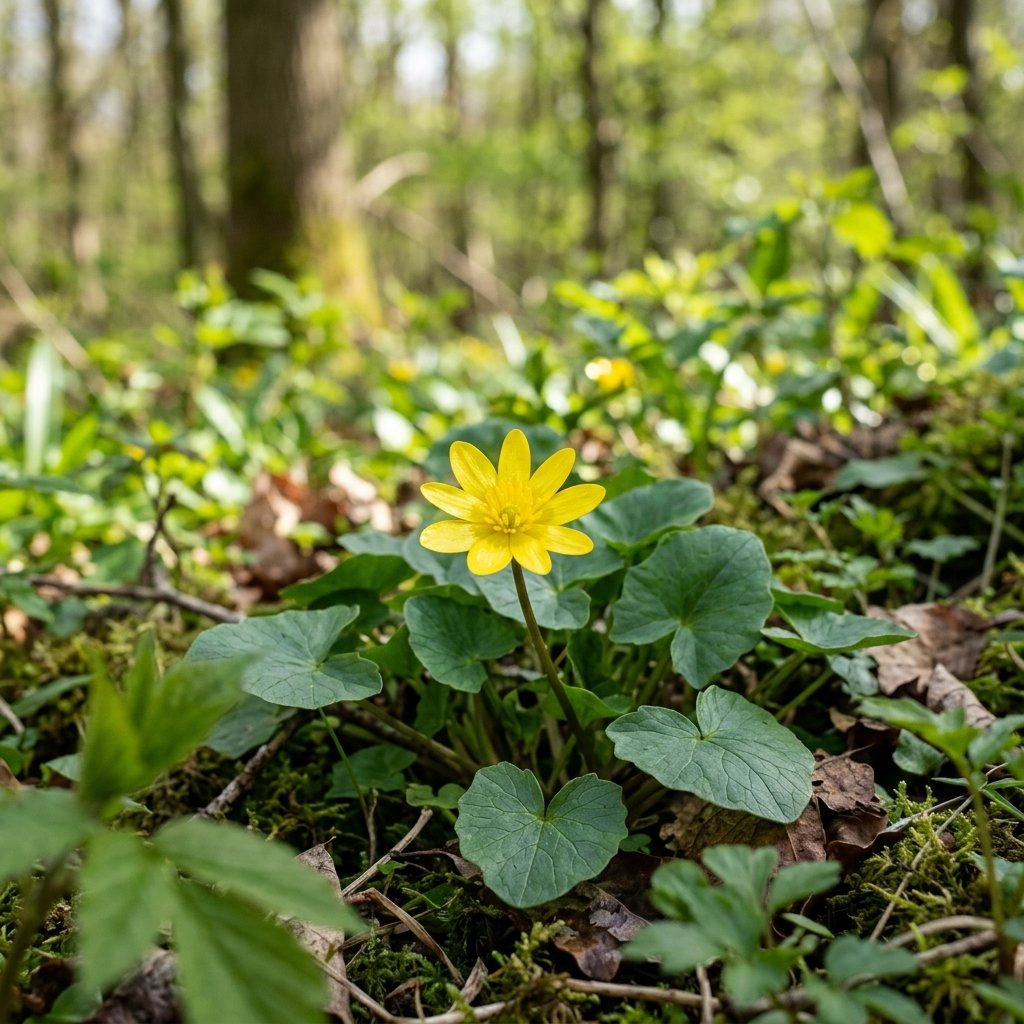
💡 Fun Facts
- Its glossy golden stars are some of the earliest flowers of the year, opening in late winter.
- The shiny petals open wide in sunshine and close up tight when it is cold or cloudy.
- By early summer the whole plant vanishes underground to rest until next spring.
📅 Through the Year
- Flowering:February to April
- Dormant:June to January
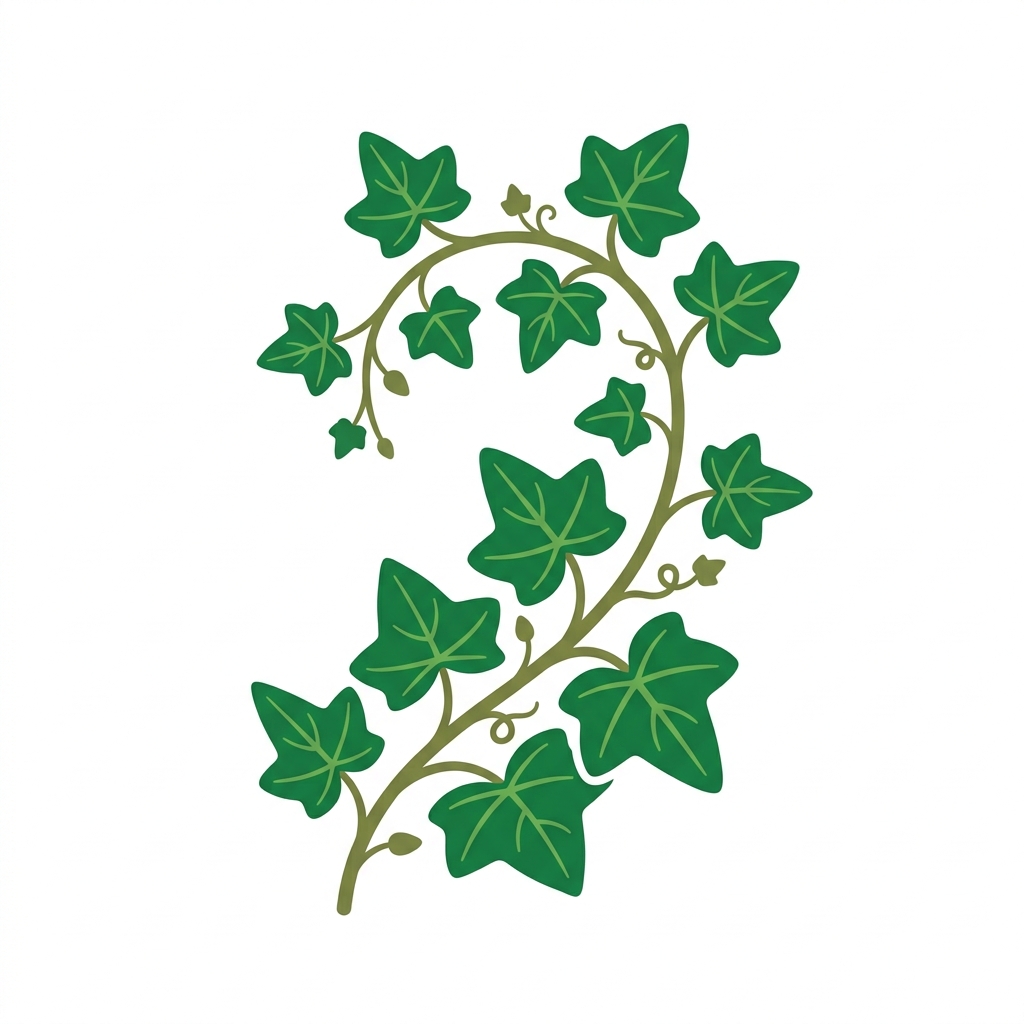
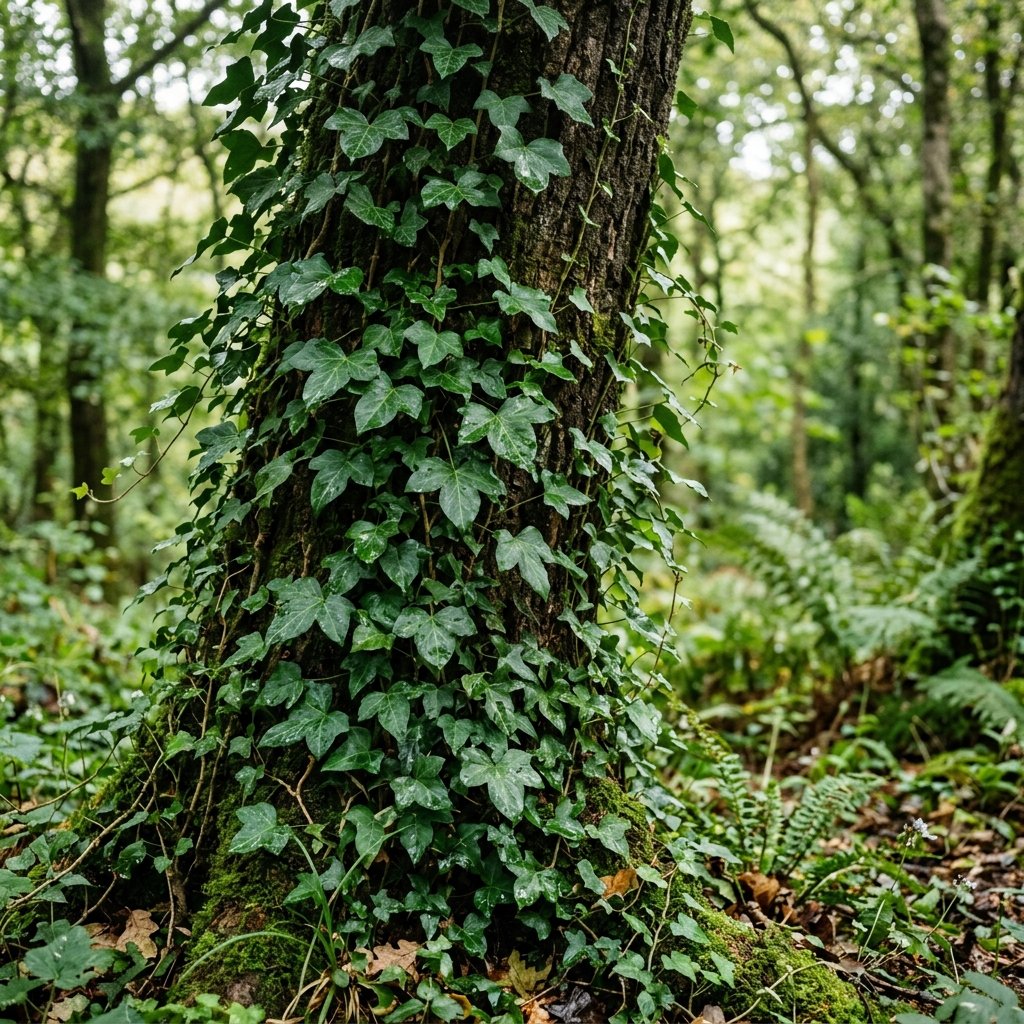
Ivy
An evergreen climber that scales trees and walls with tiny clinging roots — flowering in autumn to feed the last insects of the year, and fruiting in deep winter for the birds.
💡 Fun Facts
- Ivy is a climber — it scrambles up trees and walls using thousands of tiny clinging roots along its stems.
- It flowers in autumn, when almost nothing else does, making it one of the very last meals of the year for bees and wasps.
- Its black berries ripen in the middle of winter, feeding hungry birds when food is hardest to find.
📅 Through the Year
- Flowering:September to November
- Fruiting:November to February
Honeysuckle
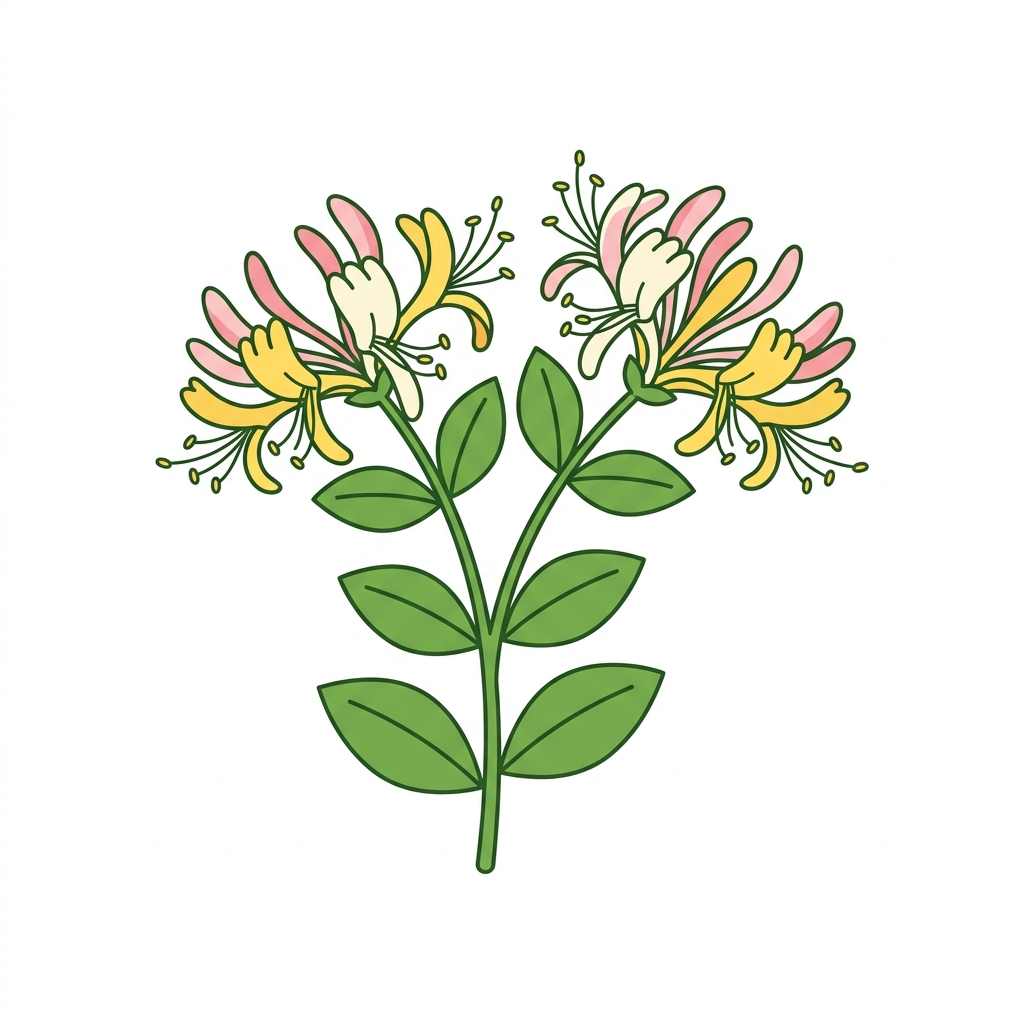
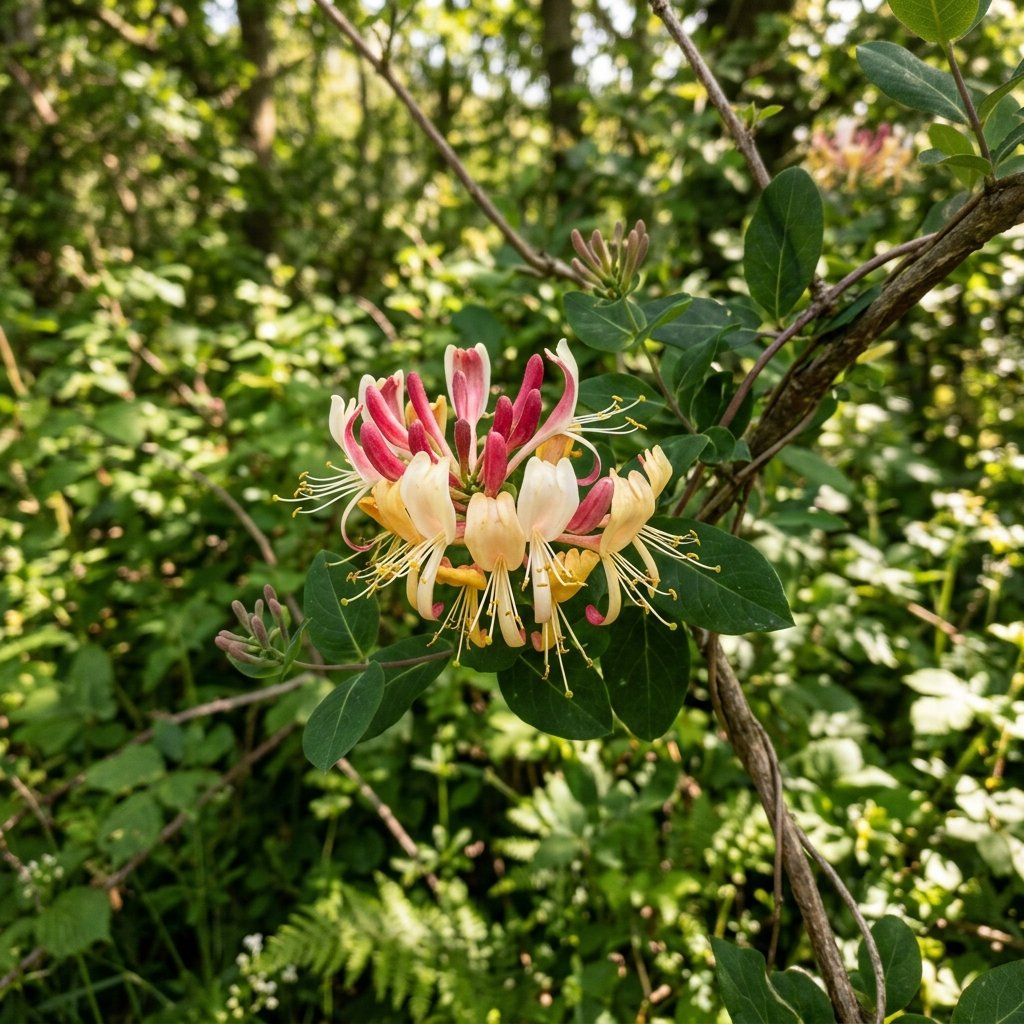
A climbing shrub that twines its way up through hedgerows, pouring out a sweet evening scent from trumpet flowers to draw in moths — and a favourite of the dormouse.
💡 Fun Facts
- Honeysuckle is a climber — it twines round and round other plants' stems to haul itself up towards the light.
- Its curved, trumpet-shaped flowers pour out a sweet scent in the evening to call in night-flying moths.
- Dormice love it — they feast on its flowers and strip its bark to weave their summer nests.
📅 Through the Year
- Flowering:June to August
- Fruiting:August to October
Ferns
Ancient, flowerless plants that love the damp, shady corners of the wood.
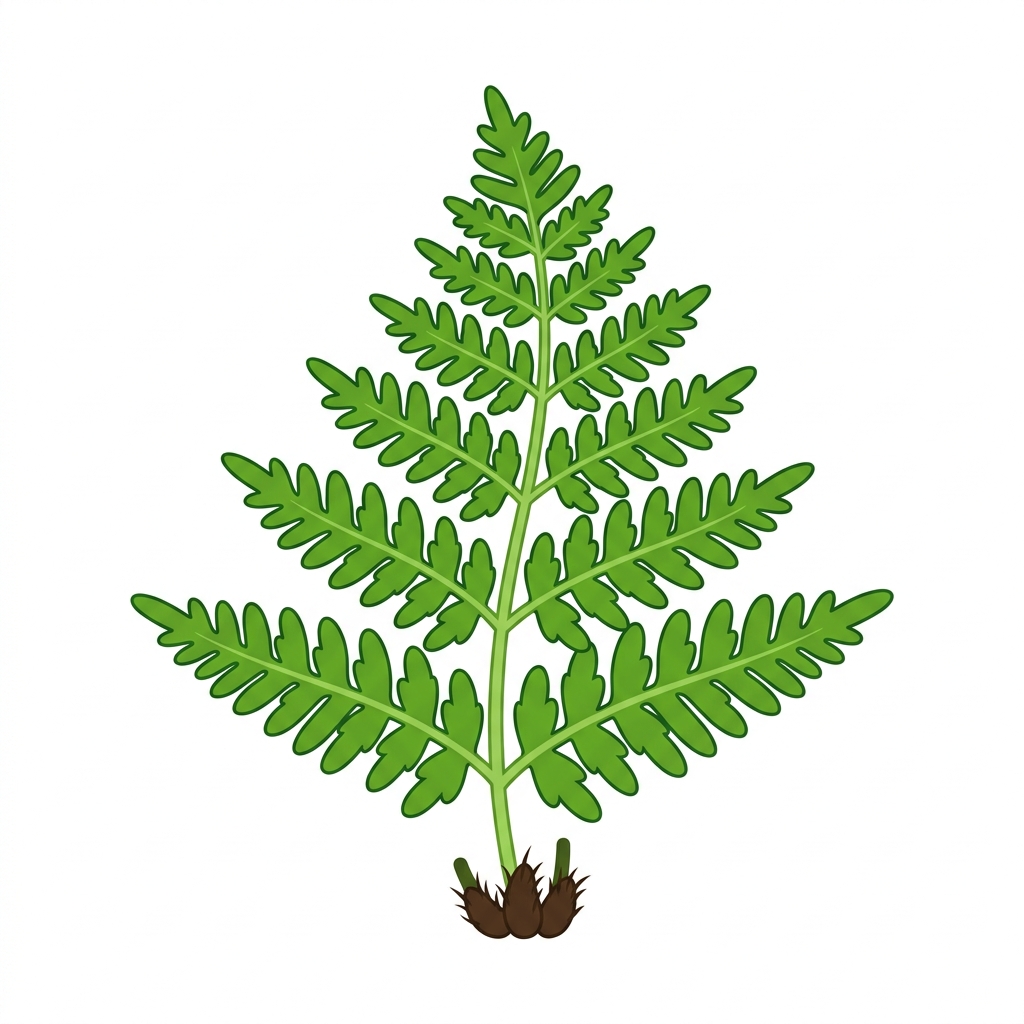
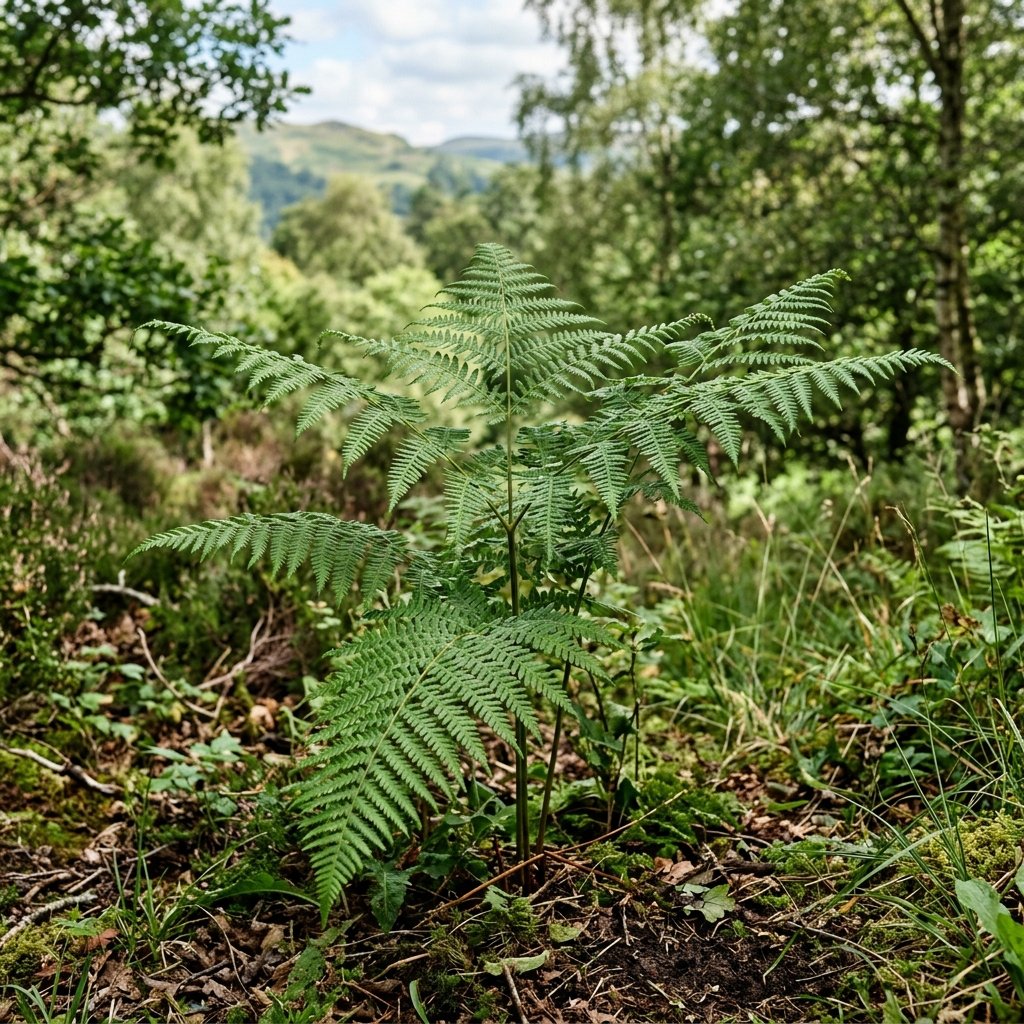
Bracken
The big, feathery fern that carpets heaths and hillsides — tough, poisonous to grazers, and spreading underground right across the countryside.
💡 Fun Facts
- Bracken doesn't grow from flowers or seeds — it scatters millions of tiny, dust-like spores from the underside of its big feathery fronds.
- Almost nothing eats it: its leaves are full of natural poisons, so grazing animals leave it well alone.
- Hidden underground, its tough creeping stems can spread for years — so a single bracken plant may carpet a whole hillside.
📅 Through the Year
- Leaf-out:May
- Leaf fall:October to November
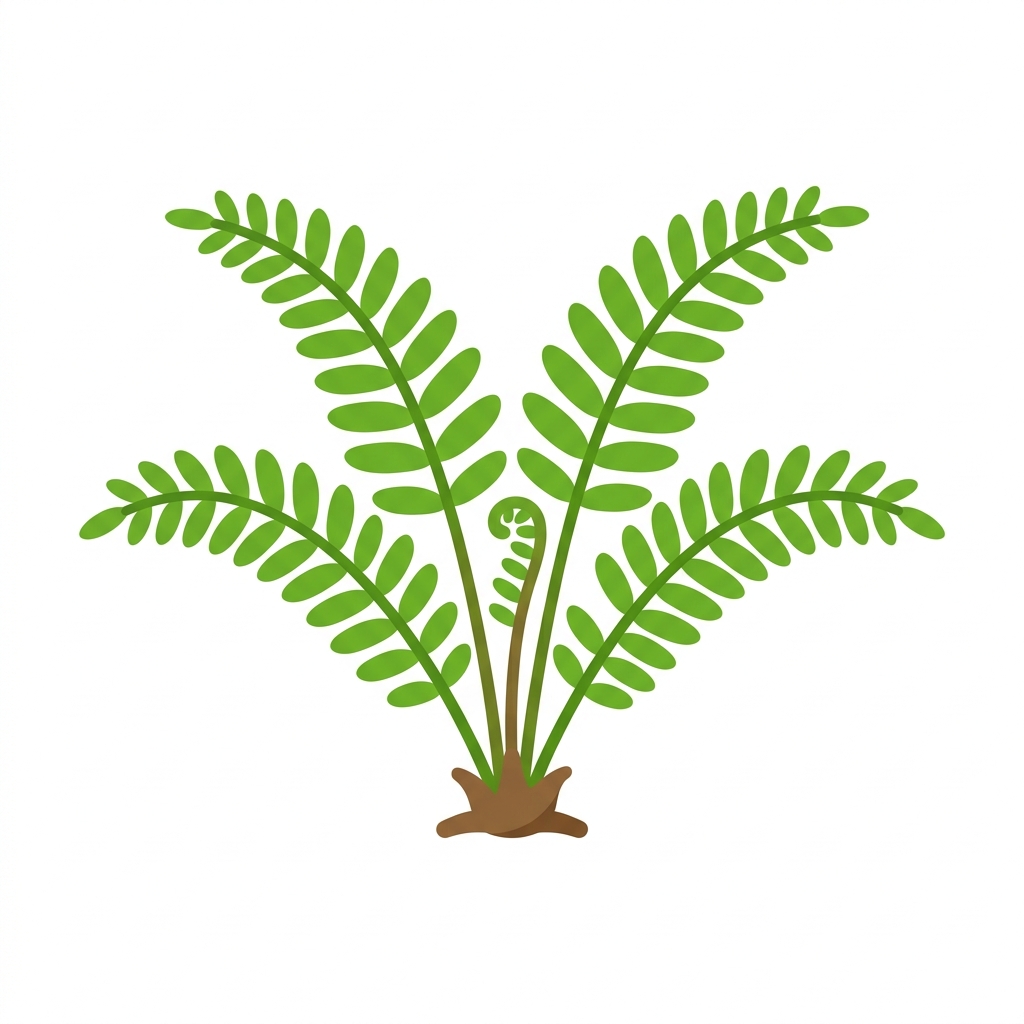
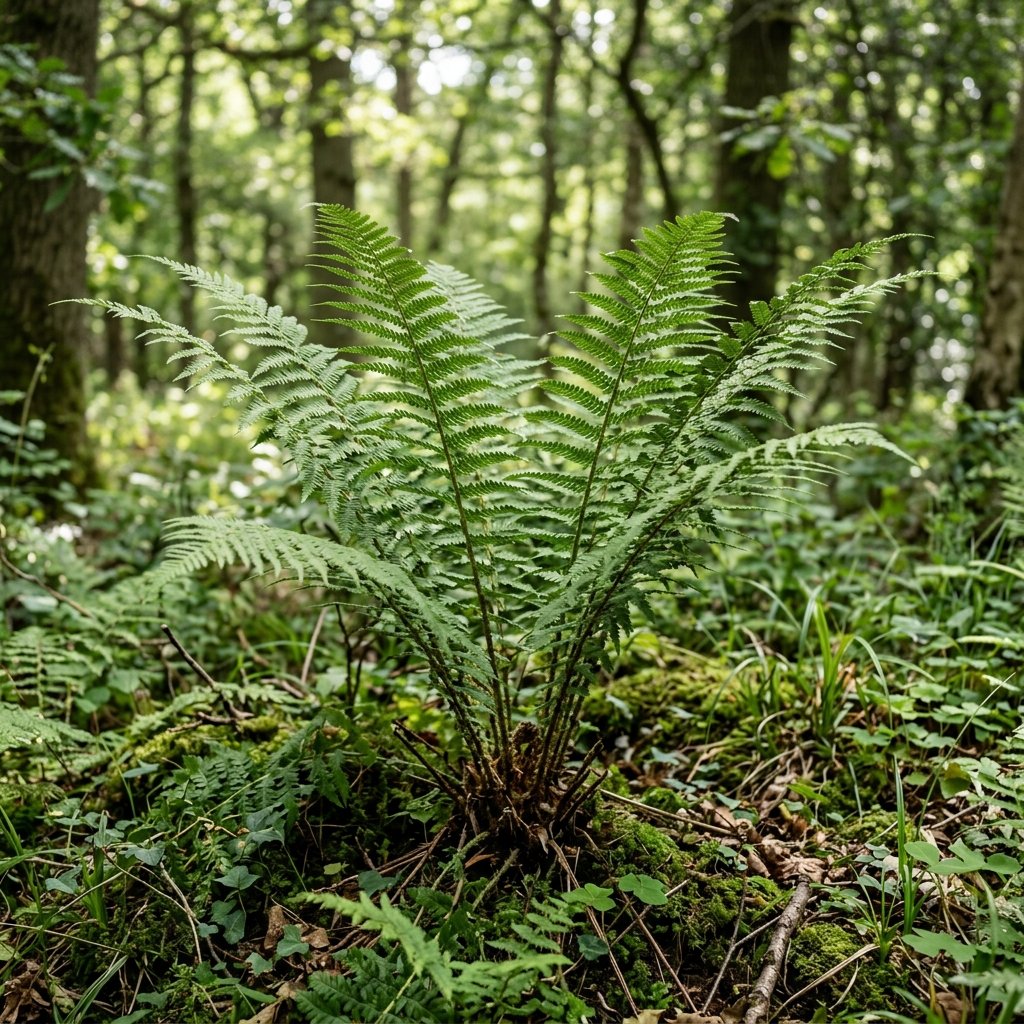
Male Fern
A big, hardy woodland fern whose fronds unfurl in a green shuttlecock each spring — one of Britain's commonest ferns.
💡 Fun Facts
- Its fronds grow in a neat circle, like a green shuttlecock, unfurling each spring from tightly coiled tips called fiddleheads.
- Like all ferns it makes no flowers or seeds — instead it releases millions of spores from rusty-brown dots on the back of its leaves.
- Its underground stem was once used as a medicine to get rid of tapeworms, but it is poisonous, so it is no longer used.
📅 Through the Year
- Leaf-out:April to May
- Leaf fall:November to December
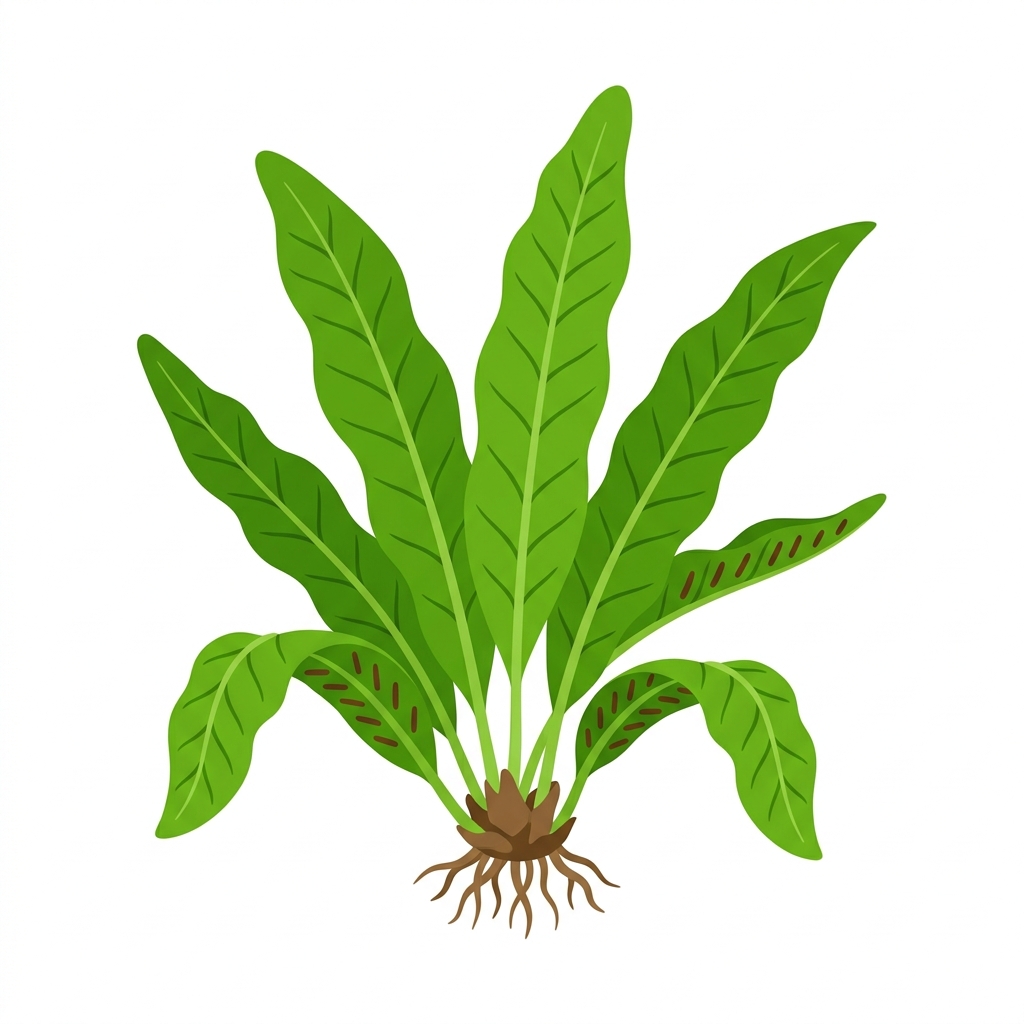
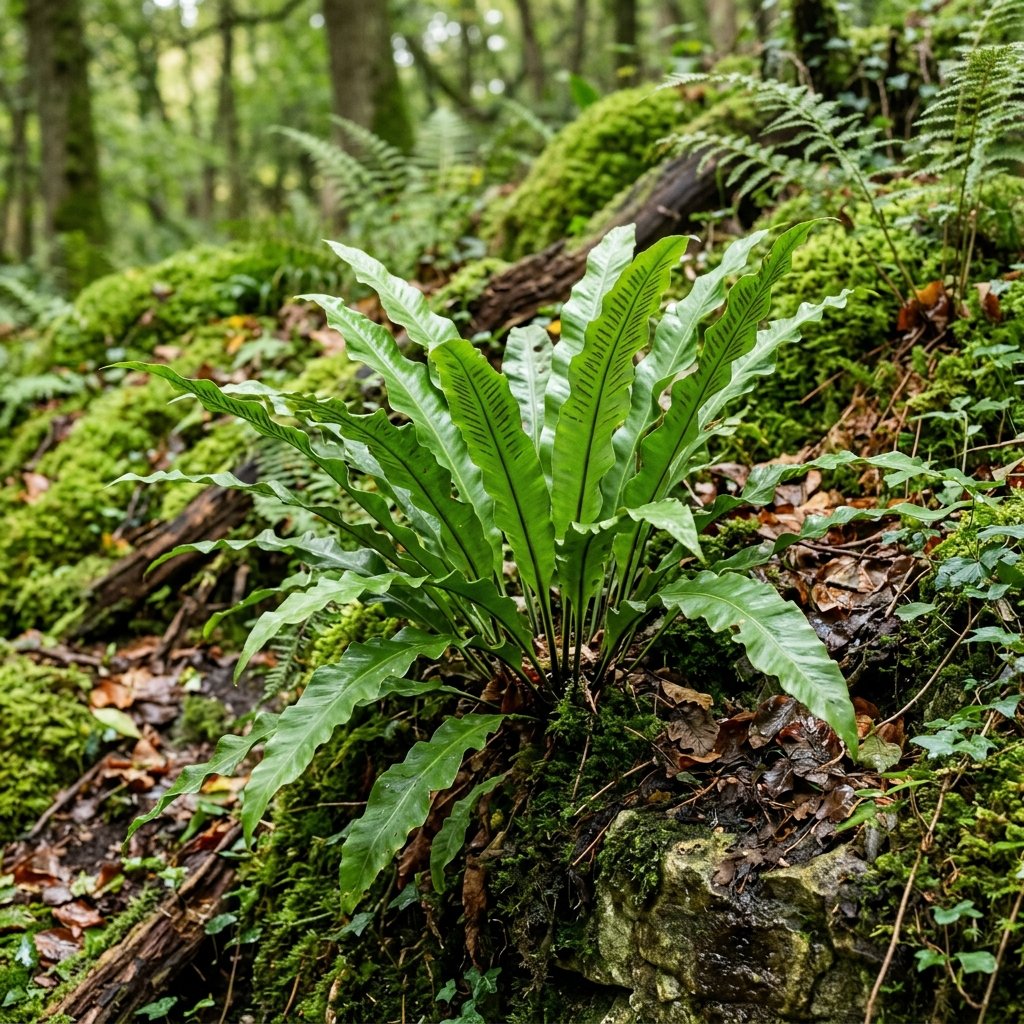
Hart's-tongue Fern
The evergreen fern with long, glossy, strap-like leaves — the only British fern whose fronds aren't feathery, often sprouting from shady walls.
💡 Fun Facts
- Unlike most ferns, its leaves aren't feathery at all — they are long, glossy, undivided straps, like green tongues.
- On the back of each frond, its spores line up in neat brown stripes arranged in a herringbone pattern.
- It stays green all year and loves damp, shady corners — you'll often find it growing straight out of old walls.
📅 Through the Year
- Leaf-out:April to June
Animals you might meet
Birds and insects that make their home among the trees.
Blackbird
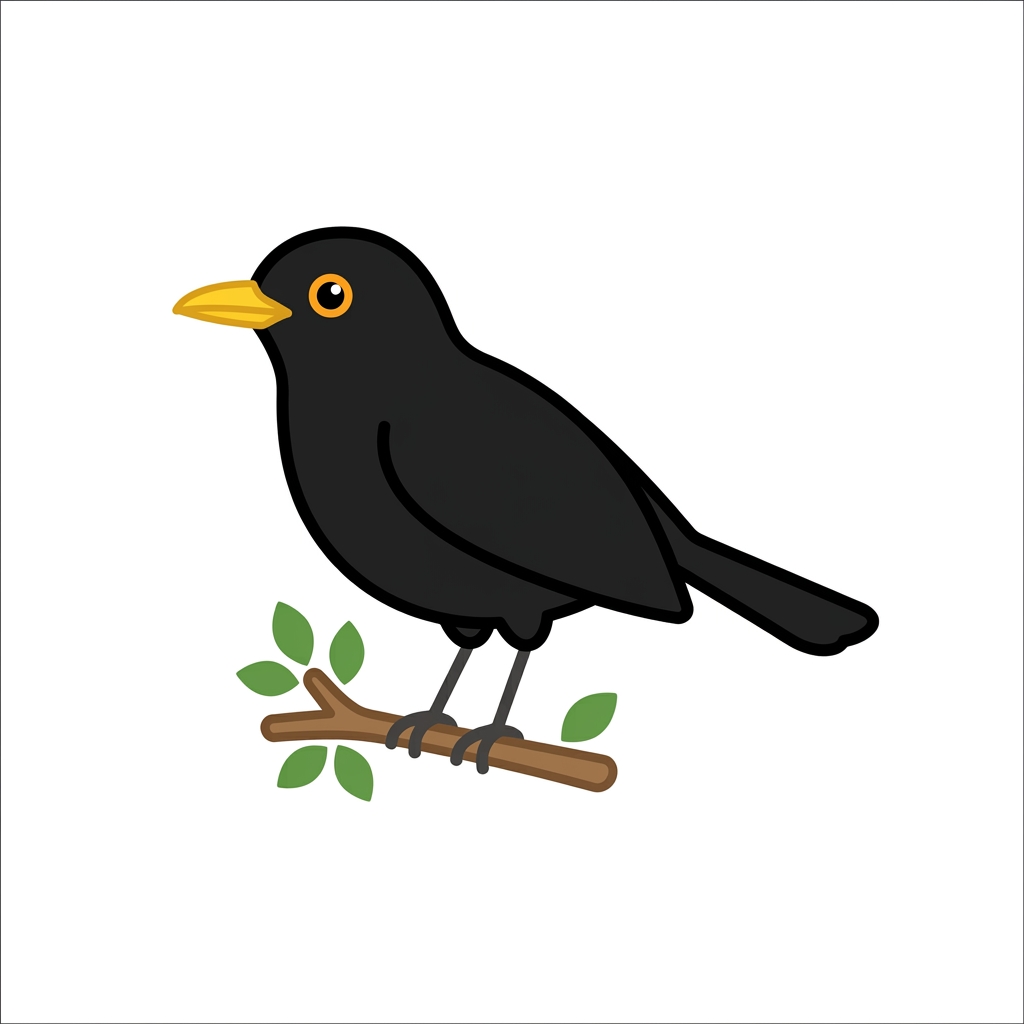
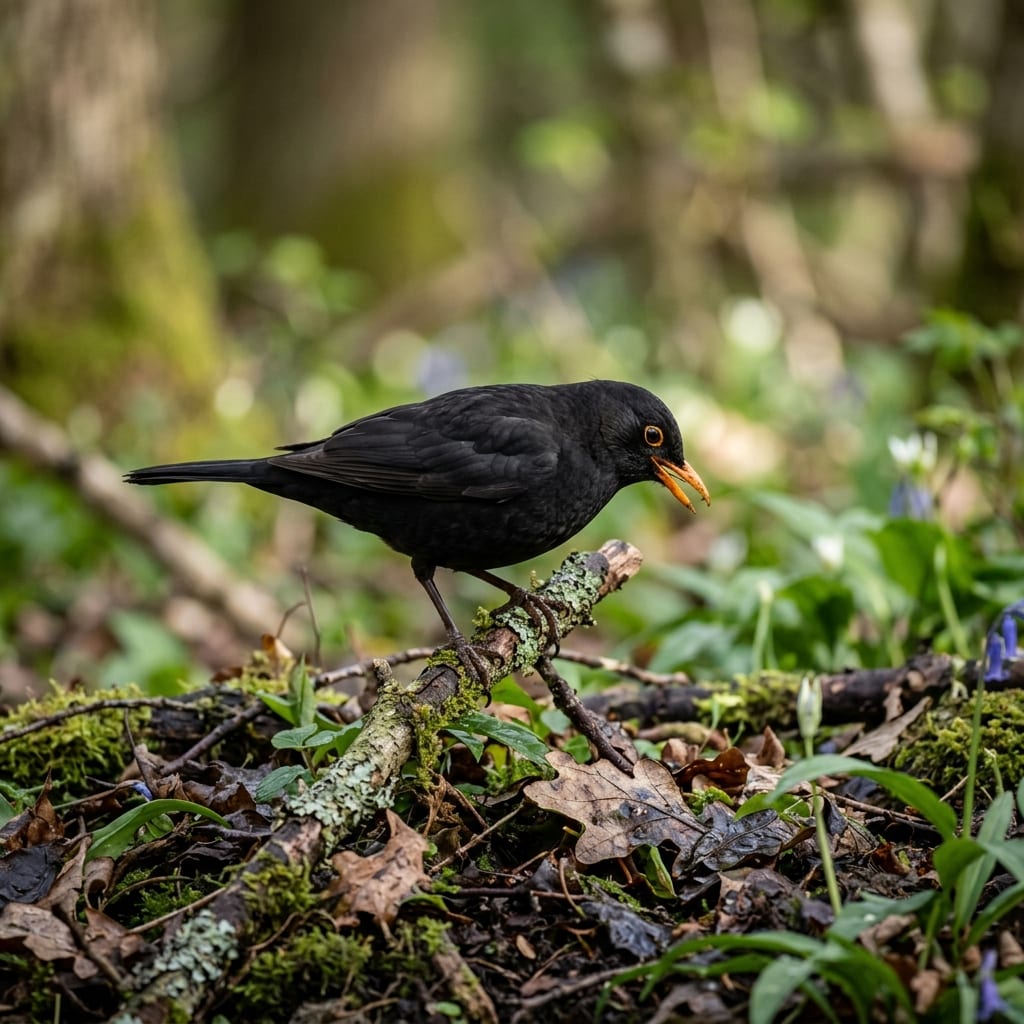
The blackbird is one of Britain's best-loved garden birds, famous for the male's mellow, flute-like song. It hops across lawns tugging up earthworms and feasts on berries and windfall fruit in autumn.
💡 Fun Facts
- The male blackbird is glossy black with a bright orange-yellow beak, but the female is actually a warm, speckled brown!
- Blackbirds are among the finest songbirds in Britain, and their rich, flute-like song is one of the first sounds of a spring morning.
- They love to hunt earthworms on the lawn, cocking their head to one side to watch and listen for movement in the soil.
📅 Through the Year
- Breeding:March to July
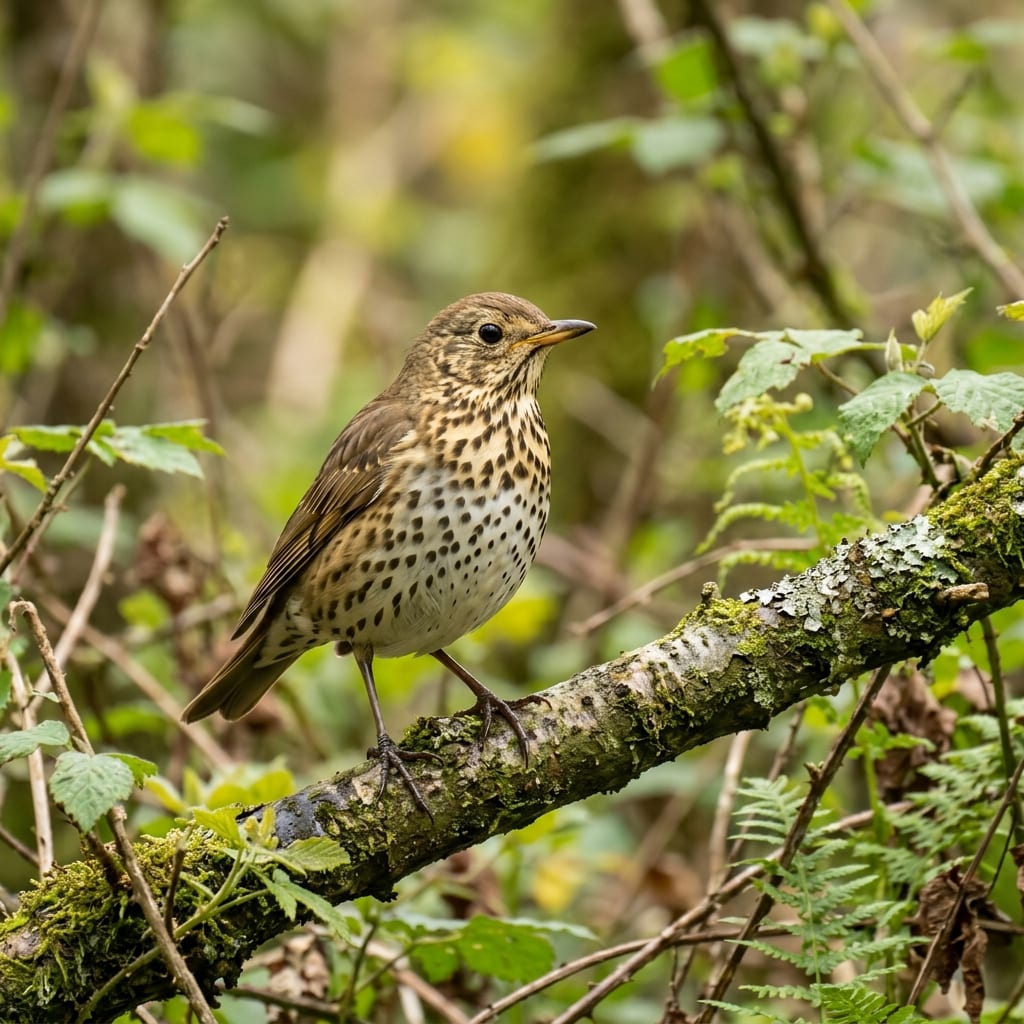
Song Thrush
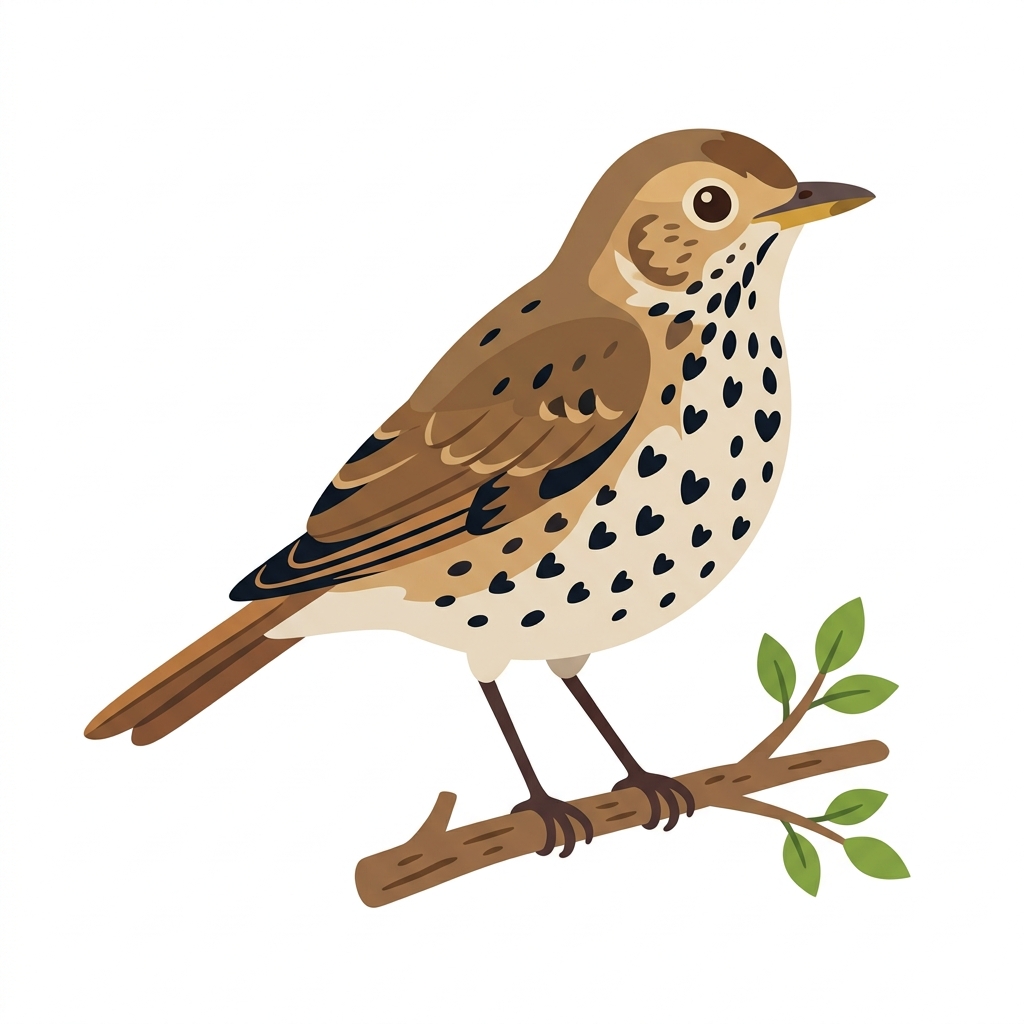
The song thrush is a much-loved garden bird with a beautiful, repeating song. It is a champion snail-hunter, famously smashing them against a stone "anvil" to reach the soft meal inside.
💡 Fun Facts
- The song thrush is famous for repeating each musical phrase two or three times, as if practising its favourite tunes.
- It is one of the few birds clever enough to use a tool — it smashes snails against a favourite stone called an "anvil" to crack them open.
- Its warm brown back and speckled, arrow-shaped spots help it blend into dappled woodland shade.
📅 Through the Year
- Breeding:March to July
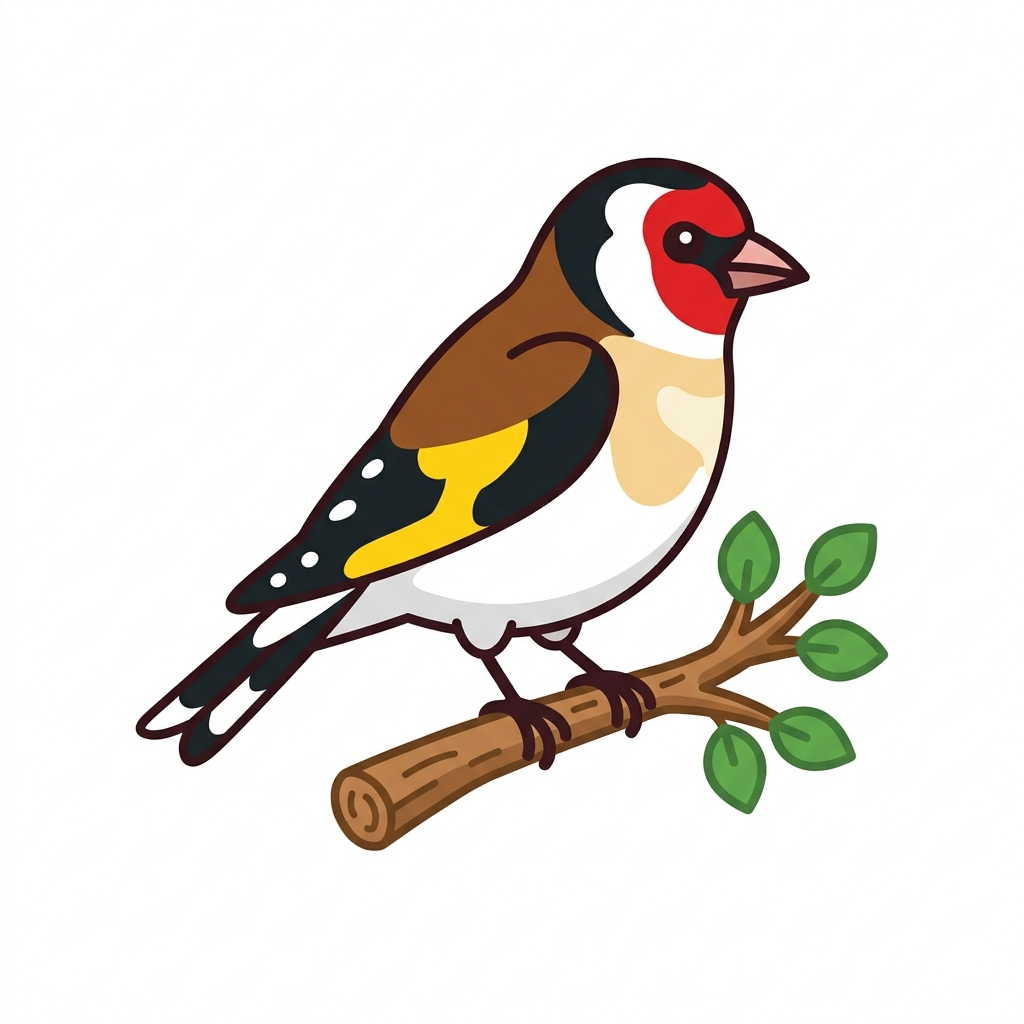
Goldfinch
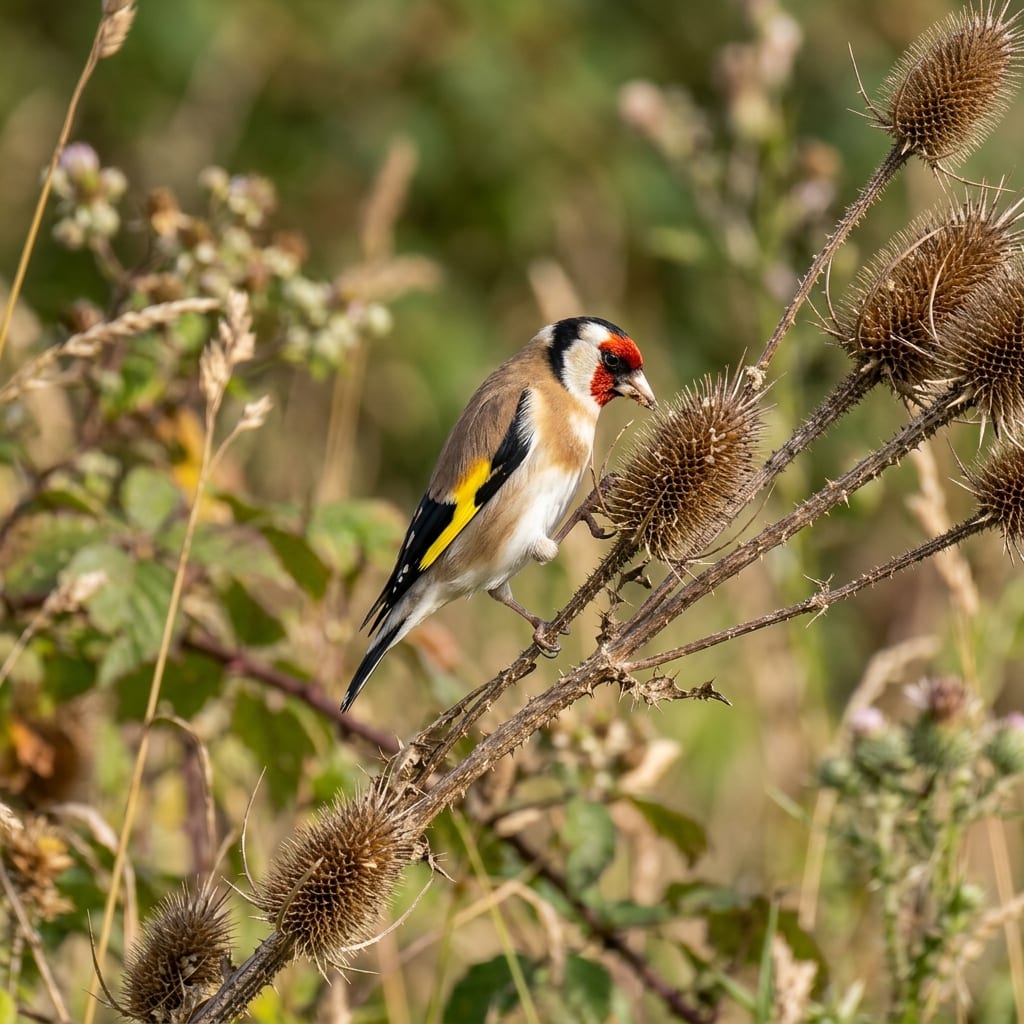
The goldfinch is a dazzling little finch with a red face and gold-barred wings. Using its slender beak, it feeds on the seeds of teasels, thistles and knapweed, often gathering in tinkling flocks called "charms".
💡 Fun Facts
- The goldfinch has a bright red face and flashing golden wing-bars that glitter as it flies.
- A flock of goldfinches has a wonderful name — a "charm" — from the tinkling, twittering sound they make together.
- Their fine, pointed beaks are perfectly shaped to tweeze tiny seeds from prickly teasel and thistle heads that other birds cannot reach.
📅 Through the Year
- Breeding:April to August
Bullfinch
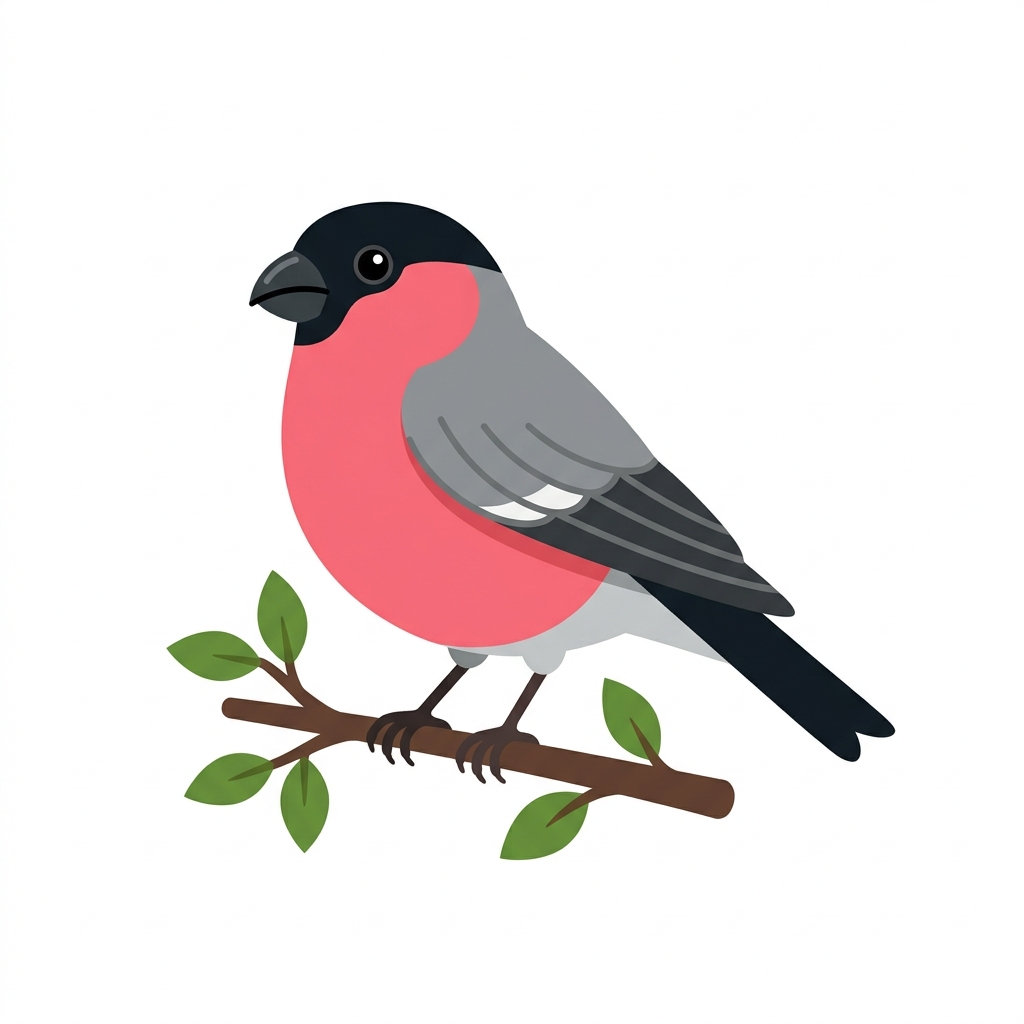
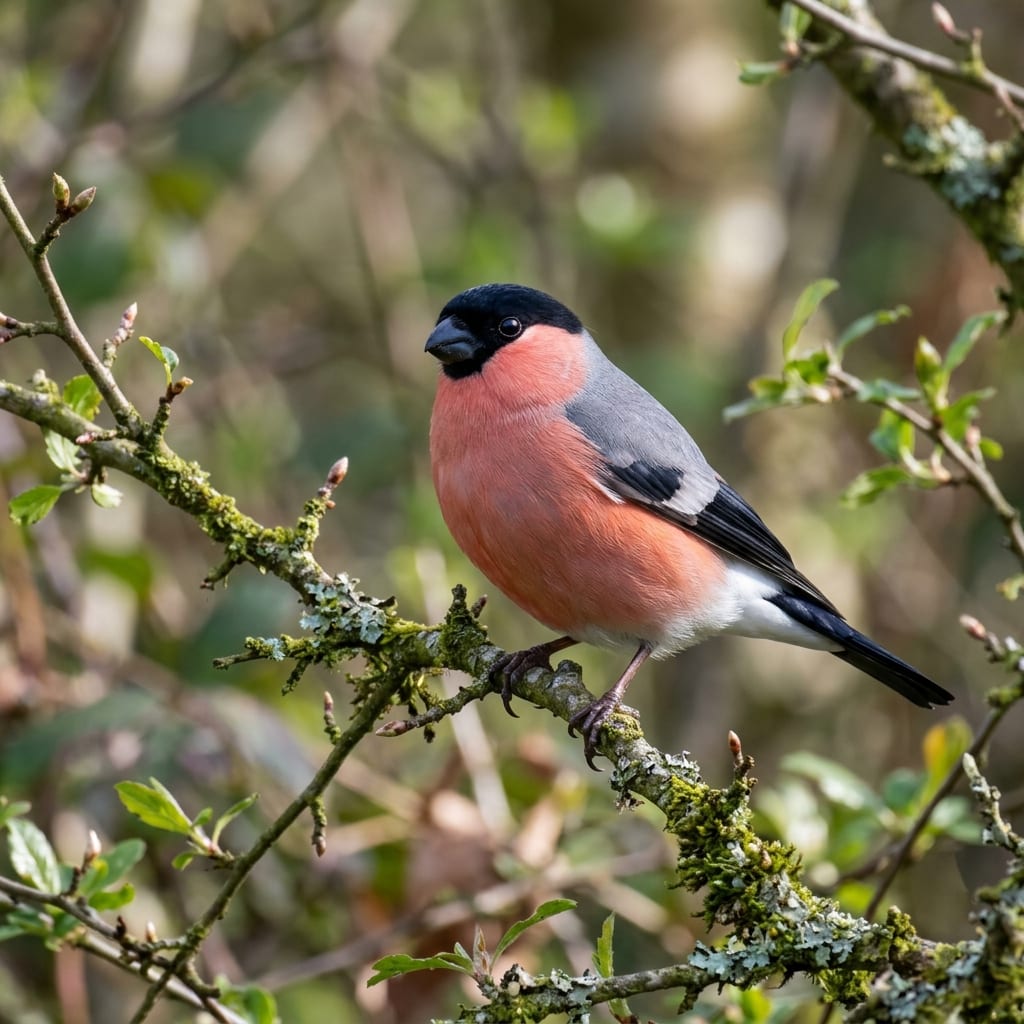
The bullfinch is a plump, colourful finch, the male glowing rosy-pink beneath a neat black cap. Quiet and rather shy, it feeds on buds, seeds and berries, often seen in gentle pairs among hedgerows.
💡 Fun Facts
- The male bullfinch has a rosy-pink chest so bright it looks almost painted on.
- Bullfinches are shy birds that often travel in pairs, keeping in touch with a soft, piping whistle.
- They have a special pouch under their tongue for carrying food — and a great fondness for the buds of fruit trees in spring.
📅 Through the Year
- Breeding:April to August
Siskin
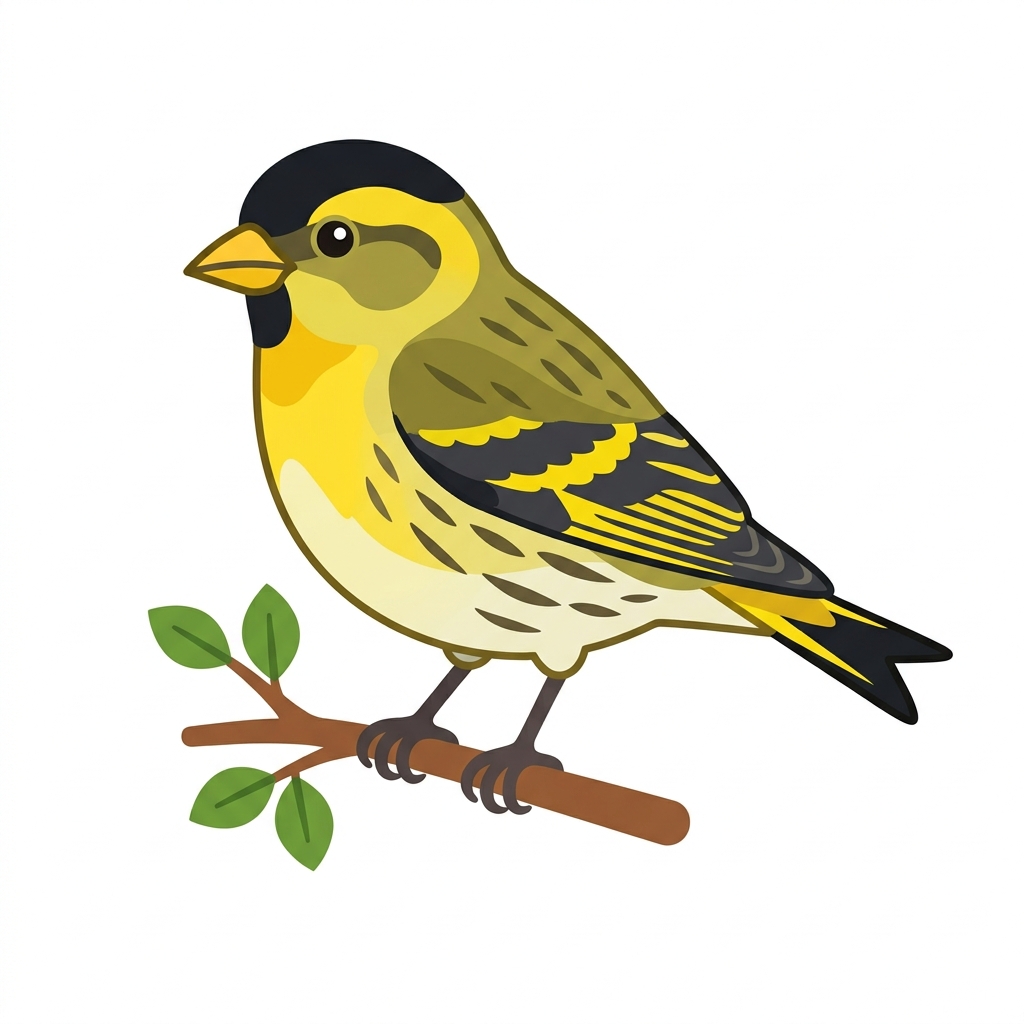
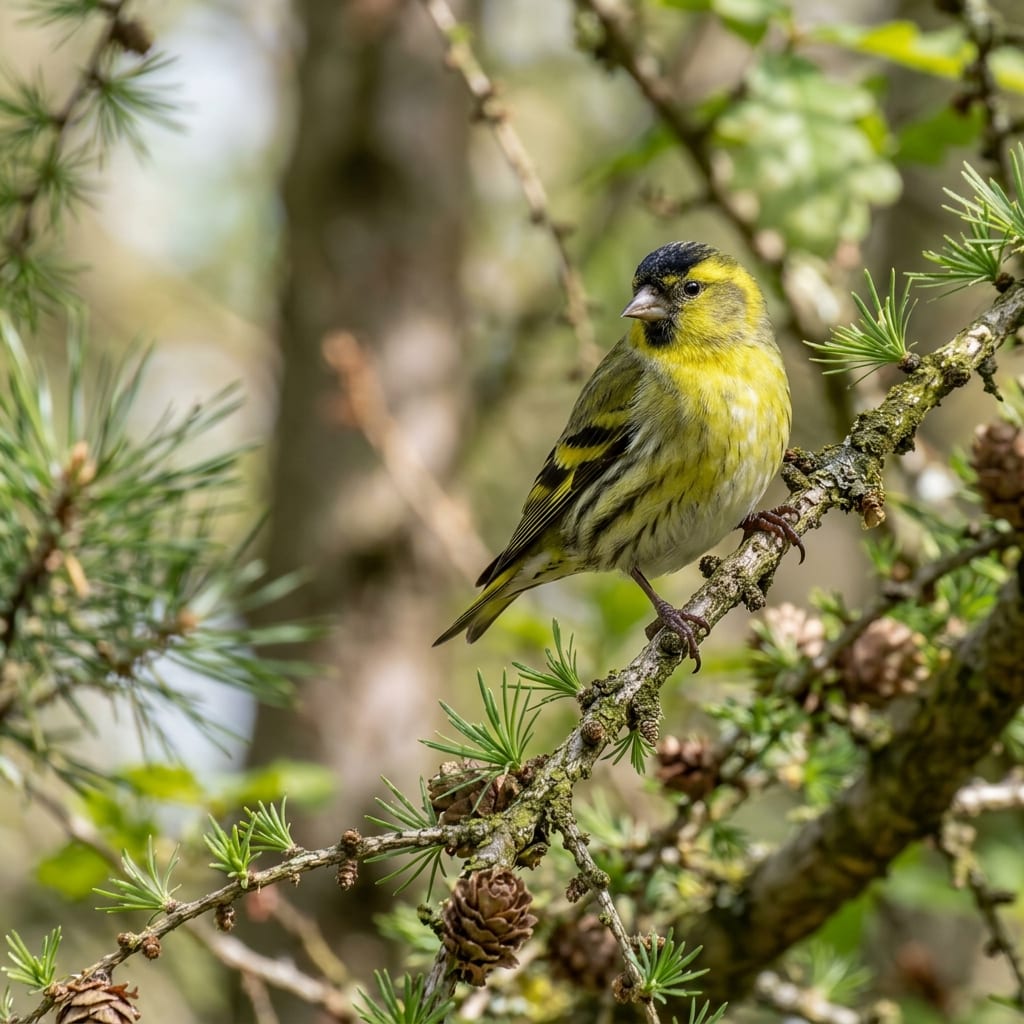
The siskin is a lively little finch of coniferous and birch woodlands. Agile and acrobatic, it dangles from twigs and feeders to prise out tiny seeds, its yellow-green plumage flashing as it moves.
💡 Fun Facts
- The siskin is a small, streaky yellow-green finch with a neat black cap and a sharply pointed beak.
- It loves the seeds of conifers, birch and alder, and often hangs upside-down like an acrobat to reach them.
- In late winter, when wild seeds run low, flocks of siskins often appear in gardens to feed on hanging nut and seed feeders.
📅 Through the Year
- Breeding:April to July
Lesser Redpoll
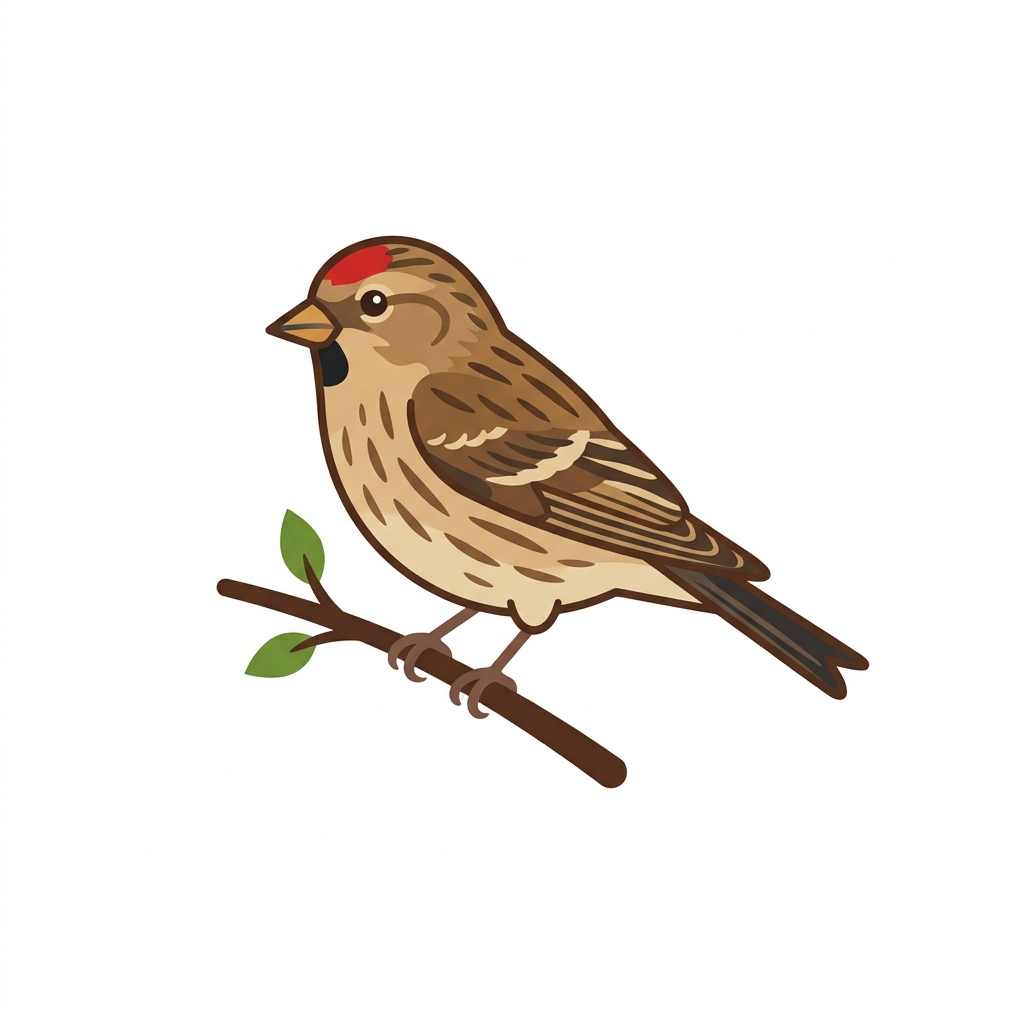
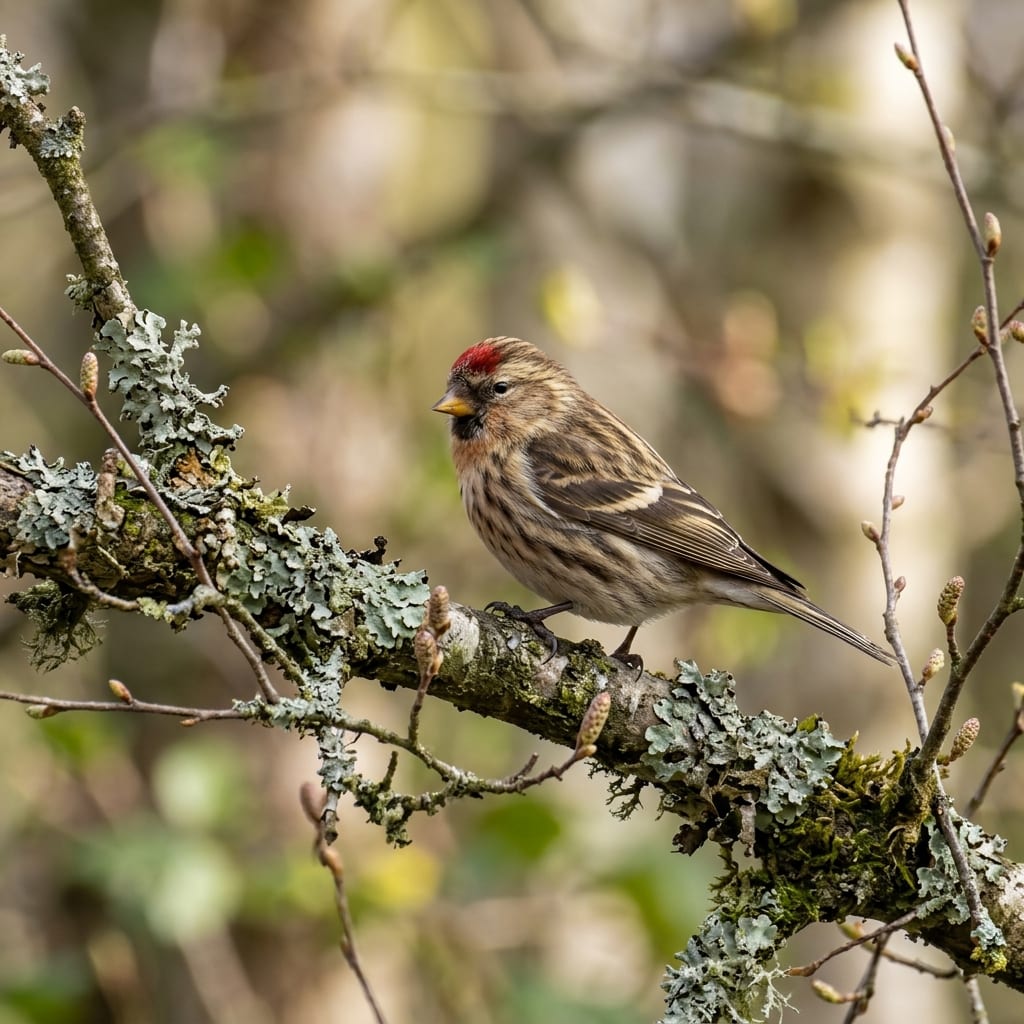
The lesser redpoll is one of Britain's smallest finches, streaky brown with a scarlet forehead. It flits through birch and alder in restless flocks, feeding on tiny seeds high in the twigs.
💡 Fun Facts
- The lesser redpoll is a tiny, streaky brown finch with a bright crimson "poll" — an old word for the top of the head.
- Breeding males also wear a rosy-pink flush across the chest in spring.
- These acrobatic little birds flit through birch trees in busy, chattering flocks, feeding on the smallest of seeds.
📅 Through the Year
- Breeding:April to July
Elephant Hawk-moth
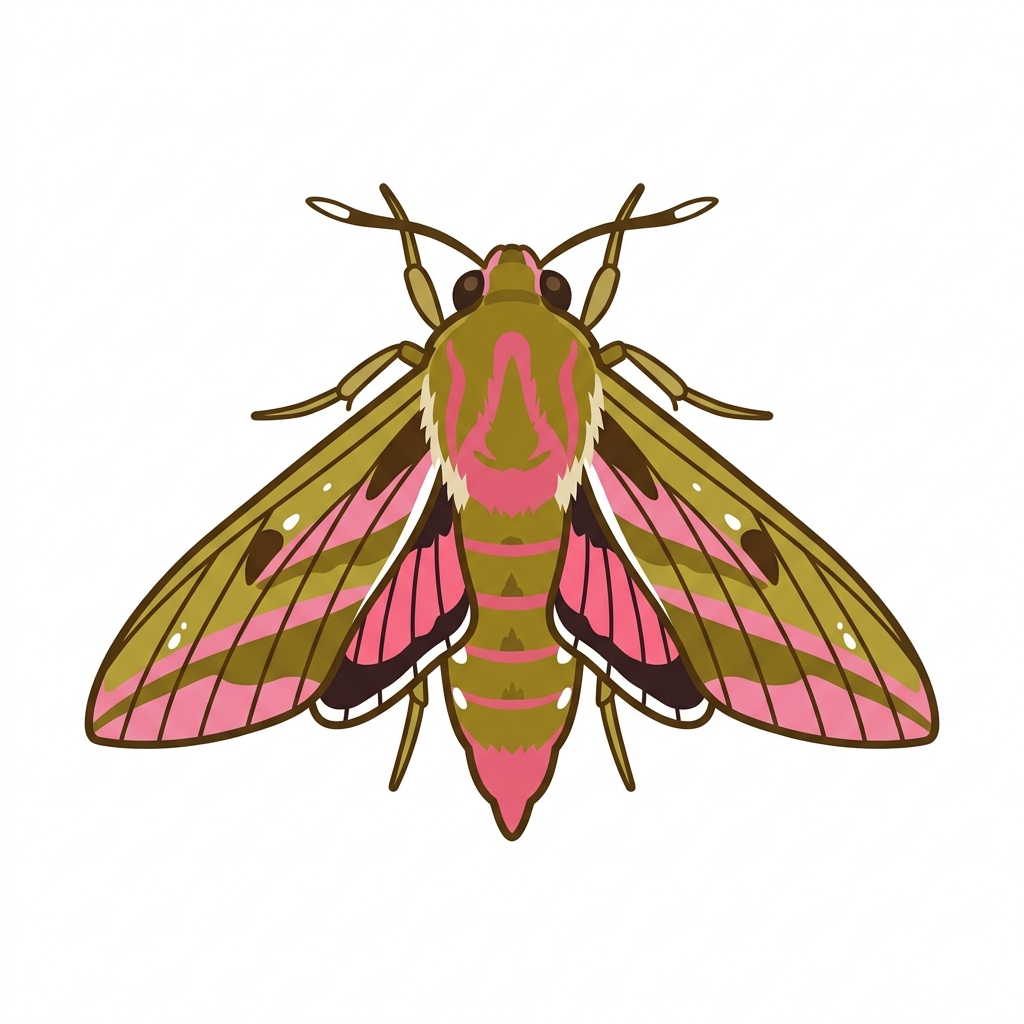
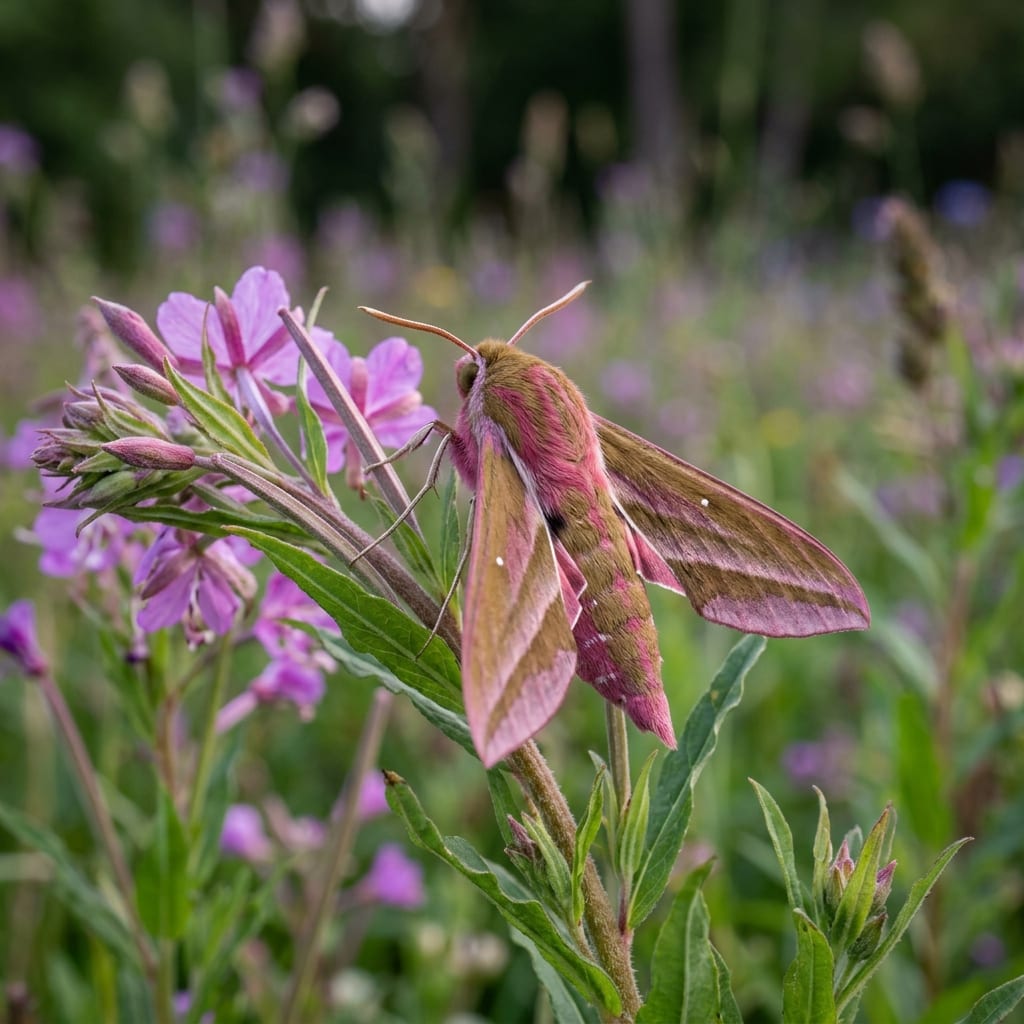
A spectacular pink-and-green moth that flies on summer nights. Its remarkable caterpillar has a trunk-like front and flashes snake-like eyespots to frighten predators.
💡 Fun Facts
- This gorgeous moth is a dazzling mix of pink and olive-green, like a living sunset.
- Its caterpillar is named after an elephant because its front end can stretch out like a long, grey trunk.
- When alarmed, the caterpillar puffs up and shows off two big fake eyespots to look like a scary little snake.
📅 Through the Year
- Active:May to July
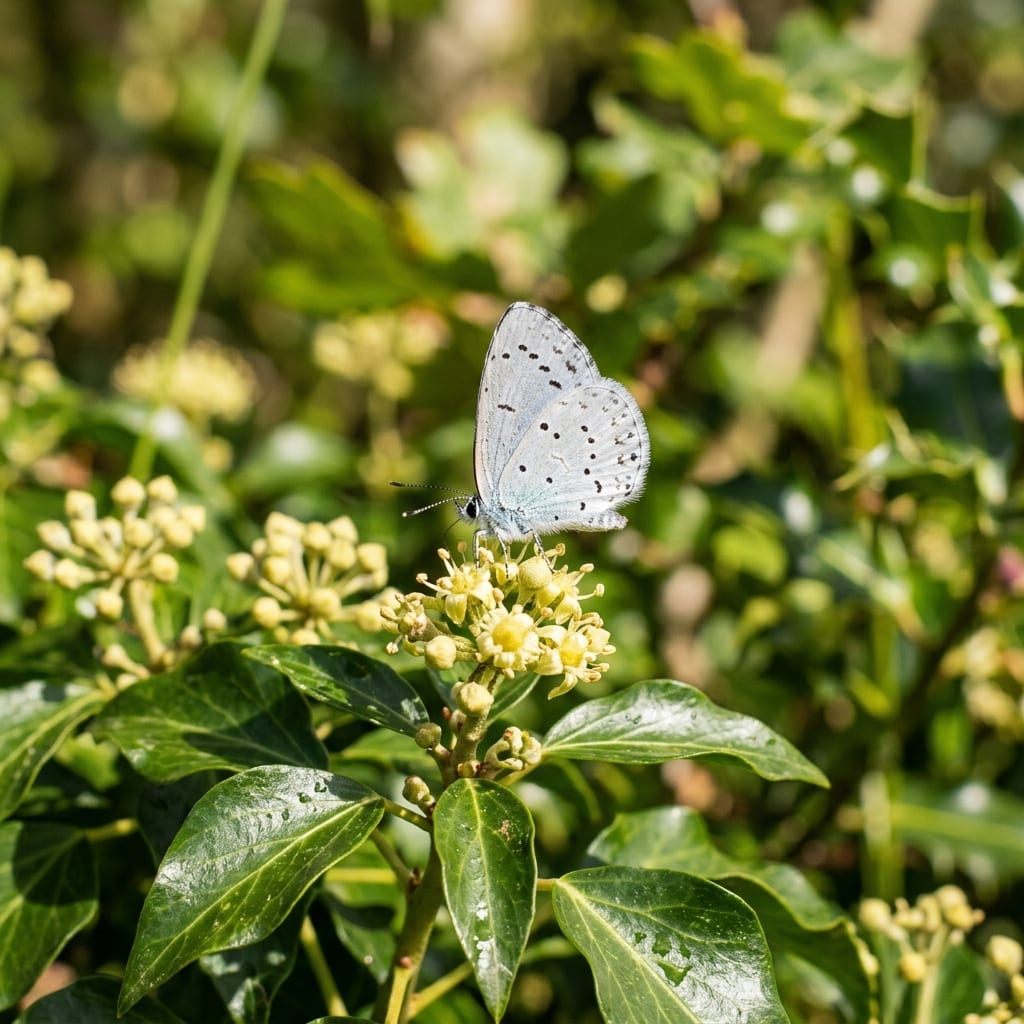
Holly Blue
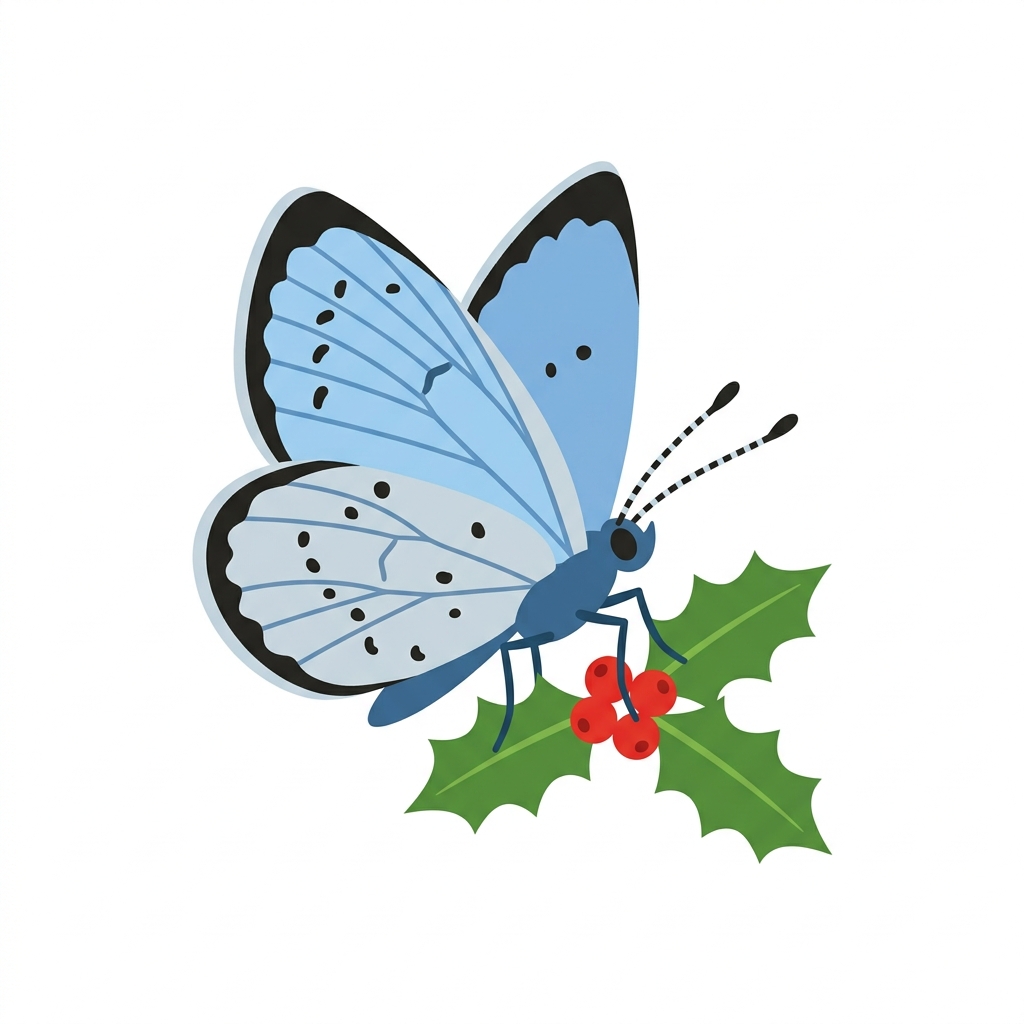
A pale, silvery-blue butterfly that flies high around holly and ivy. Its spring brood feeds on holly and its summer brood on ivy, giving it two generations each year.
💡 Fun Facts
- The Holly Blue is often the first blue butterfly of the year, flitting high around gardens and hedges.
- It has a clever two-brood habit: spring caterpillars feed on holly, and summer ones feed on ivy.
- Its numbers rise and fall in cycles, partly controlled by a tiny parasitic wasp that hunts its caterpillars.
📅 Through the Year
- Active:April to September
Identification Activity
Spot the Woodland Wildlife
Can you find three different types of plants or animals the next time you visit a Woodland habitat? Record them in your Field Journal!
Outdoor Observation
10-Minute Woodland Survey
Sit quietly in this habitat for 10 minutes. Write down everything you hear, see, and smell. What is the most abundant species?
Explore our specific Woodland habitat profiles in the Habitats Directory.