Sound
Curriculum Requirement
- Identify how sounds are made, associating some of them with something vibrating
- Recognise that vibrations from sounds travel through a medium to the ear
- Find patterns between the pitch of a sound and features of the object that produced it
- Find patterns between the volume of a sound and the strength of the vibrations that produced it
- Recognise that sounds get fainter as the distance from the sound source increases
Pupils should explore and identify the way sound is made through vibration in a range of different musical instruments from around the world; and find out how the pitch and volume of sounds can be changed in a variety of ways.
Pupils might work scientifically by: finding patterns in the sounds that are made by different objects such as saucepan lids of different sizes or elastic bands of different thicknesses. They might make earmuffs from a variety of different materials to investigate which provides the best insulation against sound. They could make and play their own instruments by using what they have found out about pitch and volume.
National Curriculum in England: primary curriculum, Section: "Sound", p. 163.
What is Sound?
Sound is invisible, but you can feel it. Everything that makes a sound is vibrating. A vibration is just a very, very fast wobble or shake. When something vibrates (like a guitar string), it bumps into the air particles next to it. These particles bump into the particles next to them, and so on, creating an invisible wave of vibrations that travels all the way to your eardrum. Your eardrum vibrates... and your brain says, "I hear a sound!"
Pitch: High vs. Low
Pitch is the word we use to describe how high or low a sound is.
- Fast, small vibrations make high-pitched sounds.
- Slow, big vibrations make low-pitched sounds.
Bird Song
You can hear this difference in UK birds.
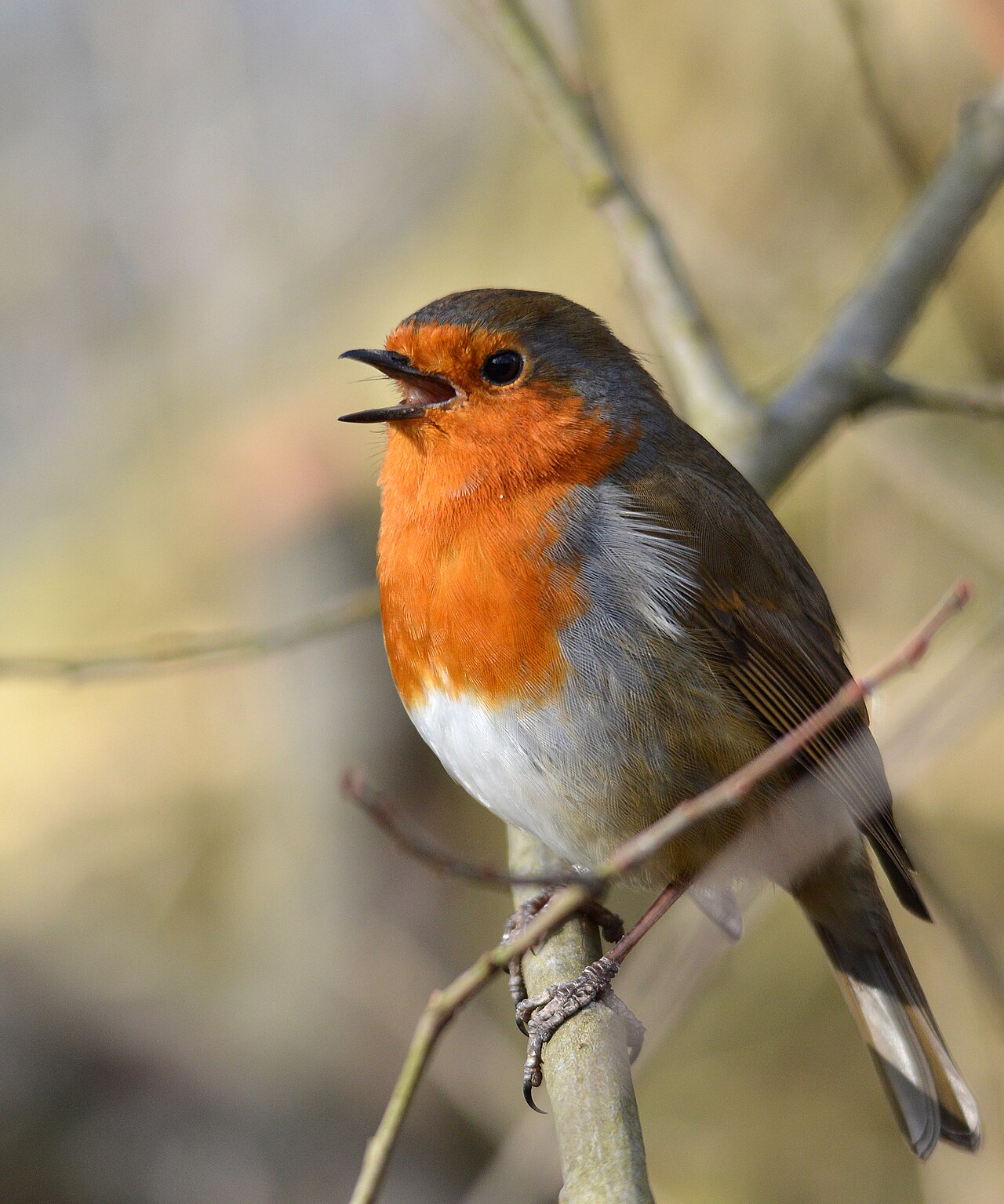
The Robin:
A robin is small, so its voice box (called a syrinx) is also small. It makes very fast, short vibrations, which create a high-pitched, warbling song.
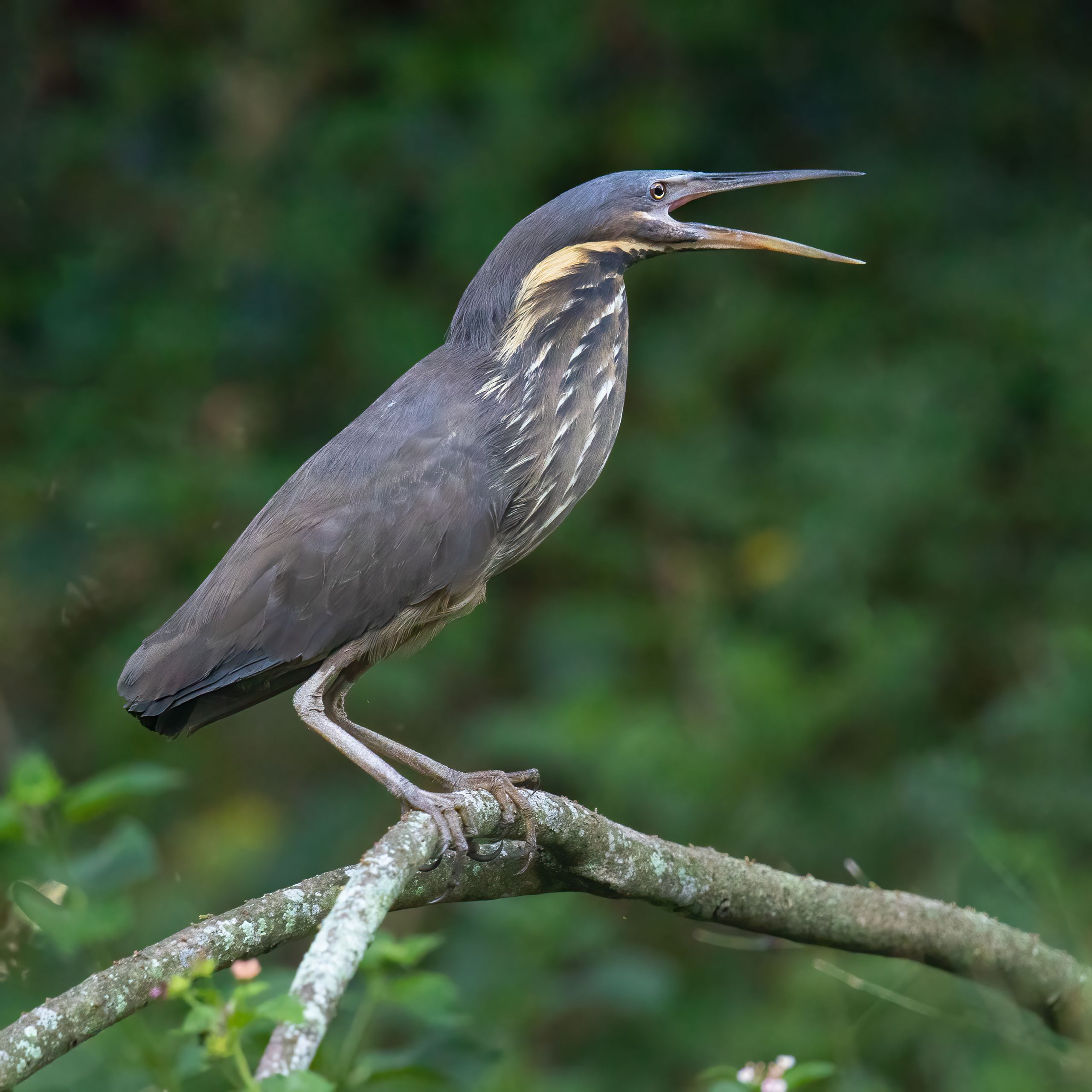
The Bittern:
A bittern is a large, chunky bird that hides in reed beds. To make its call, it gulps in air and "booms" it out. This creates a very big, slow vibration, resulting in a deep, low-pitched "booom" sound that can be heard from miles away.
💡 Fun Facts
- A bittern's boom is so low-pitched it sounds like someone blowing over the top of a giant milk bottle.
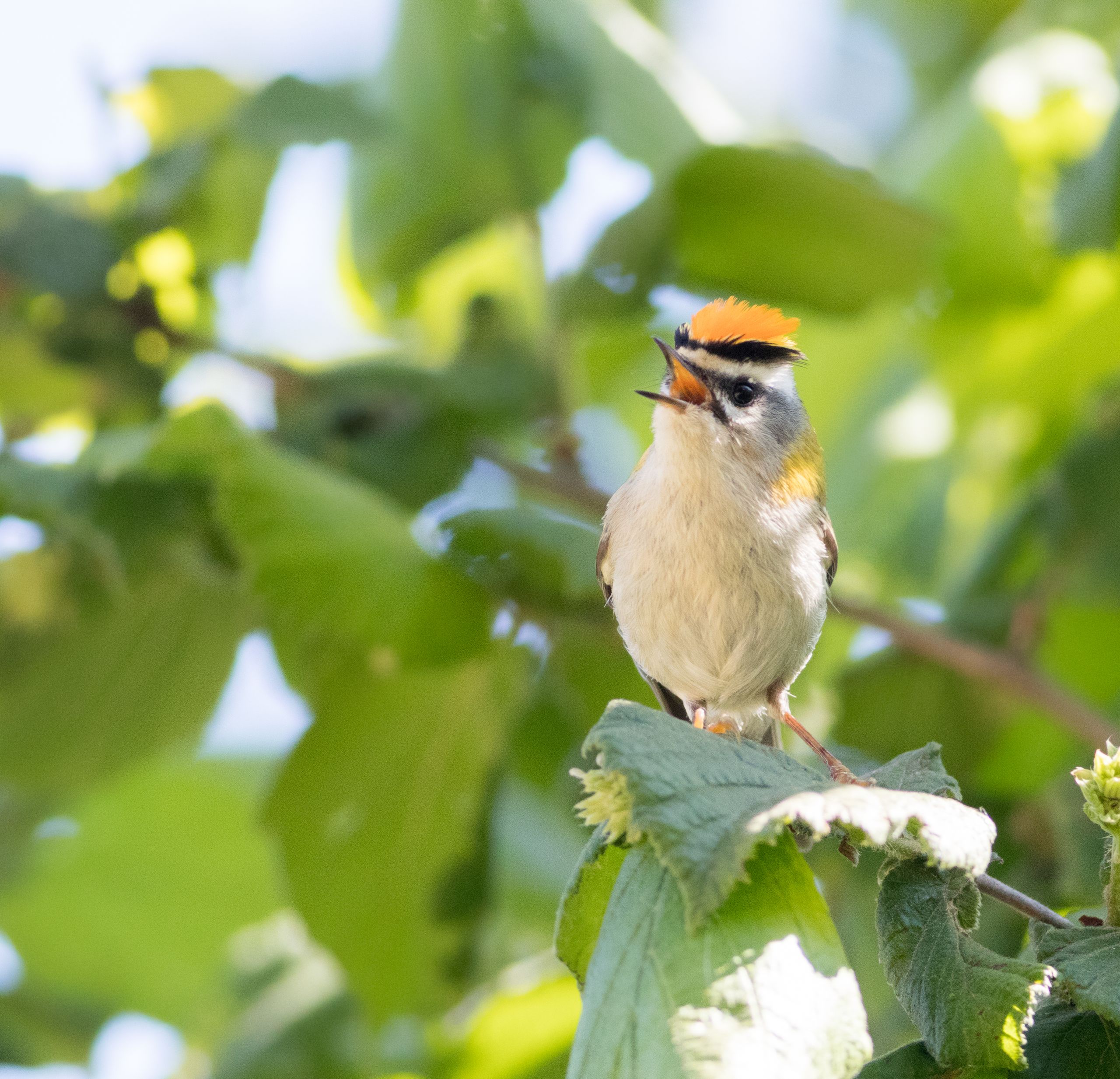
- The tiny Goldcrest, one of the UK's smallest birds, has one of the highest-pitched songs—so high that some older people can't hear it!
- In general, smaller objects vibrate faster and make higher-pitched sounds (like a triangle), while larger objects vibrate slower and make lower-pitched sounds (like a big drum).
Volume: Loud vs. Quiet
Volume is the word we use to describe how loud or quiet a sound is. This depends on the strength or power of the vibration.
- A strong, powerful vibration makes a loud sound.
- A weak, gentle vibration makes a quiet sound.
The Roaring Stag vs. The Rustling Mouse
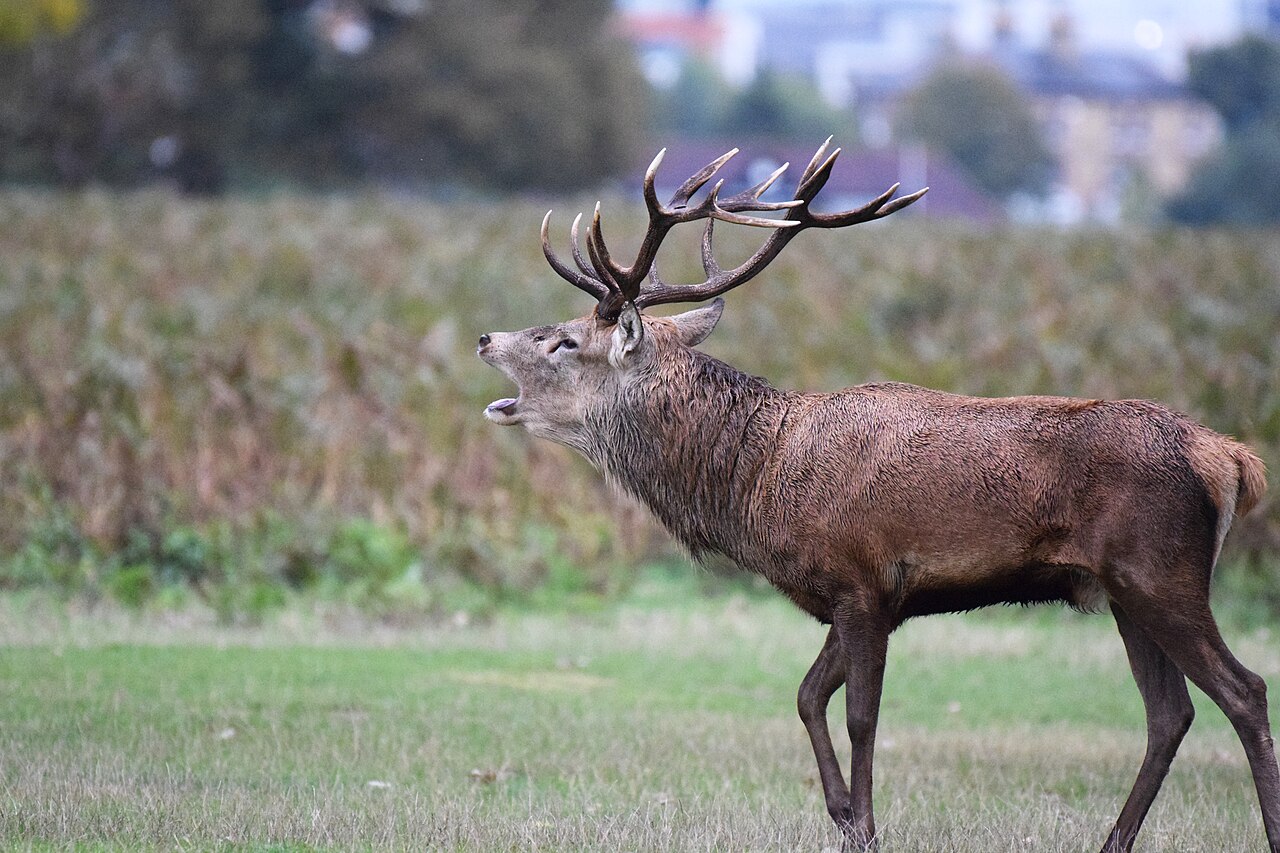
The Red Deer Stag:
In autumn, male (stag) red deer try to impress female (hind) deer. They do this by roaring! They use powerful muscles to force a huge amount of air, creating a very strong, powerful vibration. This makes a very loud sound that shows other deer how big and strong they are.
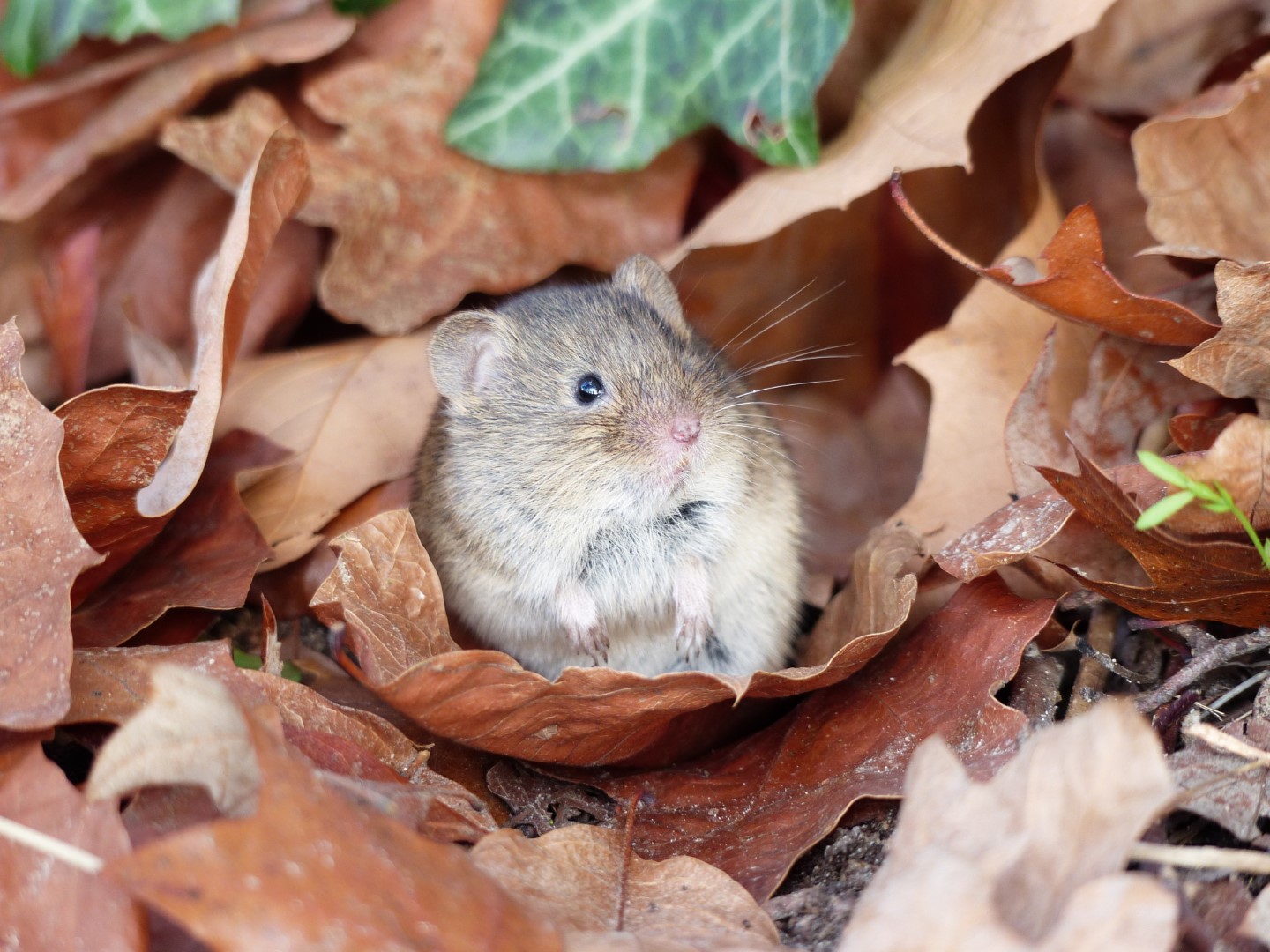
The Wood Mouse:
A tiny wood mouse rustling in the leaves makes very small, weak vibrations. This quiet sound is very hard to hear, which is useful for hiding from predators like owls (who, by the way, have amazing hearing!).
💡 Fun Facts
- A red deer's roar can be as loud as a motorbike (around 100 decibels)!
- Some animals, like bats, make sounds that are too high-pitched for humans to hear. This is called 'ultrasound'.
- The quietest sound a human can hear is 0 decibels. A whisper is about 30 decibels.
How Sound Travels
Sound vibrations need to travel through something to reach you. This 'something' is called a medium.
- Air (a gas) is the medium we usually hear through.
- Sound can also travel through water (a liquid).
- Sound can also travel through walls or the ground (a solid).

Dolphins in UK Waters

Bottlenose dolphins, which you can see in places like the Moray Firth in Scotland or Cardigan Bay in Wales, live in a world of sound.
They 'click' and 'whistle' to each other. These vibrations travel through the water, which is a liquid medium.
💡 Fun Facts
- Sound travels more than four times faster through water than through air. This allows dolphins to communicate over huge distances.
- Dolphins also use sound to 'see' in murky water. They send out high-pitched clicks (echolocation) and listen for the echoes bouncing off fish, which tells them where their dinner is.
- In outer space, there is no air (it's a vacuum). With no medium for the vibrations to travel through, sound can't travel at all. It is completely silent!
Bats: hearing in the dark
Bats are the champions of echolocation. They send out squeaks far too high for us to hear, then listen for the echoes bouncing back off tiny flying insects — building a sound-picture of the pitch-black night. It is how a bat can catch a midge mid-air in total darkness. Here are some of the UK bats that hunt this way:
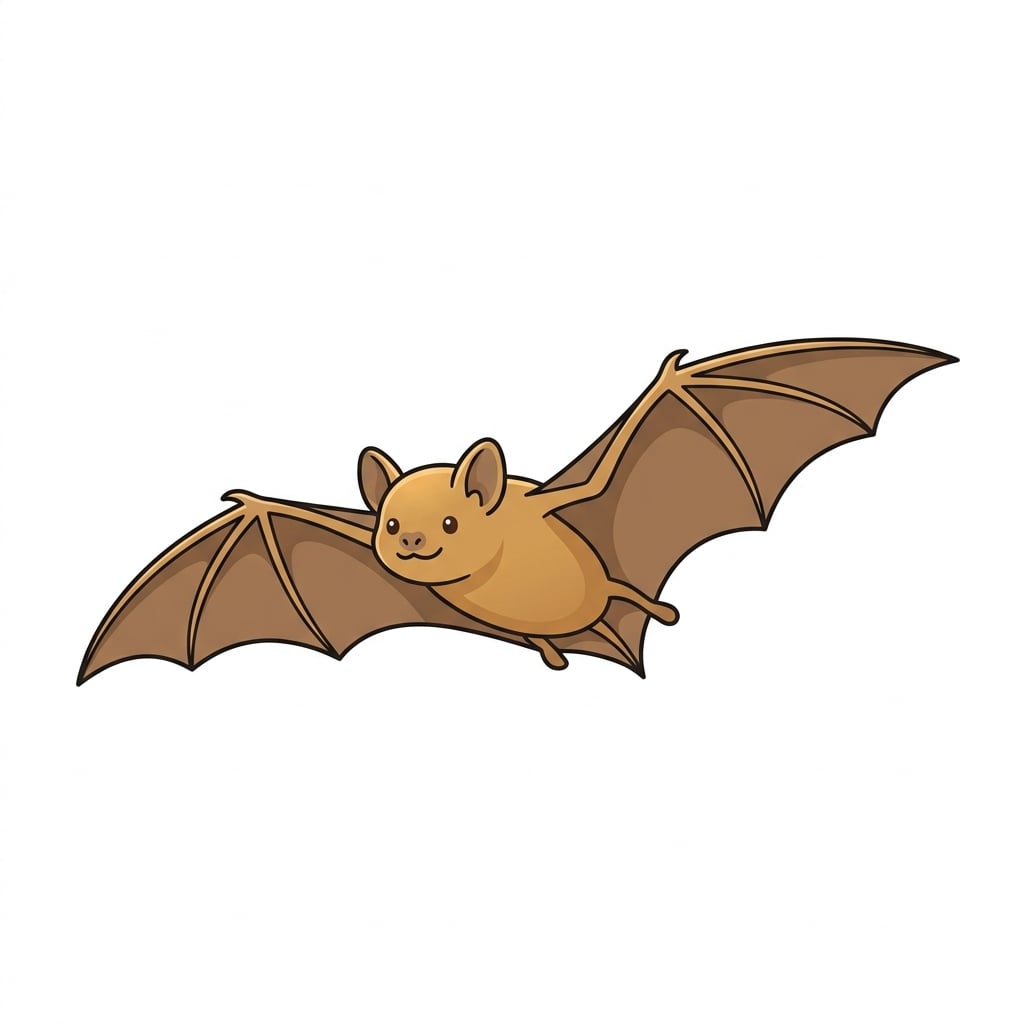
Noctule
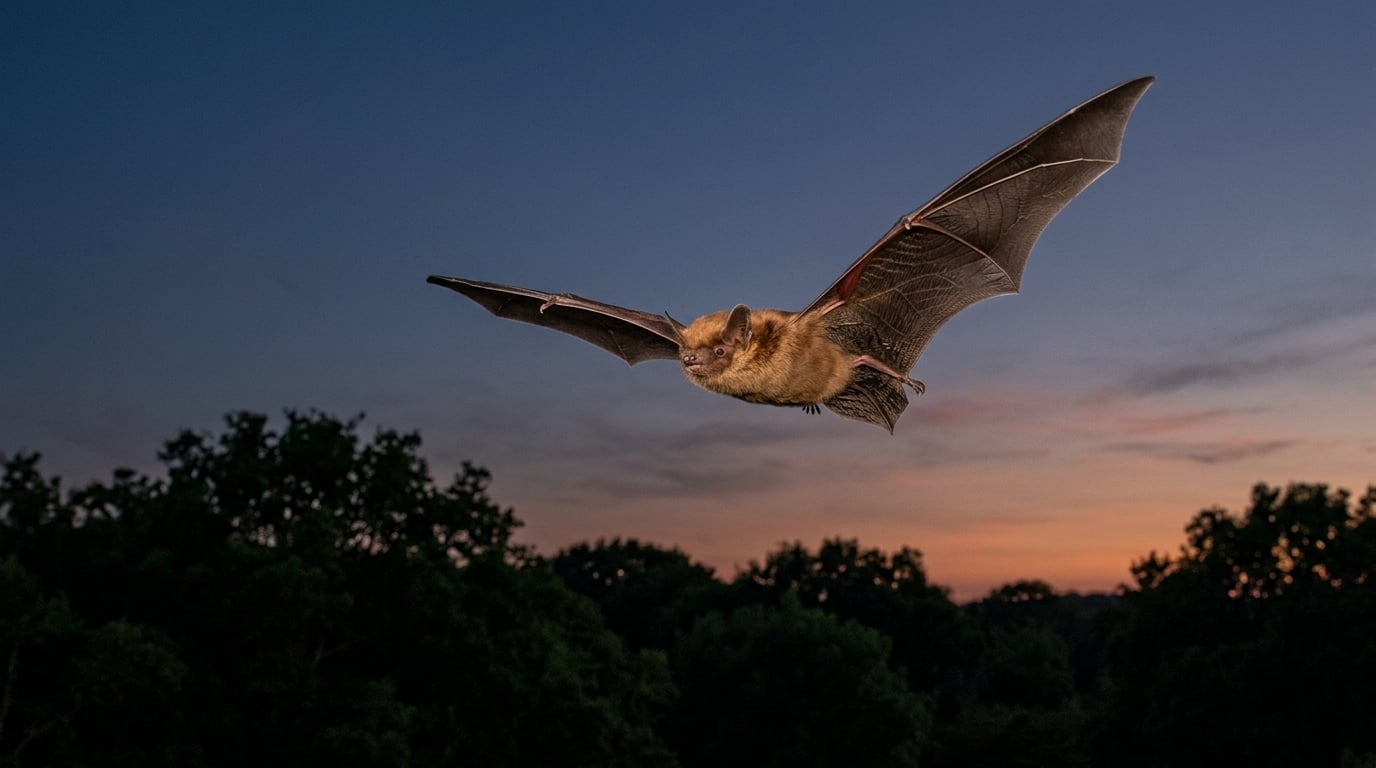
The Noctule is one of Britain's biggest bats — a powerful, golden-brown flier that hunts high in the open sky, often appearing before the sun has even set. Watch for its fast, straight flight and sudden, dramatic dives after insects.
💡 Fun Facts
- The Noctule is one of Britain's biggest bats, and it hunts higher than almost any other — swooping through the open sky far above the treetops, then folding its wings for a sudden, breathtaking power-dive onto an insect.
- It is one of the very first bats to appear each evening, often flying out before the sun has even set — so on a bright summer evening it is the bat you can watch against a glowing sky.
- Its squeaks are so low and loud — a 'chip-chop' sound — that some lucky people can actually hear a Noctule with their own ears, which is impossible with most bats.
- Noctules make their homes in old holes in trees, like abandoned woodpecker holes, so they need old, gnarled woodland to thrive.
🔍 How to spot it
- Size
- One of the UK's largest bats — wingspan up to 40 cm and weighing up to 40 g; big and broad against the sky.
- Markings
- Sleek, glossy golden-brown fur, with a darker face and wings — and no 'mask'.
- Features
- Short, rounded ears and a distinctive short, mushroom-shaped flap inside the ear; and no strange flap on its nose (some bats, like the horseshoe bats, have one).
- Behaviour
- Comes out very early — often before sunset — and flies high, fast and straight, with sudden steep dives onto insects.
- Where & when
- In the open sky above woodland, parkland, pasture and water across much of Britain; roosts in holes in old trees.
- Easily confused with
- The serotine is a similar size but flies lower and slower with a more fluttering flight; experts also look for the Noctule's mushroom-shaped ear-flap. Leisler's bat is a smaller cousin.
📅 Through the Year
- Hibernation:November to March
- Active:April to October
- Maternity/Breeding:June to July
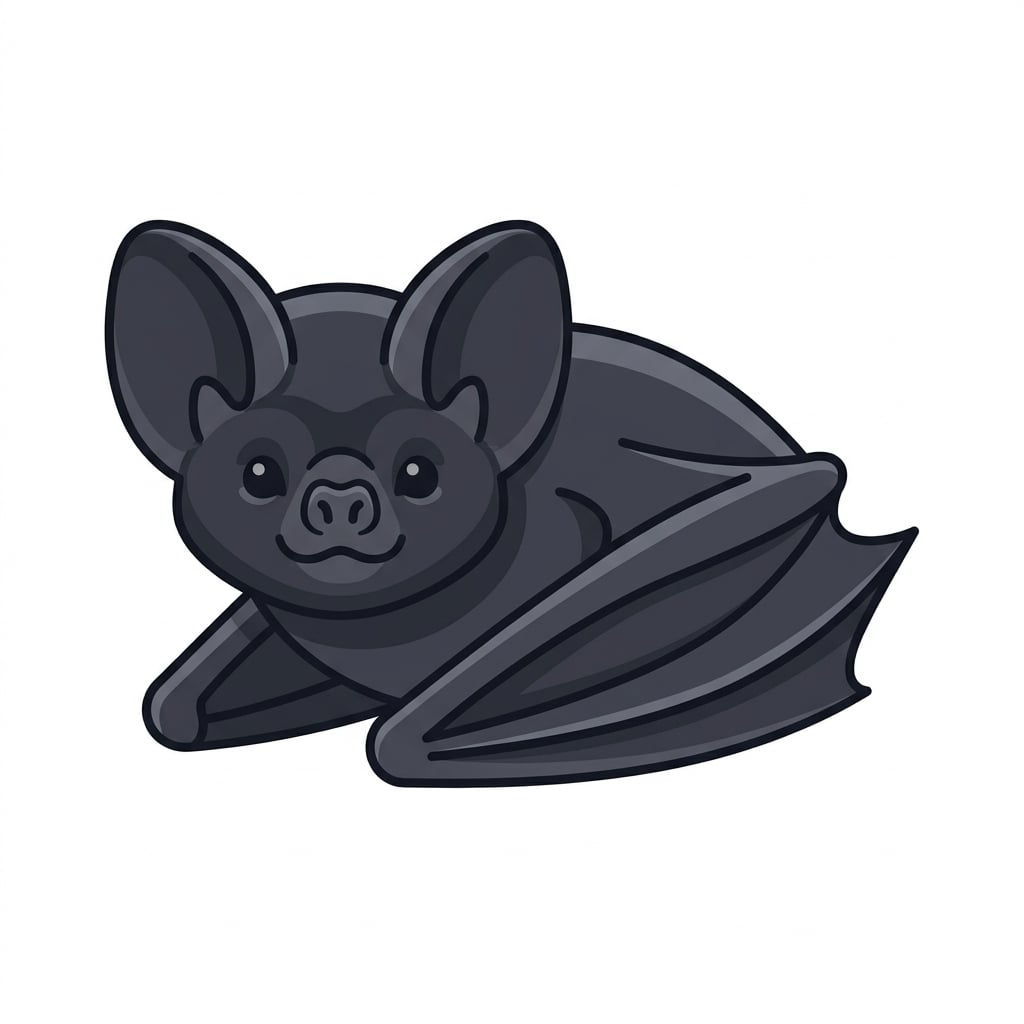
Barbastelle
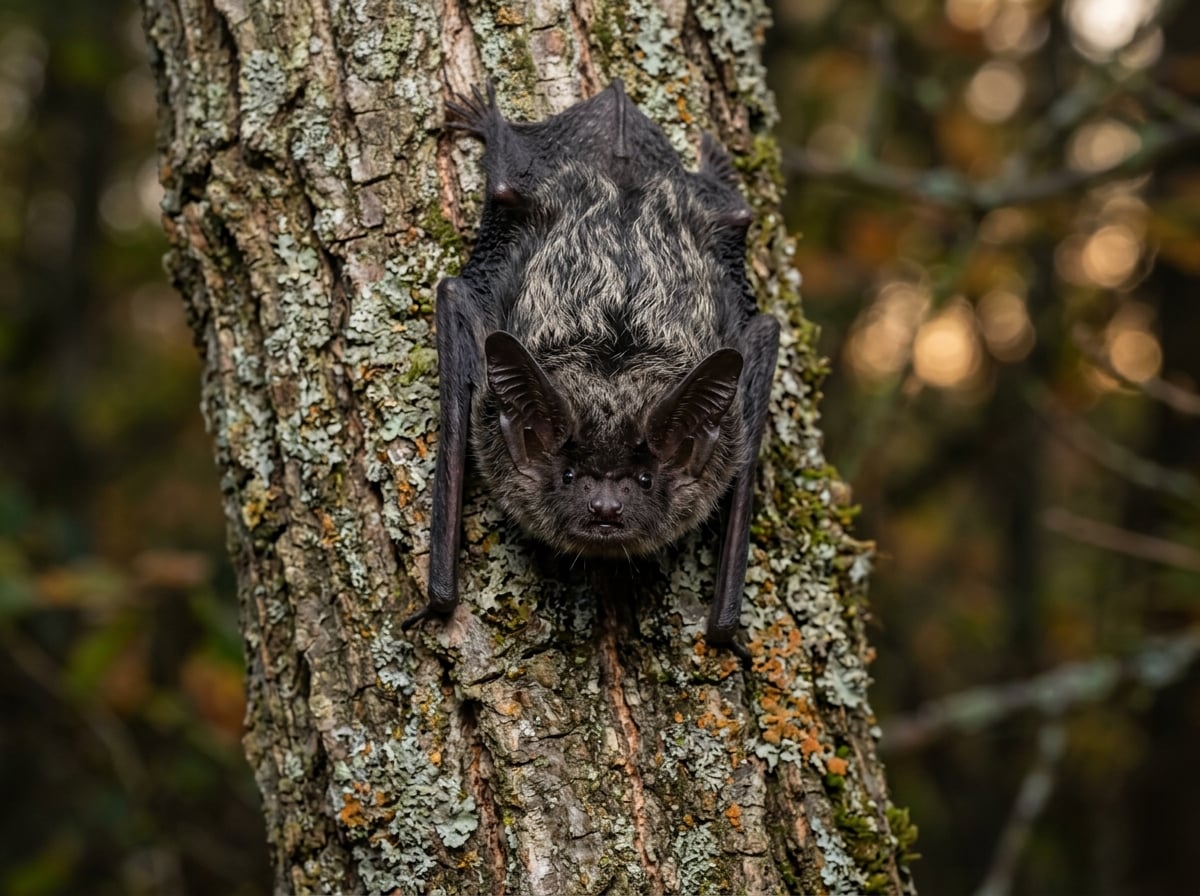
The Barbastelle is the ninja of Britain's bats — a whisper-quiet moth-hunter whose calls are so faint that its prey never hears it coming. Dark, frosted and pug-faced, it haunts ancient woodland, and is also one of our rarest and most secretive bats.
💡 Fun Facts
- The Barbastelle is a 'whispering' bat. Its hunting calls are up to a hundred times quieter than other bats' — a clever stealth trick, because the moths it hunts can actually hear a normal bat coming and dodge away. The Barbastelle simply tiptoes up on them in sound.
- It is one of the rarest mammals in all of Britain, with only a handful of known colonies — so rare and secretive that bat scientists get genuinely excited whenever they find one.
- You would know a Barbastelle by its squashed, pug-like face and its broad ears, which are joined right across the top of its head — above fur so dark it looks almost black, dusted with gold at the tips.
🔍 How to spot it
- Size
- Medium-small — wingspan about 27 cm, about the weight of a £1 coin.
- Markings
- Very dark, almost black fur with cream-gold frosted tips, giving a frosted look; a dark, pug-like face.
- Features
- Broad ears joined across the top of the head — its best clue — above a short, squashed 'pug' nose; no strange nose-flap like the horseshoe bats have.
- Behaviour
- Hunts along woodland edges and over the treetops with fast, fluttery, agile flight, using whisper-quiet calls to sneak up on moths.
- Where & when
- Rare — ancient and mature woodland and wooded river valleys in southern and central England and Wales; one of the hardest UK bats to find.
- Easily confused with
- No other UK bat has its combination of near-black frosted fur, pug face and broad ears joined across the forehead — that trio gives it away. The long-eared bats also have big ears, but theirs are separate, not joined.
📅 Through the Year
- Hibernation:November to March
- Active:April to October
- Maternity/Breeding:June to July
Daubenton's Bat
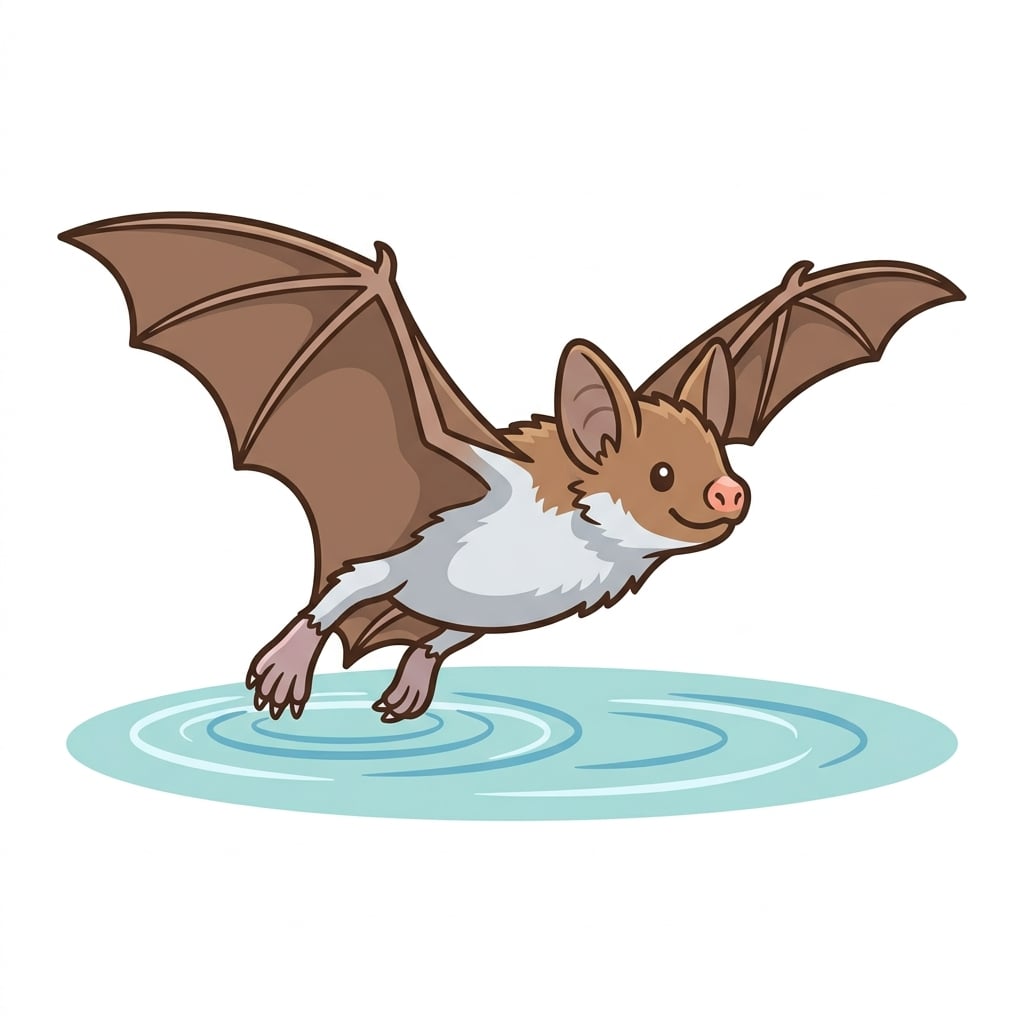
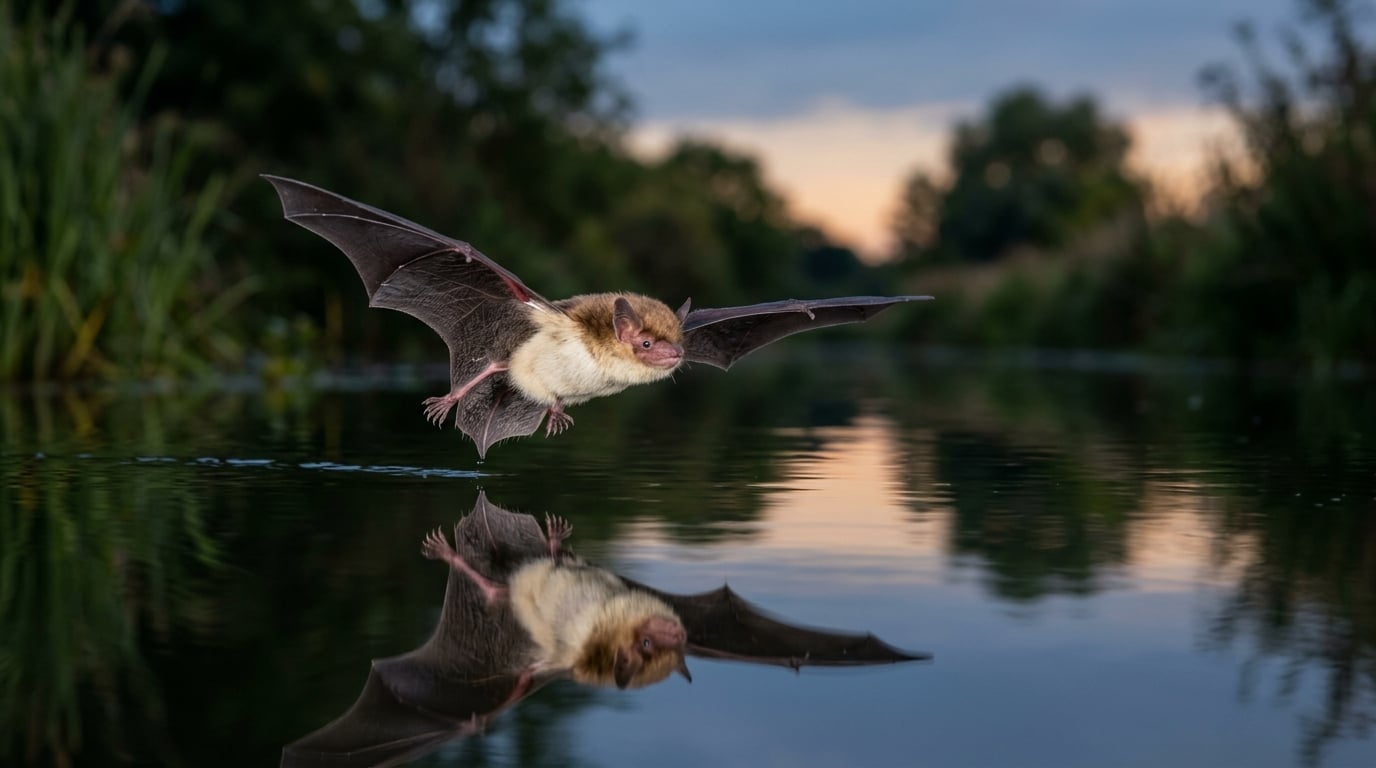
Daubenton's bat is Britain's 'water bat', skimming fast and low over rivers and lakes at dusk. It scoops insects straight off the water with its oversized feet and tail, like a tiny furry fishing net.
💡 Fun Facts
- Daubenton's is the 'water bat'. It hunts by skimming low over rivers and lakes and scooping insects straight off the surface with its big back feet and tail — like a tiny, furry fishing net.
- Its flying is so distinctive you can name it by behaviour alone: fast, flat circuits just above calm water, like a miniature hovercraft gliding across the river.
- Look for its clean, silvery-white belly, bare pink face, and feet far bigger than any other similar bat's — all built for its life skimming the water.
🔍 How to spot it
- Size
- Medium-small — wingspan about 24 to 27 cm, about the weight of a £1 coin.
- Markings
- Fluffy brown fur above and clean silvery-white below, with a bare, pinkish face.
- Features
- Surprisingly large hind feet — its scooping tool — and a big tail membrane; no strange flap on its nose (some bats, like the horseshoe bats, have one).
- Behaviour
- Flies fast and flat just above calm water, in steady circuits, like a tiny hovercraft skimming the river, snatching insects off the surface with its feet.
- Where & when
- Over calm fresh water — rivers, canals, lakes and ponds — all across the UK; the bat you see skimming a river or canal at dusk.
- Easily confused with
- Several similar bats (the mouse-eared bats) look alike in the hand, but no other UK bat skims right over the water on oversized feet with a silvery-white belly — its low water-skimming flight gives it away.
📅 Through the Year
- Hibernation:November to March
- Active:April to October
- Maternity/Breeding:June to July
Bechstein's Bat
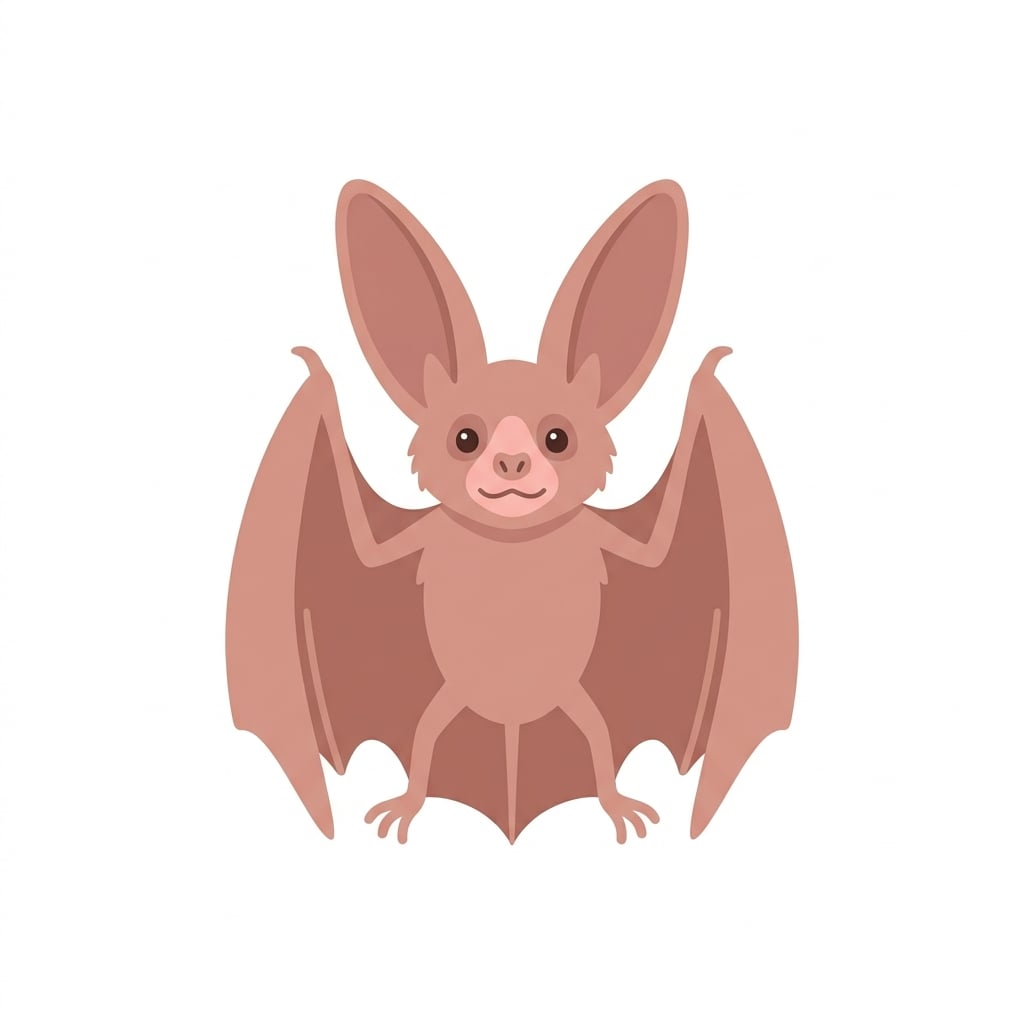
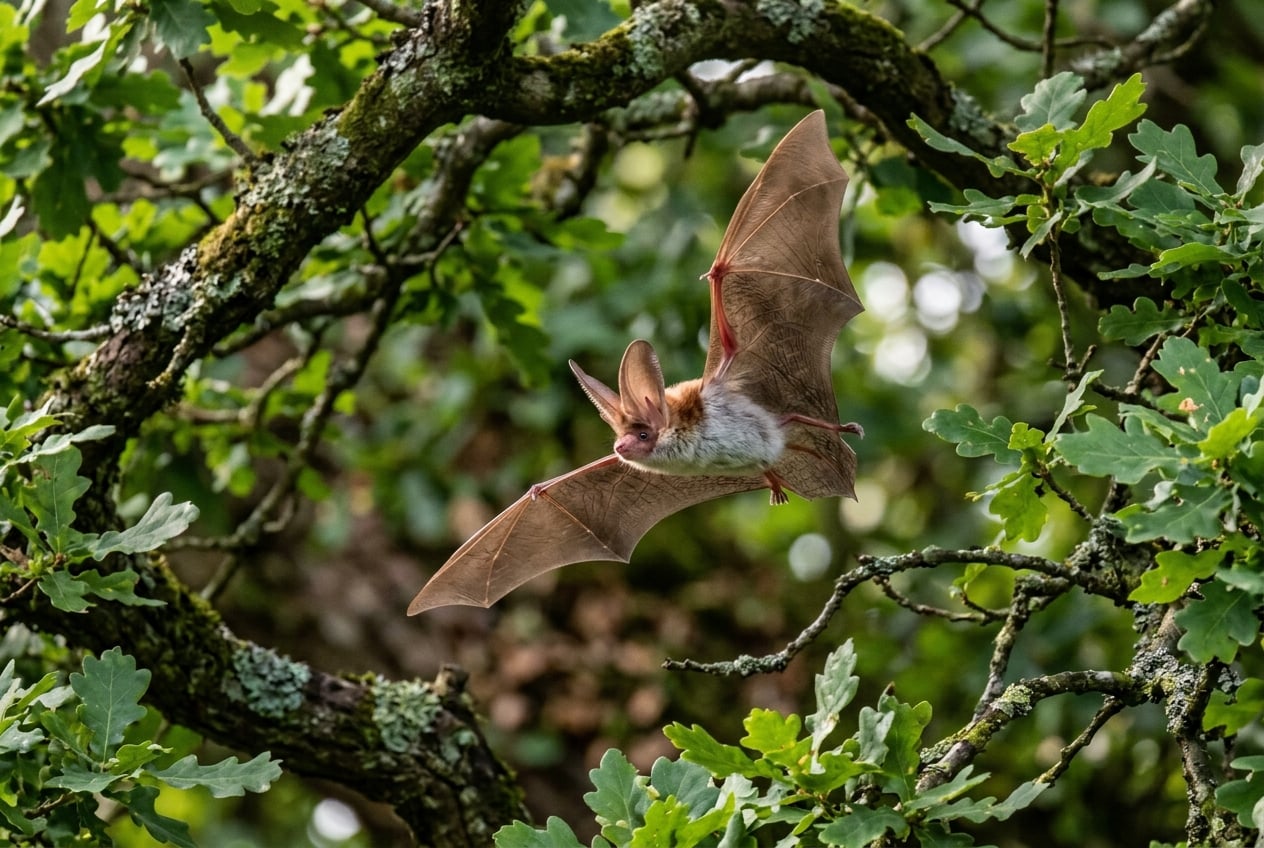
Using its long, listening ears, Bechstein's bat flies slowly through the treetops and gently plucks resting moths, caterpillars and spiders straight off the leaves. It is a hunter of ancient oak woodland — and one of Britain's rarest, most secretive bats.
💡 Fun Facts
- Bechstein's is a very rare ancient-woodland specialist — one of Britain's scarcest bats, tied to old oak woods in the south, so secretive it is usually found only by careful scientists.
- Instead of only catching insects in mid-air, it gleans — flying slowly through the treetops to pluck resting moths, caterpillars and spiders straight off the leaves, using its long ears to listen for them.
- Its long ears, held apart on top of its head, are longer than any other UK mouse-eared bat's — a bridge between the ordinary bats and the giant-eared long-eared bats.
🔍 How to spot it
- Size
- Medium — wingspan about 25 to 30 cm; a little larger than a Daubenton's.
- Markings
- Pale to reddish-brown fur above, greyish-white below, with a pink face.
- Features
- Long ears, held apart (much longer than other mouse-eared bats) — the clue to look for; no strange flap on its nose (some bats, like the horseshoe bats, have one).
- Behaviour
- Flies slowly and with great control inside the woodland canopy, plucking caterpillars, moths and spiders off leaves and bark — and rarely venturing into the open.
- Where & when
- Rare — ancient broadleaved woodland, especially old oak, in southern England and south Wales; so seldom seen it is usually found only through bat boxes or special surveys.
- Easily confused with
- The brown long-eared bat is the other long-eared woodland gleaner, but its ears are enormous — almost as long as its body — and curl back at rest, while Bechstein's ears are long but clearly shorter and held forward.
📅 Through the Year
- Hibernation:November to March
- Active:April to October
- Maternity/Breeding:June to July
Greater Horseshoe Bat
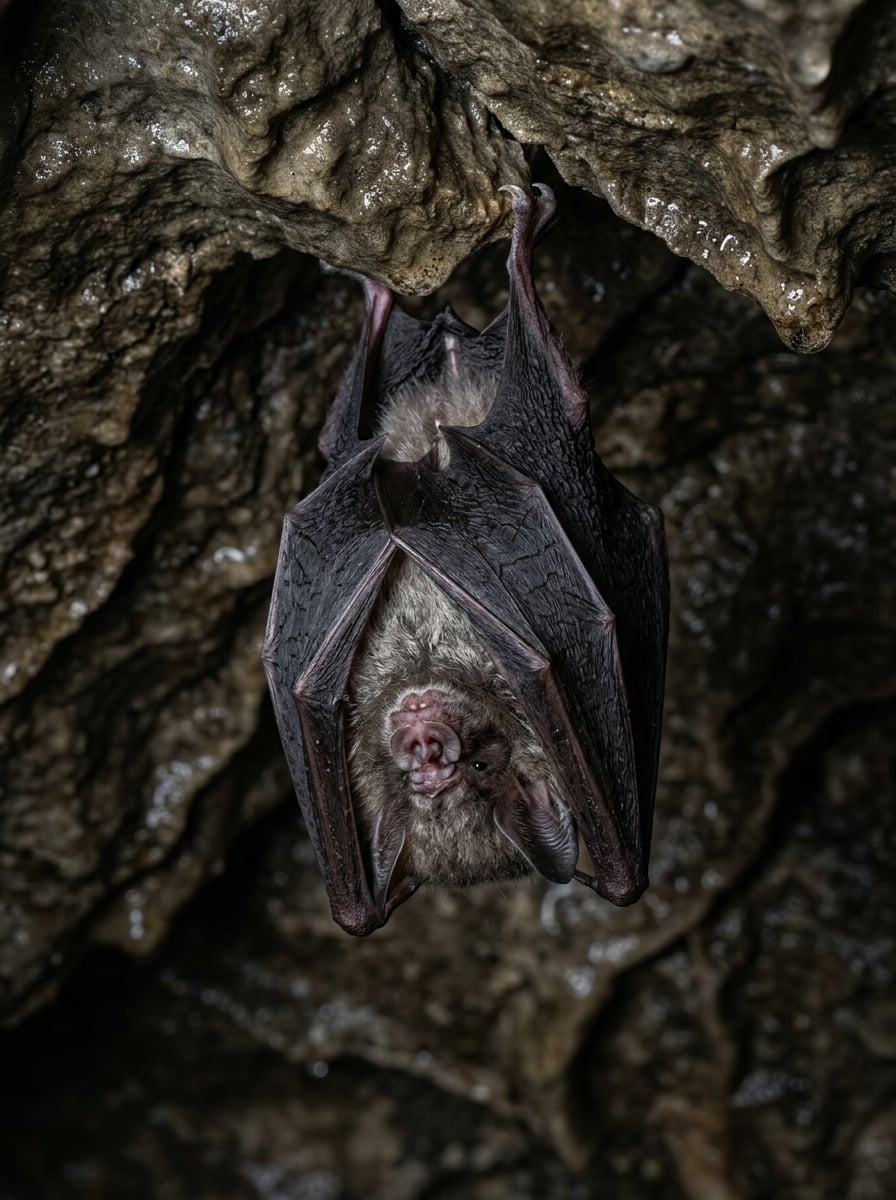
The Greater Horseshoe Bat shouts through its nose — focused by a strange horseshoe-shaped flap of skin — and roosts hanging free, completely wrapped in its own wings like a tiny cloaked figure. One of Britain's largest and rarest bats, it is found only in the south-west.
💡 Fun Facts
- The Greater Horseshoe Bat shouts through its nose, not its mouth. An elaborate horseshoe-shaped flap of skin around its nostrils focuses its calls into a beam, and it can even pick out the fluttering wingbeats of an insect in the dark.
- At rest it hangs completely wrapped in its own wings, like a tiny figure in a cloak — quite unlike other bats, which tuck themselves into cracks and crevices.
- It is one of Britain's largest and longest-lived bats, recorded at nearly 30 years old. Once widespread, it suffered a decline of more than 90%, and now lives only in the south-west. Its recovery depends on cattle-grazed fields, because its favourite dung beetles need the animals' dung.
🔍 How to spot it
- Size
- The largest bat here — wingspan up to 40 cm and weighing up to about 34 g; a plum-sized body.
- Markings
- Soft, fluffy grey-brown fur, paler below; young ones are greyer.
- Features
- The unmistakable horseshoe-shaped flap around its nose (the 'nose-leaf'); broad, rounded wings.
- Behaviour
- Hangs completely wrapped in its wings like a tiny cloaked figure; flies slow and low along hedges, and often perch-hunts — waiting on a branch to dart out at insects — all while shouting through its nose.
- Where & when
- Only in SW England and south Wales; roosts in caves, mines and large old buildings over insect-rich, cattle-grazed countryside.
- Easily confused with
- The lesser horseshoe bat shares the same nose-leaf and cloak-wrapped roosting pose, but is much smaller — plum versus walnut — and calls at a much higher pitch, so size tells them apart.
📅 Through the Year
- Hibernation:October to April
- Active:April to October
- Maternity/Breeding:June to July
Activities & Reflections
Activities
The Ruler Twang
Hold a ruler firmly on the edge of a desk with about half of it sticking off the edge. Twang the end. What do you see? (It's vibrating!) What do you hear? Now, move the ruler so less of it is sticking off (make it shorter) and twang it again. What happens to the pitch? (A shorter ruler vibrates faster, making a higher-pitched sound).
Elastic Band Guitar
Stretch elastic bands of different thicknesses over an empty tissue box or a plastic tub. Pluck the different bands. Which ones make high-pitched sounds (the thin ones)? Which make low-pitched sounds (the thick ones)? How can you make the sound louder? (Pluck the band harder to create a stronger vibration).
String Telephone
Work in pairs. You will need two paper or plastic cups and a long piece of string. Make a small hole in the bottom of each cup. Thread the string through the two cups and tie a knot on the inside of each so it doesn't pull out. One person talks into their cup while the other listens at their cup, making sure the string is pulled tight. The sound vibrations travel along the solid string!
Super Earmuffs
Challenge pupils to design and make a pair of earmuffs to block out sound. Provide materials like plastic cups, cardboard, cotton wool, fabric scraps, and tape. Which materials are best at stopping the sound vibrations from reaching your ears?
Reflections
Self-Reflection (Exit Ticket)
On a sticky note, answer this: "What is the one-word secret to all sounds?" (The answer is vibrations!)
Paired Reflection (Think-Pair-Share)
Talk to a partner: "If you twang a ruler, how do you make the pitch higher? And how do you make the volume louder?"
Group Reflection
In small groups, discuss: "A loud explosion happens in a space film. Is this realistic? Why or why not?"
Whole Class Share-Out
As a class, discuss: "We learned sound travels through air (gas), water (liquid), and a string (solid). Which one do you think sound travels through the fastest, and why?"
Back to: Science