
Horse Chestnut
Featured in: Year 1: Plants
Reading level:
Horse Chestnut
Tree
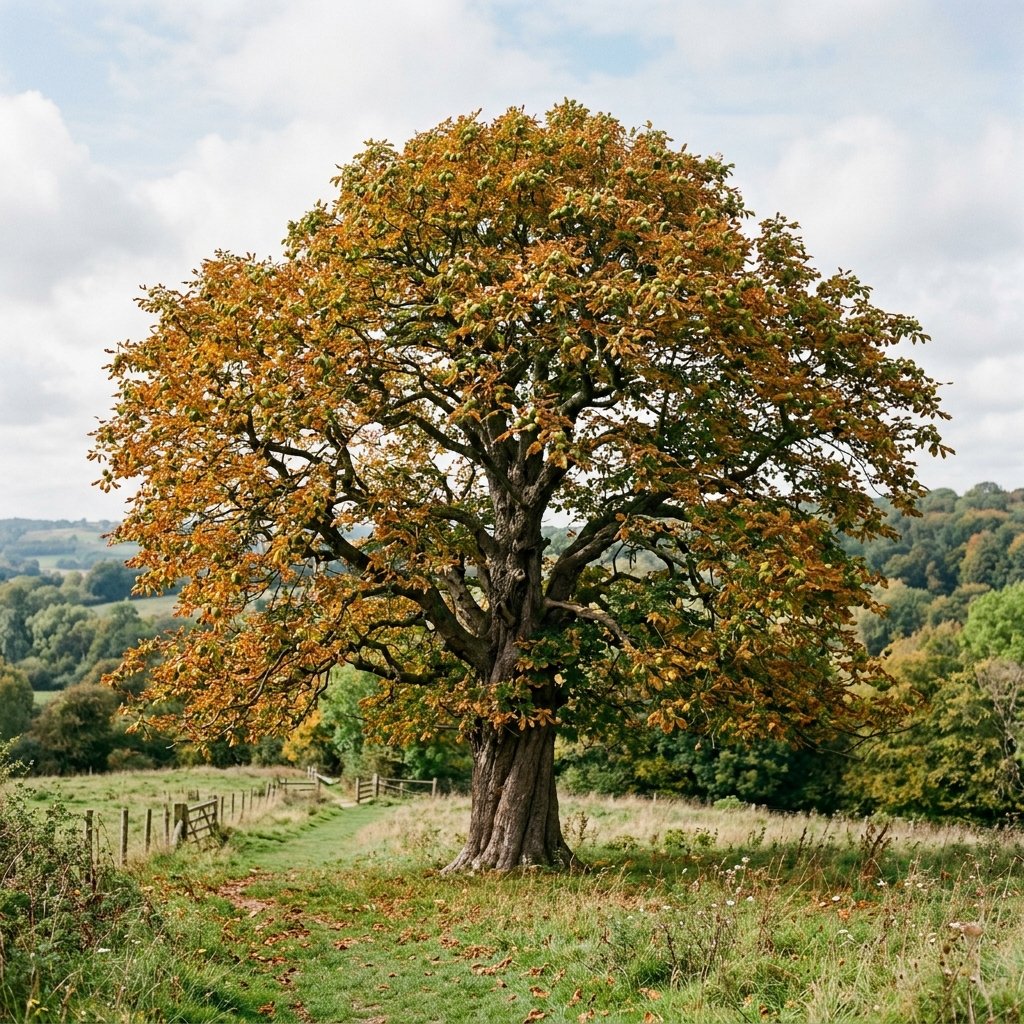
A large tree famous for its 'conkers' and large, hand-shaped leaves.
How to identify:
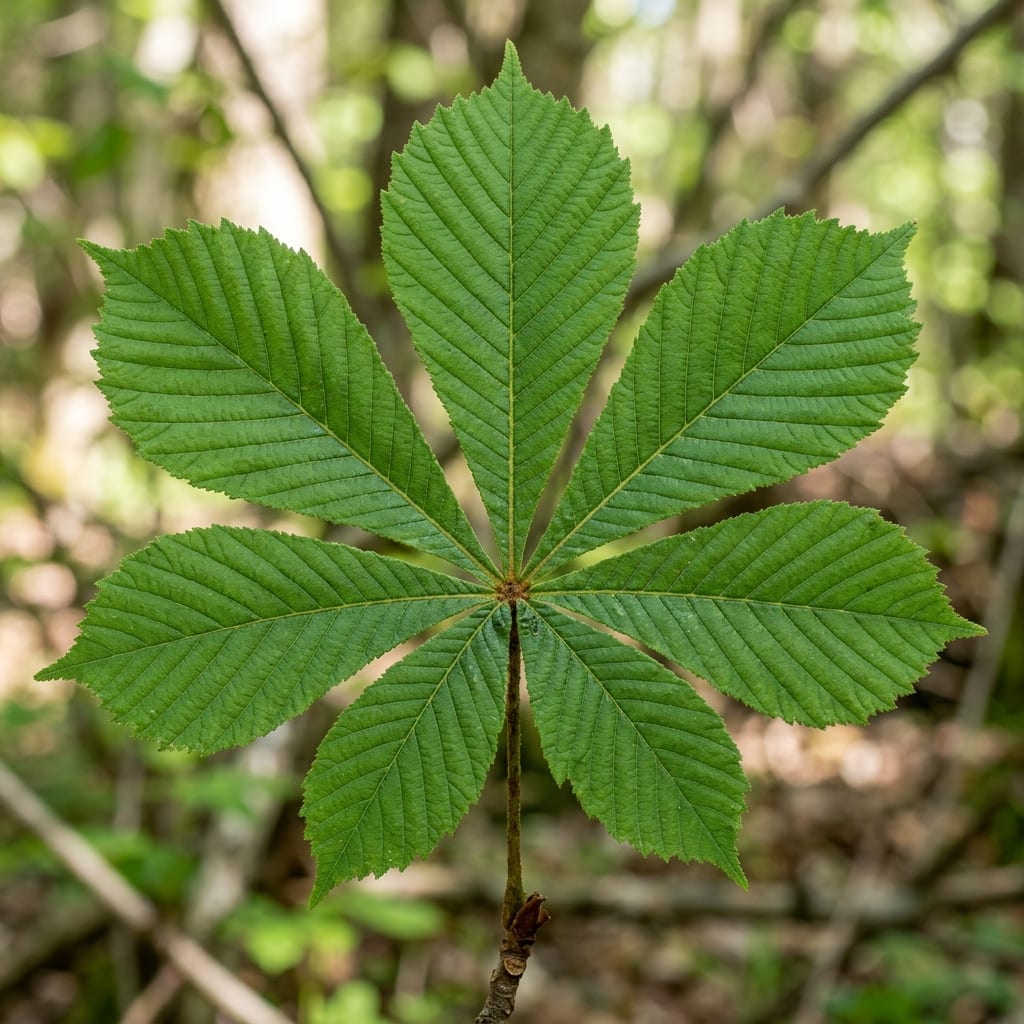
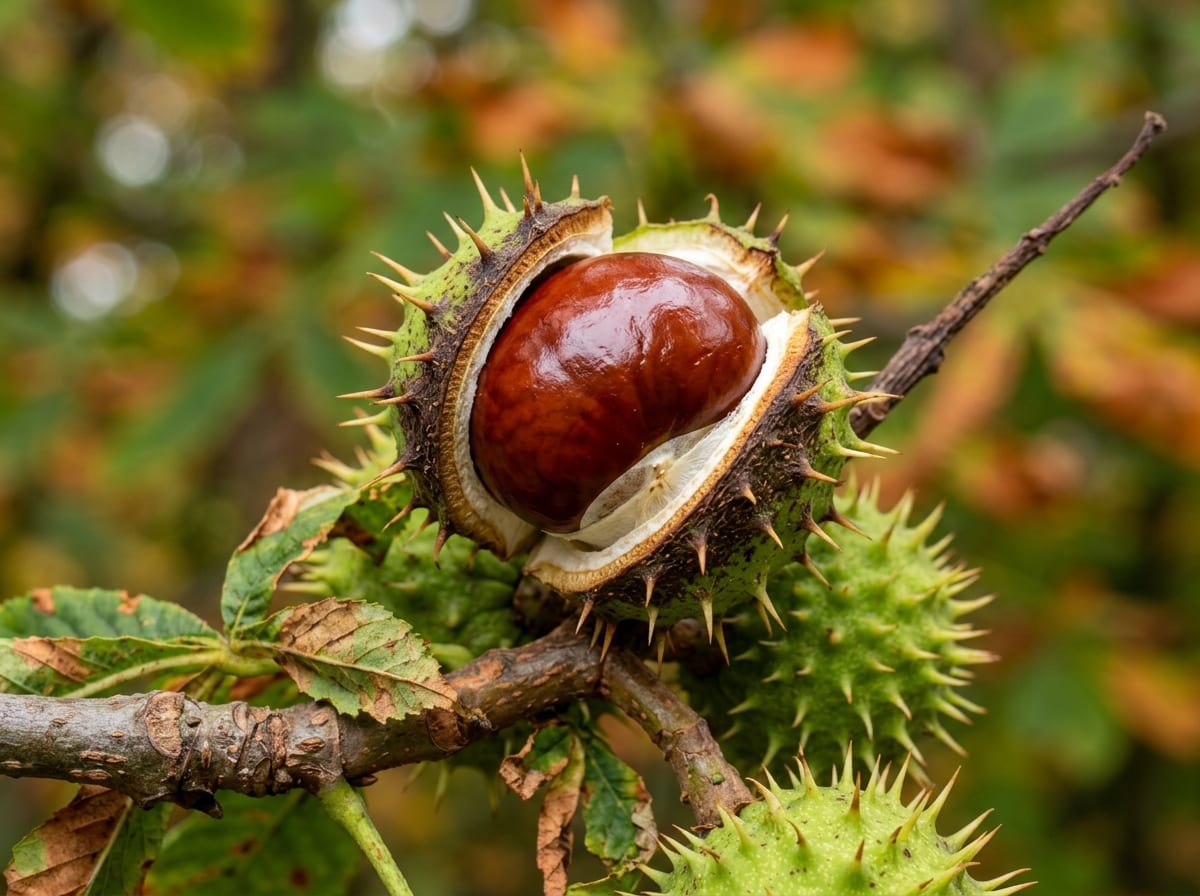
Look for its large leaves which are made up of 5-7 smaller leaflets arranged like fingers on a hand. In autumn, look for the spiky green cases containing shiny brown conkers.
💡 Fun Facts
- The 'conker' is the seed of the horse chestnut tree.
- In spring, the tree has large, sticky buds that open up to reveal the new leaves and flowers.
- It gets its name from the horseshoe-shaped mark (complete with 'nail' holes) that is left on the twig when a leaf falls off.
📅 Through the Year
- Leaf-out:March to April
- Flowering:May
- Fruiting:September to October
- Leaf fall:October to November
Name Story
Aesculus hippocastanum
means “the horse-chestnut”
a traditional storyThe 'horse' is a traditional story, not a proven fact — and despite its name this tree is not related to the sweet chestnut whose nuts we roast.
What does its name mean?
- Aesculus — an old Latin name for an oak sacred to JupiterLatin — borrowed for this tree
- hippo- — horseGreek hippos
- -castanum — chestnutGreek kastanon
Hippocastanum means 'horse-chestnut'. One old tradition says its conkers and bark were once given to horses to ease their coughs, which may be where 'horse' comes from. But this is not a true chestnut, and conkers are not for eating — they are mildly poisonous to people and horses alike.