Yew
Featured in: Year 1: Plants
Reading level:
Yew
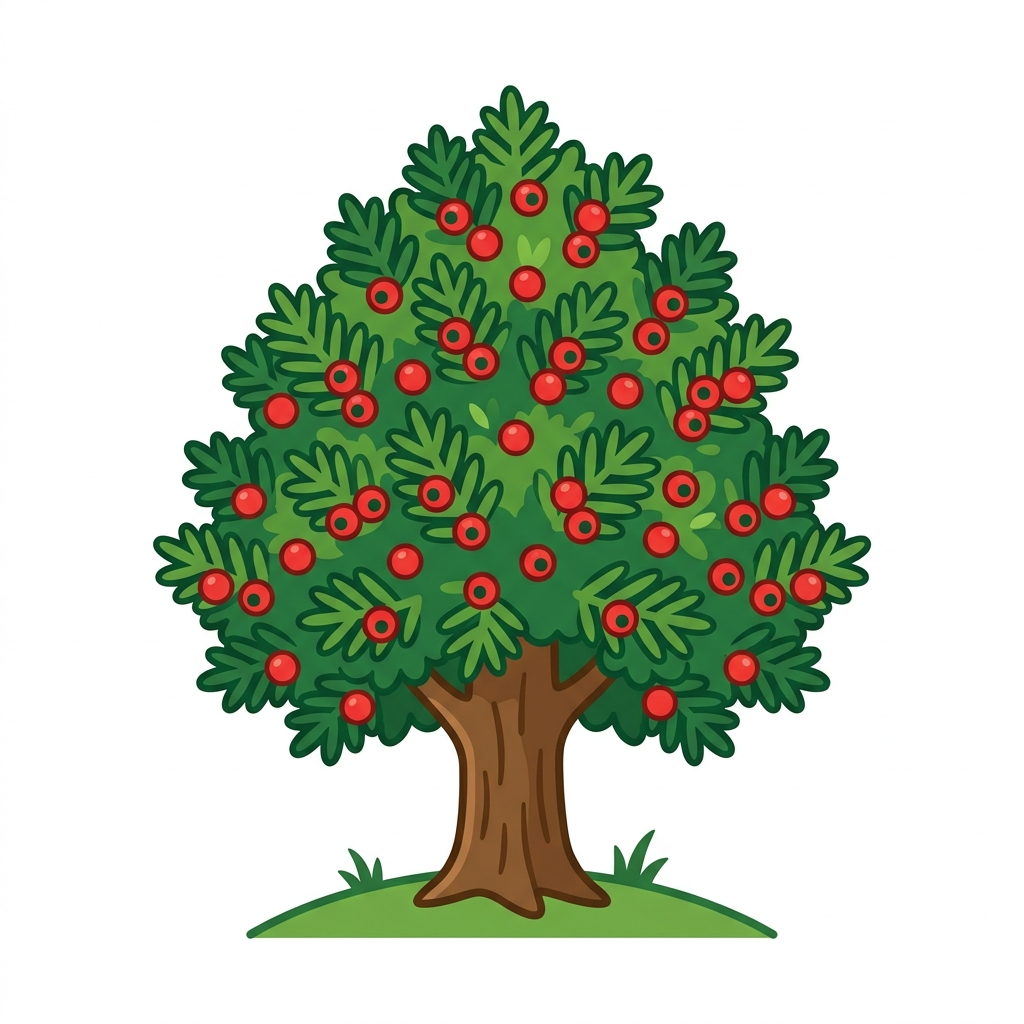
Tree
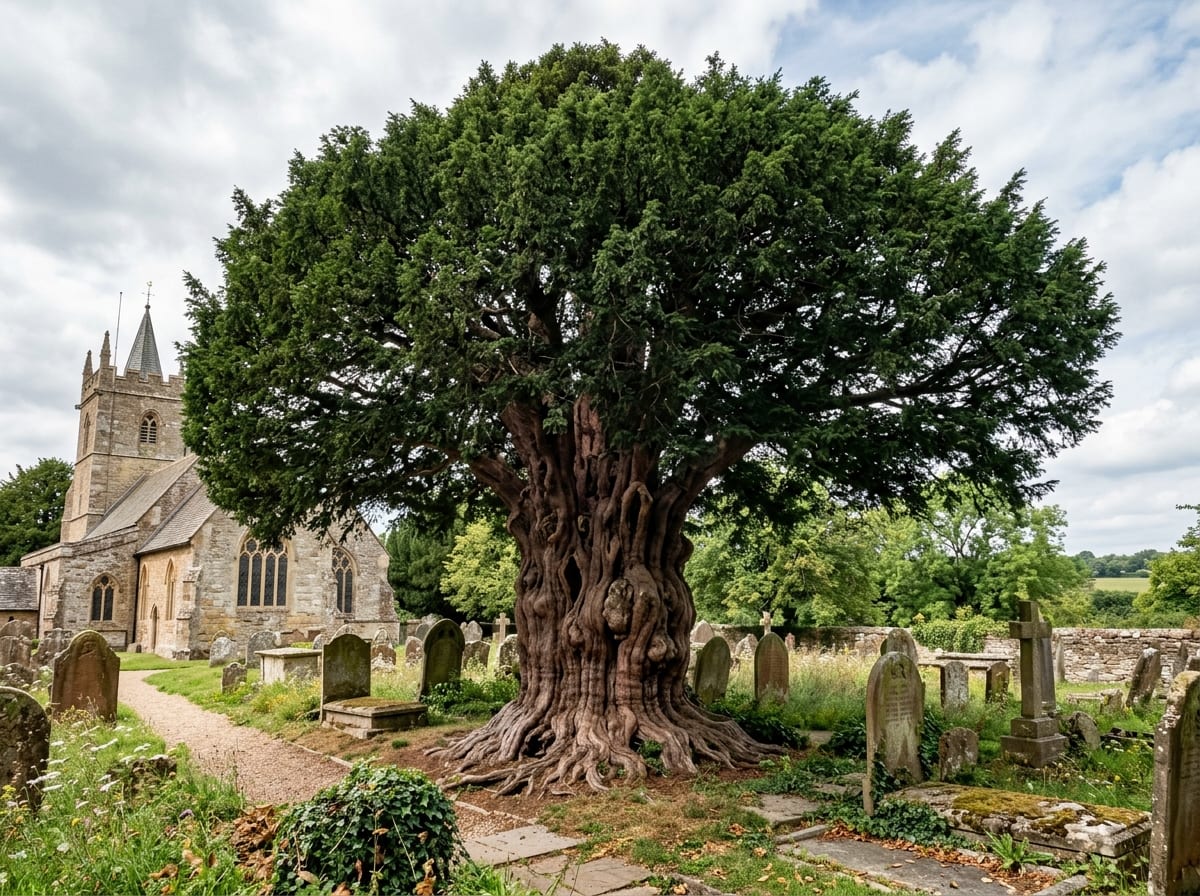
A dense, dark evergreen tree often found in churchyards, with soft needles and red, fleshy berries.
How to identify:
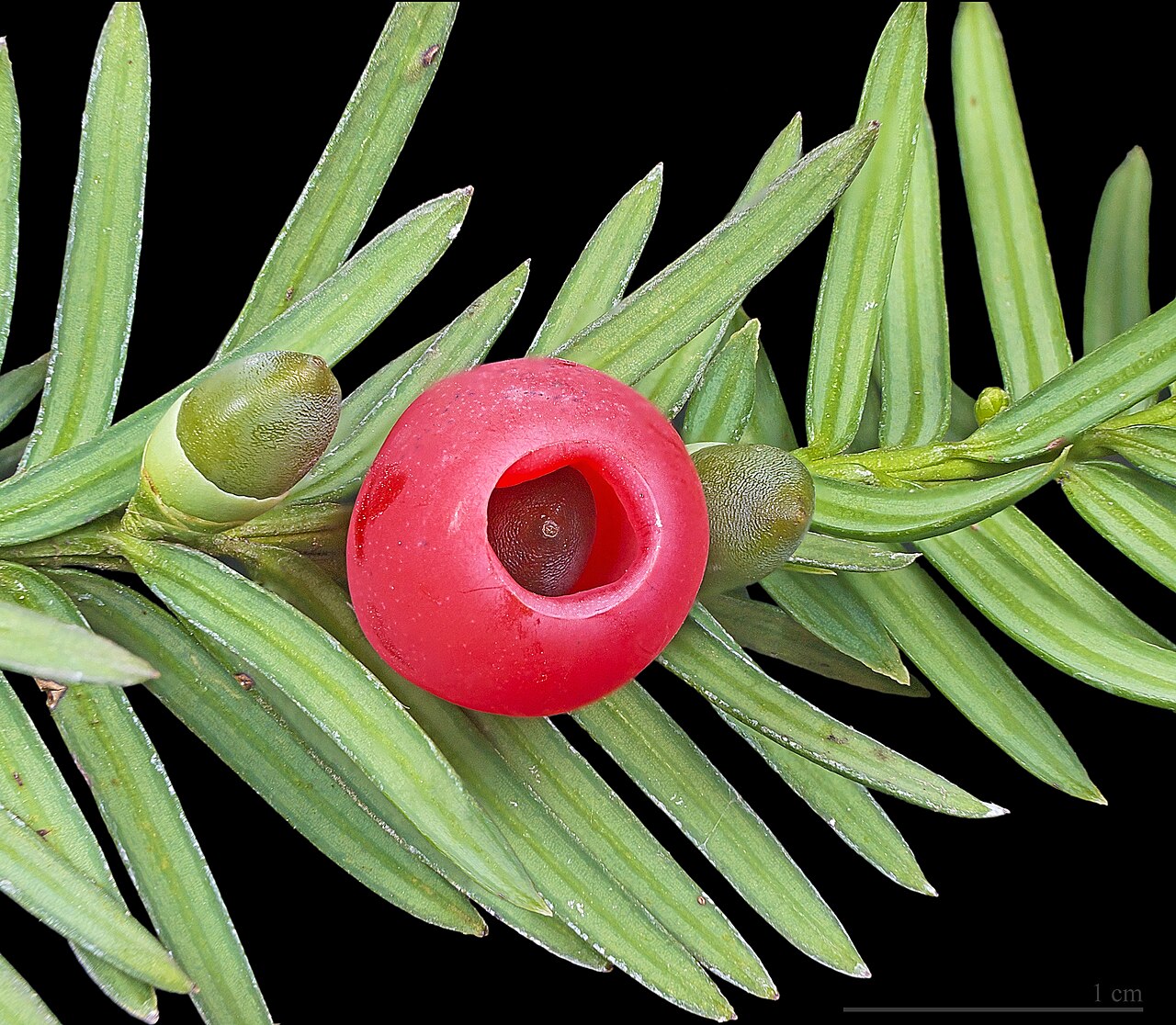
Look for its short, flat, dark green needles and its small, bright red berries that have a hole in the end.
💡 Fun Facts
- Yew trees can live for a very long time; some in the UK are thought to be over 2,000 years old.
- Almost every part of the yew tree—its needles and seeds—is poisonous to humans and most animals.
- Birds, however, can eat the fleshy red part of the berry (called an aril) and will fly off and poop out the poisonous seed somewhere else, helping the yew to spread.
📅 Through the Year
- Fruiting:September to November
Name Story
Taxus baccata
means “the berried yew”
likely meaningThe link between the name Taxus and the words for 'bow' and 'poison' is a resonant old tradition rather than a settled fact — though it is quite true that yew made the best longbows and that the tree is highly poisonous.
What does its name mean?
- Taxus — yew (often linked to words for 'bow' and 'poison')Latin — traditionally tied to Greek toxon, 'bow', and toxikon, 'poison'
- baccata — berried, bearing berriesLatin bacca, 'berry'
Baccata means 'berried', for the soft red fruits dotted along its branches — though, because the yew is really a conifer, these aren't true berries but fleshy little cups called arils. The name Taxus is often linked to old Greek words for 'bow' and 'poison': yew wood really did make the finest longbows, and nearly all of the tree really is highly poisonous.